
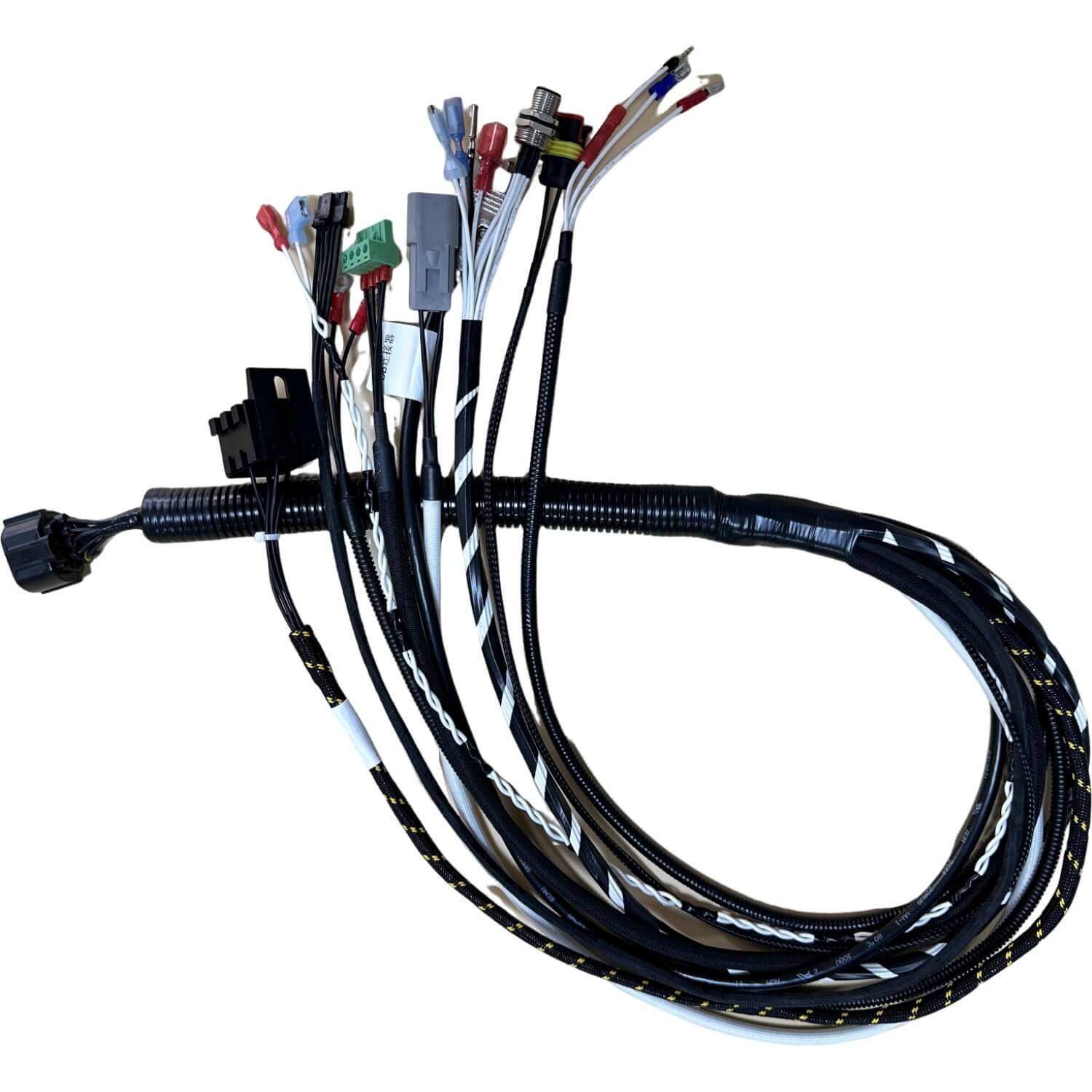
A Connector Substitution That Needs Proof, Not Guesswork
A common request: a specified connector becomes unavailable and the customer needs a qualified alternative without disrupting a build. On fine-gauge or RF assemblies a loose substitution can change cable exit geometry, contact seating, and signal behaviour, so the alternative cannot simply be swapped in. Our approach is to source a qualified alternative, build a controlled batch of sample units, and submit them for the customer's functional testing before any production continues.
Original connector unavailable; cable supply continuity at risk.
A controlled sample batch built with the qualified alternative.
Samples confirmed before committing the production run.
This is an illustrative description of a representative project type, not a specific customer engagement. As a contract assembler we do not publish customer-identifiable data.
TL;DR
- Approve connector alternates only after pinout, mating fit, crimp, electrical, and documentation checks pass.
- Match ratings first: current, voltage, temperature, material, sealing, and applicable UL or automotive requirements.
- Build samples before production; the micro-coax case used 10 sample units before customer approval.
- Keep old and new evidence in one change file so repeat orders do not drift.
What Connector Substitution Means in Cable Assembly
Connector substitution is the controlled replacement of a specified connector, terminal, housing, backshell, seal, or mating accessory with an alternate part that preserves the cable assembly's fit, electrical role, mechanical retention, and release evidence. It is not a purchasing shortcut. It is an engineering change with manufacturing consequences.
The reader for this guide is usually an engineer, buyer, or supplier quality manager who already has a drawing, an approved cable assembly, and a sourcing problem. The buying stage is urgent: allocation, end-of-life notice, MOQ conflict, or a customer build that cannot wait for the original connector.
The role perspective is factory-side. Our team has spent 15 years reviewing cable assembly drawings, connector substitutions, crimp records, and first-article packages for export harness programs. The objective is specific: decide whether an alternate connector can be released without creating a hidden field failure.
Three related definitions matter. IPC-A-620 is an acceptability standard used for cable and wire harness assemblies. UL-758 is tied to appliance wiring material recognition and wire style control. IATF 16949 is an automotive quality management standard that treats uncontrolled substitution as a change-control risk.
"A connector alternate is acceptable only after the evidence matches the risk. On an AWG#40 micro-coax build, we do not approve by catalogue pitch alone; we build samples, check the cable exit, and make the customer prove function in the actual mating system."
Connector Substitution Decision Table
A connector alternate should pass through staged gates. The table below separates low-risk administrative matches from changes that require samples, first article inspection, or customer approval.
| Check item | Accept only if | Evidence to keep | Release risk |
|---|---|---|---|
| Mating interface | Keying, latch, polarization, and mating half fit without force | Mating photos, sample fit notes, part numbers | High if customer mating half is fixed |
| Electrical rating | Current, voltage, creepage, and temperature meet or exceed drawing | Datasheets, derating note, drawing markup | High for power or safety circuits |
| Crimp system | Terminal barrel fits wire AWG, insulation OD, tooling, and pull-force target | Crimp height, pull test, visual inspection, applicator ID | High if terminal changes |
| Cable exit and strain relief | Boot, backshell, seal, overmold, or heat shrink still supports the cable | Bend photos, dimension check, retention notes | Medium to high in vibration |
| Sealing and materials | IP rating, gasket material, plating, flame rating, and chemical exposure remain suitable | Material data, IP note, supplier declaration | High for outdoor, mining, marine, or medical builds |
| Test coverage | Continuity, insulation resistance, contact resistance, functional, or RF checks match the application | Test report, fixture revision, pass/fail criteria | High if test fixture changes |
| Customer approval | Drawing owner signs off before production lot release | ECR/ECN, email approval, FAI record | High for regulated or repeat OEM supply |
A 7-Step Validation Plan Before Production Release
Connector validation works best when the supplier treats the alternate as a controlled build path, not a late BOM swap. The following sequence fits most cable assembly substitutions, from a two-pin sealed harness to a dense micro-coax lead.
1. Freeze the baseline
Record the original connector, terminal, seal, wire range, mating half, approved drawing revision, and current test criteria. Without a baseline, nobody can prove the alternate is equivalent.
2. Screen the datasheet
Compare current, voltage, temperature, material, plating, flammability, insulation OD, cable OD, and mounting geometry. Reject the alternate early if any rating falls below the original requirement.
3. Check mechanical fit
Mate the alternate with the real customer-side connector or a controlled fixture. Confirm latch feel, keying, pin height, cable exit, panel clearance, backshell fit, and service loop space.
4. Revalidate the crimp
Use the correct applicator or hand tool, then record crimp height, conductor brush, insulation support, wire pull force, terminal seating, and retention. A housing change can still affect insertion and lock behavior.
5. Build controlled samples
Build samples that represent each wire size, connector orientation, and cable length family. Build a controlled sample batch and have the customer approve the qualified alternative before production continues.
6. Test against the application
Run 100% continuity on samples, then add insulation resistance, hipot, contact resistance, signal, RF, or functional tests where the cable role demands it. Micro-coax and high-speed builds should not rely on continuity alone.
7. Release through change control
Update the BOM, drawing notes, test fixture program, supplier record, packaging instruction, and first article file. Production should use the alternate only after the drawing owner approves the change.
For adjacent controls, review our wire harness change control guide, first article inspection checklist, and test fixture design guide.
"For connector substitution, our release package always ties the new part number to a sample build. If the terminal changes, the minimum evidence is crimp height, pull force, terminal retention, and a dated electrical test record."
Standards, Records, and Supplier Controls
IPC-A-620 should be the workmanship reference for cable and wire harness acceptance, especially around crimp appearance, conductor brush, insulation support, terminal damage, wire damage, and connector assembly. The standard does not approve a connector alternate by itself; it gives the inspector a common language for judging the finished cable assembly.
UL-758 belongs in the review when the assembly uses appliance wiring material, recognized wire styles, flame-rated insulation, or customer safety files that rely on those material declarations. If the alternate connector changes insulation support, temperature exposure, or material system, keep the supplier declaration with the change file.
IATF 16949 programs need stricter customer notification and approval discipline. A connector alternate may trigger drawing revision, PPAP update, control plan update, or customer-specific approval. A buyer should ask for the change record before accepting the first lot, not after a line issue appears.
FAI Record
Include drawing revision, old/new BOM, sample quantity, inspection dimensions, test results, and approval status.
Test Evidence
Keep continuity, insulation resistance, hipot, pull, retention, or functional data tied to the exact connector revision.
Supplier Traceability
Record approved supplier, lot code where available, datasheet revision, and any authorized-distributor evidence.
When Connector Substitution Is Not the Right Choice
A connector alternate should be rejected when the new part changes the customer's mating interface and the installed equipment cannot change. It should also be rejected when the alternate reduces voltage, current, temperature, flame, or sealing margin below the approved drawing.
The same rule applies to crimp risk. If the alternate requires a terminal or tooling path the supplier cannot validate, the cable may look acceptable but fail under vibration, pull load, or repeated service. For sealed wire harnesses, a small seal mismatch can turn an IP67 design into a moisture path.
Reject the alternate if proof cannot be produced
No datasheet, no mating sample, no crimp evidence, no electrical test record, or no drawing-owner approval means the substitution is not production-ready. Availability alone is not a release criterion.
If the alternate is part of an end-of-life recovery, pair this guide with our obsolete connector replacement capability and prototype cable assembly service.
"The strongest alternate is not always the part with the lowest unit price. A connector that saves 20 cents but needs a new fixture, new terminal tooling, and fresh customer validation can cost more than waiting for the original."
Connector Substitution FAQ
How many samples should we build before approving an alternative connector?
Build enough samples to cover every cable variant, cavity count, keying option, and crimp tool setup. For low-volume cable assemblies, 5 to 10 sample units often proves fit and test coverage; safety, automotive, or medical programs should add a documented first article and customer approval before any production lot.
Can a connector be substituted if the pitch and pin count match?
No. Pitch and pin count are only the first screen. The alternate must match mating geometry, polarization, latch force, terminal retention, current rating, voltage rating, insulation system, crimp barrel range, cable exit space, and the test plan required by IPC-A-620 or the customer drawing.
Which standards should guide connector substitution for wire harnesses?
Use IPC-A-620 for cable and wire harness workmanship acceptance, UL-758 where appliance wiring material or recognized wire styles apply, and ISO 9001 controls for automotive change approval. The customer drawing remains the controlling document when it is stricter than the general standard.
Do we need new crimp validation when only the connector housing changes?
Usually yes if the terminal, cavity lock, wire seal, applicator, or insertion path changes. At minimum, record crimp height, pull force, visual acceptance, terminal seating, retention force, and 100% continuity on the first article. Keep the old and new connector evidence in the same change file.
What tests catch bad connector substitutions before production?
The strongest pre-production screen combines mating fit, pinout verification, continuity, insulation resistance, contact resistance where specified, pull force, terminal retention, polarity, label review, and a functional test in the customer device or mating fixture. RF or micro-coax builds may also need return-loss or signal checks.
When should we reject an otherwise available connector alternate?
Reject the alternate if it needs a new mating half the customer cannot change, reduces voltage or current margin, lacks the required material rating, breaks IP67 or strain-relief requirements, increases insertion error risk, or cannot be documented with controlled samples and test records before production release.
Related Resources
Connector Selection
Choose connector families by current, sealing, mating cycles, and service requirements.
Material Substitution
Control broader BOM substitutions without losing drawing or supplier traceability.
Micro-Coax Cable Assembly
Build compact RF and sensing leads where connector geometry and handling matter.
Need a Connector Alternate Validated Before Production?
Send the original part number, proposed alternate, drawing, mating interface, sample quantity, and test requirement. Our team can review fit, crimp, and release evidence before your next build is exposed to sourcing risk.