
Prototype Cable Assemblies Australia
Commercial prototype cable assembly support for Australian OEMs that need fast samples, cleaner drawing interpretation, useful electrical verification, and a controlled path into pilot or production release.
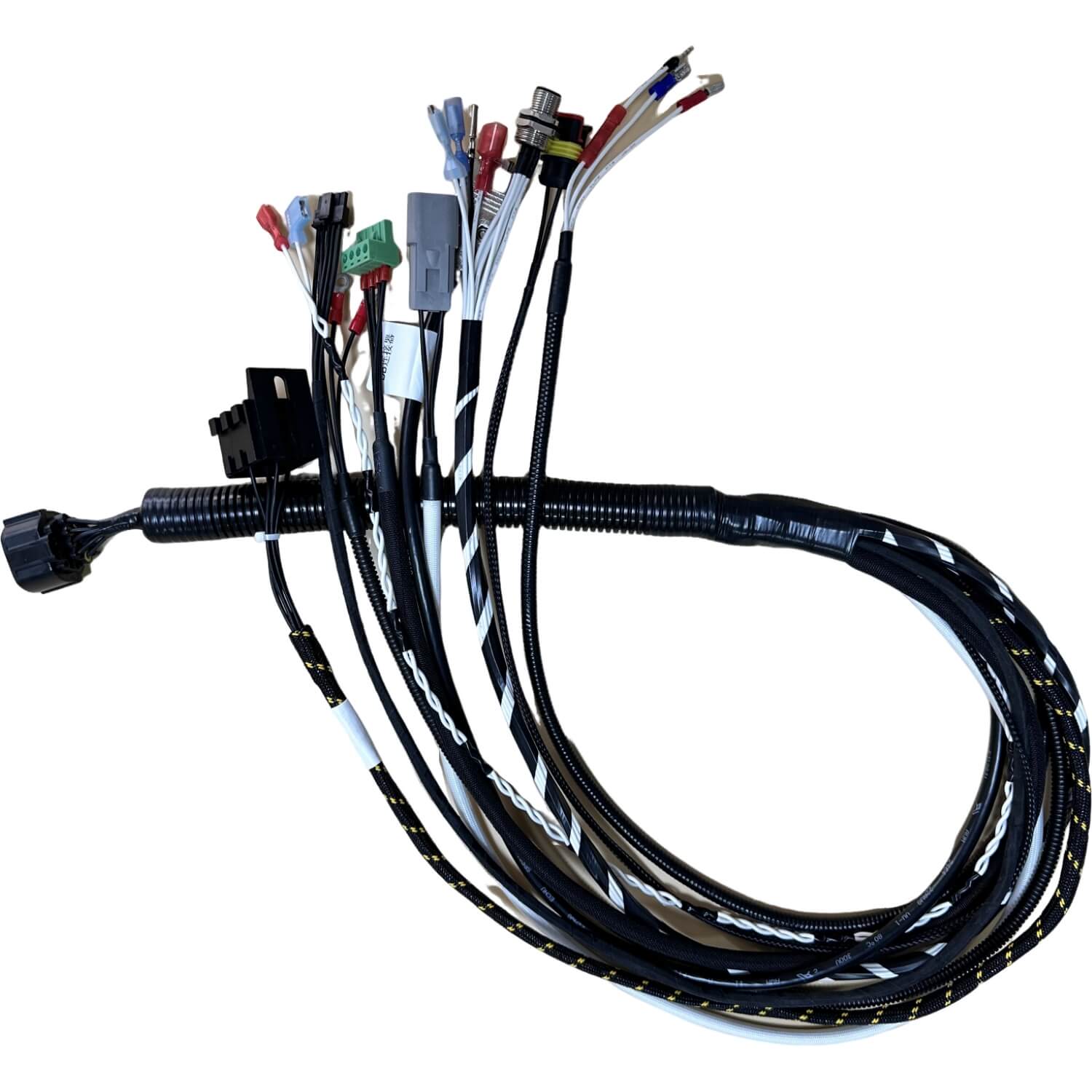
What buyers usually need from prototype cable assembly support
Prototype cable assemblies are not just fast samples. They are decision tools used to confirm whether the released part definition is realistic, whether the assembly fits the hardware, and whether the next order should be a revised sample, a pilot lot, or a production release.
Public references on prototypes, electrical crimping, and ISO 9000 quality systems are useful because they frame why sample speed alone is not enough. The sample has to produce evidence your team can act on.
In practice, engineers and procurement teams want prototypes that answer real questions about fit, routing, pinout, labels, and test coverage while still creating a clean bridge into repeat purchasing if the sample is approved.
Technical scope
Why teams order dedicated prototype cable assemblies
This page is for commercial projects that need a useful first article and a lower-risk transition into repeat supply.
Built for Design Validation, Not Generic Sample Making
Prototype cable assemblies need to answer commercial questions quickly: does the connector family fit, is the pinout correct, does the cable route cleanly, and can the approved sample become a real production part number?
Drawing, BOM, and Pinout Review Up Front
The fastest prototype projects still fail when basic definition is weak. We review cable construction, mating interfaces, labels, branch lengths, and test expectations before release so the first sample is useful instead of cosmetic.
Inspection Depth Aligned to Prototype Risk
Continuity, pinout, label checks, fit confirmation, and insulation verification can all be added at prototype stage depending on whether the assembly is for bench validation, field trial, regulated equipment, or internal EVT work.
Designed to Carry Into Repeat Supply
A buyer should not have to restart engineering after prototype approval. We structure the approved sample, work notes, and test scope so later pilot lots and production releases stay aligned with the prototype intent.
Useful for OEM NPI and Supplier Transfer
This capability fits new product introduction, replacement of an inconsistent incumbent supplier, and redesign programs where a sample, field cable, or partial drawing must become a controlled purchasing item.
Low-Volume Friendly Without Losing Control
MOQ 1 prototypes, small engineering lots, and early validation runs are supported without forcing the job into an informal process that later creates drift in production.
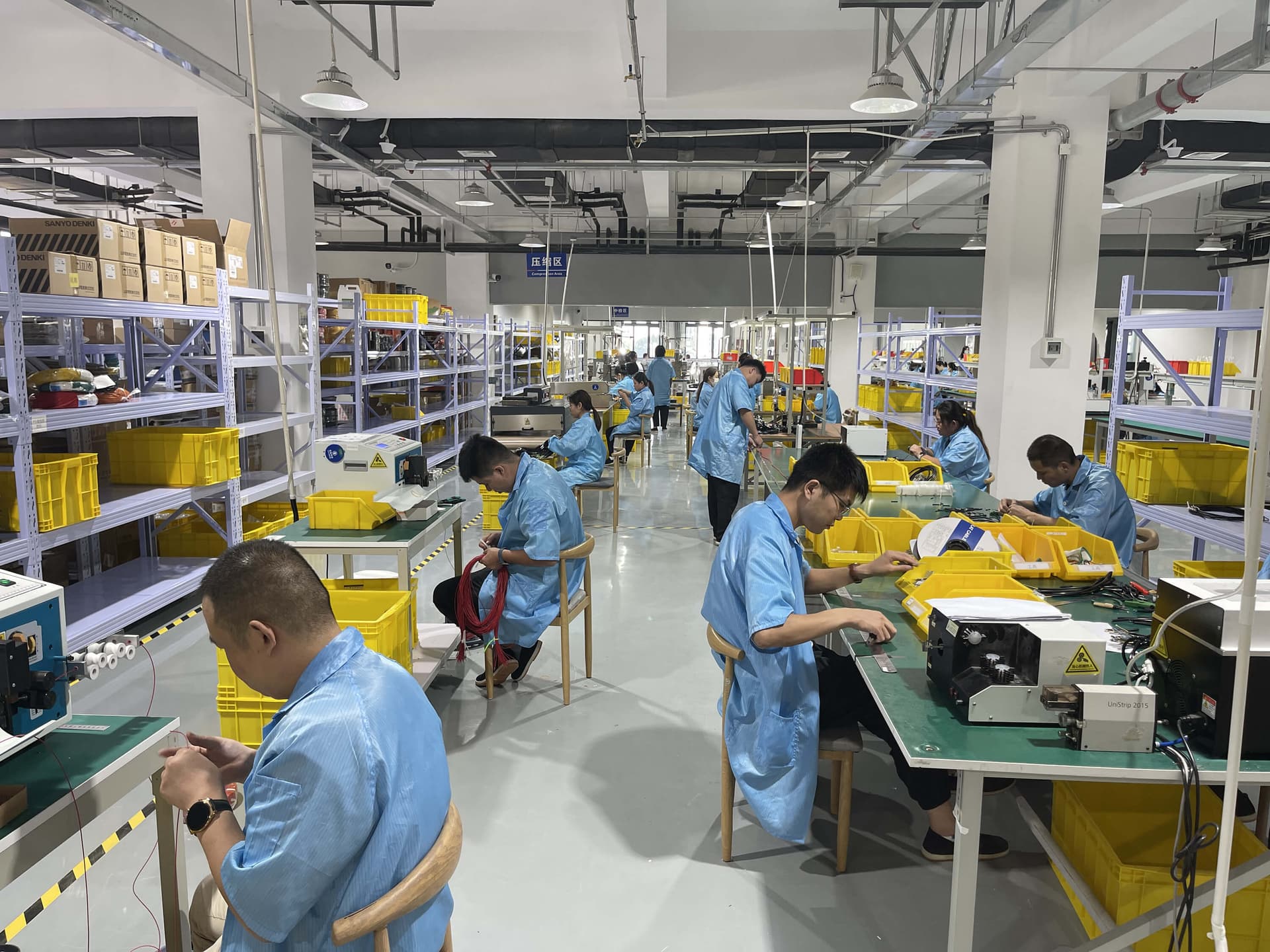
Typical prototype cable assembly applications
New Product Introduction
Engineering teams use prototype cable assemblies to confirm connector selection, cable flexibility, shielding approach, routing, and test access before freezing the released design.
Field Trial and Pilot Equipment
Low-volume prototype lots support beta installs, on-site equipment validation, pilot machines, and customer demonstrations where the cable must work reliably before full commercial release.
Legacy Cable Replacement
When the original supplier is unavailable or the documentation is incomplete, a physical sample or installed cable can be converted into a controlled prototype for qualification and later repeat ordering.
Design Change Validation
Prototype builds help confirm revised connectors, alternative cable jackets, updated branch geometry, or new label requirements before a running change is released to production.
Regulated and High-Reliability Equipment
Medical, transport, industrial control, and harsh-environment programs often need prototype evidence that ties design assumptions to real inspection and electrical verification before approval.
Supplier Transfer Projects
A first article can validate whether an assembly built by a new supplier still matches the approved intent, especially where pinout, shielding, and connector orientation were previously inconsistent.
Typical prototype cable assembly workflow
Review the design package
We check the cable type, conductor count, connector family, mating orientation, labels, dimensions, and required tests so missing information is identified before the sample is built.
Confirm prototype intent
A prototype for fit and form needs a different release approach than one for field use or production validation. We align the build and inspection plan to the actual decision your team needs to make.
Build the first article
Initial units are assembled using the agreed materials and process notes so connector fit, handling, assembly stack-up, and manufacturability can be evaluated on a real part.
Test and capture findings
Electrical checks, visual inspection, and any prototype-specific notes are recorded so design changes can be made from evidence instead of guesswork.
Release the next step
After approval, the same build package can move into revised prototypes, pilot lots, or production quotation with clearer scope, lower risk, and less hidden rework.
Buyer checklist before requesting a quote
Send the exact mating connector part numbers when possible. Prototype cable assemblies often fail because housing families are assumed rather than confirmed.
Separate the goal of the prototype: bench validation, field trial, customer sample, or production-ready first article. That changes how much documentation and testing the build needs.
Flag any cable-flex, bend-space, abrasion, UV, or fluid exposure risk early so the sample is not built with the wrong jacket or strain-relief concept.
If the design is replacing an existing cable, include photos of the installed assembly and both mating ends. That usually removes days of avoidable clarification.
Call out what must be frozen after sample approval: labels, lengths, pinout, branch breakout, shielding method, or test sequence.
List any deadlines tied to EVT, DVT, field install, or customer review because prototype value is tied to decision timing, not just shipment speed.
How a typical prototype cable assemblies program runs with us
This is an illustrative description of a representative project type, not a specific customer engagement. As a contract assembler we do not publish customer-identifiable data.
Frequently asked questions
Common commercial and engineering questions about prototype cable assemblies.
What is the difference between a prototype cable assembly and a production cable assembly?
A prototype cable assembly is built to validate the design, installation, and test assumptions before full release. The goal is to prove fit, pinout, materials, and handling with real hardware. A production cable assembly uses the approved sample plus locked work instructions, inspection criteria, and purchasing control for repeat supply. Good prototype work shortens the path to production because the approved sample becomes the basis of the released part definition.
Can you build prototype cable assemblies from a sample or incomplete drawing?
Yes. Many prototype jobs begin with a field sample, mating-device photos, a rough wiring table, or an incomplete drawing package. We can help identify missing connector details, cable construction choices, labels, and test scope so the result is a useful first article rather than a best-guess copy.
How many prototype units should we order?
That depends on the approval stage. One to three units may be enough for bench fit checks. Larger engineering lots are common when multiple teams need samples, when destructive evaluation is planned, or when a field trial needs spare units. The main decision is not MOQ; it is how many assemblies are needed to answer the next approval question with confidence.
What testing do you perform on prototype cable assemblies?
Most prototype cable assemblies receive 100% continuity and pinout verification as a baseline. Depending on the application, we can add visual workmanship checks, label verification, dimensional review, insulation resistance, hi-pot, and prototype-specific notes tied to fit or handling observations. The release stack should match prototype risk, not use the same checklist for every job.
Do prototype cable assemblies have to use final production materials?
Not always, but material substitutions should be explicit. Some early prototypes only need to prove geometry and connectivity, while others must represent the final cable jacket, shield construction, or connector sealing because those choices affect real-world performance. The important point is that the sample intent is documented so later teams do not assume the prototype already equals production readiness.
How do you help move from prototype approval to repeat production?
We use the approved prototype to tighten the build package: final BOM, connector references, labels, dimensions, and test criteria. That lets the same cable move into pilot quantities or repeat purchase orders with less ambiguity, fewer engineering clarifications, and better alignment between the approved sample and shipped production lots.
Related capabilities and technical resources
Use these pages when the prototype needs broader NPI support, deeper drawing cleanup, or a cleaner path into controlled production.
Prototyping Capability
Broader rapid prototyping support for wire harnesses and cable assemblies across early validation and iteration cycles.
Explore pageCable Assembly Manufacturing
Move from the first approved sample into repeat custom cable assembly production with controlled materials and testing.
Explore pageEngineering Drawing Review
Use drawing review when the design package still needs BOM, pinout, tolerance, label, or test clarification before the first build.
Explore pageTesting and Quality Control
See the electrical validation options available when prototype releases need continuity, insulation resistance, or hi-pot coverage.
Explore pagePrototype to Production Wire Harness Guide
A planning guide for scaling validated interconnects into repeat manufacturing.
Explore pageWire Harness Prototyping Guide
Background on EVT, DVT, PVT, and first-article expectations for prototype-stage approval.
Explore pageNeed a prototype cable assembly that can become a real production part?
Send the drawing, BOM, connector list, sample, or routing photos. We can review the prototype intent, define the first-article path, and quote a build that gives your team usable validation data.