
Custom Cable & Wire Harness Design Engineering
Transform your concepts into production-ready designs. Expert engineering team specializing in custom cable assemblies and wire harnesses for complex applications.
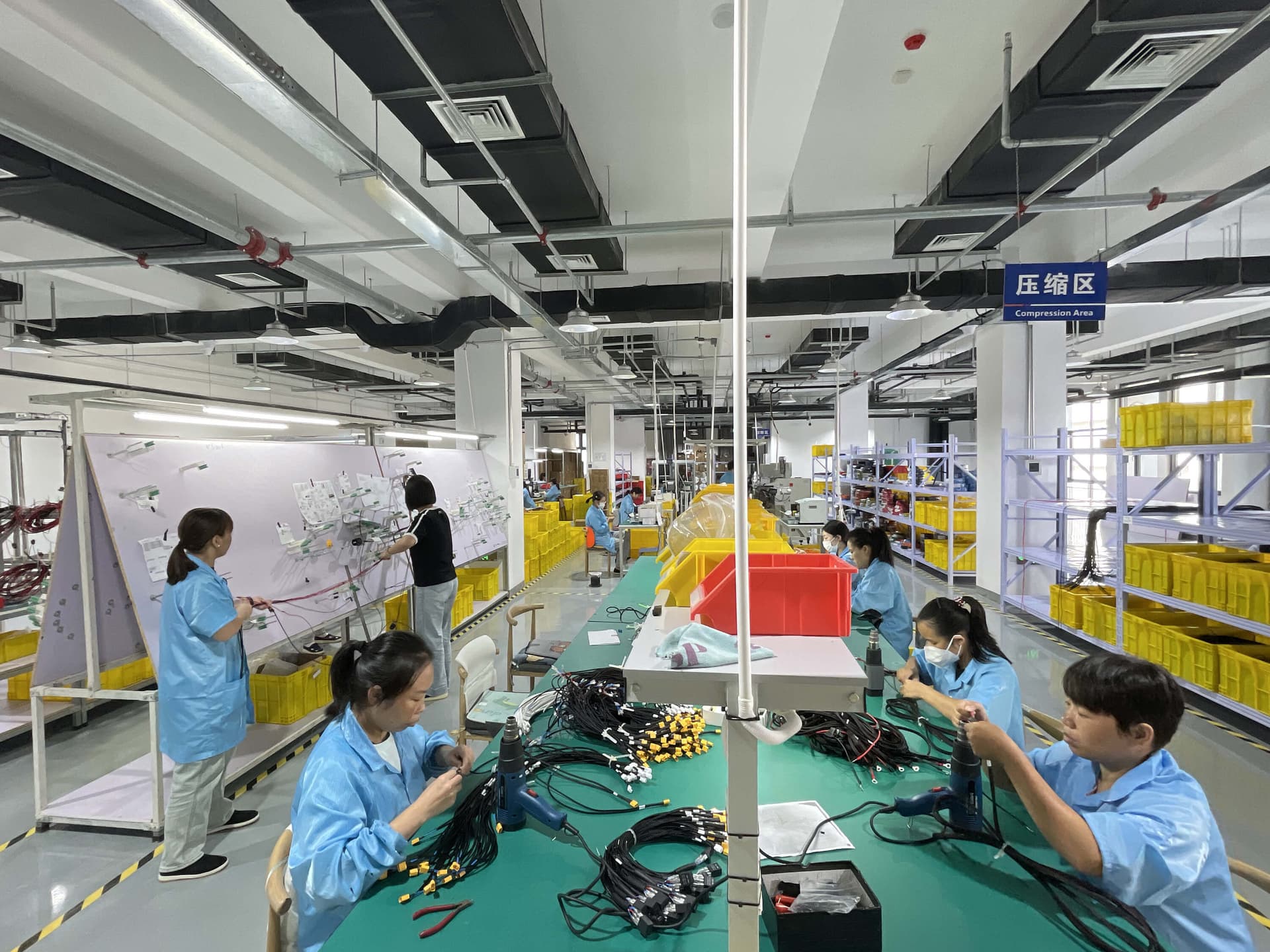
Comprehensive Design Services
Our experienced engineering team provides end-to-end design services for cable assemblies and wire harnesses. From initial concept to production-ready documentation, we ensure your designs are optimized for performance, reliability, and manufacturability.
Concept Development
Transform rough ideas into viable designs. We work with your requirements to develop optimal solutions for your application.
Electrical Schematics
Detailed electrical schematics with wire routing, pin assignments, and connection specifications.
3D CAD Modeling
3D models for visualization, fit checks, and integration with your mechanical assemblies.
Technical Documentation
Complete BOM, assembly drawings, test procedures, and quality inspection criteria.
DFM Analysis
Design for Manufacturing review to optimize designs for cost-effective production. If you already have a released drawing, use our engineering drawing review service to check BOM, pinout, tolerance, label, and test readiness before build.
Prototype & Testing
Build prototypes for validation, conduct testing, and refine designs before production.
Our Design Process
Requirements
Discuss application needs and specifications
Concept
Develop design concepts and alternatives
CAD Design
Create detailed schematics and 3D models
Review
Client review and design refinement
Validation
Prototype build and testing
Design Expertise
Industry Applications
- ✓Automotive & Electric Vehicles
- ✓Medical & Healthcare Equipment
- ✓Industrial Automation & Robotics
- ✓Mining & Heavy Equipment
- ✓Telecommunications & Data Centers
- ✓Renewable Energy Systems
- ✓Consumer Electronics
Technical Capabilities
- ✓High-voltage power distribution
- ✓High-frequency signal transmission
- ✓Flex circuits and dynamic applications
- ✓Harsh environment protection
- ✓EMI/RFI shielding solutions
- ✓Sealed and waterproof designs
- ✓Temperature extremes (-55°C to +250°C)
- ✓Custom connector integration
Why Choose Our Design Team?
Expert Engineers
15+ experienced engineers with backgrounds in electrical, mechanical, and manufacturing engineering.
Fast Turnaround
Rapid design iterations with typical turnaround of 3-5 days for simple designs, 1-2 weeks for complex projects.
Cost Optimization
DFM analysis to reduce manufacturing costs while maintaining performance and quality standards.
From requirement input to an approved drawing revision
This design-release reference describes the documents that define a custom cable or harness build. It is not a measured result from a customer project. Product-specific values must follow the selected component datasheets, the customer's drawing and the scope agreed at quotation.
Specification reference: what each release document fixes
A custom cable or harness design-release package normally contains the documents below. The reference is the release package itself; applicable standards must be named by the customer.
| Deliverable | What it fixes |
|---|---|
| Requirement input sheet | The application, environment and customer requirements used for the design. |
| Released drawing with revision | Lengths, tolerances, routing and connector orientation for the approved build. |
| Bill of materials (BOM) | Each part number and its required quantity and unit. |
| Pinout or wiring table | Every from-to connection in the assembly. |
| Test and acceptance specification | The tests and pass criteria agreed for the assembly. |
| Approval record | The customer's approval of the drawing revision before build. |
Use this document list when preparing a package for engineering drawing review.
Requirement input checklist (example template, not a customer result)
Illustrative fields to complete — no project values or test results
- Application and environment: State the intended use and operating environment.
- Connector part numbers and orientation: Identify each connector and its orientation on the customer drawing.
- Cable construction: Specify the required construction against the cable datasheet.
- Length and tolerance: Enter the required dimensions and permitted variation on the drawing.
- Pinout: List every from-to connection in the wiring table.
- Labelling: State the labelling requirements for the drawing.
- Test requirements: Name the tests and pass criteria for agreement at quotation.
- Quantity and target dates: Enter the requested quantity and dates for agreement at quotation.
- Applicable standards: Record the standards named by the customer.
Use these inputs when defining a prototype drawing for customer approval before build.
BOM layout (example template, not a customer result)
These generic descriptions illustrate the BOM columns. They are not a selected parts list. Part numbers, quantities and units remain to be specified for the customer drawing.
| Line | Description | Manufacturer part number | Quantity | Unit | Notes |
|---|---|---|---|---|---|
| To assign | Connector housing, 8-way | To specify | To specify | To specify | Record orientation on the drawing. |
| To assign | Crimp terminal | To specify | To specify | To specify | Identify the selected part against its datasheet. |
| To assign | Multi-core cable | To specify | To specify | To specify | Record construction, length and tolerance. |
Component-specific values depend on the selected product. Use the connector maker's or cable maker's datasheet and the approved drawing as the basis.
Revision letters, redlines and approval before build
- Mark the change: Show each requested change against the previous drawing revision. Add an initial and date to each redline.
- Raise the revision: Each drawing or BOM change advances the revision letter, for example from Rev A to Rev B. Reflect the redline in the next revision.
- Record approval: The customer approves the drawing before build. Production builds only to the approved revision.
- Agree the design rounds: The number of rounds is set at quotation.
For the transition after drawing approval, see the prototype-to-production wire harness guide. The approved revision remains the production build reference.
What we can and cannot provide
- We provide manufacturability feedback: DFM notes record our feedback on the proposed design.
- We own build accuracy: The approved drawing defines the assembly we must build.
- We provide agreed inspection records: The quotation agreement defines the records; the acceptance specification defines the tests and pass criteria.
- The customer owns electrical function and requirements: The customer defines the applicable regulatory and safety requirements and gives final approval.
- We do not certify the customer's end product: Build accuracy and agreed inspection records do not transfer the customer's responsibility for its end product to us.
Define the testing and inspection scope at quotation against the customer requirements and acceptance specification.
How a typical custom cable and wire harness design engineering program runs with us
This is an illustrative description of a representative project type, not a specific customer engagement. As a contract assembler we do not publish customer-identifiable data.
Frequently Asked Questions
What design services do you provide?▼
We provide complete custom design services including electrical schematics, mechanical drawings, 3D CAD models, Bill of Materials (BOM), manufacturing documentation, and testing procedures. Our team handles everything from concept to production-ready designs.
Do I need to provide complete specifications?▼
No. We can work with various levels of detail - from rough concepts to fully detailed specifications. Our engineering team will fill in the gaps and provide recommendations based on industry best practices and your application requirements.
Can you reverse engineer existing cable assemblies?▼
Yes, we offer reverse engineering services. Send us a sample and we can recreate the design, improve upon it if needed, and manufacture replacements or enhanced versions.
How long does the design process take?▼
Simple designs typically take 3-5 business days. Complex designs with multiple connection points, custom connectors, or special requirements may take 1-2 weeks. We provide estimated timelines during the initial consultation.
Do you provide design validation and testing?▼
Absolutely. We build prototypes for design validation, conduct electrical testing, mechanical stress testing, and environmental testing as needed. We ensure designs meet all specified requirements before production.
What file formats do you accept and provide?▼
We accept and provide various formats including PDF, DXF, DWG, STEP, IGES, STL for mechanical drawings, and standard electrical schematic formats. We work with most CAD systems including SolidWorks, AutoCAD, and Altium.
Is there a charge for design services?▼
Design fees depend on complexity. Simple modifications are often included with prototype orders. Complex custom designs may have engineering fees, which are typically credited toward production orders. Contact us for a detailed quote.
Which documents define the approved custom cable or harness build?▼
A design-release package normally contains a requirement input sheet, a released drawing with revision, a BOM, a pinout or wiring table, a test and acceptance specification, and an approval record. The drawing fixes lengths, routing and orientation. The BOM fixes each part number. The wiring table fixes every from-to connection. The acceptance specification fixes tests and pass criteria. The customer approves the drawing before build.
How are drawing changes recorded and design rounds agreed?▼
Show each requested change as a redline against the previous drawing revision, with an initial and date. Reflect the change in the next revision. Each drawing or BOM change raises the revision letter, for example from Rev A to Rev B. Production builds only to the approved revision. The number of design rounds is agreed at quotation.
Who owns end-product requirements and approval?▼
The customer owns the electrical function, applicable regulatory and safety requirements, and final approval. We own manufacturability feedback in DFM notes, build accuracy to the approved drawing, and the inspection records agreed at quotation. We do not certify the customer’s end product. Product-specific values must follow the selected component datasheets and customer drawing; tests and pass criteria belong in the agreed acceptance specification.
Ready to discuss your project?
Schedule ConsultationRelated Resources
Related Articles
Industry Applications
Let's Design Your Perfect Solution
Expert engineering team ready to transform your concepts into production-ready designs.