
How a typical wire harness change control program runs with us
This is an illustrative description of a representative project type, not a specific customer engagement. As a contract assembler we do not publish customer-identifiable data.
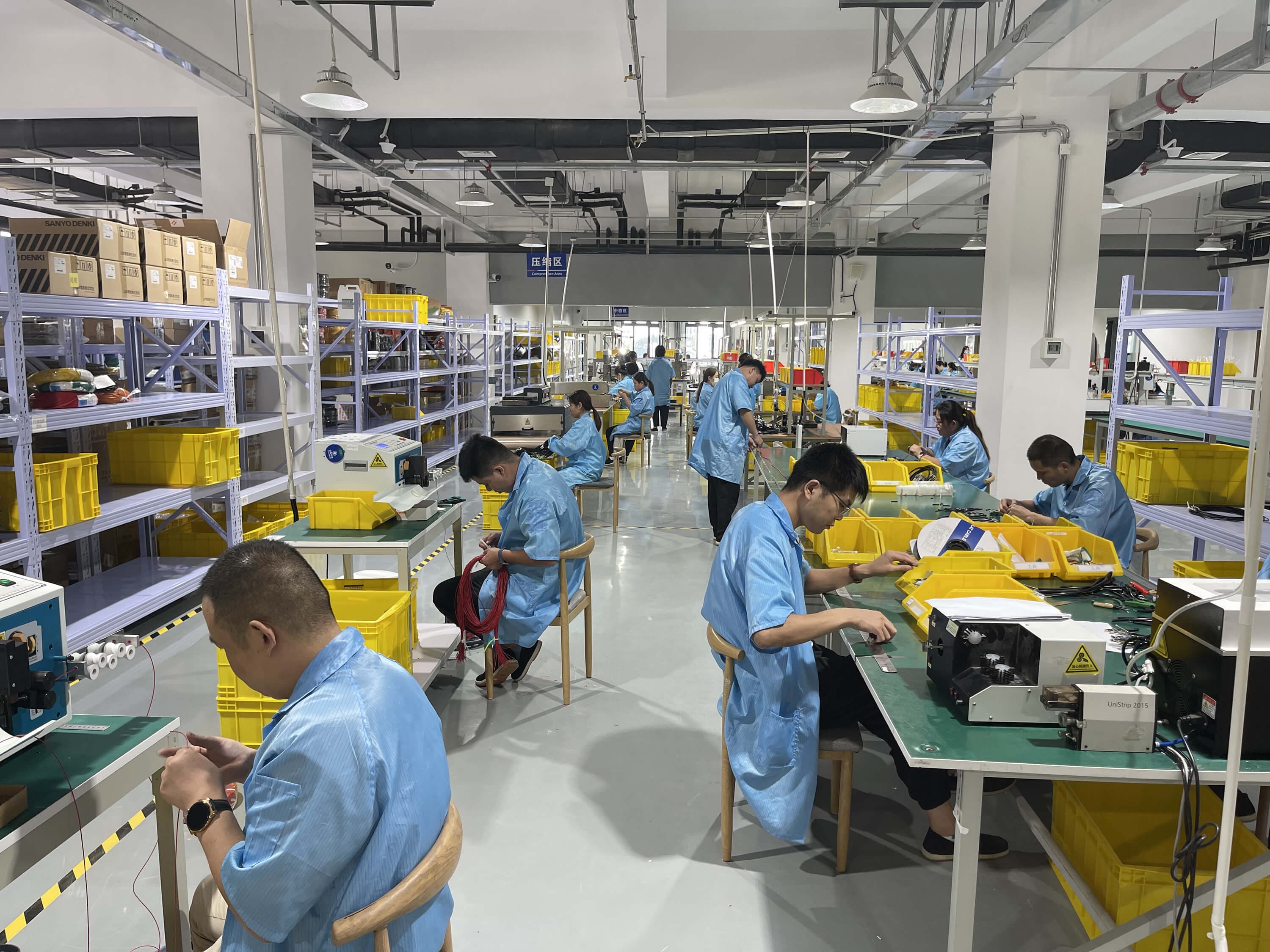
Wire Harness Change Control: ECN Guide for Production
How to release drawing, BOM, tooling and test-program changes without letting old-revision cable assemblies escape into production or field service.
The 600-piece revision mix-up that started at the BOM
In a February 2026 supplier-transfer review, our factory found 37 old-revision connector seals inside a 600-piece industrial harness order. The drawing had moved from Rev D to Rev E, but the purchasing BOM still pointed to the Rev D seal kit. Continuity passed on every assembly, yet the seal stack height was 0.6 mm short against the updated connector requirement.
We stopped the job after the first 80 pieces, quarantined two material lots, rebuilt 43 assemblies and changed our ECN checklist. The new rule is direct: a harness revision is not released until drawing, BOM, label, work instruction, test program and open-order disposition show the same revision state.
Background: who needs wire harness ECN control?
Wire harness ECN control is for engineers, supplier quality teams and buyers who are moving from prototype approval into repeat production. At this stage, the risk is rarely a dramatic design mistake. The risk is a quiet mismatch: the drawing changes, but the BOM, terminal applicator, label artwork, inspection plan or tester file does not change at the same speed.
The role perspective here is factory-side. Our team has spent 15 years reviewing cable assembly release packages for automotive, medical, mining, industrial control and export equipment programs. The objective is to give the reader a decision framework: when to freeze a revision, when to trigger delta FAI, when to ask for buyer approval, and which records prove the new build is controlled.
"A wire harness ECN fails when it treats the drawing as the whole product. In production, the product is the drawing plus BOM, tooling, labels, test program and operator method."
Use this guide with the wire harness documentation guide, the first article inspection guide and the wire harness PPAP guide. Change control connects all three disciplines.
Freeze the build package before cutting wire
A production-ready harness package should freeze before wire cutting starts, because cut wire, crimped terminals and printed labels become expensive to reverse. The freeze point should include the released drawing, BOM, approved substitutes, cut list, strip length, crimp setup, form-board reference, label file, test program and packaging instruction. If one item remains provisional, the work order should carry an engineering hold.
The same rule applies to Australian custom cable assembly programs with offshore production. A buyer may approve a connector swap by email at 4 pm, but the factory still needs a controlled release before the night shift starts. For terminal crimping service, that means the terminal part number, applicator number, crimp height target and pull-force limit move together.
documents that must share revision state: drawing, BOM, label, work instruction, test plan and COC
target disposition window for active old-revision work orders after urgent ECN release
first-off assemblies normally enough for focused delta FAI on a contained change
acceptable undocumented substitutions on safety, sealing, crimp or compliance features
The standards basis is straightforward. IPC-A-620 defines cable and wire harness workmanship acceptance, so the ECN must say whether the class or inspected features change. UL-758 matters when the wire style or recognised appliance wiring material is part of the approval path. ISO 9001 and IATF 16949 add the process-control expectation: changes need review, approval, records and traceable implementation.
ECN impact matrix for cable assembly production
Treat each ECN by physical impact, not by how small the text edit looks on the drawing. A one-line terminal substitution can affect crimp height, pull force, plating, seal compression and mating retention. A label-only revision may need no new sample, but it still needs a released artwork file and a packing record that matches the certificate of conformance.
| Change type | Production risk | Release rule | Evidence to collect | Delta FAI? |
|---|---|---|---|---|
| Drawing-only note change | No geometry, wire, terminal, label or test change | Next print run or next controlled batch | Updated drawing revision and buyer approval email | No, unless buyer asks |
| Wire gauge or insulation change | Current rating, bend radius, OD, strip setup and label text may change | Do not build until BOM and work instruction are released | BOM revision, cut-strip setup, crimp data, material lot | Yes, focused FAI on affected circuits |
| Terminal or connector substitution | Crimp tooling, cavity fit, retention and sealing can change | Hold production until approval sample passes | Terminal data sheet, applicator number, pull-force record, photos | Yes, mandatory delta FAI |
| Harness length or branch routing change | Fit, clamp position, bend radius and service loop may change | Prototype or first-off before batch release | Form-board mark-up, measured branch lengths, fit notes | Yes, if critical fit changes |
| Test program change | Continuity, hipot, insulation resistance or pin map may change | Before any shipment under the new revision | Tester program revision, golden sample result, operator sign-off | Yes, test-record delta |
| Overmold or backshell change | Strain relief, sealing, clocking and pull performance may change | Tooling review before first production shot | Tool revision, cavity photo, pull test, leak test where specified | Yes, process and dimensional FAI |
The practical implication is that a supplier should not rely on a single ECN checkbox. The change board needs at least four voices: engineering checks fit and function, quality checks inspection evidence, production checks tooling and work instructions, and purchasing checks old stock. Missing purchasing review is why obsolete terminals stay active in the ERP system after engineering believes the change is finished.
"For a terminal change, I ask for three records before release: applicator ID, crimp-height data and pull-force results. A drawing revision without those three numbers is not production evidence."
Six release gates that stop old revisions escaping
A controlled ECN moves through six gates before a new revision ships. The gates are intentionally simple because most harness escapes happen during hand-off, not during formal engineering review. The buyer sends a change, sales forwards it, engineering updates a drawing, production keeps building against the old traveler, and quality sees the mismatch only after labels are printed.
For custom cable assembly, the highest-risk gates are document release and old-revision close-out. Document release fails when the package has mixed dates. Close-out fails when old terminals, seals, heat shrink labels or tester programs remain usable at the workstation. A clean ECN physically removes or locks the old route before the new route is live.
The release test
Ask one operator to build a first-off assembly using only the released package. If the operator needs an email thread, a memory note, a marked-up screenshot or a supervisor explanation, the ECN is not ready for production. The work instruction should carry the decision, not the person standing beside the bench.
What to put in the ECN package
The ECN package should show the change, the reason and the proof that the factory can build the new state repeatedly. A buyer does not need every internal note, but the supplier should be able to produce the record within one business day during an audit or field-return review. For automotive work under ISO 9001, customer-specific requirements may also demand buyer approval before shipment.
Revision baseline
Old revision, new revision, release date, buyer approval reference and affected part numbers.
Material impact
BOM changes, approved substitutes, stock disposition, supplier lot traceability and obsolete-part lockout.
Process impact
Tooling, applicator, strip blade, overmold tool, fixture nest, label printer and operator instruction changes.
Verification impact
Continuity map, hipot limit, insulation resistance, pull force, dimensional checks and delta FAI scope.
Calibration deserves a specific line in the ECN when measurement limits change. A new strip length tolerance, crimp-height window or pull-force requirement depends on controlled gauges and documented traceability. The NIST metrological traceability policy is a useful public reference for why measurement records need an unbroken calibration chain, not just a sticker on the tool.
"The weakest ECN section is usually stock disposition. If 1,200 terminals are already in bins, the change plan must say whether those parts ship, rework, return to stock or get scrapped."
When change control is not the right tool
ECN control works best when the product identity remains the same and the change can be released into a known production path. If the harness routing, connector family, voltage class, environmental sealing method or regulatory basis changes enough to alter fit or function, a new part number may be cleaner than another revision. Revision stacking can hide risk when Rev G no longer behaves like Rev A.
For safety-related assemblies, ask whether downstream users can identify the change without opening the product. If a field technician, warehouse team or service depot cannot distinguish two incompatible builds from the label and part number, the ECN may create confusion. That is where a new part number, separate label artwork and separate test program reduce field risk.
The same boundary applies to waterproof wire harness work. Moving from a heat-shrink seal to an overmolded boot is not a small document update. The change affects tooling, process validation, leak testing, pull performance, repair method and sometimes the connector sourcing plan.
References
FAQ: wire harness ECN and revision control
What is an ECN for a wire harness?
An ECN is the controlled instruction that releases a wire harness change into purchasing, tooling, production and test. A useful ECN names the old revision, new revision, effective date, affected circuits, affected stock and inspection evidence, not just a drawing note.
When does a wire harness ECN require a new first article inspection?
Run a delta FAI when the change affects wire size, terminal, connector housing, seal, branch length, overmold, label content, test program or customer fit. For a 24-circuit harness, even 1 changed cavity can justify a focused FAI on that connector and its electrical test record.
How should suppliers control old-revision wire harness stock?
Suppliers should separate old-revision material by part number, revision, lot and work order. Active jobs need a disposition within 24 to 48 hours: use as-is, rework, scrap, return to stock, or hold for buyer approval.
Which standards support cable assembly change control?
Use IPC-A-620 for workmanship evidence, UL-758 when appliance wiring material styles are specified, ISO 9001 for document and process control, and IATF 16949 when automotive customer-specific approval rules apply.
Can a supplier make an equivalent terminal substitution without an ECN?
No, not when the terminal affects crimp height, pull force, plating, seal fit, mating retention or regulatory listing. The supplier should submit the proposed part, tool number, sample data and reason before building production parts.
What revision code should appear on a cable assembly label?
The label should show the part number and revision required by the drawing or purchase order. If the drawing moves from Rev B to Rev C, the label, certificate of conformance, test record and packing list should all show the same release state.
Need a supplier-side review before releasing a harness change?
Send the drawing revision, BOM, proposed substitute parts, annual volume and target release date. Our engineering team can review the change impact and identify the inspection evidence needed before production.