
Microwave Cable Assemblyfor Precision RF Systems
Custom microwave cable assemblies for Australian OEMs, telecom teams, and test engineers who need controlled impedance, low insertion loss, and repeatable connector transitions.
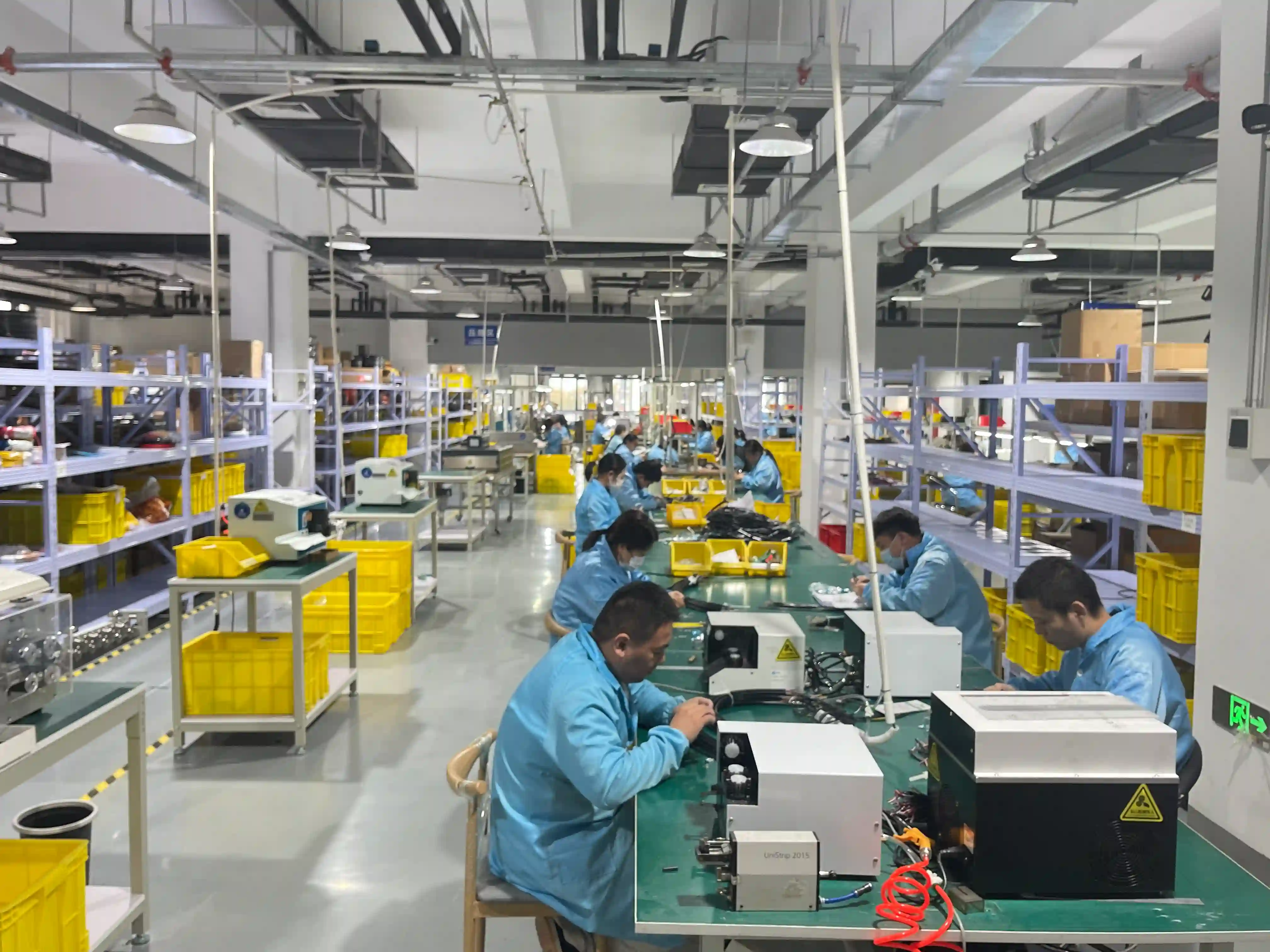
Why microwave assemblies need tighter process control
Microwave links are less tolerant of casual cable substitution, poor connector fit, and uncontrolled transition geometry. The interconnect has to behave like a controlled RF path, not just a cable that passes continuity.
Built for High-Frequency Signal Paths
Microwave assemblies demand tighter control of cable geometry, connector transition quality, and insertion-loss risk than general RF jumpers. We review the full signal path before the build is released.
Low-Loss Cable Selection Up Front
Cable family, dielectric, outer diameter, shield construction, and bend space are reviewed together because a microwave link fails on attenuation and mismatch long before a continuity test shows a problem.
Connector Families Matched to Frequency and Access
We support microwave-capable interconnect builds around connector systems such as SMA, TNC, N-type, 2.92 mm, and other approved transitions where the application, cable, and mating environment justify them.
RF Validation Beyond Basic Electrical Checks
Microwave cable assemblies can be released against criteria such as return loss, insertion loss, VSWR, orientation, and workmanship so buyers are not relying on continuity alone.
Prototype-to-Production Control
We help turn a test-bench lead, imported sample, or engineering prototype into a documented production part with fixed length, approved connector orientation, and a repeatable inspection plan.
Real-World Reliability at the Termination
Microwave interconnects are sensitive to stripping variation, centre-contact preparation, torque discipline, and strain management. We focus on those details because that is where field performance usually drifts first.
Typical microwave cable assembly applications
These builds are commonly used where frequency range, attenuation budget, and connector repeatability are purchasing priorities rather than afterthoughts.
Wireless Infrastructure and Backhaul
Microwave jumpers and interconnects for radios, antenna systems, shelters, distributed communications hardware, and infrastructure projects that need repeatable high-frequency performance.
Test and Measurement Systems
Low-loss assemblies for analysers, calibration benches, microwave test racks, and validation fixtures where connector presentation, cable length, and documented RF performance matter.
Satellite, GNSS, and Antenna Subsystems
Microwave assemblies for antenna-fed products, satellite communications support hardware, GNSS equipment, and mixed-end transitions where low loss and stable mating geometry are critical.
Industrial RF and Embedded Electronics
High-frequency interconnects for industrial radios, telemetry devices, sensing platforms, and embedded RF products that need controlled routing inside compact enclosures.
Replacement and Retrofit Supply
Sample-based microwave replacement cables for imported equipment, legacy test setups, and ageing field systems where a stable local supply path reduces downtime and requalification risk.
Technical Snapshot
Low-loss microwave coax assemblies for signal, antenna, telecom, and high-frequency test applications
SMA, TNC, N-type, 2.92 mm, approved mixed-end transitions, and application-specific microwave-capable connector systems
Low-loss coax, semi-flexible and flexible microwave cable families, and compact high-frequency constructions selected around route and loss targets
Continuity, pinout, workmanship, orientation, insertion loss, return loss, VSWR, and customer-defined RF acceptance checks
Prototype and repeat supply scoped per drawing or sample; quantities and lead time are confirmed in the quote
Telecom, instrumentation, embedded wireless, and industrial RF equipment teams
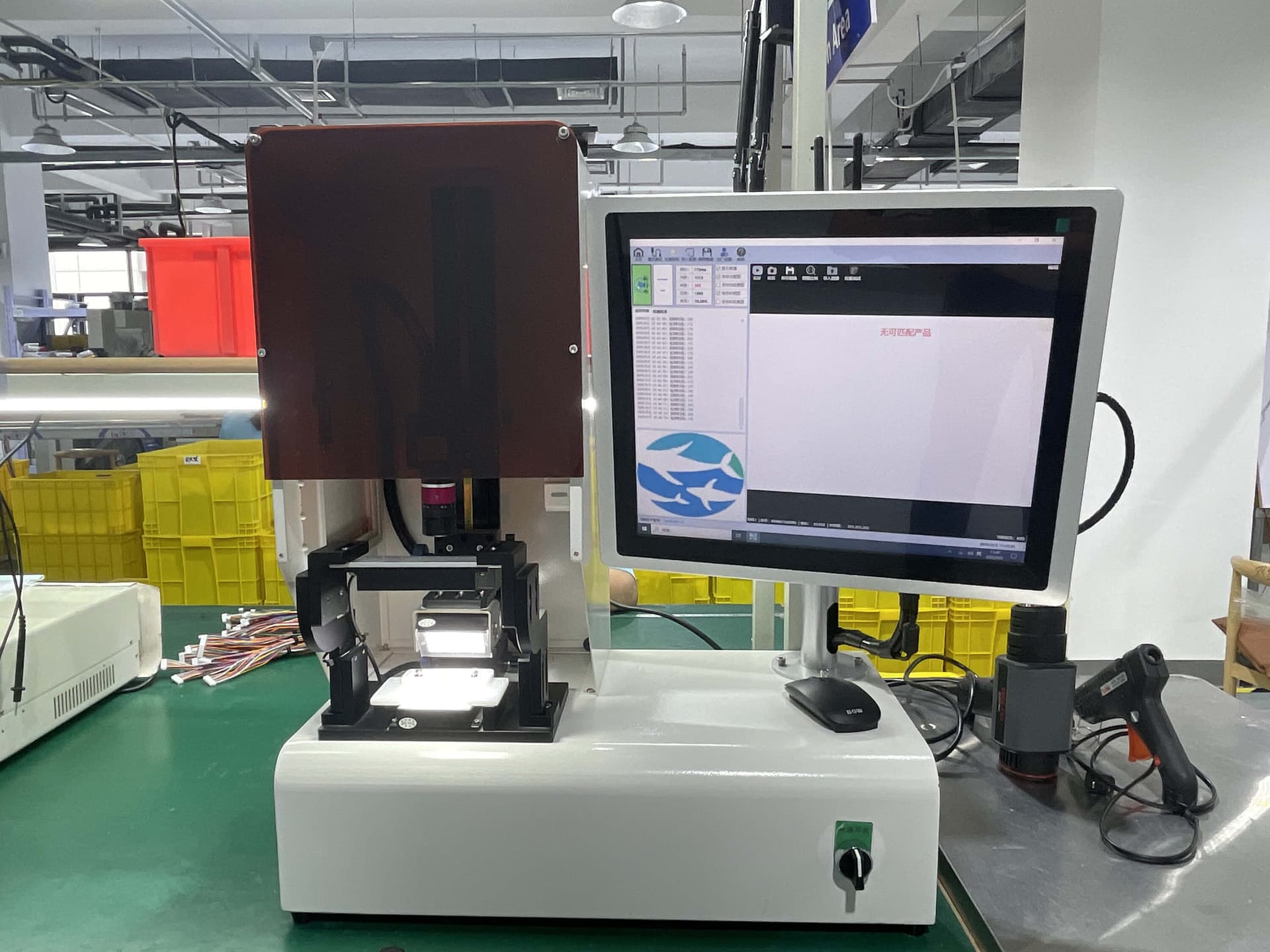
Process built around frequency, loss, and repeatability
The shortest path to a reliable microwave assembly is to define the full RF job early: interfaces, route, cable family, frequency range, and acceptance criteria.
Frequency and Interface Review
We review frequency range, connector interfaces, target impedance, route length, bend space, and installation environment before confirming the recommended cable and connector path.
Cable and Transition Definition
The build is aligned around low-loss cable selection, connector body style, plating, support hardware, strain management, and any sealing or labelling requirements needed by the final equipment.
Prototype or First-Article Build
Initial assemblies are built for fit, routing, and electrical validation so connector or cable changes happen before the part enters scheduled supply.
Controlled Assembly and Inspection
Assemblies are terminated, identified, and checked to controlled work instructions that preserve connector presentation, cable handling, and repeatable workmanship across batches.
RF Verification and Release
Finished cables are validated to the agreed acceptance plan, packed to protect precision terminations, and released with documentation that supports incoming inspection and reorder stability.
Specifying a microwave cable assembly properly
Buyers usually get better results when the RF requirements are defined as a system rather than as isolated connector names. If you need background on controlled impedance and coaxial structure, review the public references from microwave engineering and coaxial cable construction. For connector-specific trade-offs, our internal resources below are a practical next step.
What to send with an RFQ
- Target frequency range and impedance requirement
- Connector family, gender, and straight or right-angle orientation at each end
- Preferred cable family or the actual attenuation and bend-space constraint
- Finished length, route conditions, and whether the cable will move in service
- Any return-loss, insertion-loss, or VSWR acceptance target
- Photos, sketches, or a sample lead if the part is being replaced or reverse-engineered
- Where the measurement reference plane should be (connector face, adapter face, or fixture end) and which calibration method applies
- The cable or datasheet attenuation and phase-stability data you already rely on, if any
- For phase matching: frequency, allowed phase difference, matched pair or set, and temperature range if relevant
Related technical reading
Compare the connector families commonly used in coaxial and microwave cable assemblies.
Review cable family trade-offs before freezing a low-loss build around the wrong diameter or shield.
Understand how geometry control affects mismatch, return loss, and assembly repeatability.
Microwave frequency bands: specify the band edges
Source: Wikipedia: Microwave. These microwave letter bands follow the IEEE Std 521 naming shown in the reference. Put the actual operating and verification frequency range on the drawing; a band name alone does not define the acceptance sweep.
| Band | Frequency range |
|---|---|
| L | 1–2 GHz |
| S | 2–4 GHz |
| C | 4–8 GHz |
| X | 8–12 GHz |
| Ku | 12–18 GHz |
| K | 18–26.5 GHz |
| Ka | 26.5–40 GHz |
The selected connector family and cable must be rated to the highest band edge used. Confirm those ratings against the exact connector and cable datasheets before choosing the assembly.
Connector families above 18 GHz
Source: Wikipedia: SMA connector. These are published upper frequency references for interface families, not assembly ratings. The selected connector and cable datasheets govern the assembly. SMA has a nominal impedance of 50 ohm.
| Interface family | Published upper frequency |
|---|---|
| SMA | Typically 18 GHz, from DC; some variants to 26.5 GHz |
| 3.5 mm | 34 GHz |
| 2.92 mm (K type) | 46 GHz |
| 2.4 mm | 50 GHz, mode-free |
| 1.85 mm | 65 GHz |
| 1.0 mm | 110 GHz |
Check mating compatibility before specifying an adapter
SMA, 3.5 mm, and 2.92 mm share the same outside thread and can be cross-mated, but low-grade SMA connectors can damage the precision connector. The 2.4 mm and 1.85 mm interfaces are compatible with each other; their metric thread prevents intermating with the SMA family. Include exact mating part references in the RFQ.
For TNC and N-type interfaces, consult the RF Connector Types Guide and the selected component datasheets. For SMA construction choices, see SMA cable assembly; the frequency and measurement requirements here apply to the complete microwave path.
Return loss, VSWR, and reflection ripple
Sources: Wikipedia: Return loss and Wikipedia: Standing wave ratio. Return loss and VSWR express the same reflection magnitude in different forms. Higher return loss and lower VSWR mean less reflection; acceptance targets are customer-defined over the required frequency range.
With Gamma as the reflection coefficient: RL(dB) = -20 log10|Gamma|; VSWR = (1+|Gamma|)/(1-|Gamma|); mismatch loss = -10 log10(1-|Gamma|^2). Mismatch loss describes the reflected-power contribution, not the complete insertion loss of a cable.
| Return loss (dB) | |Gamma| | VSWR | Mismatch loss (dB) |
|---|---|---|---|
| 10 | 0.3162 | 1.92 | 0.458 |
| 14 | 0.1995 | 1.50 | 0.176 |
| 15 | 0.1778 | 1.43 | 0.140 |
| 20 | 0.1000 | 1.22 | 0.044 |
| 26 | 0.0501 | 1.11 | 0.011 |
| 30 | 0.0316 | 1.07 | 0.004 |
Combined reflections: assumed numbers, not a product spec
Assume two connector interfaces each have return loss of 26 dB and |Gamma| of 0.0501. If their reflections add in phase, the worst-case combined |Gamma| is 0.1002, corresponding to return loss of 19.98 dB and VSWR of 1.223. Cable loss is ignored, so this is a worst-case bound for the assumed reflection model, not an assembly acceptance limit.
The relative phase of the reflections changes with electrical length and frequency, producing ripple in S11. For assumed velocity factor VF = 0.70 and discontinuities separated by L metres, the ripple period is c × VF / (2L), where c is the speed of light. Request a frequency sweep across the operating band so that acceptance covers the ripple.
| Separation L | Ripple period at VF 0.70 |
|---|---|
| 0.3 m | 349.8 MHz |
| 0.5 m | 209.9 MHz |
| 1.0 m | 104.9 MHz |
Insertion loss changes with frequency and length
Source for measurement terms: Wikipedia: Scattering parameters. S11 relates to reflection and return loss; S21 describes transmission, including insertion loss and phase. Specify the insertion-loss acceptance target over the required frequency range and at the agreed reference plane.
Attenuation example: assumed numbers, not a product spec
Assume attenuation of 0.50 dB/m at 1 GHz and scale it by the square root of frequency relative to 1 GHz. Conductor loss scales roughly with the square root of frequency; dielectric loss adds on top and grows roughly with frequency. This is a lower-bound illustration of cable loss, not a prediction for a finished assembly. The cable datasheet governs; connector and fixture contributions also need to be accounted for.
| Frequency | Attenuation (dB/m) | Loss: 0.5 m (dB) | Loss: 1 m (dB) | Loss: 2 m (dB) |
|---|---|---|---|---|
| 1 GHz | 0.50 | 0.25 | 0.50 | 1.00 |
| 2.4 GHz | 0.77 | 0.39 | 0.77 | 1.55 |
| 6 GHz | 1.22 | 0.61 | 1.22 | 2.45 |
| 10 GHz | 1.58 | 0.79 | 1.58 | 3.16 |
| 18 GHz | 2.12 | 1.06 | 2.12 | 4.24 |
Values are rounded after calculation. A length chosen for 2.4 GHz can consume far more of the loss budget at 18 GHz. Send the attenuation data already used in the system budget and compare the proposed length at the highest operating frequency, as well as across the required sweep.
Phase, electrical length, and cable handling
Source: Wikipedia: Velocity factor. Wavelength in cable = c × VF / f, where VF is velocity factor and f is frequency. Physical length alone does not define phase matching; the propagation properties of the selected cable matter.
Length sensitivity: assumed numbers, not a product spec
Assume VF = 0.70 and c = 299,792,458 m/s. The propagation delay is 4.765 ns per metre. The following values show the phase sensitivity to a length difference under those assumptions.
| Frequency | Wavelength in cable (mm) | Phase difference (degrees per mm) |
|---|---|---|
| 2.4 GHz | 87.44 | 4.12 |
| 10 GHz | 20.99 | 17.15 |
| 18 GHz | 11.66 | 30.88 |
| 26.5 GHz | 7.92 | 45.46 |
At 10 GHz, a 1 mm length difference between cables causes a phase difference of 17.15 degrees. Conversely, a 2 degree phase change corresponds to 0.117 mm of electrical length in this assumed model. These values do not establish a manufacturing tolerance or a phase-stability specification.
Define the bend condition and the matching requirement
Phase change from bending or flexing is a cable-specific datasheet or measured value. Specify S21 phase at one defined frequency before and after a defined bend radius and number of bends, using the same handling, connector torque, and reference plane. State how the cable is supported during each measurement.
For phase matching between cables, send the frequency, allowed phase difference, whether a matched pair or set is needed, and the temperature range if relevant. Include any phase-stability data already used in the design so the verification plan can use the same conditions.
Calibration reference plane and test fixtures
Source: Wikipedia: Network analyzer (electrical). A vector network analyzer uses user calibration against known standards to correct systematic errors, including test cable, adapter, and fixture characteristics. The reference plane is where the calibration standards were connected, normally the calibrated connector interface. Random errors such as connector repeatability cannot be removed by that calibration.
Choose the calibration method for the interface
SOLT (short, open, load, through) suits coaxial measurements. TRL (through-reflect-line) is useful in non-coaxial environments such as fixtures. Identify the method and calibration kit in the test plan, and state whether the required plane is the connector face, adapter face, or fixture end.
Fixture phase example: assumed numbers, not a product spec
An adapter or fixture section of 25 mm of line at VF 0.70 added after calibration introduces 428.9 degrees of phase delay at 10 GHz, or 68.9 degrees modulo 360. Its response remains between the calibrated plane and the cable interface unless accounted for. Adding that section shifts the effective reference plane for the cable measurement; it does not automatically extend the calibration to the new connector face.
What the measurement record should identify
- The reference plane, such as the connector face, and any adapters or fixtures included in the result
- The calibration method and kit used at that plane
- Torque per the connector manufacturer’s value, applied with a torque wrench
- The number of mating cycles of the calibration and test connectors
- Cable support and handling during measurement
- Confirmation that returned data is compared at the same reference plane
Include these conditions with the RFQ and the customer-defined S11, S21, and phase acceptance criteria. The testing capability page provides the broader inspection context.
How a typical microwave cable assembly program runs with us
This is an illustrative description of a representative project type, not a specific customer engagement. As a contract assembler we do not publish customer-identifiable data.
Frequently asked questions
Common commercial and engineering questions from teams sourcing custom microwave cable assemblies.
What is a microwave cable assembly?+
A microwave cable assembly is a high-frequency coaxial interconnect built for signal paths that extend well beyond ordinary low-frequency wiring. It combines the selected low-loss cable, microwave-capable connectors, controlled termination process, and RF validation needed to preserve impedance and minimise mismatch.
How is a microwave cable assembly different from a standard RF cable?+
Microwave assemblies usually operate at higher frequencies and tighter loss budgets, so cable geometry, connector transition quality, stripping accuracy, and return loss control become more critical. A build that is acceptable for a general RF jumper may not be stable enough for microwave measurement or communications work.
Which connector types do you support for microwave cable assemblies?+
We support microwave-capable assemblies using connector families such as SMA, TNC, N-type, and 2.92 mm, plus approved mixed-end configurations where the cable, mating hardware, and target frequency range support that combination.
Can you help if we only have a sample cable or test-bench setup?+
Yes. Many microwave jobs start with a sample lead, marked-up photo, or test setup rather than a complete drawing. We can help define the cable family, connector interfaces, finished length, and acceptance criteria needed to convert that sample into a repeatable production part.
What testing do you perform on microwave cable assemblies?+
Depending on the application, we can align the release plan around continuity, workmanship, connector orientation, insertion loss, return loss, VSWR, and other customer-defined RF checks. The goal is to match the validation scope to the actual signal risk instead of treating the assembly as generic wiring.
Do you support prototypes as well as production reorders?+
Yes. We support first articles, engineering validation cables, pilot quantities, scheduled OEM production, and spare-part replenishment. That allows teams to validate the microwave assembly early and then keep the approved build stable for reorders.
How much phase error does a length difference cause?+
Assumed numbers, not a product spec: at a velocity factor of 0.70, the wavelength in cable at 10 GHz is 20.99 mm. A 1 mm length difference between cables causes a phase difference of 17.15 degrees; conversely, a 2 degree phase change corresponds to 0.117 mm of electrical length. Use the selected cable datasheet and specify the frequency, allowed phase difference, matched pair or set, and temperature range if relevant.
What is the difference between return loss and VSWR?+
Both describe reflection through the magnitude of the reflection coefficient, |Gamma|. RL(dB) = -20 log10|Gamma|; VSWR = (1+|Gamma|)/(1-|Gamma|). Higher return loss and lower VSWR indicate less reflection. A return loss of 20 dB corresponds to |Gamma| = 0.1000 and VSWR approximately 1.22. Mismatch loss = -10 log10(1-|Gamma|^2); it is not the complete cable insertion loss. Acceptance targets are customer-defined over the specified frequency range.
Where is the reference plane for a microwave cable measurement?+
The reference plane is at the calibrated connector interface where the calibration standards were connected. Adapters or fixtures added after calibration shift the effective plane for the cable under test and contribute their own response unless accounted for. Assumed numbers, not a product spec: a 25 mm adapter or fixture line at velocity factor 0.70 adds 428.9 degrees of phase delay at 10 GHz, or 68.9 degrees modulo 360. State the connector face, adapter face, or fixture end and the calibration method explicitly, then compare returned data at the same plane.
Related capabilities and industry pages
Buyers evaluating microwave assemblies usually compare them against adjacent RF cable options, connector formats, and telecom deployment constraints.
SMA Cable Assembly
50 ohm coax assemblies for compact RF modules, antennas, instrumentation, and microwave-adjacent transitions.
Micro Coaxial Cable Assembly
Compact coax construction and routing considerations for space-constrained interconnects.
RF Cable Assembly Manufacturer
Broader custom RF interconnect support for telecom, transport, embedded wireless, and OEM production supply.
RG214 Cable Assembly
Double-shielded coax assemblies for heavier-duty routes where robustness and shielding margin matter.
Telecommunications Industry
See how high-frequency cable assemblies fit telecom infrastructure, radios, and data communications programs.
Testing Capability
Define inspection and electrical verification requirements alongside the assembly drawing.
Need a production-ready microwave interconnect?
Send the connector types, cable preference, frequency range, and any RF acceptance target. We can help convert a sample lead or test setup into a documented assembly for prototype or repeat supply.