
Optical Cable Assembly Manufacturing for Australia
Custom optical cable assemblies for telecom infrastructure, industrial systems, medical equipment, imaging devices, and high-bandwidth electronics. Prototype through production supply with documented testing and fit-for-application build control.
Why Buyers Specify a Custom Optical Cable Assembly Instead of a Generic Fibre Lead
Optical cable assembly projects often look simple until buyers have to lock down connector family, polarity, fibre count, route protection, and the inspection package needed for incoming quality or field replacement. That is where a commercial program separates from a generic patch cord purchase.
The physical medium is based on the behaviour of optical fibre, and the full link performance sits inside the broader context of fibre-optic communication. In many rack and equipment environments, connector density and structured cabling rules also map back to frameworks associated with ANSI/TIA-568.
Our role is to turn those requirements into a controlled manufacturing part that can be sampled, approved, purchased again, and replaced later without ambiguity.
Why Technical Buyers Choose a Custom Optical Assembly Supplier
The assembly must fit the hardware, survive handling, and remain purchasable long after the first prototype.
Specified Around the Full Optical Link
A custom optical assembly should be defined around transceiver type, route length, loss budget, polarity, connector density, and service access. That prevents an apparently compatible fibre lead from becoming the weakest point in the link.
Repeatable Connectorisation and Inspection
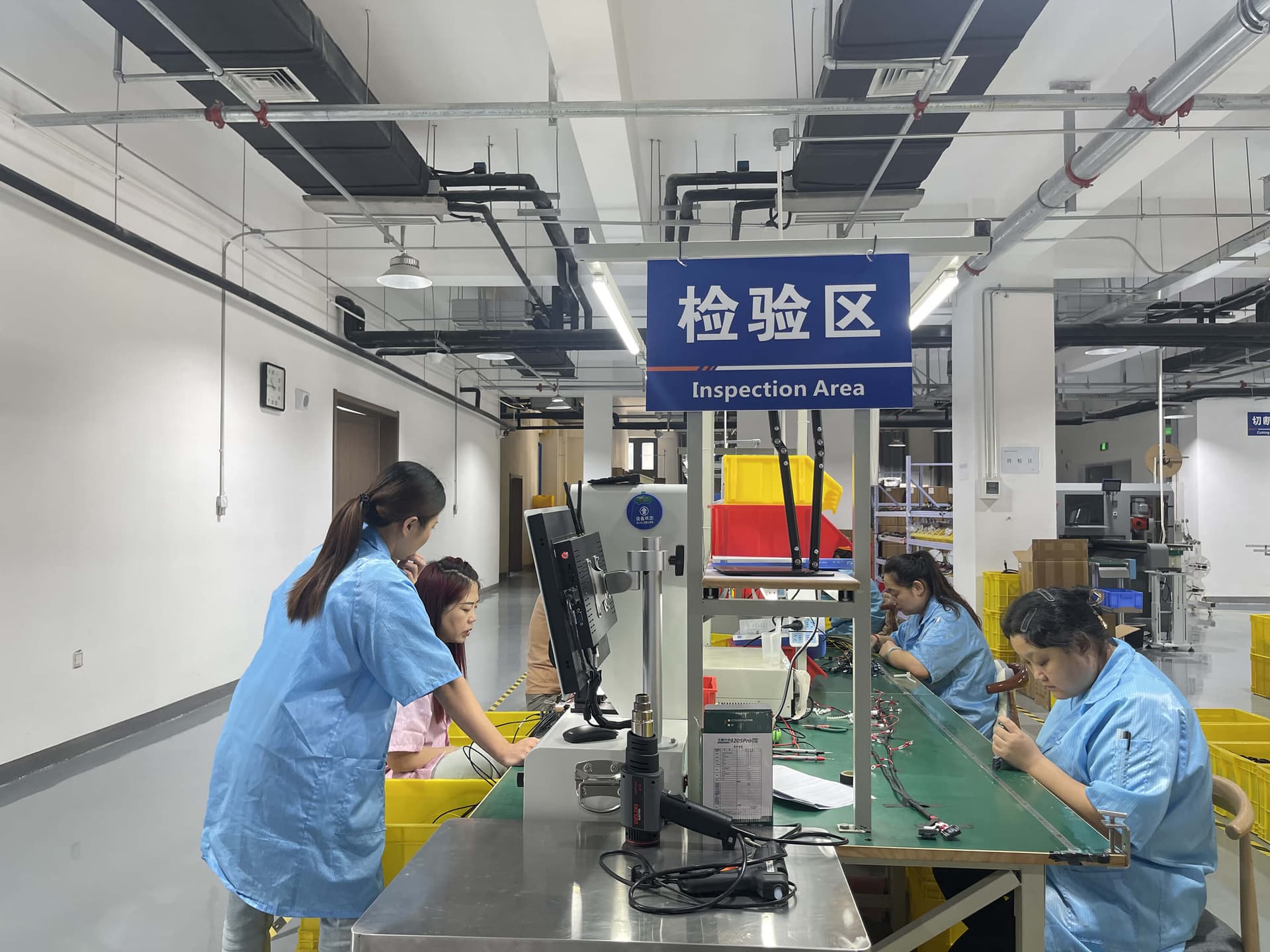
Optical performance depends heavily on connector handling, end-face condition, and build control. We treat the assembly as a controlled manufactured part, not just a length of cable with ends attached.
Hybrid and Rugged Build Support
Where the program needs power, control, or data conductors alongside fibre, we can support managed hybrid assemblies and ruggedised constructions for demanding field installations.
Prototype to Production Under One Supplier
Engineering samples, validation builds, spare parts, and recurring supply can stay under one controlled workflow so the approved optical assembly does not drift into unqualified substitutes later.
Commercial Focus for Buyers, Not Just Lab Language
The practical questions are usually about fit, labeling, handling risk, rack density, lead time, and replacement control. We structure the assembly definition around those purchasing realities.
Specification Cleanup Before Release
If the initial request only says optical cable assembly, we help narrow the real requirements before release so connector family, polarity, fibre count, and jacket style are not left ambiguous.
Technical Range
| Fibre Types | Single-mode and multimode constructions selected around attenuation, bandwidth, route length, and equipment interface requirements |
|---|---|
| Connector Families | LC, SC, ST, FC, MPO/MTP-style multi-fibre, and mixed-end optical cable assemblies built to the required mating hardware |
| Cable Constructions | Simplex, duplex, breakout, trunk, fan-out, hybrid fibre-plus-copper, and ruggedised builds for installation and service conditions |
| Jacket Options | Indoor, outdoor, LSZH, riser-style, abrasion-resistant, and application-specific protective constructions where handling or route conditions demand it |
| Polarity and End Finish | Polarity control, ferrule handling, and connector-end-face quality aligned to the link architecture and maintenance expectations |
| Validation | Insertion loss checks, polarity verification, end-face inspection, workmanship review, and project-specific documentation where required |
| Build Scale | Prototype through pilot lots, scheduled OEM purchasing, and controlled spare-parts replenishment |
| Support Scope | Sample-based reverse engineering, drawing clarification, first-article builds, and repeat manufacturing supply for Australian buyers |
Typical Applications for Optical Cable Assemblies
Telecom and Data Infrastructure
Pre-terminated fibre trunks, patch assemblies, and breakout harnesses for racks, cabinets, edge sites, and structured cabling programs that need controlled polarity, labeling, and installation speed.
Industrial Automation and Machine Vision
Optical assemblies for noisy plant environments, machine-to-cabinet links, and vision or inspection systems where EMI immunity, route control, and service access matter.
Medical and Diagnostic Equipment
Custom optical interconnects for imaging, sensing, and specialist instruments where compact routing, controlled handling, and repeatability are more important than generic off-the-shelf patching.
Broadcast, Imaging, and High-Bandwidth Devices
Optical cable assemblies for camera systems, imaging equipment, and data-heavy electronics where copper interconnects become impractical over distance or in dense routing paths.
Retrofit and Replacement Programs
Sample-based replacement of legacy optical leads, imported assemblies, or undocumented rack interconnects that still need a repeatable local supply path.
How We Take an Optical Assembly into Repeat Supply
Application and Link Review
We review fibre type, connector family, route length, polarity, handling environment, and interface hardware before finalising the assembly definition.
Cable and Connector Selection
The build is aligned to density, installation method, jacket needs, service access, and any ruggedisation or hybrid requirements rather than defaulting to a generic patch lead.
Prototype or First-Article Build
Initial assemblies are produced for fit, polarity confirmation, route validation, and handling review so issues are found before the program enters repeat supply.
Controlled Assembly and Inspection
Assemblies are terminated, labelled, protected, and inspected to controlled work instructions so future orders remain aligned with the approved part.
Validation and Release
Finished assemblies are checked to the agreed optical and workmanship criteria, then released for pilot builds, service stock, or recurring production demand.
Specification Checklist Before RFQ
- Define whether the link is single-mode or multimode before quoting. That one choice changes connector, transceiver, and cost assumptions immediately.
- Confirm connector family and polarity at both ends, especially for duplex and higher-density optical assemblies where field swaps create avoidable risk.
- Check the route environment early: cabinet entry, bend control, pull handling, abrasion, and service access affect jacket and protection choices.
- Clarify whether the cable is a simple patch assembly, a breakout, a trunk, or a hybrid fibre-plus-copper build so the part is specified correctly from the start.
- Align inspection and documentation with the project risk. A lab sample and a field-replaceable production assembly should not carry the same acceptance assumptions.
- Freeze the approved build into a controlled drawing or BOM so replacements remain interchangeable with the tested assembly.
These related pages help when the project overlaps broader cable manufacturing, testing, or telecom deployment decisions:
Optical assembly acceptance documents: sample layouts for purchasing
The short answer: an optical assembly can be accepted on evidence when the order states where each limit comes from, and the delivery carries four records: an insertion loss and return loss record, an end-face inspection record, a polarity record, and a lot trace. The layouts below are working samples you can adapt to your own document control. Field names and example values are illustrative, not a published form of ours, and no limit value on this page is a standard or a datasheet figure. Connector formats are compared on the fibre optic connector types chart; this section is about what to specify and what to ask for at each purchasing stage.
1. Which document at which purchasing stage
Most disputes come from a record being asked for late. Decide at RFQ what will be measured, and at first article what will be shown.
| Stage | State on the order or drawing | Evidence to ask for |
|---|---|---|
| RFQ | Fibre type, connectors and polish at each end, length, polarity method, and the source of the loss limit. | Confirmation that the supplier can test to the stated wavelength and method. |
| First article | Test wavelength(s), reference method, end-face criteria, label and lot-code format. | Full loss record, end-face record and polarity record for every first-article assembly. |
| Production release | The approved part number and revision, plus the sampling plan if not 100 % of assemblies. | Loss, end-face and polarity records per lot, tied to the lot code. |
| Incoming inspection | Which of your own checks apply and with which method. | Your own end-face check on arrival; compare any loss re-test only if the same method is used. |
| Reorder | The same revision, or an ECN that names the change. | First reorder lot compared against the first-article record. |
2. Where insertion loss and return loss limits come from
Insertion loss is the optical power lost through the assembly, in dB, where lower is better. Return loss is the power reflected back toward the source, also in dB, where a higher figure is better. Neither number belongs to the assembly alone: it depends on the wavelength, the test method, and what is being mated to what. Write down which source the limit comes from before you quote it.
| Source | What it gives you | Watch for |
|---|---|---|
| Connector series datasheet | Loss for the connector itself, commonly a typical and a maximum value per mated pair, for a stated fibre type and grade. | A typical value describes expected performance; it is not an acceptance limit. Check the test conditions behind the figure. |
| Cabling standard | A limit per connection or per link for a defined channel, where your project follows one. | Edition and grade matter. Confirm the current edition before quoting a figure from memory. |
| Application or equipment specification | The total link budget the transceivers can tolerate, which the assembly must fit inside. | The budget covers fibre, every connection and margin together, not the assembly alone. |
| Your drawing | A limit for the assembly itself, set equal to or tighter than the sources above. | Say which wavelength, which method and which polish it applies to. A bare number is ambiguous. |
Link loss budget: assumed example, not a standard limit
To see how assembly limits roll up into a link, assume a single-mode run of 2 km at 0.4 dB/km fibre attenuation with 4 mated connections at 0.3 dB each, against an assumed transceiver budget of 3.0 dB. Every figure here is an assumption chosen for easy arithmetic.
- Fibre: 2 km x 0.4 dB/km = 0.8 dB
- Connections: 4 x 0.3 dB = 1.2 dB
- Total: 0.8 + 1.2 = 2.0 dB
- Margin: 3.0 - 2.0 = 1.0 dB
If a single mated pair measured 0.6 dB instead of 0.3 dB, the total would rise by 0.3 dB to 2.3 dB and the margin would fall to 0.7 dB. That is why the per-assembly limit should be derived from the link, not copied from the connector datasheet alone.
Return loss depends strongly on the polish. Angled (APC) and flat-polished (PC or UPC) ferrules are different parts and must not be mixed in one link, so the polish at each end belongs on the drawing next to any return loss limit.
3. Insertion loss test record: instrument, wavelength, reference
Standard test wavelengths are 850 nm and 1300 nm for multimode and 1310 nm and 1550 nm for single-mode. Tell the supplier which of these apply; testing at one wavelength does not demonstrate the other. Basic loss and return loss test procedures are published in the IEC 61300 series (parts 3-4 and 3-6 respectively); confirm the part and edition your project cites. Test items in general are covered on the testing page.
| Field | Entry | Why it is there |
|---|---|---|
| Assembly part number, revision, lot code | As released. Example format only: 1042-C-2709-03. | Ties the result to one build. |
| Fibre type and connector ends | For example single-mode, LC/APC to LC/APC. | Confirms the correct build was tested. |
| Wavelength(s) | 850 / 1300 nm (multimode) or 1310 / 1550 nm (single-mode), as ordered. | Loss differs by wavelength. |
| Instrument model and serial number | Light source and power meter used for the loss measurement. | Allows a questioned result to be traced to a tool. |
| Calibration due date | Date from the instrument certificate. | A result from an out-of-date instrument is hard to defend. |
| Reference method | One-jumper, two-jumper or three-jumper, plus the test standard named on the order. | Decides how many connector pairs are counted in the figure. |
| Launch condition (multimode) | The launch condition named by the test method, such as encircled flux where the method requires it. | Multimode loss varies with how the source fills the fibre. |
| Reference jumper IDs and condition | Which leads set the reference and that their ends were inspected and cleaned. | A dirty or worn reference lead biases every result. |
| Result per fibre or per assembly | Measured value in dB, to the resolution agreed. | The number the limit is compared with. |
| Limit and source of the limit | Value, and whether it came from datasheet, standard, application spec or drawing. | Shows what pass means. |
| Pass or fail, operator, date | Name or ID of the tester and date. | Closes the record. |
The reference methods differ in how many connector mated pairs of the assembly enter the reported figure, so a one-jumper result and a three-jumper result for the same assembly are not interchangeable. If your incoming inspection re-tests, use the same method or compare only against the same method.
4. End-face inspection report: sample layout
A contaminated or scratched end face is a common reason a good assembly measures badly. The inspection method and visual acceptance criteria for connector end faces are covered by IEC 61300-3-35, which sets pass or fail criteria by zone of the end face for a given connector type and grade. Confirm the current edition and which grade applies before writing a criterion on a drawing. Qualifying a replacement part, including one with a different end face, is covered in the connector substitution validation guide.
| Field | Entry | Note |
|---|---|---|
| Assembly part number, revision, lot code | As on the loss record. | Same identifiers so the records can be matched. |
| Connector end | End A or B; for MPO, also the fibre position and pinned or unpinned end. | A multi-fibre ferrule has many end faces on one connector. |
| Polish type | PC, UPC or APC, as drawn. | Must match the mating hardware. |
| Inspection tool | Microscope or probe model, and whether manual or automated analysis was used. | Records how the judgement was made. |
| Criteria and grade | Standard, edition and grade or table named on the order. | Without this, pass has no definition. |
| Observation | Clean, contamination, scratch, chip or pit, and in which zone of the end face. | Zone-based criteria judge a defect by where it sits as well as how large it is. |
| Action and re-inspection | Cleaned and re-inspected, reworked, or scrapped, with the second result. | Shows the inspect, clean, re-inspect step actually happened. |
| Image kept | Yes or no, plus file reference if agreed. | Agree beforehand whether images are part of the delivery. |
| Result, operator, date | Pass or fail, who, when. | Closes the record. |
5. Polarity: fibre map and record
Polarity means a transmit fibre at one end arrives at a receive position at the other. For duplex leads that is a matter of straight or crossed pairs. For MPO trunks, TIA-568 style cabling describes array cable types that map fibre positions differently; the table below shows the commonly described 12-fibre mappings. The patch cord arrangement that completes each method differs between sources, so take it from the standard or from the connector vendor diagram that your project cites.
| End 1 position | Type A (straight) | Type B (reversed) | Type C (pair-flipped) |
|---|---|---|---|
| 1 | 1 | 12 | 2 |
| 2 | 2 | 11 | 1 |
| 3 | 3 | 10 | 4 |
| 4 | 4 | 9 | 3 |
| 5 | 5 | 8 | 6 |
| 6 | 6 | 7 | 5 |
| 7 | 7 | 6 | 8 |
| 8 | 8 | 5 | 7 |
| 9 | 9 | 4 | 10 |
| 10 | 10 | 3 | 9 |
| 11 | 11 | 2 | 12 |
| 12 | 12 | 1 | 11 |
Type A also changes the key orientation between ends (key up to key down), while Type B keeps key up at both ends. Mating adapters have their own key orientation, so a polarity record should name the adapter type as well as the trunk type.
| Field | Entry | Note |
|---|---|---|
| Polarity method and cable type | Method and array type named on the drawing, or "duplex straight" or "duplex crossed". | Do not leave it as "standard polarity". |
| Fibre map | Position at end 1 against position at end 2 for each fibre, or a reference to the table used. | The record that settles a dispute. |
| Adapter and key orientation | Key-up or key-down, pinned or unpinned ends. | An adapter change can reverse the whole link. |
| Verification method | Tracer, visual fault locator, or the loss test result per fibre. | Shows how polarity was confirmed. |
| Labels | Text and position of end labels, including any "A" or "B" marking. | Labels are how the field installer sees it. |
| Result, operator, date | Pass or fail, who, when. | Closes the record. |
6. Lot traceability record
Traceability pays off when a field failure or a supplier notice forces the question: which other assemblies share this fibre, connector lot or process state? One lot code on the assembly label should link to the records below.
| Field | Entry | Note |
|---|---|---|
| Lot code | Printed or labelled on each assembly or bag. Layout to agree at release, for example part number, revision, year and week, sequence. | The key that links every record below. |
| Part number and revision | As released. | Shows which package the lot was built to. |
| Cable reel or lot reference | Fibre cable lot or reel number where the supplier provides one. | Lets a cable problem be traced to the assemblies that used it. |
| Connector and ferrule lot references | Connector, boot and ferrule lot or date code where provided. | A connector lot change is one thing to check first if loss results shift. |
| Termination and polish record | Station or operator ID and the consumables or process used. | Connects a result to the process state at the time. |
| Test and inspection record IDs | Loss record, end-face record, polarity record and instrument IDs. | Shows which instrument and which method released the lot. |
| Shipment record | Delivery document and quantity per lot. | Defines the population to contact if a lot is questioned. |
The first-article stage is described in the first-article inspection guide. The general build process for cable assemblies is on the cable assembly page.
Polarity Errors Are Expensive and Avoidable
Duplex and higher-density optical assemblies often fail because polarity was assumed instead of documented. Clear build control avoids rework and field confusion later.
Connector Density Changes the Buying Decision
A simple LC duplex lead and a dense MPO-style trunk have different handling, labeling, and replacement risks. Buyers should define the service environment, not just the fibre count.
Documentation Protects Long-Term Supply
Once an optical assembly is validated, it should exist as a controlled part number with clear connectors, fibre type, labels, and inspection requirements so future replacements stay interchangeable.
How a typical optical cable assembly manufacturing program runs with us
This is an illustrative description of a representative project type, not a specific customer engagement. As a contract assembler we do not publish customer-identifiable data.
Optical Cable Assembly FAQs
Common questions from buyers specifying custom fibre optic interconnects.
An optical cable assembly is a pre-terminated fibre interconnect built around the required fibre type, connector family, cable construction, and installation environment. It is used when buyers need controlled optical performance, reliable connectorisation, and repeatable supply instead of field termination variability.
Need an optical cable assembly that fits the hardware and stays repeatable?
Send a drawing, sample lead, rack layout, or equipment photo. We can help define the right optical cable assembly and move it into controlled supply alongside related capabilities such as testing, prototyping, and broader custom cable assembly manufacturing.
Single-mode, multimode, and mixed connector support
Breakout, trunk, rugged, and hybrid assembly options
Prototype builds through repeat OEM replenishment
Clear BOM, polarity, labels, and inspection control for long-term supply