
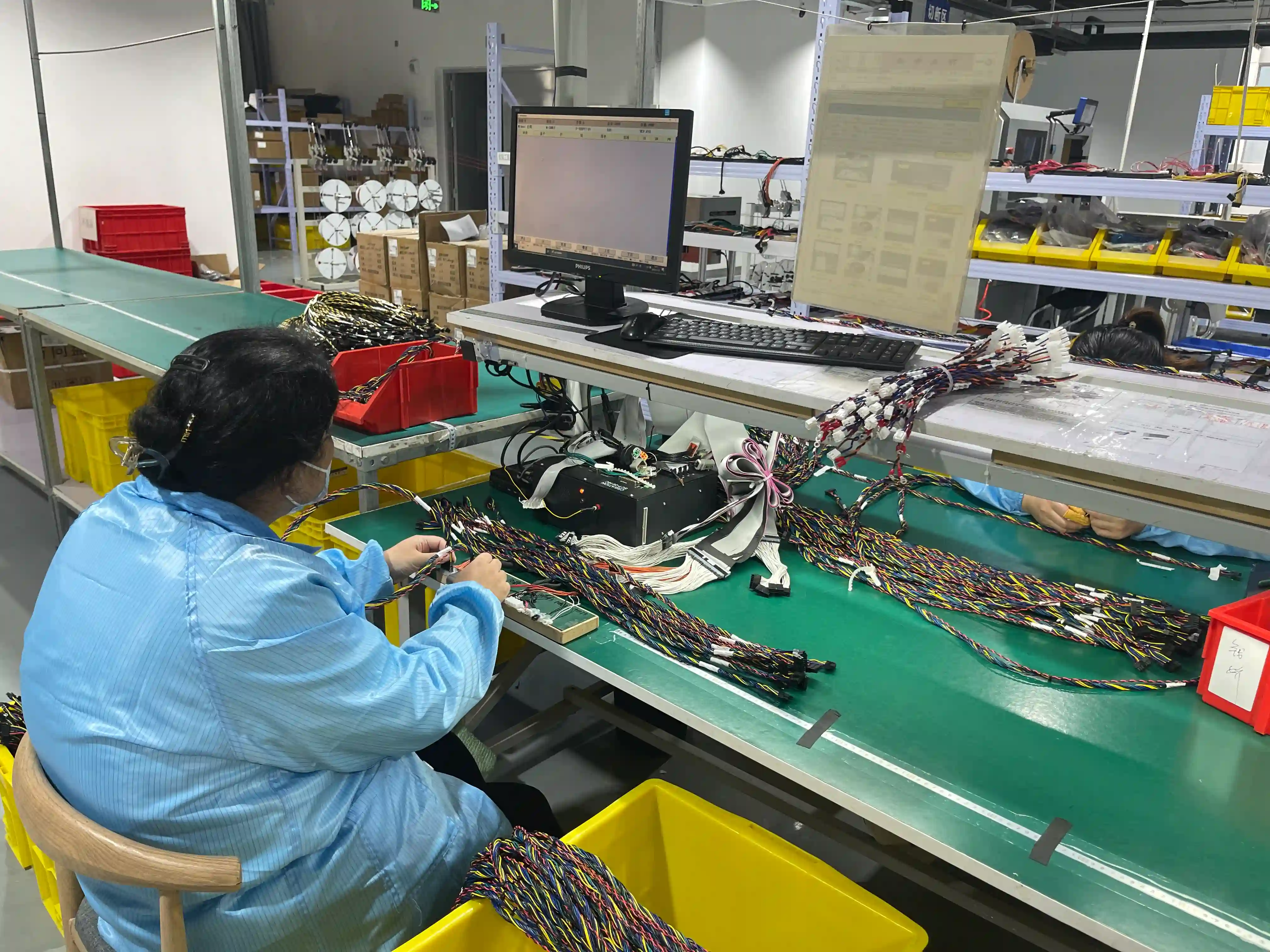
A Melbourne OEM approved a new harness supplier for an electric utility vehicle program. The supplier sent sample parts, continuity reports, and a neat-looking PSW. Four weeks into pilot production, the customer discovered the approved sample used one seal revision, the production batch used another, and the control plan never listed seal insertion force or cavity retention verification. The submission looked complete, but it did not prove the real process was under control.
That is the core purpose of PPAP for wire harnesses. It is not a paperwork exercise. It is a structured way to confirm that the released drawing, the shop-floor process, the test evidence, and the submitted sample all describe the same product built the same way.
“Testing should scale with risk: 100% continuity on every unit, dielectric or insulation resistance on critical circuits, and pull-force verification on each new crimp setup. That is the minimum discipline we expect.”
“A troubleshooting guide is credible only when it links symptoms to measured thresholds. If voltage drop, contact resistance, or pull force is out by even 10%, the root cause path changes.”
“Most field escapes happen because verification stops too early. We keep first-article data, tester calibration, and revision control aligned so the production lot matches the approved sample.”
Most common submission level for new harness launches
Traceability needed between sample, results, and warrant
Things PPAP must align: design, process, validation
Evidence should come from normal production conditions
"A good PPAP package answers one question clearly: if we place a production order tomorrow, will you build the same harness, with the same controls, as the one you submitted today? If the answer depends on tribal knowledge, the PPAP is not ready."
What PPAP Covers in a Wire Harness Program
For a machined part, PPAP often focuses on dimensions and material certification. For a wire harness, the scope is broader because the final product depends on workmanship, component orientation, crimp geometry, seal fit, routing, bundling, and electrical test integrity. Two harnesses can match the same BOM and still perform very differently if the assembly process is not controlled.
A harness PPAP should therefore prove five things: the drawing and BOM are released, the production process is defined, key risks are controlled, validation results represent production-intent product, and the supplier can reproduce that result consistently.
What a strong harness PPAP demonstrates
- Released revision control for drawing, BOM, and test specification
- Defined manufacturing flow from wire cut to final electrical test
- Risk-based controls for crimping, insertion, routing, and sealing
- Evidence that submitted samples match production-intent materials
- Clear link between data, samples, and signed PSW
What PPAP does not fix
- Unclear customer drawings or unresolved open engineering notes
- Late BOM substitutions hidden after sample approval
- Missing application validation for flex, fluid, or vibration exposure
- Weak launch planning and poor schedule discipline
- Suppliers treating the PSW as more important than the supporting evidence
PPAP Submission Levels 1 through 5
| Level | Typical Harness Use | What Gets Submitted |
|---|---|---|
| 1 | Low-risk change or repeat program | PSW only, supporting evidence retained by supplier |
| 2 | Simple updates with limited customer concern | PSW plus sample parts and selected supporting data |
| 3 | Most new wire harness launches | PSW, samples, and complete supporting package |
| 4 | Customer-specific or safety-critical programs | Defined by customer, often expanded review package |
| 5 | High-risk launches or supplier audit concern | Complete package kept on-site for customer review at supplier |
If you are buying custom harnesses for automotive, robotics, mobile equipment, or another program with launch risk, defaulting to Level 3 is usually the right balance. It forces the supplier to show real evidence without the overhead of a full on-site Level 5 review.
Required Submission Documents for a Harness PPAP
The classic PPAP framework lists many elements, but harness buyers should focus on whether each document reflects the real process used to build the sample. A perfect form with the wrong revision or wrong process step is worse than a rough form that is truthful.
Released drawing and BOM
Part number, revision, wire callouts, connector cavities, labels, breakouts, and test criteria must all match the submitted samples.
Process flow diagram
Must show the actual route from incoming inspection through cut/strip, crimp, insertion, routing, protection, electrical test, final inspection, and pack-out.
PFMEA
The risk analysis should address crimp height drift, wrong cavity insertion, missing seals, shielding termination errors, routing damage, and mixed revisions.
Control plan
This is the document buyers use to verify that high-risk PFMEA issues became real controls with frequencies, reaction plans, and traceability.
Dimensional results
For harnesses, this includes critical lengths, breakout positions, branch geometry, connector orientation, labels, and key installation dimensions.
Material and component certifications
Evidence for wire approvals, connector family, terminals, seals, tubing, tape, and any required RoHS, REACH, or customer-specific compliance.
Performance and electrical test records
Continuity, insulation resistance, dielectric withstand, pull force, crimp height, cross-section, and application-specific environmental validation where required.
PSW and sample identification
The warrant must tie the exact submitted samples and data set to the released part and requested submission level.
Harness-specific detail buyers often miss
A wire harness dimensional report is not just a list of cable lengths. It should cover branch breakout locations, orientation clocking, cavity population, seal presence, protection coverage, label placement, and any customer-defined install dimensions.
If the supplier only submits overall length and continuity results, the PPAP is incomplete for any harness with multiple branches or complex routing.
Validation Evidence That Matters Most
Buyers often receive large PPAP files with weak validation buried inside them. For harnesses, the highest-value evidence usually sits in four buckets: crimp quality, electrical test, material traceability, and application-specific validation.
| Evidence | Why It Matters | What Good Looks Like |
|---|---|---|
| Crimp records | Most field failures start at the termination | Crimp height, pull force, and cross-section tied to terminal and wire revision |
| Electrical test data | Confirms pinout, shorts, opens, and insulation performance | Named test program revision, pass criteria, serial or lot traceability |
| Material certs | Prevents hidden substitutions after approval | Certs for wire, terminals, connectors, seals, tubing, and special protection materials |
| Application validation | Generic tests rarely prove the real use case | Flex, vibration, thermal, fluid, ingress, or EMC evidence for the actual environment |
For automotive and mobile equipment
Expect stronger focus on PPAP level, PSW discipline, traceability, terminal crimp capability, and change control. Programs often also require customer-specific formats layered on top of standard PPAP expectations.
For industrial and non-automotive OEMs
Even when the customer does not call it PPAP, the same discipline still applies: released drawings, first article evidence, controlled process steps, and proof that the approved sample matches production.
When PPAP Resubmission Is Required
Many harness issues begin after approval, when a supplier treats the initial PPAP as a permanent waiver. In reality, the approval only covers the part, process, location, and materials represented by the submitted package.
Drawing revision or BOM change
Terminal, connector, seal, wire, tape, sleeving, or backshell substitution
Crimp applicator, tester, or fixture change affecting the process
Manufacturing location transfer or major line rearrangement
Supplier sub-tier source change for critical components
Extended shutdown followed by restart on launch-sensitive programs
Repeated field failures or escape that show the approved process is no longer valid
Customer request driven by risk, warranty, or audit findings
Common mistake
Suppliers often assume a "form-fit-function equivalent" terminal or seal does not need resubmission. On paper that sounds reasonable. In practice, equivalent parts can change crimp window, insertion force, seal compression, cavity retention, or long-term corrosion behaviour. If the changed component affects risk, process, or validation, it belongs in resubmission.
Why Wire Harness PPAPs Get Rejected
Revision mismatch
The drawing, BOM, control plan, and test reports do not all show the same part revision.
Weak traceability
Sample parts are not clearly linked to test records, lot codes, material certs, and the submitted PSW.
Control plan copied from template
The document lists generic checks but misses the real risks such as terminal cavity lock, seal presence, branch routing, or shielding termination.
Incomplete dimensional coverage
Only overall length is measured even though the harness has multiple breakouts, branch points, labels, and orientation requirements.
Production evidence not representative
Tests were run on prototype intent parts or hand-built samples instead of the defined production process.
Missing reaction plans
The control plan says what is checked, but not what the operator must do when a result fails or drifts.
Three approval shortcuts that usually backfire
Continuity alone does not prove survival in vibration, heat, fluids, or flex.
The warrant is a summary, not proof. The supporting package carries the real risk signal.
If your drawing notes or launch risks are special, your PPAP checklist must be special too.
Launch Example: What a Buyer Should Check in the First 48 Hours
A practical way to judge a harness PPAP is to review it in the same order risk appears during launch. Start by confirming the part number, drawing revision, and BOM revision on the PSW, sample labels, and all attached test reports. If even 1 document carries an older revision, the package is already weak because the customer cannot prove which design was actually validated. On a mixed-signal harness with 24 circuits, 3 branch points, and 2 sealed connectors, that kind of mismatch can hide a very small change with a very large consequence.
Next, review the PFMEA and control plan together instead of reading them as separate forms. If the PFMEA says missing cavity seals, terminal back-out, and incorrect breakout position are high-risk failure modes, the control plan should show how often those features are checked, what gauge or fixture is used, and what the reaction plan is when the result fails. A PPAP package that lists "visual inspection" without frequency, acceptance criteria, or escalation path is not giving you production control. It is giving you a hope-based process.
Third, compare the validation evidence to the real use case. A utility vehicle harness that will see dust, washdown, and vibration should not rely on continuity data alone. You want to see crimp height and pull-force records, insulation resistance, dielectric withstand, and at least one application-relevant check such as sealing verification, fixture-based routing inspection, or customer-defined vibration evidence. If the launch schedule is tight, require the supplier to release a simple 3-column matrix: requirement, evidence submitted, and open action. That matrix often exposes missing proof in less than 30 minutes.
Decision rule
Approve only when revision control, process control, and validation evidence all line up. If 1 of those 3 pillars is still open, mark the PPAP as conditional rather than approved. That approach protects launch timing better than issuing a full approval and then trying to contain escapes after the first 50 or 100 production units ship.
Buyer Review Checklist Before Approving a Harness PPAP
If you are the OEM or procurement lead, a short structured review catches more issues than a large unstructured document dump. Use this checklist before signing off.
Confirm all submitted documents match the released part revision and requested PPAP level.
Verify sample part labels, lot codes, and test records are traceable to the same build.
Check that the PFMEA high-risk items appear as real controls in the control plan.
Review dimensional results for branch points, breakout positions, orientation, labels, and not just overall length.
Inspect crimp evidence: pull force, crimp height, and cross-section where appropriate.
Confirm electrical test program revision and acceptance limits are documented.
Check whether application-specific validation is still open for vibration, EMC, ingress, or fluid exposure.
Verify the supplier change-control process so substitutions cannot slip in after approval.
Practical recommendation
Build your own one-page customer PPAP checklist for harnesses. Include revision alignment, traceability, crimp validation, electrical test proof, special characteristics, and resubmission triggers. It will reduce approval cycle time far more than asking suppliers for "more documents" after the fact.
How a typical wire harness ppap guide program runs with us
This is an illustrative description of a representative project type, not a specific customer engagement. As a contract assembler we do not publish customer-identifiable data.
Frequently Asked Questions
What does PPAP mean for wire harness manufacturing?
PPAP stands for Production Part Approval Process. For a wire harness, it proves that the supplier can repeatedly build the released design under normal production conditions while meeting dimensional, workmanship, material, and test requirements.
Which PPAP level is most common for wire harnesses?
Level 3 is the most common for new harness programs because it requires the complete supporting package, sample parts, and a signed PSW. Higher-risk programs may go to Level 4 or Level 5.
What documents are usually required in a harness PPAP?
Expect the released drawing and BOM, process flow, PFMEA, control plan, dimensional results, material certifications, crimp and electrical test evidence, any application validation required by the customer, sample parts, and the signed PSW.
When is PPAP resubmission required?
Resubmission is typically required after drawing revisions, source or material changes, process changes, tooling changes, plant transfers, extended shutdowns, or any issue that means the approved package no longer represents the current production reality.
Can a supplier substitute terminals or seals after PPAP approval?
Not without controlled approval. Even apparently equivalent terminals or seals can change crimp geometry, seal compression, insertion force, corrosion resistance, or cavity retention performance.
Related Articles
Prototype to Production Wire Harness Guide
How first articles, EVT, DVT, and release planning connect to production readiness.
Read articleWire Harness Documentation Guide
BOM, drawing, test, and manufacturing document structure for repeatable builds.
Read articleWire Harness Crimp Quality Inspection Guide
The inspection evidence most buyers should demand before approving terminations.
Read articleApprove the process, not just the sample
A wire harness PPAP is valuable only when it proves the approved sample, the released design, and the real manufacturing process are all the same story. If you need support reviewing a supplier package, preparing first articles, or building a launch-ready harness validation file, we can help.