
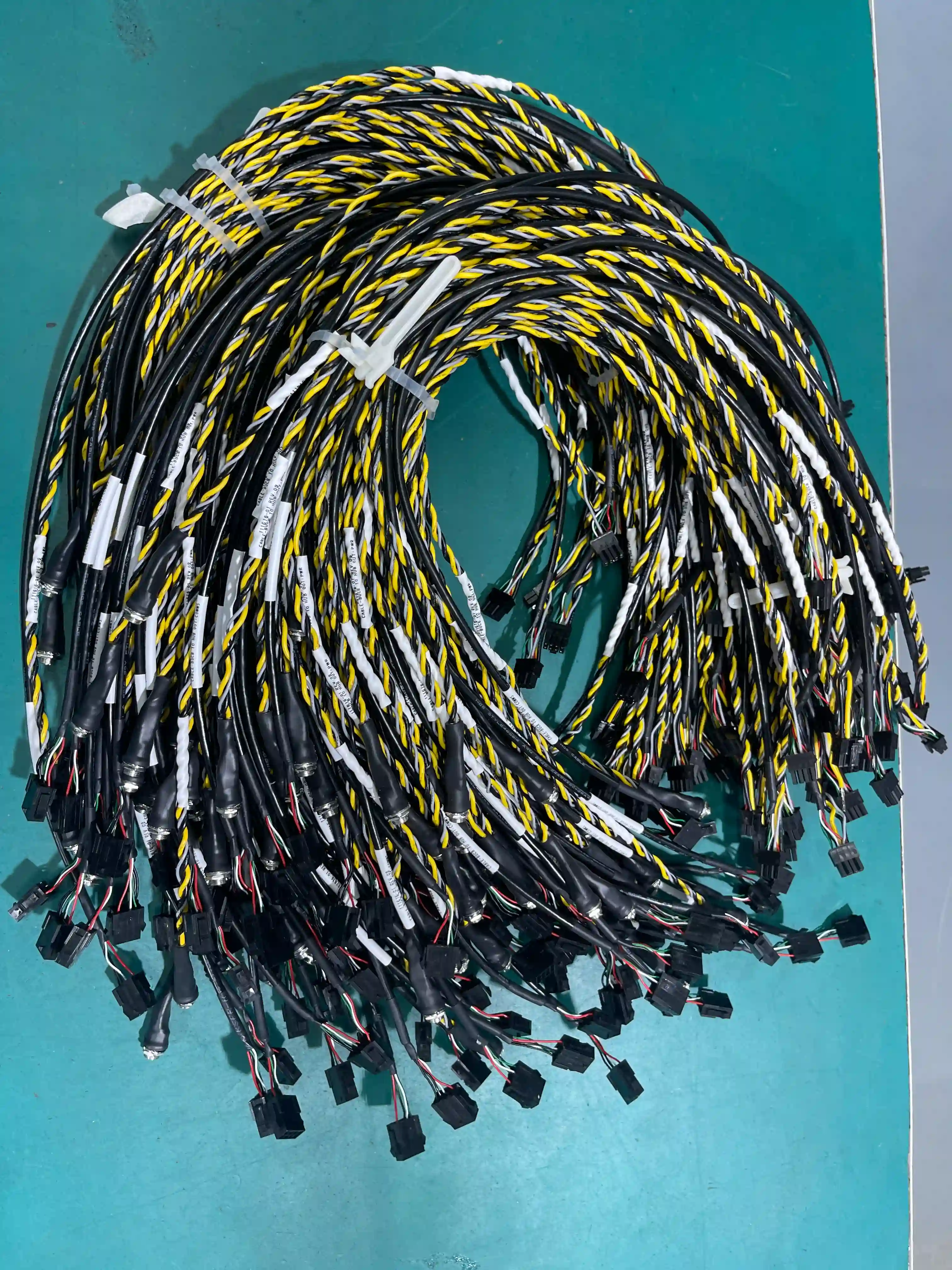
Connector backshell selection belongs in the design review stage, not after the first harness build. The backshell must grip the cable jacket, guide the cable exit, protect the contact termination, and sometimes bond the shield to the connector shell. If the drawing only calls out a connector part number, the supplier may choose a rear accessory that passes pinout testing but fails during pull, washdown, vibration, or EMI checks.
This guide is written for engineers, sourcing teams, and quality managers comparing custom cable assembly suppliers before prototype or pilot production. The role is a senior factory engineer with more than 12 years releasing harnesses for industrial, transport, and medical projects. The objective is practical: choose a backshell that fits the connector, cable, environment, and inspection plan without leaving hidden assumptions on the shop floor.
Preferred shield contact for EMI backshells
Typical jacket grip target before pull validation
Review point for tight rear connector clearance
Workmanship reference for cable and harness builds
The 8 Checks That Decide Backshell Fit
The correct backshell starts with the finished cable and installed routing. A procurement line that says "D38999 connector with backshell" leaves too much open. The supplier still needs shell size, rear thread, cable outer diameter, shielding method, exit direction, sealing target, bend radius, and inspection criteria before the assembly can be released repeatably.
“On shielded harnesses, we ask for measured cable OD before choosing the backshell clamp. A 0.4 mm jacket change can turn a stable clamp into either jacket damage or weak pull retention.”
Connector interface
Match rear thread, shell size, keying, coupling style, and accessory compatibility before checking price.
Cable OD range
Use measured min/max jacket diameter from real cable, including supplier tolerance and ovality.
Shield construction
Define braid, foil, drain wire, or combination shield before choosing banding or clamp hardware.
Exit angle
Choose straight, 45-degree, or 90-degree exit from the installed bend radius and panel clearance.
Environmental target
Call out dust, splash, immersion, washdown, oil, fuel, UV, salt spray, and temperature exposure.
Mechanical load
Specify pull force direction and whether the cable sees static routing, service loops, or repeated flex.
Serviceability
Decide whether technicians must reopen the backshell without cutting booting or replacing bands.
Quality record
Add inspection points: shield continuity, clamp torque, band position, and continuity after pull.
Main Backshell Types and Where They Fit
Straight backshells fit assemblies with enough rear clearance and a controlled service loop. They are easy to inspect, economical, and suitable for many cabinet and test-equipment cables. The risk appears when installers bend the cable sharply within the first 50 mm behind the connector because the drawing did not show the installed envelope.
Angled backshells solve routing problems but add orientation risk. A 90-degree exit may be perfect on the left side of a panel and unusable on the right side. For vehicle, rail, robotics, and portable equipment, the drawing should define clocking with a view direction or a keyed connector reference, then confirm the harness on a form board or enclosure sample.
EMI/RFI banding backshells fit shielded assemblies where the shield must bond to a conductive shell. The design intent is similar to the 360-degree approach covered in our shield termination guide: maintain a low-impedance path instead of leaving a long pigtail transition. Environmental backshells add seals or boot interfaces where moisture and dust threaten the connector rear.
EMI, Sealing and Standards References
EMI backshells work when the shield termination is intentional. For braided shields, the braid is usually flared over a termination area and captured by a band, cone, spring, or clamp. For foil plus drain wire cables, the supplier must decide whether the drain wire bonds to the shell, a pin, or a grounding point. The drawing should not leave that decision to an operator.
Standards help convert opinions into acceptance criteria. IPC/WHMA-A-620 is the common workmanship reference for cable and wire harness assemblies. UL 758 matters when appliance wiring material is part of the cable construction. For circular high-reliability connectors, public references to MIL-DTL-38999 and AS85049-style connector accessories explain why backshell angle, shield termination, and environmental protection belong in the same decision.
Sealing requires the same discipline. The IP Code describes dust and water protection, but a backshell or boot only supports an IP target when the full assembly is validated: connector seal, rear accessory, boot adhesive, cable jacket, and installation torque. A waterproof connector with an unsealed rear exit is not a waterproof cable assembly.
Connector Backshell Type Comparison
| Backshell type | Best use | Main strength | Watch point | Release check |
|---|---|---|---|---|
| Straight strain relief backshell | Cabinet wiring, test leads, serviceable industrial assemblies | Simple cable exit, low cost, easy inspection | Needs enough rear clearance; poor fit where cable exits near a wall | Pull test plus bend radius inspection |
| 45-degree or 90-degree backshell | Rail panels, vehicle harnesses, robotics arms, compact enclosures | Controls routing and protects the contact interface from side load | Clocking must match the installed connector orientation | Harness fit check on the real panel or form board |
| EMI/RFI banding backshell | Shielded cable assemblies near drives, radios, servos, and CAN networks | Provides 360-degree braid termination with repeatable impedance | Band width, braid flare, and exposed shield length must be controlled | Shield continuity and visual banding inspection |
| Environmental sealing backshell | Outdoor machinery, mining equipment, marine controls, washdown systems | Protects the rear connector cavity from dust, water, and jacket movement | Seal must match cable OD, jacket material, and temperature range | Ingress test or water exposure after thermal cycling |
| Moulded boot or heat-shrink boot | Prototype builds, compact connector transitions, low-profile strain relief | Smooth transition and useful secondary insulation | Boot alone does not create shield bonding or contact retention | Adhesion, bend, continuity-after-flex, and workmanship check |
| Open-frame clamp or saddle backshell | Large cable bundles, mixed jacket diameters, field-service harnesses | Easy access for rework and multiple cable exits | Lower sealing performance unless paired with booting or enclosure protection | Clamp torque, chafe clearance, and pull direction test |
Factory Scenario: Why the Backshell Was the Failure Point
In a 2026 pilot build for 420 shielded control cables, our factory received a drawing that specified the circular connector and cable but only said "standard backshell." The first 40-piece lot passed 100% continuity and pinout testing. During a routing check on the customer enclosure, 11 assemblies showed jacket whitening within 30 mm of the rear clamp because the straight backshell forced the cable against a metal lip.
We changed the release package in three ways: a 90-degree shield termination backshell, fixed clocking relative to the connector key, and a minimum 10 mm jacket engagement under the clamp. The next 60-piece pilot lot passed continuity after pull, shield continuity below 0.1 ohm on our bench check, and a 500-cycle bend screen at the installed exit angle. The connector did not change; the rear accessory definition did.
“Backshell failures often look like cable failures. In that 420-piece pilot, the fix was not a tougher cable. It was a clocked 90-degree backshell and a controlled 10 mm jacket grip.”
Production Validation Plan
Minimum release checks for backshell-equipped assemblies
- 1. Measure cable OD from at least 10 production cable samples before choosing clamp range.
- 2. Confirm backshell thread, shell size, plating, angle, and clocking against the connector datasheet.
- 3. Inspect braid flare, band position, drain wire path, and exposed shield length on first articles.
- 4. Run 100% continuity and pinout testing before and after the defined pull or bend screen.
- 5. Check shield continuity for EMI assemblies and record the acceptance threshold in the control plan.
- 6. Repeat insulation resistance or ingress exposure after thermal cycling for sealed outdoor builds.
A useful validation plan connects the backshell choice to the operating risk. For a static cabinet cable, pull testing and visual inspection may be enough. For a mining, rail, marine, or robotics assembly, add bend screening, vibration review, water exposure, and shield continuity checks. The same logic applies to cable glands and waterproof wire harnesses: the protection method must be tested as part of the finished assembly.
“For Class 3-style expectations under IPC/WHMA-A-620, I want the backshell process recorded like any other termination: part number, torque or band tool, inspection photo, and electrical result after stress.”
Common Backshell Selection Mistakes
Choosing by connector only
The connector shell size matters, but the cable OD, shield, bend radius, and field routing decide whether the backshell works.
Omitting clocking on angled exits
A 90-degree backshell without clocking can route the cable into a panel wall, heat source, or service obstruction.
Using a strain relief backshell for EMI work
Mechanical support does not guarantee 360-degree shield bonding or low-impedance continuity.
Clamping over braid instead of jacket
Loose braid can creep under load. Grip the jacket unless the backshell design explicitly defines shield capture.
Assuming a boot proves waterproofing
Booting must match adhesive, jacket material, connector rear geometry, and the target IP exposure.
Skipping first-article photos
Photos of braid prep, band location, and clamp engagement prevent drift when the job moves from prototype to repeat production.
How a typical connector backshell guide program runs with us
This is an illustrative description of a representative project type, not a specific customer engagement. As a contract assembler we do not publish customer-identifiable data.
Connector Backshell FAQ
How do I choose the right connector backshell for a cable assembly?
Start with the connector shell size, cable outer diameter, shield type, exit angle, and environmental target. A good release drawing names the backshell family, angle, plating, clamp range, shield termination method, and at least 1 pull or continuity-after-pull test.
When should I use a 90-degree backshell instead of a straight backshell?
Use a 90-degree backshell when the installed cable would otherwise violate bend radius or press against a panel within the first 50-75 mm behind the connector. Confirm clocking on the real enclosure because a 90-degree exit can be wrong by 90 or 180 degrees if the drawing omits orientation.
Does a backshell improve EMI shielding?
An EMI backshell improves shielding only when it creates controlled 360-degree contact to the braid or foil system. A plain plastic strain relief backshell may reduce movement but does not replace shield bonding under IPC/WHMA-A-620 workmanship expectations or an EMC test plan.
What standards apply to connector backshell selection?
Use IPC/WHMA-A-620 for cable and harness workmanship acceptance, UL 758 when appliance wiring material is part of the cable construction, and MIL-DTL-38999 or AS85049-style accessory logic when rugged circular connectors and shield termination backshells are specified.
How much cable jacket should sit inside the backshell clamp?
The clamp should grip jacket, not loose braid or individual conductors. For many small and medium assemblies we target at least 8-12 mm of stable jacket engagement, then verify the real value with pull testing and post-pull continuity.
Can heat shrink replace a connector backshell?
Heat shrink can protect a transition, but it cannot replace a mechanical clamp where the connector needs pull relief or 360-degree shield termination. Use adhesive-lined shrink as secondary protection, then validate with bend, pull, and insulation resistance checks.
Related Cable Assembly Resources
Shield Termination Guide
Compare 360-degree termination, drain wires, and pigtails before specifying backshell hardware.
Cable Assembly Strain Relief Guide
Choose clamps, boots, glands, overmoulding, and bend-radius controls for finished assemblies.
Deutsch vs Amphenol vs Molex
Review connector family trade-offs before locking in backshell and accessory choices.
Need a Backshell Decision Checked Before Production?
Share your connector family, cable OD, shield construction, routing envelope, and environmental target. Our team can review the backshell choice before it becomes a rework issue in prototype or pilot production.