
SMA Cable Assembly Manufacturing
Custom SMA cable assemblies for Australian OEMs, telecom teams, and instrumentation projects. We build controlled 50 ohm coax assemblies for antennas, RF modules, test systems, and embedded hardware with prototype support and production-ready documentation.
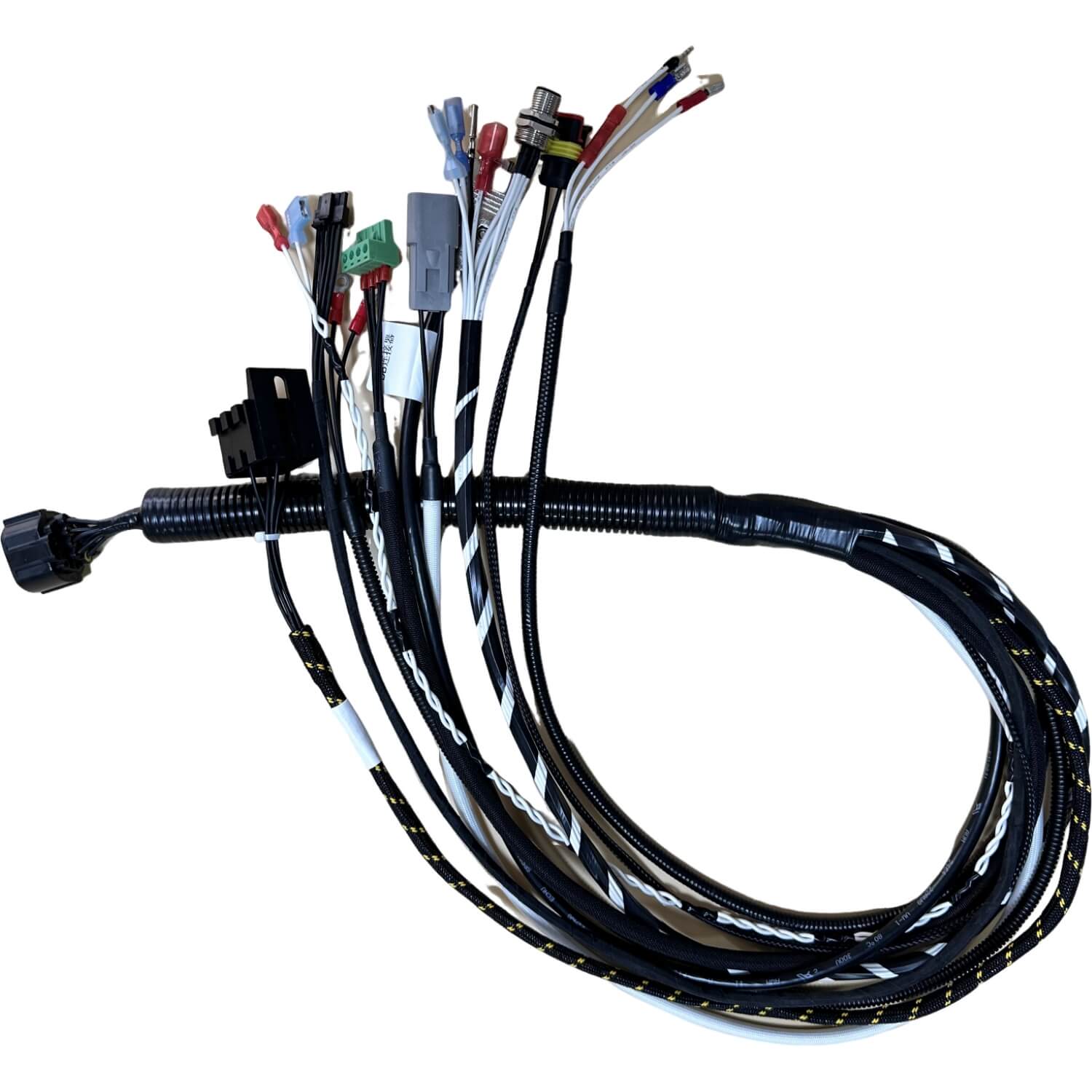
Why SMA assemblies need more discipline than generic coax leads
SMA is a compact threaded RF connector family used widely in microwave, wireless, GPS, and instrumentation systems. According to the SMA connector reference, it is built for high-frequency coaxial interconnection where connector geometry, impedance control, and mating condition directly affect signal quality. That means an SMA assembly cannot be treated like an ordinary low-frequency cable with fancy connectors on the ends.
The cable itself matters just as much. A coaxial cable works because its centre conductor, dielectric, shield, and connector geometry stay controlled as a system. If stripping is inconsistent, the wrong cable is selected, or the installation relies on avoidable adapter stacks, the result is more mismatch, more insertion loss, and more time wasted troubleshooting what looks like an RF problem elsewhere in the system.
Our role is practical: define the connector and cable combination that fits the real use case, build it repeatably, and verify it at the level the application justifies. For a lab cable that may mean clean orientation, correct length, and continuity. For a telecom or antenna path, it may also mean documented RF checks and tighter control over cable family, loss, and bend management.
SMA assembly capabilities
Focused on the areas that actually affect RF cable performance, repeatability, and installation reliability.
Built Around RF Performance, Not Generic Wiring
We select the cable and connector combination around impedance, frequency range, insertion loss, and bend constraints instead of treating the job like a standard low-frequency assembly.
Controlled Cable Length and Signal Path
Length tolerance matters in RF systems. We build to your actual routing and performance requirement so excess slack, unnecessary adapters, and avoidable mismatch are removed from the design.
Connector Handling That Protects Real-World Reliability
SMA assemblies depend on proper stripping, centre-contact preparation, torque discipline, and strain management. We focus on those fundamentals because that is where many field failures begin.
Verification Options for Test and Production
From basic continuity through RF validation, we align the inspection scope to the risk level of the build instead of using a one-size-fits-all checklist.
Support for Shielding and EMI-Sensitive Applications
Coaxial construction, connector choice, and installation geometry are matched to applications where signal integrity, shielding effectiveness, and repeatable antenna performance matter.
Prototype-to-Production Documentation
We help turn a bench cable or sample lead into a documented part with stable BOMs, test requirements, and repeatable workmanship expectations for purchasing and quality teams.
Technical scope
| Typical Impedance | 50 ohm assemblies for RF, wireless, instrumentation, and antenna systems |
| Cable Families | RG-174, RG-316, RG-58, micro-coax, and lower-loss custom coax options |
| Connector Styles | Straight, right-angle, panel-mount bulkhead, jack, plug, and mixed-end transitions |
| Build Configurations | SMA to SMA, SMA to N-type, SMA to BNC, SMA to TNC, RP-SMA, and custom mixed ends |
| Validation Options | Continuity, orientation, length, visual workmanship, VSWR, insertion loss, and return loss checks |
| Mechanical Features | Torque-controlled mating, strain relief, labels, heat shrink identification, and revision control |
| Environment Support | Indoor electronics, telecom cabinets, test benches, industrial enclosures, and protected outdoor installs |
| Production Scale | MOQ 1 prototype through small batch and repeat OEM production supply |
Specification checklist
What buyers should define before quoting
Specify impedance, connector gender, and cable family together because one without the others leaves too much ambiguity for RF assemblies.
Avoid adapter chains where possible. A direct custom assembly usually performs better and simplifies both procurement and troubleshooting.
Define the real operating frequency range, not just the connector type, because cable loss and return loss targets depend on frequency.
Confirm whether the cable will be flexed, panel-mounted, or exposed to vibration before freezing the connector orientation and strain-relief method.
Document acceptable VSWR or insertion loss if the assembly is performance-critical instead of relying on generic continuity-only checks.
Include mating-space and bend-space constraints early, especially in compact enclosures where a right-angle SMA may outperform a straight connector.
Typical SMA cable assembly applications
Common projects range from short internal pigtails to fully documented RF interconnects for field equipment.
Wireless and Telecom Equipment
SMA assemblies for radios, routers, repeaters, remote monitoring hardware, DAS equipment, and antenna-fed systems where 50 ohm signal integrity is essential.
Instrumentation and Test Benches
Coax leads for analysers, sensors, calibration rigs, lab instruments, and validation setups that need clear connector identification and predictable RF behaviour.
Industrial and Embedded RF Systems
Internal or external antenna connections for industrial IoT devices, telemetry hardware, embedded controls, and field-deployed electronics in protected enclosures.
GPS, GNSS, and Antenna Pigtails
Short-run assemblies that bridge modules, bulkheads, and external antennas while minimising unnecessary connector transitions and service complexity.
Retrofit and Replacement Builds
Sample-based replacement cables for imported equipment, legacy radio systems, and field service situations where an exact fit is more practical than redesigning the hardware.
How we take an SMA assembly into production
Application and RF Requirement Review
We review connector interfaces, cable family, impedance, target frequency range, run length, routing space, and environmental demands before confirming the assembly path.
Cable and Connector Selection
Our team matches the build to your loss target, bend radius, shielding need, and installation geometry, then confirms whether straight, right-angle, bulkhead, or mixed-end interfaces make the most sense.
Prototype or First-Article Validation
Initial assemblies are built for fit, mating, routing, and electrical verification so any connector or cable changes happen before the part is released into repeat supply.
Controlled Assembly and Inspection
Assemblies are cut, stripped, terminated, identified, and checked to controlled work instructions that keep connector orientation and workmanship stable across batches.
Test, Pack, and Release
Finished cables are verified to the agreed criteria, packed to protect connector condition, and released with the documentation needed for incoming inspection or repeat ordering.
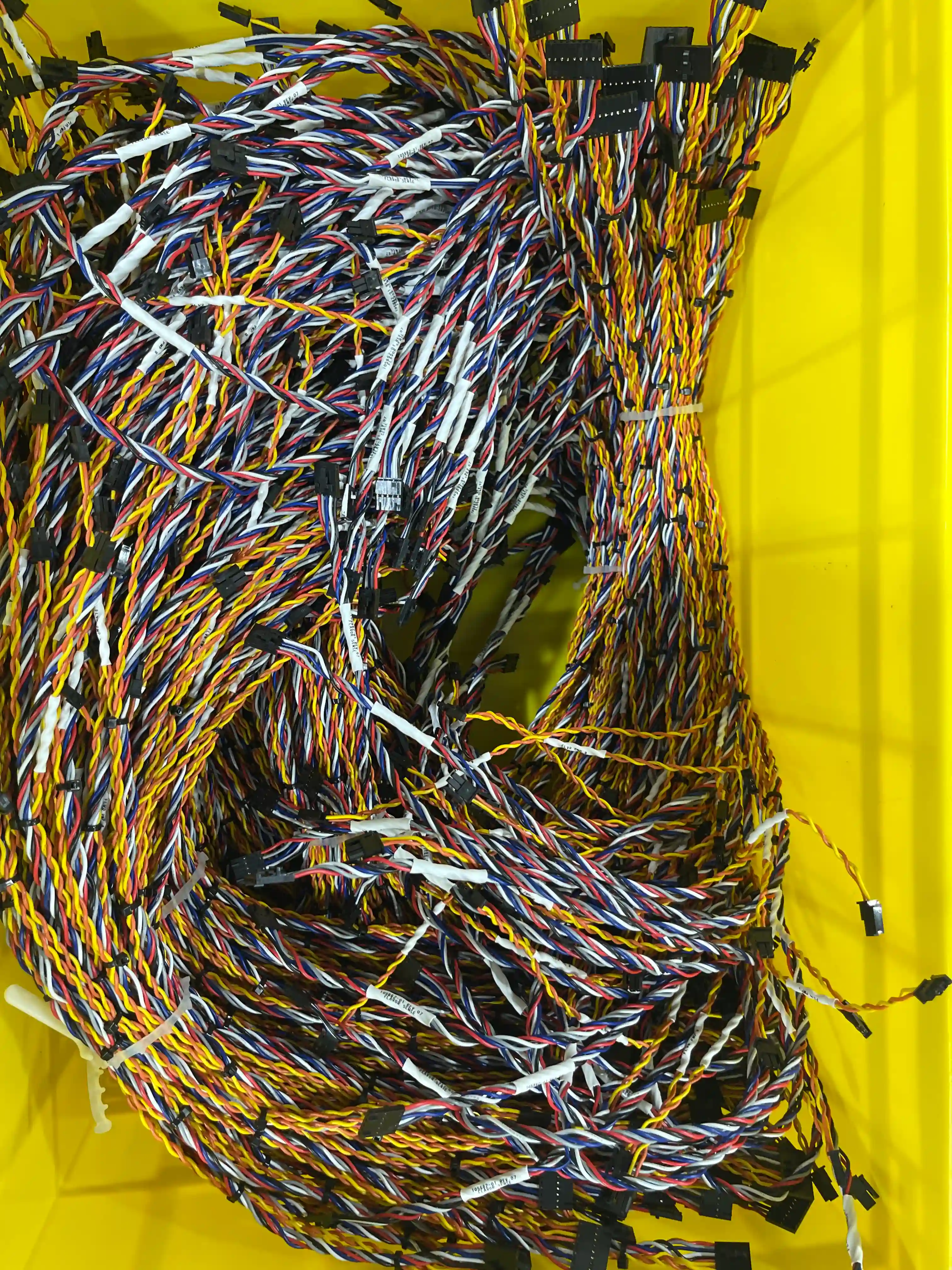
Related capability fit
Many SMA projects overlap with broader RF, shielded, and connector-driven builds. If your assembly also needs overmolding, circular transitions, or harsh-environment sealing, we can integrate those requirements into the same supply path.
How a typical sma cable assembly manufacturing program runs with us
This is an illustrative description of a representative project type, not a specific customer engagement. As a contract assembler we do not publish customer-identifiable data.
Common questions about SMA cable assemblies
Most RF cable problems start at the specification stage. These are the questions we hear most often when teams move from ad hoc bench cables to controlled purchasing.
SMA cable assemblies are used for 50 ohm RF signal transmission in telecom equipment, antennas, GPS modules, wireless infrastructure, instrumentation, and industrial sensing systems. They are common where stable impedance, compact connectors, and repeatable microwave performance matter more than generic low-frequency wiring.
Need a production-ready SMA cable assembly?
Send your connector part numbers, cable type, target length, and any RF acceptance criteria. We can quote from a drawing, sample, BOM, or even a marked-up install photo.
Good input for a fast RF quote
Connector type and gender at both ends
Cable family or existing sample reference
Finished length and any tolerance requirement
Frequency range, loss target, or VSWR requirement
Installation environment and bend-space limits
Prototype quantity and annual production estimate