
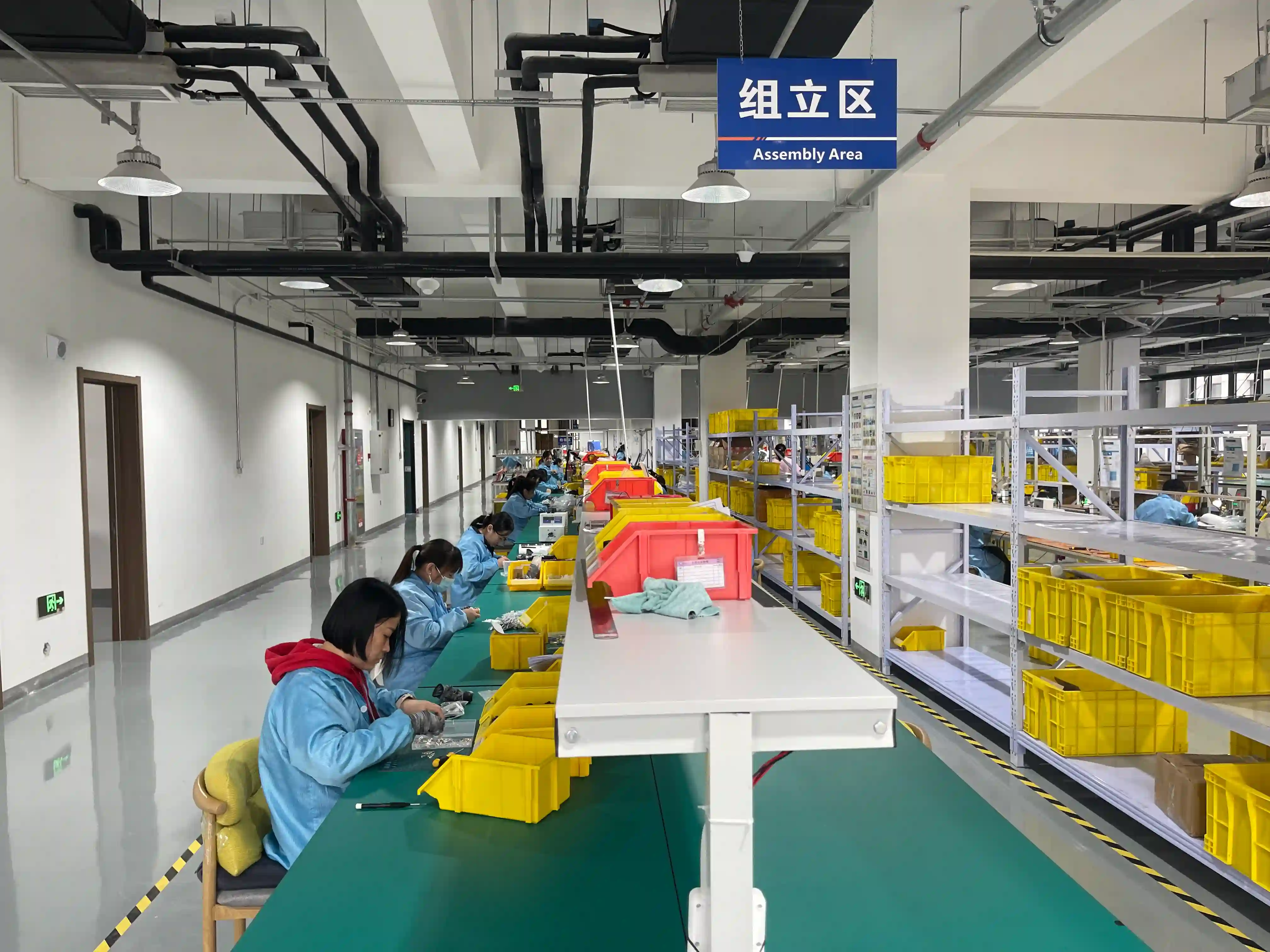
A coaxial cable only performs as intended when its geometry stays controlled from raw material through final termination. The target may be 50 ohm for RF power and instrumentation or 75 ohm for video and broadcast paths, but the rule is the same: if the geometry moves, the characteristic impedance moves with it.
That is why a good coax supplier does more than crimp connectors onto cable. It controls strip dimensions, dielectric compression, braid capture, centre-pin seating, bend handling, and acceptance tests such as VSWR or return-loss checks when the application justifies them.
Common RF system impedance in ohms
Typical video and broadcast impedance in ohms
Core geometry variables that drive impedance
Continuity test is necessary but still not enough
Why Impedance Control Matters More Than Basic Pass/Fail Electrical Test
A coax assembly can pass continuity and still fail in service. The reason is simple: continuity only confirms that current can flow. It does not prove that the cable and connector transition preserve the waveform. In RF, video, and fast-edge signalling, local mismatch creates reflections, extra loss, and unstable performance. Those issues may show up as noisy video, poor antenna efficiency, weaker receive sensitivity, or measurement drift on a test bench.
This article builds on our broader coaxial cable primer and coax family comparison guide. The focus here is narrower: what the manufacturer must control so that the theoretical impedance of the chosen cable family survives real production.
“Most coax failures are not dramatic open circuits. They are small geometry errors at the termination, and 2 or 3 millimetres of bad transition can destroy the RF margin on an otherwise good assembly.”
What Actually Sets Impedance in a Coax Assembly
Impedance in coax is dominated by geometry and dielectric properties. In plain terms, the centre conductor diameter, the inside diameter defined by the shield, the dielectric constant of the insulation, and the concentricity between those layers all matter. Once a connector is attached, the transition geometry matters too. If the dielectric is nicked, compressed, or left too short, the impedance can dip or spike right where the signal enters the connector.
This is why controlled-impedance coax manufacturing is both a cable problem and an assembly problem. Stable bulk cable is only half the job. The factory still needs the correct strip tooling, the right centre contact for the exact cable family, and an operator method that does not flare the braid or crush the dielectric. It also needs discipline around connector selection and 50 ohm versus 75 ohm interfaces.
Simple rule
If the cable, connector, and tooling are not matched as one system, the assembly may still look clean and pass continuity while drifting outside the return-loss target at the connector entry.
“Impedance control starts before crimping. If conductor diameter, dielectric extrusion, or braid coverage variation is already unstable, the assembly team can only hide the problem, not remove it.”
Manufacturing Control Points That Protect Coax Impedance
| Process Step | What Must Be Controlled | Typical Failure If Weak |
|---|---|---|
| Conductor draw and plating | Stable diameter, surface condition, and material consistency | Impedance drift and unstable attenuation along the cable |
| Dielectric extrusion | Wall thickness, concentricity, and dielectric uniformity | Local mismatch, return-loss degradation, and phase instability |
| Shield application | Braid coverage, foil integrity, and tension control | Leakage, shielding loss, and altered outer conductor geometry |
| Cable prep and stripping | Precise strip lengths without dielectric nicking or braid damage | Mismatch concentrated at the connector transition |
| Connector termination | Correct contact size, ferrule crimp, centre-pin seating, and torque | High VSWR, intermittent RF loss, or poor long-term reliability |
| Final verification | Continuity plus dimensional and RF checks matched to application risk | Assemblies ship electrically connected but performance-unstable |
Notice that most of these failure modes are invisible once the connector body is closed. A local disturbance inside the ferrule area may only be a few millimetres long, but it can still dominate the assembly's return-loss result. That is why serious coax suppliers keep setup samples, use cable-specific strip tools, and approve process changes before the line restarts.
This also explains why generic “fits many cables” connector sourcing is risky. Even when the mating interface looks correct from the outside, the internal dielectric support and centre-contact geometry may not match the chosen cable family closely enough to preserve the intended impedance transition.
Factory Checkpoints That Separate RF Assemblies from Generic Cable Builds
The best factories control coax like a process window, not a craft exercise. Strip dimensions are defined by cable and connector pairing. Ferrule crimp dimensions are checked against the connector supplier recommendation. Centre-pin retention is verified. Operators are trained not to overheat or crush the dielectric. Where the application is sensitive, the factory adds network-analyser or return loss sampling rather than relying on visual inspection alone.
These controls also overlap with broader signal-integrity rules and EMI containment practices. A coax assembly with poor impedance control often has shielding and repeatability problems too, because the same process sloppiness tends to affect both.
Dimensional discipline
- Defined strip lengths by connector and cable family
- Controlled centre-conductor protrusion and pin location
- Documented bend and routing limits after termination
Electrical discipline
- 100% continuity and shorts testing on finished assemblies
- Return-loss or VSWR checks where RF budget requires it
- Sample retention for first-off and process-change approvals
“A coax assembly line should know the acceptable strip length to the millimetre and the RF consequence of getting it wrong. If those two points are not linked, impedance control is mostly luck.”
Buyer Spec Checklist: What to Send Before You Ask for a Quote
Many impedance problems begin before production because the RF requirements were never made explicit in the enquiry. If the buyer only sends connector names and overall length, the supplier may quote a buildable assembly that does not meet the real insertion-loss or return-loss target. A stronger RF enquiry includes the cable family, target impedance, operating frequency range, mating interface, length tolerance, installation bend limits, environmental exposure, and acceptance criteria.
That package also helps the supplier decide whether a standard assembly process is sufficient or whether the job needs controlled strip tooling, tighter setup approval, and RF verification. It is the same logic used in any higher-risk cable build: better front-end definition reduces avoidable variation at launch.
If the application has a known loss budget, include it. A statement such as “maximum insertion loss 1.2 dB at 3 GHz” gives the supplier a measurable target and often changes the cable recommendation, connector series, or test method. Without that number, the quote may optimise cost while leaving the true RF margin undefined until field validation.
Minimum RF enquiry package
Include 8 items at minimum: cable family, impedance, connector A, connector B, finished length, operating frequency, environment, and validation method. That is the baseline needed to discuss impedance risk honestly.
How a typical impedance control in coaxial cable manufacturing program runs with us
This is an illustrative description of a representative project type, not a specific customer engagement. As a contract assembler we do not publish customer-identifiable data.
Frequently Asked Questions
What does impedance control mean in coaxial cable manufacturing?
It means the manufacturer controls the cable geometry and termination process so the finished assembly stays near its target characteristic impedance, usually 50 ohm or 75 ohm. In practice that requires stable conductor diameter, dielectric thickness, concentricity, shield integrity, connector compatibility, and RF test confirmation.
Why does coax impedance drift during manufacturing?
The most common causes are off-centre conductors, dielectric variation, braid damage, poor strip dimensions, and connectors that do not match the cable family. Even small shifts matter because RF systems react to geometry errors long before a continuity test sees a problem.
Is a continuity test enough for controlled-impedance coax assemblies?
No. Continuity only proves that the conductors connect. It does not verify return loss, VSWR, insertion loss, or local impedance disturbance at the connector transition. For RF and high-frequency work, continuity is the minimum test, not the finish line.
What is the biggest impedance risk at the assembly stage?
For many coax assemblies, the connector transition is the biggest risk. Wrong strip lengths, loose braid capture, deformed dielectric, and poor centre-pin seating can create a mismatch concentrated in the first few millimetres of the termination.
How should buyers specify coax if they care about impedance stability?
Send the target impedance, cable family, connector series, frequency range, finished length, bend constraints, environmental requirement, and acceptance criteria. A useful RF enquiry usually includes at least 8 technical inputs so the manufacturer can align materials, tooling, and test method before production.
When should a supplier perform RF testing instead of only dimensional checks?
RF testing becomes important whenever the assembly works above low-frequency signalling, uses longer cable runs, supports low-loss measurement paths, or has a strict return-loss budget. In many applications above hundreds of MHz, dimensional checks alone are not enough to protect field performance.