
Factory Wiring Harness Manufacturer for Australian OEMs
Custom factory wiring harnesses for automation lines, control cabinets, conveyors, robot cells, sensors, and production equipment where branch control, labeling discipline, and repeatable release matter as much as electrical continuity.
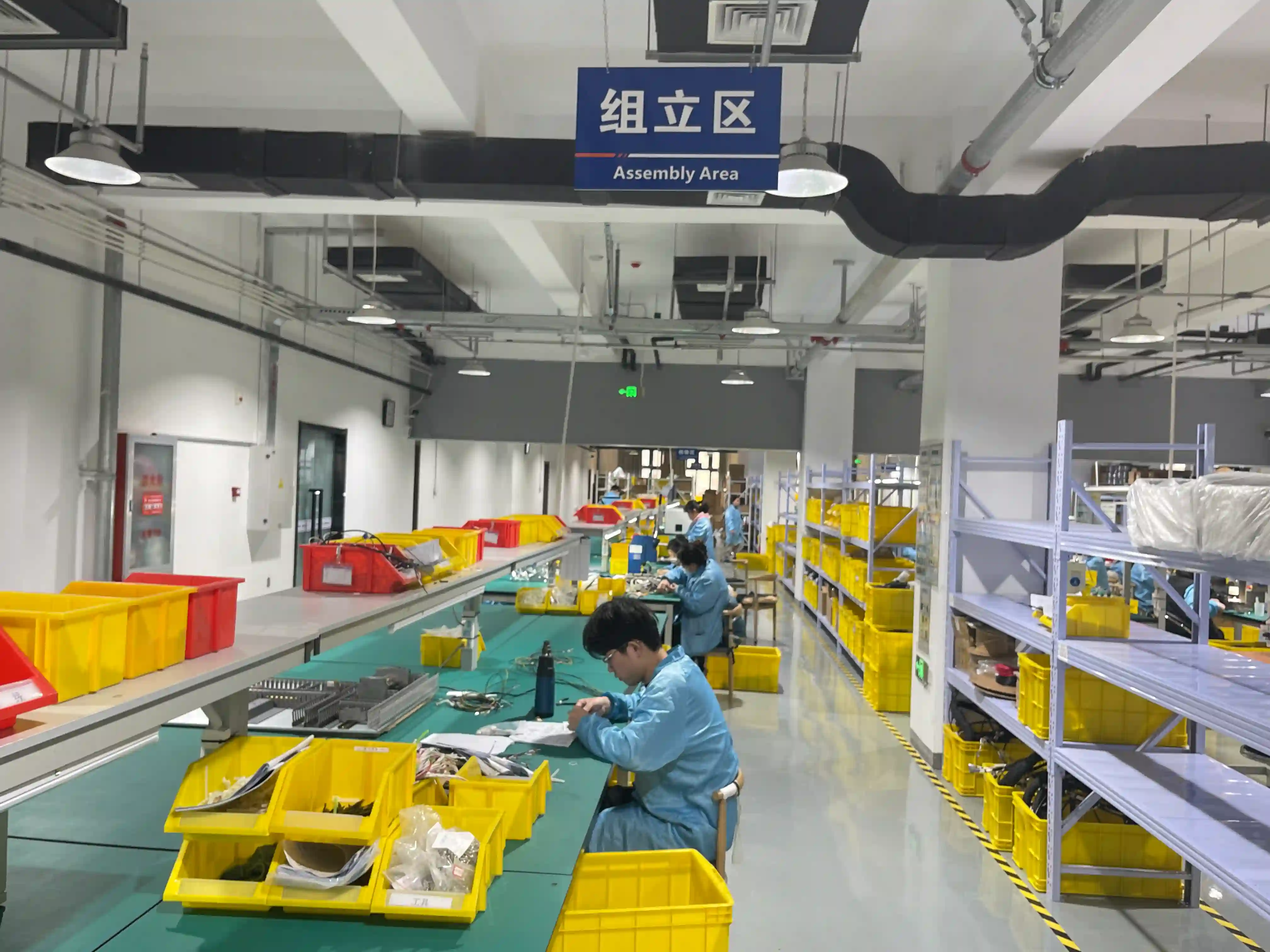
Why Factory Wiring Harnesses Need More Than Basic Continuity
On factory equipment, a harness does more than connect points A and B. It has to install cleanly, route around clamps and moving hardware, support maintenance access, and stay consistent across repeat machine builds or spare-part orders.
That means branch geometry, labels, connector orientation, panel-entry details, and protective materials need to be controlled from the first article forward. Otherwise the same harness can behave differently from one machine build to the next, even when the electrical schematic looks unchanged.
Our factory wiring harness service is designed for buyers who need controlled production supply for automation, industrial machinery, and production equipment instead of ad hoc hand-wired assemblies with limited revision traceability.
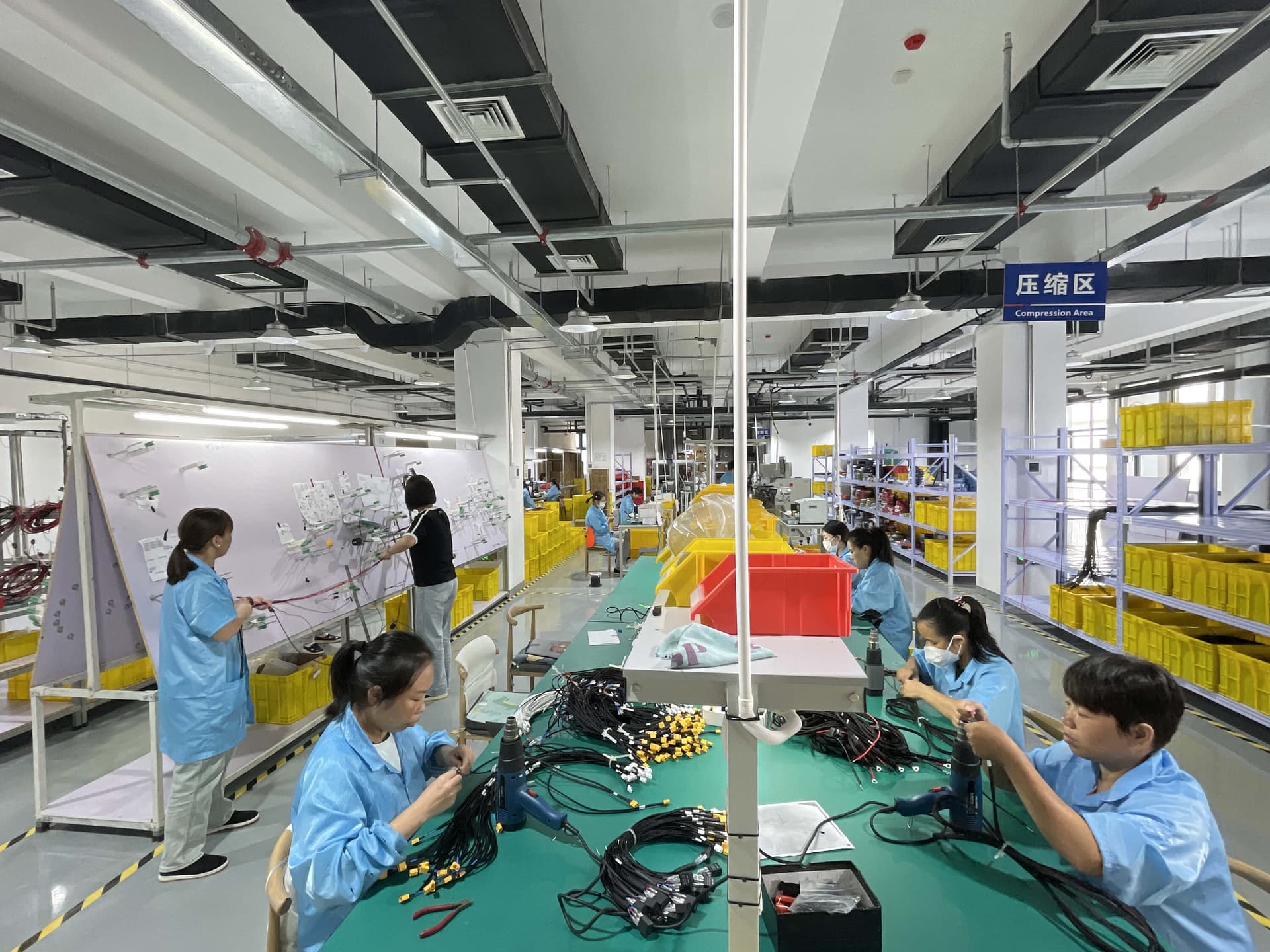
What We Control on Factory Harness Programs
The objective is repeatable installation and repeatable purchasing, not just one harness that works once.
Harnesses Built for Installation Flow
We define branch points, breakout order, labels, and connector orientation around how the harness is actually installed in the machine or production line, not just how it looks on a bench.
Clear Identification for Electricians and Service Teams
Circuit IDs, branch labels, and connector references are controlled so technicians can commission, troubleshoot, and replace the harness without tracing every conductor manually.
Revision-Controlled Repeat Supply
Approved samples, BOMs, routing notes, and test criteria are locked into a repeatable build definition so replacement orders match the released machine configuration.
Protection Matched to Industrial Conditions
We review abrasion, oil, heat, flexing, EMI, washdown, and service access so sleeving, shielding, strain relief, and connector choices fit the real factory environment.
Support for Automation and Motion Equipment
Factory harnesses often combine sensors, actuators, PLC I/O, drives, HMIs, and field devices. We help organise those mixed circuits into a controlled assembly that reduces line-build variability.
Built Around OEM and Integrator Workflows
We support machine builders, system integrators, and industrial OEMs that need prototype-through-production supply rather than one-off custom wiring with no revision trail.
Factory Wiring Harness Technical Scope
| Typical Products | Automation looms, PLC cabinet harnesses, robot cell harnesses, conveyor wiring sets, machine sub-harnesses, sensor/actuator bundles, and retrofit replacement harnesses |
| Circuit Mix | Power, signal, control, sensor, communication, and mixed-voltage circuits grouped around the equipment architecture |
| Connector Support | Molex, TE Connectivity, JST, Deutsch, Amphenol, circular industrial connectors, terminal blocks, sealed interfaces, and customer-specified mating systems |
| Protection Options | Labels, marker sleeves, braided sleeve, conduit, tape, heat shrink, grommets, strain relief, shield terminations, and breakout protection |
| Validation | 100% continuity and pinout checks with optional insulation resistance, hi-pot, shield continuity, retention, and dimensional verification |
| Quality Basis | ISO 9001 manufacturing systems with controlled first-article approval and traceable production release |
| Commercial Scope | MOQ 1 prototype or service spare through scheduled production, with Melbourne-based support and 2-3 week prototype timing when materials allow |
Useful Companion Pages
Factory harness programs often start with an upstream drawing review, a defined test plan, and a clear understanding of RFQ expectations.
Buyers planning repeat industrial releases also use our guides on harness manufacturing process, harness testing, and routing and clamping.
For public quality references, buyers commonly align release language with ISO 9000, IATF 16949, and accessible workmanship references such as crimp termination fundamentals.
Typical Factory Wiring Harness Applications
These are the equipment programs where repeatable harness release usually reduces commissioning friction and field risk.
Automation Cells and Robot Stations
Harnesses linking robot dress packs, sensors, actuators, safety devices, and control hardware where branch control and service access are critical.
PLC and Control Cabinet Assemblies
Pre-defined cabinet and enclosure harnesses reduce panel build time, improve labeling discipline, and simplify commissioning compared with ad hoc internal wiring.
Conveyors and Packaging Lines
Distributed production equipment benefits from repeatable harnesses that hold exact branch locations for motors, photoelectric sensors, safety circuits, and HMI connections.
Machine Tool and Process Equipment
Factory machinery exposed to vibration, coolant, oil, dust, and maintenance handling needs protective materials and documented routing rather than generic wire bundles.
Retrofit and Maintenance Programs
Legacy imported machines often need second-source or replacement harnesses when the original supplier is slow, obsolete, or no longer available locally.
OEM Production Equipment Platforms
When a machine platform moves from pilot builds into repeat orders, a controlled harness release reduces variation across assembly teams and field installations.
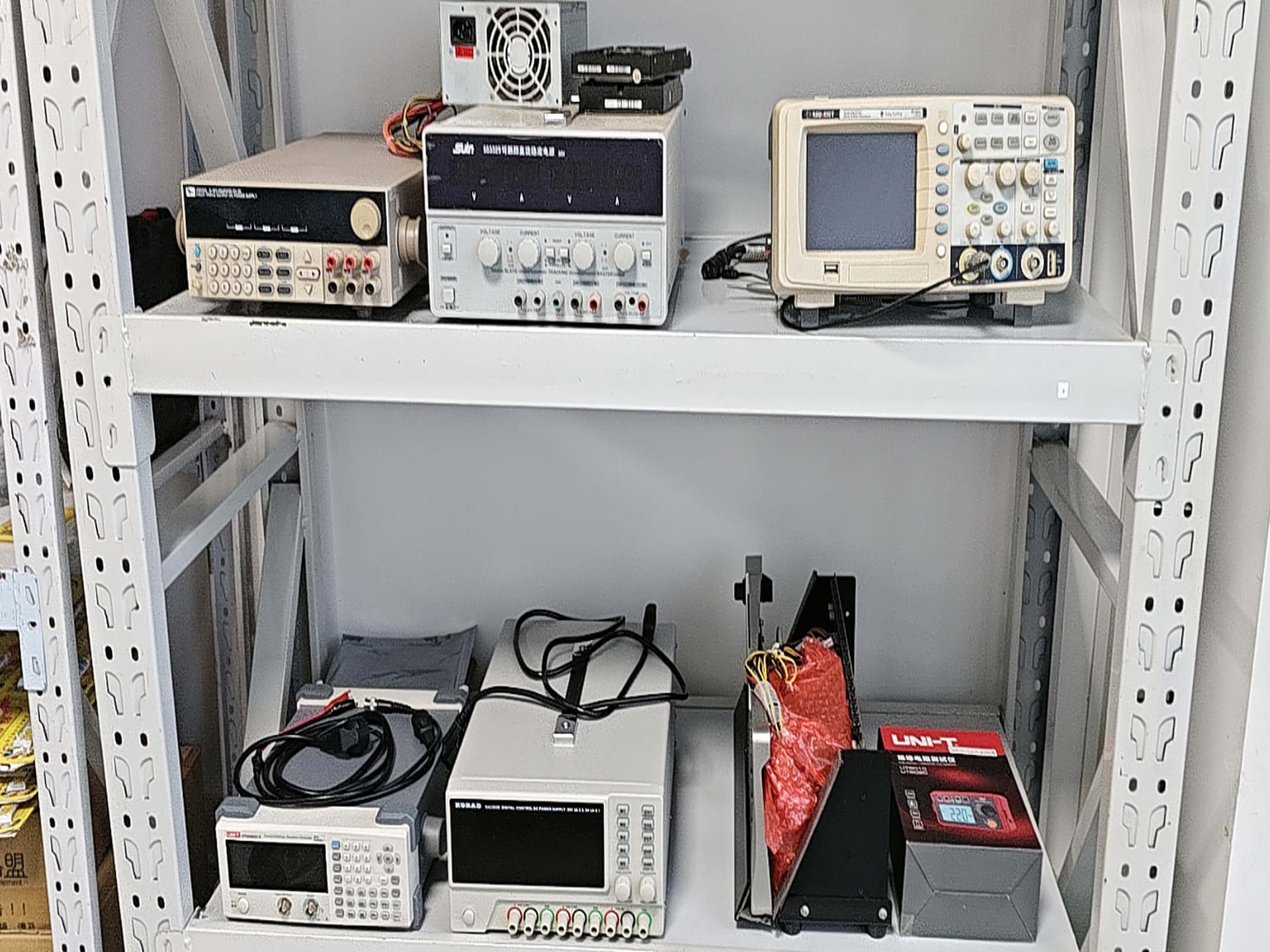
Release Process for Factory Equipment Harnesses
Requirement Capture and Equipment Review
We review the machine function, circuit mix, connector family, routing constraints, environment, and service requirements before confirming the harness scope.
BOM, Label, and Routing Definition
Wire types, branch dimensions, labels, shielding, sleeving, and connector orientation are aligned into one build package so purchasing and production work from the same release.
Prototype or First-Article Build
Initial builds verify fit, handling, installation sequence, and electrical performance before the harness is released for spare-part supply or scheduled production.
Controlled Manufacturing and Inspection
Assemblies are processed against approved work instructions, measurement points, and workmanship checks instead of relying on operator interpretation.
Electrical Test and Release
Finished harnesses are tested to the agreed plan, packed for production-floor or field use, and released with the information needed for repeat ordering.
Factory Harness Buyer Checklist
Most line-build delays come from missing release detail, not from the harness being especially complex.
Define branch lengths from clear reference points such as cabinet entry, clamp positions, or fixed connectors rather than one overall length.
Lock connector orientation, cavity numbering, and mating side references before prototype approval so installers do not reinterpret the drawing.
Separate mandatory tests from optional checks. A generic note saying 100% tested does not tell purchasing or quality what evidence is required.
Confirm labels, marker sleeves, and service identifiers early because factory maintenance teams depend on them long after the initial machine build.
Record the actual environment including oil, coolant, dust, vibration, washdown, and EMI exposure so sleeving and shielding are chosen for the site conditions.
If the harness is part of a machine platform, tie the release to a machine revision so spare-part orders do not drift away from the approved configuration.
Factory harness installation reference: branch legend, labels and field records
The installation package contains pre-built branches with each wire labelled. The installer connects cabinet terminals to equipment without measuring or cutting on site, using the customer's wiring diagram. The references and illustrative templates below are not measured customer results.
Public-specification reference: where installation values come from
Use the selected component makers' published datasheets alongside the customer drawing. Product-specific values and acceptance criteria must be defined in that drawing or agreed at quotation.
| Specification item | Basis to use | Owner of the reference |
|---|---|---|
| Wire cross-section | Select for current and temperature rise. Use the selected wire datasheet and specify mm² or AWG on the drawing. | Cable or wire maker: product data. Customer: drawing selection. |
| Device connector and pin | Use the selected connector datasheet and the connections on the customer wiring diagram. | Connector maker: product data. Customer: connection definition. |
| Branch length and tolerance | Use the length and tolerance stated on the drawing. | Customer: drawing dimensions and tolerance. |
| Bundling, clamp spacing and strain relief | Cable ties or lacing cord, clamp spacing and strain relief follow the drawing. | Customer or system integrator: installation drawing. |
For wire sizing by current and temperature rise, use the wire-gauge selection guide with the chosen wire's datasheet.
When specifying the installation drawing, refer to the cable tie vs lacing cord guide and the strain-relief guide. The drawing sets the method and spacing for the assembly.
Branch drawing legend (example template, not a customer result)
Illustrative fields for the customer drawing
| Legend field | Entry to define on the drawing |
|---|---|
| Branch ID | Branch identifier. |
| From | Cabinet terminal block and terminal label. |
| To | Device connector and pin. |
| Wire number | Wire identifier used in the label cross-reference. |
| Cross-section | Selected size in mm² or AWG, based on current, temperature rise and the wire datasheet. |
| Length | Required length with the tolerance stated on the drawing. |
| Protection | Sleeve or conduit as specified on the drawing. |
| Label position | Position specified on the drawing. |
Use these fields when preparing the branch legend for engineering drawing review. Resolve product-dependent entries against the datasheets and customer drawing at quotation.
Label cross-reference (example template, not a customer result)
These five rows use illustrative identifiers only. They do not define a device pinout. Replace the names and label text with the customer drawing entries; select each cable or wire type from that drawing and its product datasheet.
| Wire number | From | To | Cable/wire type | Label text |
|---|---|---|---|---|
| W01 | CAB-TB1:3 | M1 connector pin 2 | Enter drawing-specified type | W01 |
| W02 | CAB-TB1:4 | M1 connector pin 3 | Enter drawing-specified type | W02 |
| W03 | CAB-TB2:1 | D1 connector pin 1 | Enter drawing-specified type | W03 |
| W04 | CAB-TB2:2 | D1 connector pin 2 | Enter drawing-specified type | W04 |
| W05 | CAB-TB3:1 | D2 connector pin 1 | Enter drawing-specified type | W05 |
Installation field record (example template, not a customer result)
Illustrative blank example for the installer or QC to complete
This blank record contains no real before/after data. We hold no measured cycle-time or rework statistics for the reader to rely on. Enter actual installation observations against the customer drawing and agreed checks.
| Field | Installation entry (blank) |
|---|---|
| Harness ID/revision | |
| Install date | |
| Branch connected | |
| Label check | |
| Continuity check | |
| Rework note |
Define harness testing and acceptance criteria at quotation against the customer wiring diagram. The blank field record does not establish a test result.
What we can and cannot provide
- We can build and test the harness: The customer's wiring diagram and scope agreed at quotation define our assembly work.
- We do not design the machine's control system: The customer or system integrator owns that design and its wiring requirements.
- We do not certify cabinet or machine compliance: The customer or system integrator is responsible for compliance of the complete installation.
- On-site installation is outside this reference: The customer or system integrator arranges installation and completion of the field record unless it is separately agreed at quotation.
- Component specifications come from their makers: Connector and cable makers supply the product datasheet references. The customer or system integrator selects them for the machine requirements.
How a typical factory wiring harness manufacturer for australian oems program runs with us
This is an illustrative description of a representative project type, not a specific customer engagement. As a contract assembler we do not publish customer-identifiable data.
Frequently Asked Questions
Common questions from buyers sourcing harnesses for machine builds, automation cells, and factory equipment.
Related Capability & Resource Links
Wire Harness Manufacturing
See our broader production capability for custom wire harness supply across Australian OEM programs.
Control Cable Assembly
Explore control, PLC, servo, encoder, and sensor cable assemblies used alongside factory harness builds.
Industrial Automation Industry
Read how we support machine builders and automation equipment in industrial environments.
Wire Harness PPAP Guide
Buyer-side guidance for release control, documentation, and approval planning on repeat harness programs.
Need a Factory Wiring Harness That Drops Into Production Cleanly?
Send your schematic, sample, or machine photos. We will review the routing and release risks, define the test plan, and quote a factory wiring harness path from first article to repeat supply.