
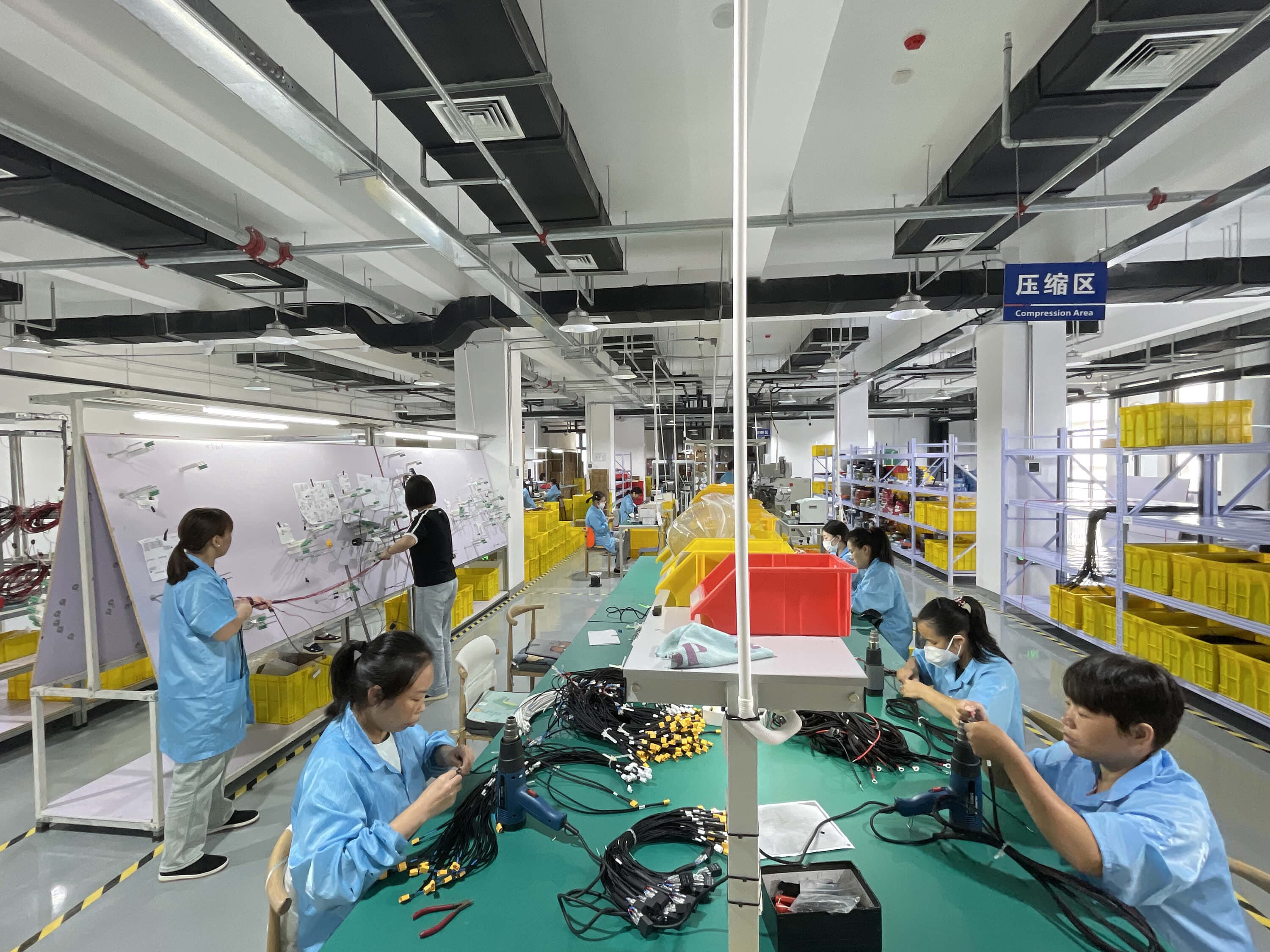
Engineering Drawing Review Before Your Harness Becomes Expensive
We review wire harness and cable assembly drawings before quote, prototype, or production release so ambiguous connector notes, pinouts, lengths, labels, and test requirements are fixed while changes are still cheap.
Drawing review turns supplier interpretation into controlled build information.
A wire harness drawing is ready for manufacturing only when engineering, purchasing, production, and quality can read it the same way. Our review checks that the drawing package defines the assembly strongly enough for a quote, a first article, and a repeat order without relying on phone-call assumptions.
This service is narrower than our custom design engineering. We are not replacing your product design team; we are checking whether your current drawing, BOM, pinout, tolerances, labels, and test notes are buildable. If a design is still conceptual, our prototyping service can convert review findings into a first physical sample.
The review uses the same manufacturing lens behind 100% electrical testing, first-article inspection, and ISO 9001:2015 quality control. We also reference public workmanship and quality-system concepts from IPC electronics standards, ISO 9000 quality management, and IATF 16949 automotive quality systems where they are relevant to cable and harness release control.
What We Check in the Drawing Package
The review covers the documents that drive cost, lead time, test coverage, and repeatability. One unclear connector note can affect the BOM, crimp tooling, first-article evidence, and packaging method.
Drawing Completeness
We check whether the drawing defines connector views, wire lengths, branch points, pin numbers, label positions, tolerances, and revision status clearly enough for quoting and build control.
BOM and Connector Fit
Housing, terminal, seal, backshell, wire, sleeve, heat shrink, and label references are compared against the drawing so procurement does not quote from one document while production builds from another.
Pinout and Circuit Logic
Circuit IDs, colour codes, connector cavities, shield drains, twisted pairs, and polarity-sensitive circuits are reviewed before a wrong assumption becomes a first-article failure.
Length and Tolerance Review
Harness length is checked against measurement reference points, breakout geometry, bend allowance, service loops, and installation constraints instead of treating every dimension as equally critical.
Test Requirement Alignment
Continuity, insulation resistance, hi-pot, pull-force, visual inspection, and functional test notes are mapped to the risk level of the assembly and the project quality plan.
Production Release Readiness
The review separates quote-ready, prototype-ready, and production-ready information so engineering, purchasing, and quality teams know exactly what still needs confirmation.
Capability Scope and Limits
Engineering drawing review is a manufacturing-readiness service for cable and harness products. It covers what must be clear before a build can be quoted, tested, inspected, and repeated. It does not replace regulatory certification, product safety approval, or final design authority held by the customer.
Honest limitation
We can recommend manufacturability changes, alternate connectors, test notes, and release controls. We do not certify the end product for a regulated market, and we do not review non-harness electronics design or software packages.
Technical review basis
Review Type by Project Stage
A quote-stage review should not be as heavy as a production-release review. We match the review depth to the risk, quantity, and stage so the result is useful instead of slow.
Five-Step Drawing Review Process
The process is built to return actionable redlines and assumptions, not a vague statement that the drawing "looks fine".
Upload the Drawing Package
Send the latest drawing revision, BOM, connector table, sample photos, mating part numbers, expected quantity, and any inspection or test requirements.
Document Baseline Check
We confirm whether the drawing, BOM, revision block, and purchasing description are aligned before reviewing technical manufacturability.
DFM and Risk Review
Our engineering team checks connector clarity, terminal selection, wire gauge, branch geometry, tolerance stack-up, label readability, and test coverage.
Redline and Quote Notes
You receive clear review notes that separate required fixes, cost-saving options, manufacturability risks, and assumptions used for quotation.
Prototype or Production Release
Approved drawings move into prototype, first-article, or repeat production with revision-controlled build notes and defined acceptance checks.
What Buyers Usually Miss
Most drawing problems are not dramatic. They are small interpretation gaps that multiply across quoting, procurement, build, inspection, and reordering. The practical value of review is that it assigns each gap to a fix, an assumption, or an accepted risk before production starts.
"A cable drawing is not production-ready because it has many dimensions. It is production-ready when the operator, inspector, buyer, and engineer all know which dimensions matter and how they will be verified."
Connector orientation
Front view and rear view are mixed, causing mirrored pinout risk.
Length reference points
Housing-to-housing, cut length, and routed length are not the same measurement.
Terminal ambiguity
Housing is defined but terminal, seal, or crimp applicator basis is missing.
Label control
Text is shown visually but sleeve material, position, and durability are undefined.
Test notes
Continuity is required, but insulation resistance, hi-pot, or pull test criteria are missing.
Revision mismatch
Drawing revision, BOM revision, and quote notes point to different design states.
Related Capabilities
Custom Design Engineering
Use this when the drawing does not exist yet or the harness architecture still needs to be created.
Prototype Cable Assembly
Turn approved review notes into a physical sample for fit, function, and first-article validation.
Testing & Quality Control
Define continuity, insulation resistance, hi-pot, pull-force, and inspection evidence before release.
How a typical engineering drawing review service program runs with us
This is an illustrative description of a representative project type, not a specific customer engagement. As a contract assembler we do not publish customer-identifiable data.
Engineering Drawing Review FAQ
What is included in a wire harness engineering drawing review?
A wire harness engineering drawing review checks the drawing, BOM, connector table, pinout, wire lengths, tolerances, labels, revision block, and test notes before quoting or production. For a typical 10- to 50-circuit harness, we look for build ambiguity, missing terminal part numbers, unclear length reference points, and test gaps such as continuity without insulation resistance where the risk profile requires more evidence.
I only have a PDF drawing and a sample cable assembly. Can you still review it?
Yes. A PDF drawing plus a physical sample or clear photos is usually enough to start a review, especially for replacement cable assemblies or supplier-transfer projects. We compare the sample against the drawing, identify undocumented connector orientation, label placement, branch lengths, and test needs, then list what must be confirmed before a controlled prototype or production release. STEP, DWG, or native CAD files help, but they are not required for the first review.
How fast can I get drawing review feedback before requesting a quote?
Straightforward cable assembly drawings usually receive initial review feedback within 24-48 hours after we receive the drawing, BOM, target quantity, and application notes. Complex multi-branch harnesses, sealed automotive connectors, overmolded strain reliefs, or assemblies with custom test requirements may need 3-5 business days. The goal is to clarify quote assumptions before pricing so the first quote is not built on hidden engineering risk.
Should I request drawing review before or after a prototype build?
Request drawing review before the prototype if the assembly has more than 5 circuits, sealed connectors, tight routing, custom labels, or any special test requirement. Early review can catch pinout ambiguity, tolerance conflict, and BOM mismatch before the 2-3 week prototype clock starts. After prototype approval, a second release review is useful to confirm first-article criteria and production test notes before repeat orders begin.
My project has a six-week launch window. Will drawing review slow it down?
Drawing review normally shortens a six-week launch window because it removes preventable clarification loops before material purchase and build. A 24-48 hour review can flag whether connector part numbers, wire colours, length references, labels, and test criteria are complete enough for procurement. Skipping that step often creates delays later when operators, inspectors, or buyers discover that the drawing can be interpreted in more than one way.
Can drawing review reduce cable assembly cost without changing the design intent?
Yes. Drawing review can reduce cost by relaxing non-critical tolerances, standardising wire gauges, consolidating connector families, simplifying label formats, and separating required tests from optional checks. The electrical function can remain unchanged while the manufacturing method becomes easier to repeat. We mark cost-saving suggestions separately from required corrections so engineering can decide which changes fit the product risk and validation plan.
Do you certify that a drawing complies with IPC/WHMA-A-620 or automotive requirements?
We review drawings against manufacturability, inspection, and quality-system expectations, but we do not act as a certification body. Our facilities work under ISO 9001:2015 systems, and we can align workmanship and inspection notes with IPC/WHMA-A-620-style cable and harness acceptance concepts. If a regulated program requires formal third-party certification, the approval path should be defined by the customer or responsible compliance authority.
Get a Buildability Review Before You Release the Drawing
Send your wire harness drawing, BOM, target quantity, and application notes. We will identify quote assumptions, DFM risks, missing test criteria, and production-readiness gaps before they become sample delays.