
OEM Wiring Harnesses Manufacturer for Australian Equipment Programs
We build OEM wiring harnesses for buyers who need more than a custom one-off. That means controlled BOMs, first-article approval, stable connector decisions, documented test coverage, and repeatable supply for production and spare-part demand.
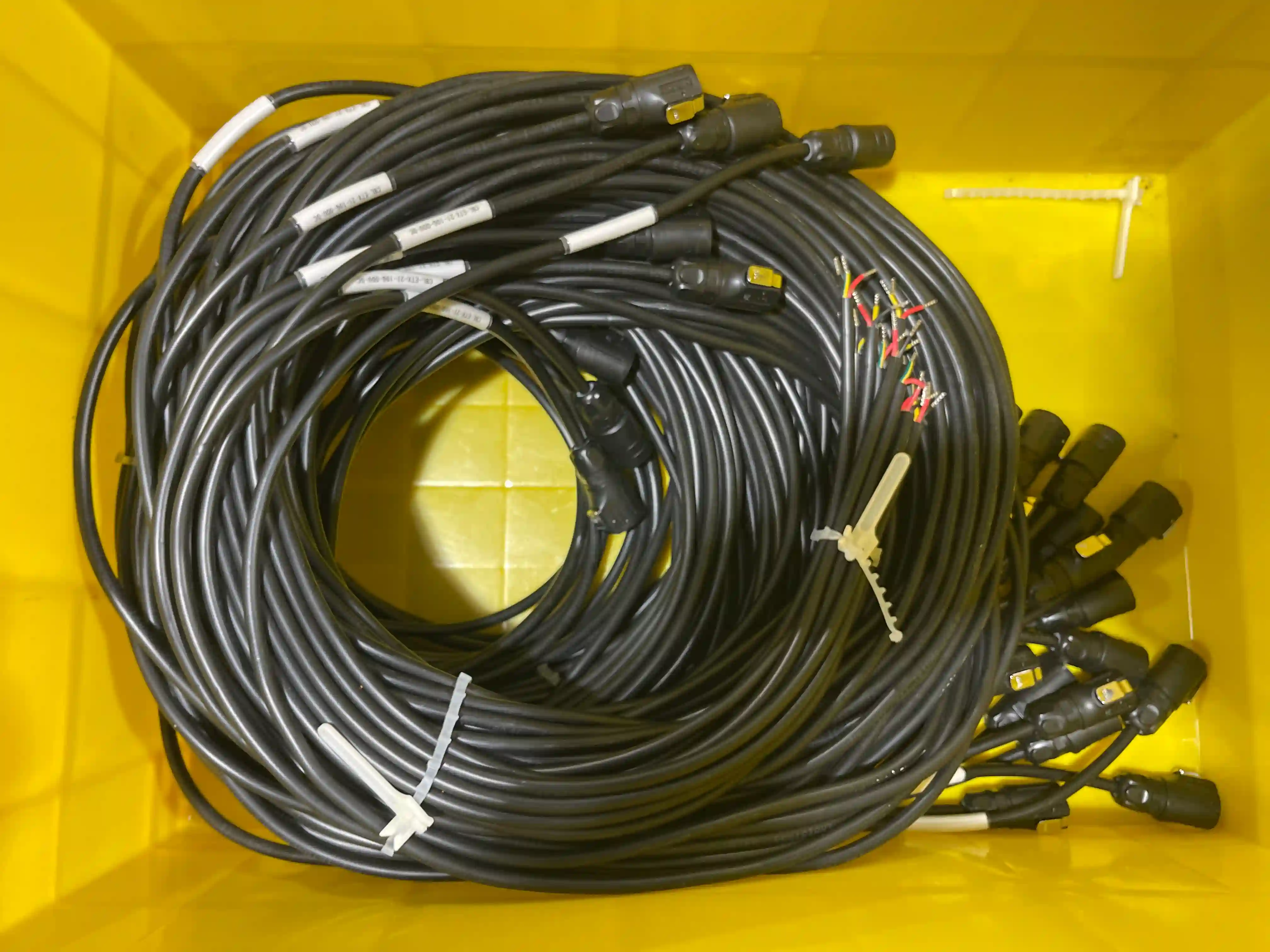
What buyers usually need from OEM wiring harnesses
An OEM harness program is usually judged on repeatability, documentation, and lifecycle risk rather than on unit price alone. If a harness fits the prototype but later drifts in routing, connector orientation, or label logic, the real cost shows up during assembly, incoming inspection, warranty handling, or field replacement.
That is why many buyers compare suppliers against public quality references such as ISO 9000 quality management, IATF 16949 automotive quality systems, and IPC workmanship guidance. The point is not paperwork for its own sake. The point is a harness definition that stays stable when purchasing volumes rise and replacement orders arrive months later.
Why buyers choose this capability
Built Around OEM Release Control
We support buyers who need an approved harness definition with controlled materials, labels, branch geometry, and test requirements rather than a loosely described custom build.
Prototype to Production Continuity
Keeping the prototype, first article, and production harness under one process reduces the risk of unexpected changes once the part moves into purchasing.
Stable BOM and Connector Decisions
Connector systems, terminals, seals, protection materials, and labeling are aligned early so the released harness stays repeatable across future orders and supplier audits.
Inspection Matched to Program Risk
OEM programs usually need more than a basic pass or fail statement. We define the test and inspection scope around the actual product, environment, and field failure risk.
Commercial Fit for Scheduled Supply
We support prototypes, pilot lots, blanket orders, service spares, and repeat manufacturing for equipment builders that need both flexibility and documentation discipline.
Aligned With Recognised Quality Systems
Our harness processes follow the same quality-management thinking buyers expect from public references such as ISO 9000, IATF 16949, and IPC workmanship guidance.
Technical and commercial scope

Release discipline matters once a harness becomes a real product part
The same harness may need to satisfy engineering samples, incoming quality checks, production orders, and later service replenishment. That is where a controlled OEM program creates more value than a generic custom build.
Typical OEM harness applications
Automotive and Vehicle Electrical Subsystems
OEM harnesses for body electronics, sensors, lighting, low-voltage power distribution, CAN communication, and sealed under-hood or cabin applications.
Industrial Machines and Control Equipment
Harnesses for PLC cabinets, machine modules, sensor packs, HMIs, and mixed power plus signal assemblies where release control matters as much as the hardware itself.
Medical and Laboratory Equipment
Programs that need traceability, repeatable internal routing, controlled labels, and sample-to-production consistency rather than bench-built cable sets.
Robotics and Motion Platforms
Harnesses for moving equipment where branch lengths, strain control, connector orientation, and serviceability need to stay stable across multiple builds.
Mining, Transport, and Harsh-Duty Equipment
Assemblies that need stronger environmental protection, clearer service identification, and controlled spare-part supply for field maintenance programs.
Supplier Transfer and Legacy Replacement
OEMs moving away from an incumbent supplier often need sample comparison, drawing cleanup, and release discipline so the new harness stays interchangeable in the field.
How we move an OEM harness into controlled supply
The production process matters, but the release logic matters just as much. Each step below is designed to keep the approved harness stable as it moves from quoting and samples into repeat purchasing.
Requirement Capture and Drawing Review
We review the harness function, connector family, branch references, labels, environmental needs, and the evidence your quality team expects before we define the build basis.
BOM and Release Definition
Wire, terminals, seals, housings, coverings, and labels are aligned into a controlled package so purchasing and production are not working from different assumptions.
Prototype or First-Article Build
An initial sample confirms fit, handling, routing, and electrical performance before the harness is released for scheduled production or service-spare supply.
Controlled Manufacturing and Inspection
Assemblies are built against approved instructions, measurement points, and inspection criteria instead of depending on operator interpretation of a loose drawing.
Electrical Test and Release
Finished harnesses are tested to the agreed plan and packed with the revision and lot information needed for incoming inspection and repeat ordering.
Buyer checklist before release
These are the issues that most often create drift between an approved prototype and the production harness that arrives later.
- Define branch lengths from fixed reference points such as connector faces, clamps, or breakouts instead of one overall harness length.
- Freeze connector orientation, cavity numbering, and mating-side references before approving the first article.
- Separate mandatory release tests from optional validation checks so purchasing knows what evidence is required on every lot.
- Lock label text, position, and durability early because service and field teams depend on those identifiers later.
- Review alternates carefully. A substitute terminal or seal can change tooling, pull force, fit, or environmental performance even when the connector family looks similar.
- Tie the harness revision to the equipment revision so spare-part orders do not drift away from the approved build standard.
OEM supply documents: sample layouts for purchasing
The short answer: an OEM harness stays the same part across orders when five records exist and are kept in step: the ECN, the approved-alternate list, the traceability record, the planned-order schedule, and a reorder check. The layouts below are working samples you can adapt to your own document control. Field names and example values are illustrative, not a published form of ours. How to build the harness is covered on the wire harness manufacturing page; this section is about what purchasing needs to freeze.
1. Engineering change notice (ECN): form fields
A change to a released harness is easiest to control when it arrives on one form. For the gate-by-gate review that follows, see the wire harness change control and ECN guide.
| Field | What to enter | Why it is there |
|---|---|---|
| ECN number and date | A unique number plus the raised date. Example format only: ECN-0007 / 2027-03-02. | Lets an order, a lot and a drawing be tied to one change. |
| Harness part number, old revision, new revision | Both revision codes, written the way they appear on the drawing and BOM. | Stops two revisions being built under one part number. |
| What changes | Tick the affected items: drawing, BOM line, label text or position, tester program, pin map, packaging, work instruction. | A BOM change that is not reflected in the tester program is the common miss. |
| Reason for change | One sentence: supplier discontinuation, field failure, fit problem, cost, customer request. | Tells reviewers whether the change is urgent and whether the risk is fit, function or availability. |
| Orders and stock affected | Open PO numbers, quantities in stock, quantities in build. | Sets the cut-over point and the amount of material at risk. |
| Disposition of existing stock | Use as is, rework to new revision, or scrap, per quantity. | Avoids a mixed lot reaching the line. |
| Evidence required before release | For example delta first-article on affected circuits, pull data on a changed terminal, updated test record. | Defines what proof the buyer will see before the new revision ships. |
| Effective point | A date, order number, or lot break from which the new revision applies. | Incoming inspection needs to know which revision to check each delivery against. |
| Approvals | Buyer engineering, buyer quality where affected, and the assembler release. | A change that affects fit, function or compliance should not be released by one party alone. |
2. Approved substitute parts: record fields
Many buyers call this an approved alternate list or AML; the term varies by company. A substitute that is not recorded for the revision being built is treated as unapproved. Why a look-alike part can still change the build is covered in the guides to connector substitution validation and material substitution.
| Field | Entry | Note |
|---|---|---|
| BOM line and designator | The line the substitute applies to, for example the sealed 2-way housing on branch B2. | Ties the approval to one place in the harness. |
| Primary part number and manufacturer | The part released on the drawing. | The default that is built unless an approved alternate is invoked. |
| Alternate part number and manufacturer | The exact substitute, including plating, seal or colour variant. | A family name is not enough; variants can differ in tooling and retention. |
| Status | Approved, approved with conditions, or not approved. | Conditions might be sealed-only, a specific crimp tooling, or a specific lot range. |
| Evidence | Datasheet comparison, sample build, crimp cross-section or pull data, test result. | Without evidence, approval is only an opinion. |
| Approver and date | Name or role at the buyer, and the date. | Shows who accepted the risk. |
| Revision scope | The harness revisions the approval covers. | An approval for Rev B does not automatically carry to Rev C. |
3. Traceability record and lot-code logic
Traceability is useful when it answers one question quickly: given a harness in the field, which materials, process state and test version produced it, and which other harnesses share that history? That needs one lot code that links to the records below.
| Field | Entry | Note |
|---|---|---|
| Harness lot code | Printed or labelled on each harness or bag, one code per build lot. | The key that links the harness to every record below. |
| Harness part number and revision | As released. | Shows which package the lot was built to. |
| Build date or week | Encoded in the lot code or recorded alongside it. | Narrows down which material and tool conditions applied. |
| Material lot references | Wire, terminal reel, housing and seal lot or batch references, where the supplier provides them. | Lets a supplier problem be traced to the harness lots that used it. |
| Crimp or process record | Applicator or tool ID and the crimp checks recorded for the lot. | Connects a field failure to the process state at the time. |
| Test record | Tester program revision, result, and date for the lot. | Shows which test version released the lot. |
| Shipment record | Delivery document and quantity per lot. | Defines the population to contact if a lot is recalled. |
Lot-code layout: assumed example, not our production format
A readable lot code is built from fields that can be decoded by eye. One layout to agree at release is PN-REV-YYWW-SS: part number, revision, two-digit year and week, and a sequence for the lot within that week.
Assumed example: 1042-C-2709-03 reads as harness 1042, Rev C, built in week 9 of 2027, third lot that week. If an ECN later moves the harness to Rev D, the next lot code starts 1042-D, so a Rev C and a Rev D harness can never share a code. Decide the layout once, print it on the label schedule, and keep it the same on every reorder.
4. Planned orders versus firm orders
A firm purchase order authorises build and material purchase. A planned order is a forecast that gives visibility for capacity and long-lead parts but does not commit either side by itself. Agree in writing which is which, and whether any long-lead material is bought against the planned quantity. Terms are set per program; the schedule below only shows the layout.
| Window | Status | Quantity | Note |
|---|---|---|---|
| Months 1 to 3 | Firm purchase order | 3 x 100 = 300 | Released for build and material purchase. |
| Months 4 to 6 | Planned (forecast, not yet firm) | 3 x 100 = 300 | Visibility for capacity and long-lead parts. |
| Months 7 to 12 | Planned (forecast, not yet firm) | 6 x 100 = 600 | Visibility only; converts to firm as each month approaches. |
| Rolling 12 months | Total | 300 + 300 + 600 = 1,200 | Planned share = 900 of 1,200, which is 75 %. |
Material rounding: assumed example
For the 300 firm harnesses, assume one housing per harness, a 3 % process allowance, and a supplier that sells that housing in multiples of 50. Needed: 300 x 1.03 = 309. Rounded up to the next multiple of 50 gives 350, so 41 pieces are left over. Whether the leftover stock is held for the planned months or counted against them is exactly the kind of point the schedule should state. The 3 % and the pack size are assumptions for the arithmetic, not a published allowance.
5. Reorder consistency checklist
Run this before each reorder is released, especially after a gap of several months. Early validation steps are described in the first-article inspection guide, and the move from sample to scheduled supply in the prototype-to-production guide. Final test scope is set out on the testing page.
| Check | Compare against | Evidence to keep |
|---|---|---|
| Same revision | Drawing and BOM revision on the purchase order against the released revision and any ECN since. | PO line shows part number and revision; ECN log shows no open change. |
| Same approved substitutes | Approved-alternate list for that revision against the parts actually issued to the build. | Alternate list at the same revision; any alternate used is named on the build record. |
| Same test program | Tester program revision and pin map against those used for the first article. | Test record states program revision for each lot. |
| Same label and lot-code format | Label text, position and lot-code layout against the released label schedule. | Label photo or sample on the first reorder lot. |
| Same packaging and orientation marks | Bagging, cartons and marker positions against the release notes. | Packing note for the revision. |
| First piece after a long gap | First reorder piece against the first-article report or a retained sample if one was agreed. | Dimensional and electrical comparison recorded; agree beforehand whether a sample is retained. |
Related capabilities and buyer resources
OEM wiring harnesses usually sit inside a wider buying workflow that includes design review, precision build control, validation planning, and approval of replacement or transferred supply.
Precision Wiring Harness
For programs where branch geometry, connector orientation, and dimensional control are especially tight.
Engineering Drawing Review
Review BOMs, pinouts, tolerances, labels, and test notes before releasing an OEM harness.
Automotive Industry Harnesses
See how we support vehicle and mobility programs with controlled wire harness manufacturing.
OEM vs Aftermarket Wiring Harness Quality
Buyer-side guidance on equivalence, traceability, and approval risk before switching or approving a harness.
Need an OEM wiring harness quote or supplier-transfer review?
Send your drawing, sample, BOM, or current part reference. We can review the release risks, define the build basis, and quote a prototype or repeat production program with clear test expectations.
How a typical oem wiring harnesses manufacturer program runs with us
This is an illustrative description of a representative project type, not a specific customer engagement. As a contract assembler we do not publish customer-identifiable data.
OEM wiring harness FAQ
What do you mean by OEM wiring harnesses?+
OEM wiring harnesses are harnesses released for use in an original equipment manufacturer program, not just one-off custom builds. That usually means controlled BOMs, approved samples, stable connector and terminal selections, revision tracking, repeatable branch geometry, and documented electrical test coverage for every production lot.
Can you support prototypes as well as repeat OEM production?+
Yes. Many OEM harness programs start with a concept sample, first article, or pilot build. We support that early stage, then hold the approved harness under revision-controlled production so the same part can move into repeat purchasing without changing supplier or rebuilding the documentation from scratch.
Which industries commonly need OEM wiring harnesses?+
Common sectors include automotive subsystems, industrial automation, mining equipment, medical devices, robotics, transport, and control equipment. The shared need is not a specific connector family but a repeatable harness definition that supports procurement, quality audits, field service, and product lifecycle management.
Can you work from a sample or incomplete drawing?+
Yes. We can start from an existing harness, connector references, wiring tables, annotated PDFs, installation photos, or a partial BOM. For repeat OEM supply, we convert that input into a controlled build package covering materials, branch points, labels, orientation notes, and the agreed test plan.
What testing is normal for OEM wiring harnesses?+
Baseline release usually includes 100% continuity and pinout verification. Depending on the application, we can add insulation resistance, hi-pot, shield continuity, retention checks, dimensional verification, label checks, and first-article documentation so incoming quality teams know what evidence supports the part release.
How do you reduce supply risk on OEM harness programs?+
We reduce risk by freezing the approved material set, confirming alternate sourcing where appropriate, documenting connector orientation and cavity references, defining the exact measurement points for branch lengths, and keeping the production and inspection requirements aligned to the released revision. That prevents drift between prototype, production, and spare-part orders.
What belongs on an engineering change notice (ECN) for a released harness?+
An ECN should name the harness part number, the old and new revision, what is changing (drawing, BOM line, label, test program, packaging), why, and which open orders and stock are affected. It also needs a disposition for existing stock (use as is, rework, scrap), the evidence required before release (for example a delta first-article), an effective point such as a date or serial/lot break, and an approver. The form field table on this page lists each field. The point of the form is that purchasing, production and incoming inspection all start from the same revision on the same day.
How should approved substitute parts be recorded?+
Record each approved substitute against the BOM line it replaces, not as a loose note. Useful fields are the BOM line, the primary manufacturer part number, the alternate manufacturer part number, the status (approved, approved with conditions, or not approved), the evidence behind the approval (datasheet comparison, sample, crimp or pull data), any condition such as a sealed-only restriction, who approved it, and the date. A substitute that is not on the list for that revision should be treated as unapproved until the buyer signs off, because a similar-looking terminal or seal can change tooling, retention force or sealing.
What should match between the first build and a reorder months later?+
Four things: the drawing and BOM revision on the purchase order, the set of approved substitutes in force for that revision, the test program and pin map revision used for final test, and the label and lot-code format. If any of the four has changed, the change should arrive as an ECN with a disposition, not as a silent difference on the reorder. For a long gap between orders, compare the first reorder piece against the first-article report or a retained sample if one was agreed at release.