
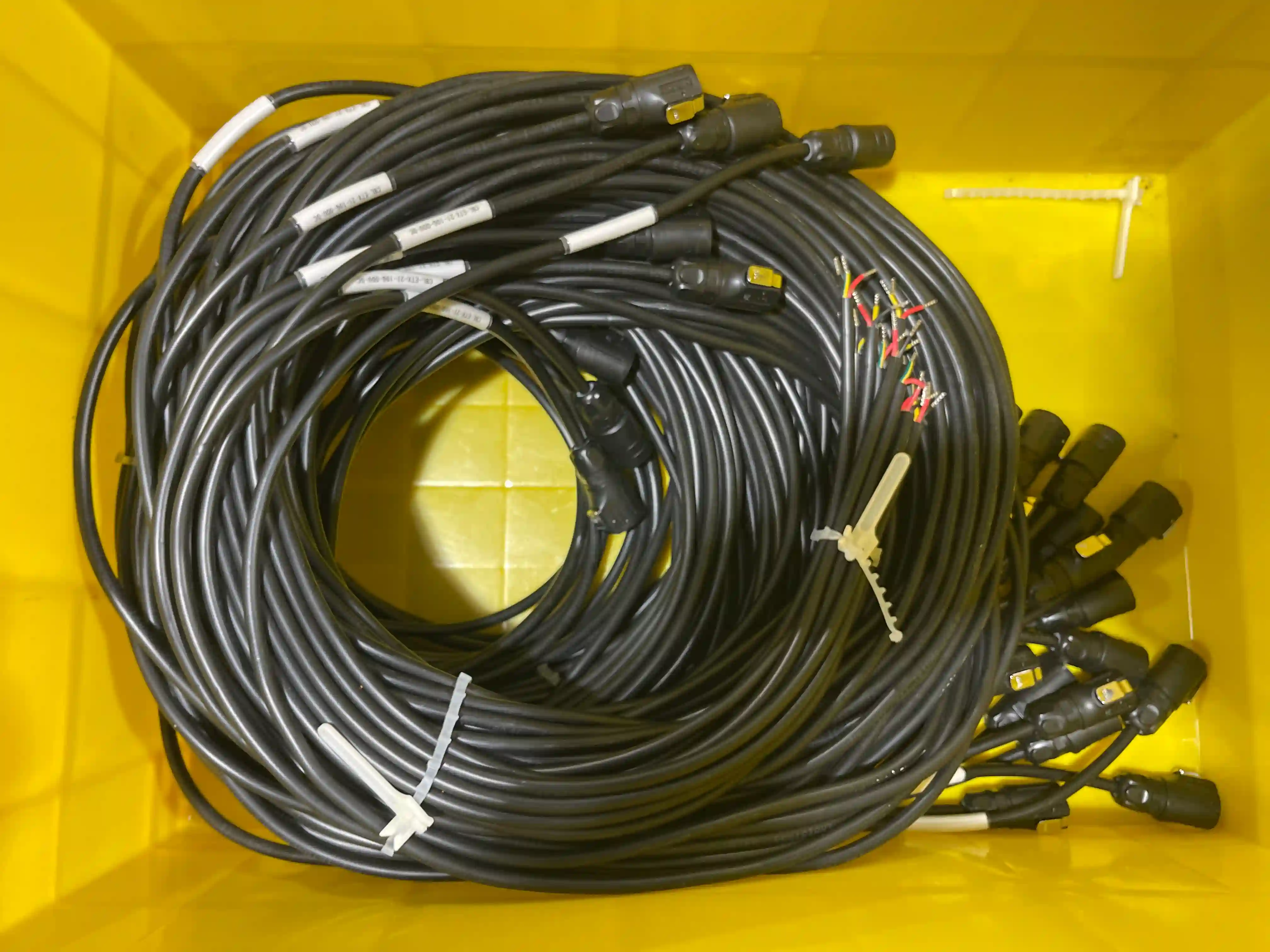
A replacement harness for a washdown packaging line arrived at an Australian plant with the right connector housings, the right number of circuits, and a price 28% below the original. Two weeks after installation, the line started dropping out during cleaning cycles. The root cause was not obvious until the harness was cut open: the aftermarket supplier had changed the rear seal material and used a thinner adhesive-lined heat shrink than the original design. Water migrated into the breakout, the crimp barrel oxidised, and the intermittent fault only appeared after thermal cycling.
That is the real OEM versus aftermarket debate. The issue is rarely “brand name” versus “generic.” The issue is whether the replacement assembly has been built and validated to the same engineering intent. Buyers who compare only unit price usually miss the hidden differences in conductor class, terminal plating, branch geometry, retention force, and test discipline. Buyers who compare evidence make better decisions.
"If a harness supplier cannot show crimp height control, pull-force evidence, and 100% test records, then the low price is usually just deferred quality cost. IPC/WHMA-A-620 is not a marketing line; it is the minimum language of controlled workmanship."
— Custom Wire Assembly
Why OEM vs Aftermarket Quality Differences Matter
In formal terms, an OEM harness is the version released with the original product configuration, while the aftermarket is the replacement ecosystem that follows. Neither term guarantees quality by itself. OEM parts can be overpriced and slow to source; aftermarket parts can be excellent or dangerous. The quality question is whether the replacement respects the original electrical, mechanical, and environmental requirements.
That distinction is critical on equipment exposed to vibration, washdown, heat, abrasion, or frequent service. A harness that is 98% equivalent can still fail if the remaining 2% affects seal compression, strain relief, or current density. This is why buyers evaluating a replacement harness should read it as a manufacturing control question, not just a sourcing question.
If you are already deciding whether a damaged assembly should be repaired or replaced, review our wire harness repair vs replacement guide first. If you are qualifying a new supplier, combine this article with our manufacturer selection checklist and RFQ best practices.
OEM vs Aftermarket Wiring Harness Quality Comparison
| Quality Factor | Typical OEM Harness | Low-Control Aftermarket Harness | What Buyers Should Verify |
|---|---|---|---|
| Materials | Released BOM with approved wire, terminals, seals, and clips | Substituted materials chosen on price or availability | Conductor spec, plating type, insulation temperature rating, seal material |
| Dimensional fit | Branch lengths and breakout locations verified to original packaging space | Approximate fit based on connector count only | First-article dimensions, branch tolerances, clip and grommet locations |
| Workmanship control | Documented tooling, crimp settings, and inspection criteria | Operator-dependent assembly with limited process records | Crimp height records, pull-force data, workmanship standard used |
| Electrical validation | 100% continuity and pinout test, often with fixture traceability | Basic continuity only, or no retained records | Test report format, serial or lot traceability, rework controls |
| Environmental durability | Validated for vibration, fluids, heat, or ingress where required | Assumed equivalent with no environmental evidence | Seal compression, strain relief design, evidence of ingress protection testing |
| Lifecycle support | Revision control and engineering change history | Part copied from a sample with unclear revision baseline | Revision identification, deviation approval, sample-to-production lock |
A good aftermarket harness is the one that can close the evidence gap in the rightmost column. If that evidence is missing, the comparison is not finished.
"A branch leg that is only 8 millimetres short may still install, but it changes strain on the connector and clamp points. In high-vibration equipment, that small dimensional error is enough to shorten field life by months, not years."
— Custom Wire Assembly
Where Low-Quality Aftermarket Harnesses Usually Fail
- Terminal plating is downgraded from tin-over-nickel or gold flash to plain tin, increasing corrosion risk.
- Wire strand count changes, making the harness stiffer and more susceptible to fatigue near the crimp barrel.
- Seal or grommet compounds are changed, reducing compression set performance in heat or washdown.
- Clip geometry moves slightly, forcing installers to twist the branch during fit-up.
- Electrical test coverage is reduced to simple continuity without fixture-controlled pin mapping.
Those failure modes are not theoretical. They appear repeatedly in replacement programs for fleets, service parts, industrial retrofits, and legacy machines where the original OEM no longer supports the product or lead times are unacceptable. The most common mistake is assuming that mating connectors are the whole problem. In reality, contact system performance, harness routing, and protection architecture matter just as much.
Buyers should also separate part interchangeability from quality equivalence. A supplier may copy a sample harness accurately enough to build a pilot lot, but if there is no controlled specification package, each future build is exposed to drift. That is where process control systems such as ISO 9001 and workmanship guidance linked to IPC standards become useful. They do not guarantee quality by themselves, but they give buyers a framework for what should be documented and repeatable.
If connector integrity is a concern, pair this review with our crimp quality inspection guide and wire harness testing guide so the acceptance criteria are explicit before approval.
When an Aftermarket Harness Can Be the Right Choice
An aftermarket harness is often the practical choice when the OEM part is obsolete, lead time is too long, regional support is poor, or the equipment itself has been modified beyond the original released design. In those cases, a strong aftermarket supplier can actually add value by correcting known field weaknesses, improving protection, or consolidating service complexity into a more maintainable design.
The key is controlled equivalence. Ask whether the supplier has recreated the harness from drawings, from a sample, or from both. Ask whether they froze the approved sample after first-article inspection. Ask whether approved alternates are documented. Those questions are far more useful than asking only whether the harness is “OEM quality.”
- The supplier can demonstrate equivalent or improved materials and test coverage.
- The harness is for service, retrofit, or legacy support rather than an uncontrolled field guess.
- The buyer runs a pilot installation and records any fit-up issues before volume release.
- Change control is contractually defined so substitutions cannot drift silently over time.
"The best aftermarket programs behave like OEM programs after qualification: frozen BOM, approved sample, controlled alternates, and 100% test. Once those controls are in place, the market label matters far less than the manufacturing discipline behind it."
— Custom Wire Assembly
Buyer Approval Checklist for OEM vs Aftermarket Decisions
- Confirm connector family, cavity count, keying, and retention features.
- Review wire gauge, insulation system, temperature rating, and strand class.
- Verify branch dimensions, breakout clocking, clip positions, and labels.
- Inspect crimp quality evidence, not just a visual sample.
- Require 100% electrical test with retained records by lot or serial number.
- Approve first article before volume release, especially on safety-related harnesses.
- Document all alternates for terminals, seals, tapes, and protection components.
- Lock revision control and define what triggers requalification.
If the harness supports a regulated or harsh-duty application, add environmental checks such as ingress protection, vibration durability, or thermal ageing where appropriate. For enclosure and ingress concerns, our IP67 vs IP68 vs IP69K guide helps define the protection level that the replacement must maintain.
How a typical oem vs aftermarket wiring harness quality program runs with us
This is an illustrative description of a representative project type, not a specific customer engagement. As a contract assembler we do not publish customer-identifiable data.
FAQ
Is an aftermarket wiring harness always lower quality than OEM?
No. A disciplined aftermarket supplier can deliver equivalent performance if the harness is built to the same material and validation intent. The difference is that buyers must verify evidence such as 100% electrical test, first-article dimensions, and controlled substitutions instead of assuming equivalence from appearance alone.
What is the biggest quality risk when buying a replacement wiring harness?
The largest risk is hidden mismatch in materials or geometry. A branch that is only 5 to 10 mm out, or a lower-grade seal compound, may still install but create stress, water ingress, or intermittent faults after several hundred hours of vibration or service cycles.
What tests should an aftermarket harness supplier provide?
At minimum, ask for continuity, short, and pinout verification on 100% of units. For critical programs, add crimp height checks, pull-force records, and insulation resistance or hi-pot evidence where the electrical design requires it. First-article dimensional inspection should also be part of the approval package.
When is OEM the safer choice for wiring harness replacement?
OEM is generally safer when the assembly is safety-critical, tied to warranty obligations, or used in tightly regulated sectors such as medical, rail, or emissions-controlled automotive platforms. In those cases, the cost of a field issue is usually far higher than the part-price delta.
How much can a poor aftermarket harness really cost?
A part that saves 20% on piece price can create 200% to 500% additional lifecycle cost once rework, downtime, repeat service, freight, and troubleshooting are included. One failed service visit often costs more than the original price difference between suppliers.
How should buyers approve an aftermarket harness without unnecessary risk?
Run a staged approval: compare BOM equivalence, inspect a sample, review the test package, install a pilot lot, then freeze the approved revision. That process takes longer than buying on price alone, but it is how you convert an aftermarket source into a controlled supply program.
Related Reading
Wire Harness Repair vs Replacement
How to decide when repair is acceptable and when a full replacement is the lower-risk path.
Wire Harness Testing 101
Continuity, hi-pot, insulation resistance, and what 100% test coverage should actually include.
How to Choose a Wire Harness Manufacturer
The supplier evaluation framework to use before moving a replacement harness into production.
Need help qualifying a replacement harness?
We help buyers compare OEM and aftermarket assemblies, inspect samples, identify material downgrades, and move approved replacements into stable production with controlled testing and documentation.