
M12 Cable Assembly Manufacturing for Australia
Custom M12 cable assemblies for sensors, actuators, Industrial Ethernet, CAN bus, and compact machine power distribution. Straight, right-angle, shielded, overmolded, and mixed-end builds for OEMs, panel builders, and integrators across Australia.
What Makes M12 Cable Assemblies So Common in Industrial Equipment?
M12 connectors have become a default interconnect choice for industrial automation because they combine compact size, positive threaded locking, and strong environmental durability. Compared with open terminal wiring or office-style data connectors, an M12 cable assembly is easier to install, simpler to replace, and more tolerant of vibration, contamination, and routine maintenance handling.
In practice, M12 cordsets appear everywhere: on sensors, valve islands, cameras, machine-mounted I/O blocks, servo peripherals, industrial switches, and mobile equipment. The exact connector coding and cable construction changes by application, which is why a dedicated M12 build should be defined around signal type, current, EMC demands, and sealing expectations rather than purchased as a generic commodity lead.
The M12 interface family is part of the IEC 61076 connector standard group, while sealed industrial versions are often specified around enclosure protection concepts described by the IP code. For applications that carry machine communications, design decisions may also need to account for protocol behaviour such as CAN bus network requirements.
Why Buyers Specify a Custom M12 Cable Assembly Instead of a Generic Cordset
The connector family may be standard, but the performance of the finished assembly still depends on the right coding, cable, shielding, and sealing choices.
Built for Industrial Communications and I/O
M12 cordsets are common where sensors, actuators, Ethernet switches, drives, and distributed I/O need a compact, lockable connector that survives vibration and contamination better than office-style connectors.
EMI-Aware Shielding and Grounding
We select the cable and termination method around the actual noise environment so Ethernet and fieldbus assemblies are not treated like generic low-speed sensor leads.
Connector Orientation Matched to the Machine
Straight versus right-angle exits, panel-mount interfaces, branch lengths, and keying details are defined around the installed equipment so the assembly is easier to route and replace in the field.
Overmolding and Seal Support
Where the application calls for it, we build M12 cable assemblies with overmolded exits, sealing features, strain relief, and protective boots that support long service life in washdown and outdoor settings.
Power and Data Variants in One Supplier
We support low-current sensor cables, Ethernet cordsets, and higher-current M12 power formats, which simplifies sourcing for OEMs building complete machine platforms.
Prototype-to-Production Control
Sample builds, first articles, revision-controlled drawings, and repeatable electrical test requirements help move an M12 assembly from engineering trial to stable purchasing supply.
M12 Coding Table: Read the Letter Before You Pick the Cable
The table lists the M12 codings that the public M12 connector reference gives with pin count, rating and use. It is a first filter: the figures belong to the coding family, and the data sheet of the exact connector is the limit that applies to your cordset.
| Coding | Pins | Current and voltage | Use given in the reference |
|---|---|---|---|
| A-code | 2 to 17 | 4 A to 1.5 A, 250 V to 60 V | CANopen, DeviceNet, Profibus PA and 1 Gb/s Ethernet |
| B-code | 5 | 2 A, 60 V | Profibus DP |
| D-code | 4 | 4 A, 250 V | 100 Mbit/s Ethernet (Fast Ethernet) |
| X-code | 8 | Not stated | 10 Gb/s Ethernet |
| Y-code | 8 | Not stated | Power plus 100 Mb/s Ethernet |
| L-code | 2 to 4, with or without FE | 12 A to 16 A, 63 V dc | DC power |
| T-code | 2 to 4 | 12 A, 60 V dc | DC power |
| K-code | 2 to 4 plus PE | 16 A, 600 V ac | AC power, single or three phase |
| M-code | 2 to 5 plus PE | 8 A, 600 V ac | AC power, including a 3-phase motor with an auxiliary wire pair |
| S-code | 2 to 3 plus PE | 12 A, 300 V ac or 600 V ac | AC power, single phase or 3-phase delta |
The same reference lists the standards behind the M12 codings: IEC 61076-2-101 for A, B, C and D, IEC 61076-2-109 for X and H, IEC 61076-2-111 for E, F, K, L, M, P, S and T, and IEC 61076-2-113 for Y. It states no mating torque and no ingress-protection value, so both must come from the data sheet of the exact connector. A-code alone spans 2 to 17 pins, so the letter does not fix the pin count or the pin assignment: confirm both against the mating part.
Worked example (assumed inputs)
Assume an L-coded DC power cordset, 10 m long, feeding a 24 V load that draws 8 A through 18 AWG conductors. The table lists L-code at 12 A to 16 A and 63 V dc, so the load is inside the family range. Wire resistance follows from the AWG definition: about 21 mOhm per metre for 18 AWG at 20 °C (solid copper; stranded wire is slightly higher).
The out-and-back path is 2 × 10 m × 0.021 Ohm/m ≈ 0.42 Ohm, so the voltage drop is 8 A × 0.42 Ohm ≈ 3.4 V, about 14 percent of the 24 V supply, and the heat in the conductors is I²R = 64 × 0.42 ≈ 27 W. A connector rating that fits the load does not make the whole cordset fit it: on a long run the conductor size usually decides.
Illustration only, with assumed values and no customer data. The contact rating still depends on the wire size and insulation used in the exact connector.
What to put on an M12 drawing
- Coding letter, pin count and gender for each end, plus the connector maker's part number.
- Mating part part number or a photo of the mating face, so keying and pin assignment can be checked, not assumed from the letter.
- Plug or receptacle form: cable connector with a rotating coupling nut, or panel-mount with a fixed thread; straight or right-angle exit.
- Pin map and wire colours per position, and which pins carry power and which carry data.
- Cable construction: conductor size, shield type and outside diameter, checked against the connector's cable range.
- Load: current per pin and cable length, so the table above and the voltage drop can be checked.
- Mating torque and ingress protection as the connector data sheet states them, not as a general M12 figure.
Common M12 Coding Families We Build
A-Code
Common for sensors, actuators, and general machine I/O where compact size and secure locking are more important than high data rate.
D-Code
Used for 100 Mbps Industrial Ethernet links where shielding and controlled termination are important to stable network performance.
X-Code
Used for higher-speed Ethernet applications where better data capacity and stronger EMC performance are required.
L-Code / T-Code
DC power codings used where more current capacity is needed for distributed power, compact drives, or machine auxiliaries. The coding table below lists the public figures for each.
Technical Range
| Connector Coding | A-code, B-code, D-code, X-code, L-code, T-code, and customer-specified keyed variants |
|---|---|
| Pin Counts | Typical 3, 4, 5, 8, and 12 position formats depending on signal, Ethernet, or power application |
| Cable Families | Sensor/actuator cable, Industrial Ethernet, CAN bus, power cable, hybrid signal-plus-power constructions |
| Shielding | Unshielded, foil, braid, and foil-plus-braid with controlled shield termination options |
| Jacket Materials | PVC, PUR, TPE, LSZH, UV-resistant and oil-resistant industrial compounds |
| Ingress Protection | Connector and overmold designs selected for indoor, washdown, outdoor, or harsh-duty installations |
| Temperature Range | Typical -40 degrees C to +90 degrees C, with higher-temperature constructions available on request |
| Production Scale | Prototype and validation lots, spare-parts replenishment, and scheduled OEM production; quantities and timing are confirmed at quotation |
Typical Applications for M12 Cable Assemblies
M12 connectors are versatile enough to cover discrete sensors, industrial networks, and compact power distribution across many equipment categories.
Sensors and Actuators
A-coded M12 assemblies for proximity sensors, photoelectric devices, valves, and machine I/O where secure mating and field replacement are important.
Industrial Ethernet Networks
D-coded and X-coded M12 cable assemblies for switches, robots, conveyors, drives, and vision systems operating in electrically noisy industrial environments.
Fieldbus and CAN Bus Systems
Reliable M12 cordsets for CAN bus, DeviceNet, and other machine network layers where locking connectors and clear pinout control reduce commissioning issues.
Robotics and Motion Equipment
Compact M12 interconnects for end-effectors, servo accessories, sensors, and distributed controls where cable routing space is limited and vibration is constant.
Mobile and Harsh-Environment Equipment
Sealed M12 cable assemblies for agricultural, mining, rail, and outdoor equipment where water, dust, oil, and shock exposure exceed what ordinary connectors should handle.
Control Cabinets and Panel Interfaces
Panel-mount and bulkhead M12 assemblies that simplify machine wiring, service access, and modular equipment replacement.
How We Build and Release an M12 Program
Specification Review
We review coding type, pin count, connector gender, cable family, shielding, ingress requirement, and mating environment before confirming the assembly path.
Cable and Connector Selection
Our team aligns conductor size, jacket compound, flex profile, shield structure, overmold need, and connector orientation to the application instead of defaulting to a generic cordset.
Prototype or First-Article Build
Initial assemblies are produced for fit, routing, mating, and electrical validation so any coding, orientation, or cable changes happen before scheduled release.
Controlled Production and Inspection
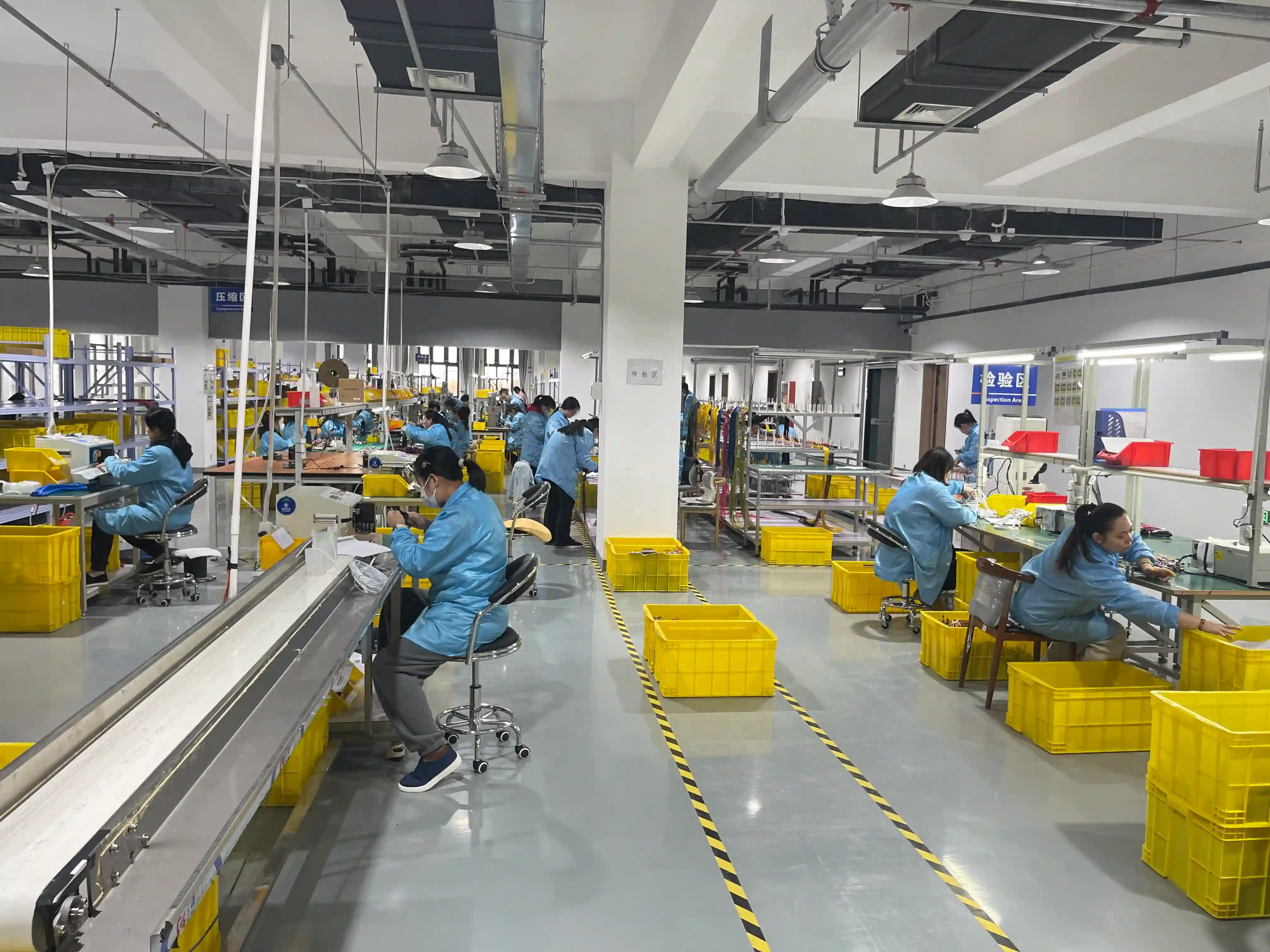
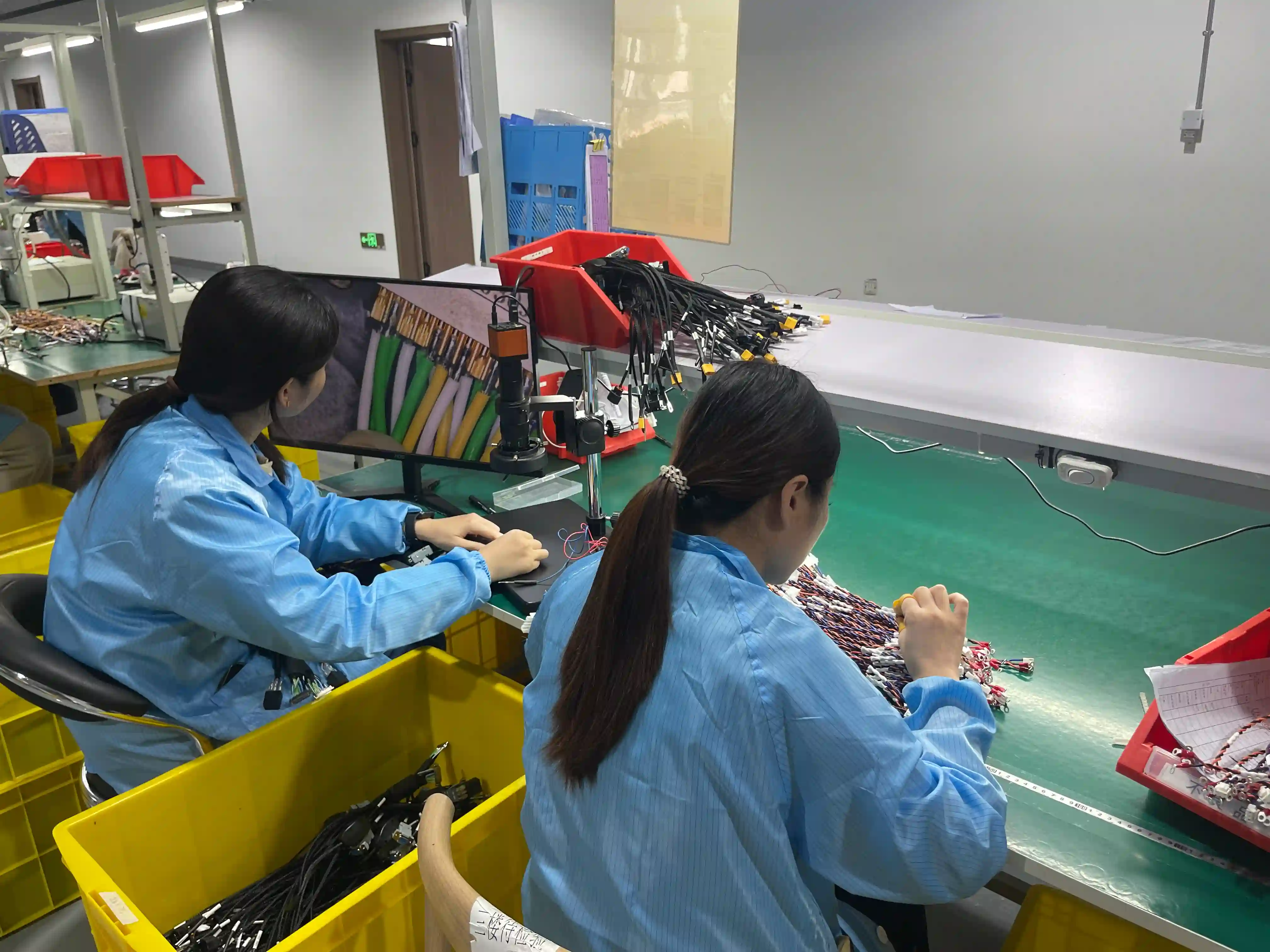
Assemblies are cut, stripped, terminated, overmolded or sealed where required, labelled, and checked to documented work instructions and revision-controlled data.
Testing and Release
Finished M12 assemblies are electrically verified and visually inspected, with additional insulation, shield, sealing, or continuity checks added to match the risk of the application.
Specification Checklist Before RFQ
- Define coding type, pin count, and connector gender together. Leaving any of those vague creates quote risk and field incompatibility.
- Separate sensor, Ethernet, and power requirements early because M12 cable construction changes materially across those use cases.
- Specify the real environment: washdown, oil, UV, drag-chain motion, and vibration all affect jacket and overmold choices.
- Confirm whether shield continuity or 360-degree termination is required for EMC-sensitive Ethernet and fieldbus links.
- Check mating-space and cable-exit clearance before choosing straight or right-angle connectors.
- Lock revision control on pinout, wire colours, labels, and branch dimensions so spare-part reorders remain interchangeable.
If you are still deciding between a general-purpose industrial cable, a sealed overmolded build, or a higher-flex machine assembly, these related pages help clarify the tradeoffs:
Environmental Fit Matters
M12 connectors are often chosen for harsh settings, but the connector alone does not guarantee a durable result. Jacket material, seal design, overmold geometry, and cable clamp strategy determine whether the assembly survives washdown, oil mist, UV, and repeated movement.
Network Performance Needs Specificity
D-coded and X-coded Ethernet assemblies should be quoted with real protocol and shielding requirements in mind. The right build depends on bandwidth target, route length, noise environment, and how the connector is bonded at the equipment interface.
Procurement Gets Easier with Controlled Builds
Once the M12 assembly is defined correctly, purchasing teams gain a clear part number, stable documentation, and repeatable testing criteria. That reduces the risk of field substitutions that look equivalent but create network or sealing failures later.
How a typical m12 cable assembly manufacturing program runs with us
This is an illustrative description of a representative project type, not a specific customer engagement. As a contract assembler we do not publish customer-identifiable data.
M12 Cable Assembly FAQ
The main technical and purchasing questions we hear from automation engineers and sourcing teams.
An M12 cable assembly is a pre-terminated circular connector cable used in industrial automation, sensors, actuators, fieldbus networks, and Industrial Ethernet systems. It combines an M12 plug or receptacle, the selected cable construction, shielding where required, and strain-relief or overmolded termination into a ready-to-install assembly.
Need a Custom M12 Cordset for a New Build or Replacement Program?
Send your drawing, sample, or machine photos and we will help define the right coding, cable construction, shielding, and sealing approach for prototype or production supply.