
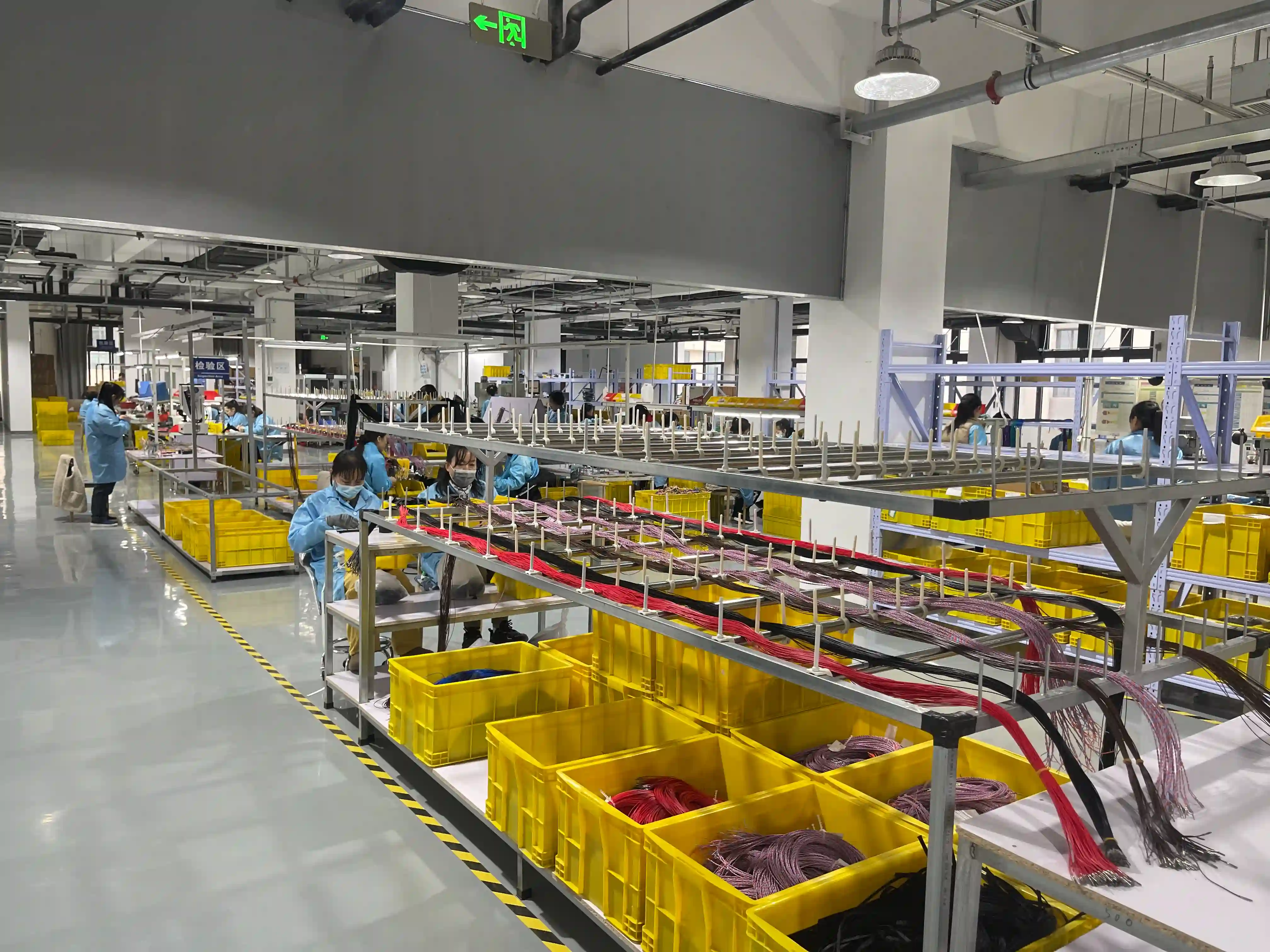
Why board design matters more than most teams expect
Many teams treat the form board as something the factory can “figure out later.” That works only on simple looms with generous slack. Once a harness has multiple breakouts, fixed clips, mixed connector orientations, or sealed protection zones, the board becomes a controlled manufacturing tool, not a convenience item.
The right board turns an abstract drawing into a physical process. It defines what is fixed, what can float, and what inspectors must measure before the harness disappears under tape, braid, or heat shrink. This is the same reason disciplined factories rely on jigs and fixtures: the tool removes interpretation error before the defect reaches final test.
“If a branch breakout really matters, say so on the board. A critical branch should carry a measured reference and a realistic tolerance such as +/-3 mm or +/-5 mm. Telling operators to match a sample by eye is not control.”
A good board also protects the credibility of first-article approval. If the approved sample was built on an unofficial layout and the repeat order uses a different interpretation, the approved part number means very little. That is why strong teams connect the board release to the drawing package, BOM, and documentation package.
10 rules for a repeatable wire harness form board
1. Start with installation datums, not overall length
Overall length alone rarely predicts fit. The board should anchor from real datums such as connector mating faces, panel exits, clip positions, or branch centres. That lets the harness absorb variation in safe zones rather than at hard interfaces where install force creates failures later.
2. Divide the harness into fixed and floating zones
Not every section needs the same precision. Fixed zones include mating connectors, breakouts, and support points. Floating zones include service loops or protected trunk lengths. This principle aligns with good DFM practicebecause it prevents unnecessary tolerance stacking.
3. Control connector clocking explicitly
Multi-pin and sealed connectors should have mating-face orientation marks, keyed nests, or fixture stops. If the operator can rotate the connector 15 or 30 degrees during wrap, the final harness may pass continuity but still fail installation. This is common on circular, rectangular, and sealed automotive connectors.
4. Mark the start and stop of every protection zone
Braid, tape, heat shrink, labels, boots, and conduit should all have visible start-stop references on the board. If protection materials are defined only in a work instruction, their position drifts. That directly affects abrasion life, serviceability, and the quality of labeling and marking.
“For harnesses above about 30 circuits, the biggest board mistake is pretending every dimension is equally critical. It is better to lock 8 or 10 fit-critical points well than to over-constrain the whole loom and force assembly workarounds.”
5. Use tolerances that production can actually hold
Tight tolerances slow cutting, verification, and routing. Many harnesses do not benefit from +/-1 mm branch control everywhere. Save tight limits for true mechanical interfaces. For non-critical branches, +/-5 mm often provides better total cost without harming fit.
6. Design fixtures to support the bundle without hiding defects
Pegs, forks, and nests should hold wires in the right path while leaving visibility for routing checks, pin insertion, and breakout inspection. If the fixture covers the exact area that inspectors need to see, the board is working against quality instead of supporting it.
7. Build inspection checkpoints into the board method
The best time to catch a wrong breakout is before the bundle is wrapped. Add dimensional checkpoints, connector orientation verification, and material presence checks before final bundling and after electrical test. Workmanship expectations should remain consistent with public references around IPC style acceptance thinking.
8. Tie the board revision to the drawing and BOM revision
Informal tape marks and hand notes on the shop floor create undocumented process drift. The board should carry a revision, effective date, and release owner, and any change to connector, clip, label, or protection position should cascade through the controlled release package.
9. Validate with the real installation envelope
A board can be internally consistent and still wrong for the product. First articles should be fitted to the real assembly, panel, or equipment mock-up wherever possible. This is especially important for compact medical devices, mobile equipment, and tightly routed industrial controls.
10. Treat the board as a process-control asset
Mature teams store boards, photos, measurement references, and approval records as part of the manufacturing system. That fits with the discipline expected in ISO 9000style process control and is what keeps a repeat order from turning into a fresh interpretation exercise.
Form board design decisions that affect repeatability
Strong board control vs weak board control
| Decision Area | Strong Control | Weak Control | Production Effect |
|---|---|---|---|
| Board scale | 1:1 board with fixed connector datums and branch references | Reduced-scale sketch or overall-length note only | Faster operator setup and fewer installation surprises |
| Breakout control | Measured branch points with tolerance bands such as +/-5 mm | Operator decides breakout location by eye | Stable fit between pilot lot and repeat orders |
| Connector orientation | Clocking marks, keyed nests, and mating-face reference arrows | No orientation control until final inspection | Lower rework on multi-connector harnesses |
| Protection zones | Sleeve start-stop, tape wraps, clamps, and labels marked on the board | Protection left to work-instruction text only | Consistent abrasion protection and label placement |
| Inspection points | Defined dimensional checks before wrap and after final test | Electrical test only | Geometry defects caught before shipment |
| Change control | Board revision tied to drawing, BOM, and test revision | Unofficial hand edits on the shop floor | Traceable first-article and repeat production release |
A practical release checklist before the board goes live
- Confirm the board is 1:1 and references real installation datums rather than only overall length.
- Verify every fit-critical breakout has a measurement reference and tolerance.
- Check connector clocking, clip positions, labels, braid, tape, and heat-shrink zones on the board itself.
- Cross-check the board revision against the drawing, BOM, and test instruction revision.
- Run first-article fit confirmation before assuming electrical pass equals install pass.
- Archive approval photos so repeat lots have the same visual reference, not just text notes.
“Treat the board like tooling. If a revision changes a clip by 12 mm or rotates a connector by one clock position, that is a process change and should be released with the same discipline as a crimp applicator or test fixture update.”
If your team is still early in the program, it helps to align the board review with RFQ preparationand prototype planning. It is much cheaper to fix a breakout reference before the first production lot than after field installers start forcing connectors into place.
Common board-design mistakes that create rework
Using the sample as the only authority
Samples can hide accumulated drift. Reverse engineer them, but convert what matters into controlled dimensions before release.
Over-constraining non-critical lengths
Over-tight tolerance on every branch slows wire cutting, routing, and verification without improving function. Use engineering judgement instead of defaulting to the tightest possible number.
Forgetting protection-material references
A harness can be electrically correct but still fail abrasion, sealing, or serviceability if sleeve and tape positions drift.
Leaving revision changes off the board
Shop-floor marker edits create invisible process changes. Controlled layout assets prevent repeat-order surprises and strengthen incoming inspection conversations.
How a typical wire harness form board design guide program runs with us
This is an illustrative description of a representative project type, not a specific customer engagement. As a contract assembler we do not publish customer-identifiable data.
Frequently asked questions
What is a wire harness form board?
A wire harness form board is a 1:1 assembly fixture, sometimes called a nail board, that fixes connector positions, breakout points, routing paths, and bundle geometry before wrapping and final test. For harnesses with 20 or more circuits, a controlled board often cuts routing variation by more than 50% compared with freehand assembly.
When should a harness use a form board instead of freehand assembly?
Use a form board when the harness has multiple branches, fixed clip locations, connector clocking, or installation space that cannot absorb routing drift. In practice, once a harness reaches roughly 3 branch legs or 2 mating connectors with orientation requirements, a board usually pays for itself in lower rework.
How tight should branch length tolerances be on a harness board?
Do not default to +/-1 mm everywhere. Many production harnesses work well with +/-5 mm on non-critical branch points and tighter limits only where a connector mates into a hard mechanical envelope. Over-specifying tolerance can slow cutting and assembly by 20% to 40% without improving field performance.
What information should be on a released form board drawing?
A controlled board package should include connector datums, branch lengths, sleeve and tape zones, label positions, clip locations, wire IDs, revision number, and inspection checkpoints. If the harness follows IPC/WHMA-A-620 workmanship expectations, the board should point inspectors to the relevant crimp, routing, and protection acceptance criteria.
Can a supplier build a form board from a sample harness?
Yes, but the sample should be treated as a starting point, not the final authority. A good supplier reverse engineers the sample into a controlled 1:1 layout, confirms true branch references, and then verifies the recreated harness against the installation envelope before approving production.
How is a harness board validated before production release?
Validation usually includes first-article fit verification, dimensional checks on critical branches, 100% continuity and pinout testing, and confirmation that protection materials begin and end in the intended zones. On higher-risk programs, teams also add pull-force checks, shield continuity, or customer-specific functional testing before production sign-off.
Need a controlled harness board instead of a one-off shop sketch?
We build prototype and production harnesses with controlled board layouts, revision-matched documentation, and electrical verification for Australian OEM and industrial programs. If your current harness fit depends on operator memory, the board release is where to fix it.
Related articles
Wire Harness Documentation Guide
How drawings, BOMs, wire lists, and revision control support repeatable harness manufacture.
Wire Harness DFM Guide
Design-for-manufacturability rules that reduce cost without creating fit or quality problems.
Wire Harness Manufacturing Process
The end-to-end production flow from cutting through test, with the board stage in context.