
Wire Harness Board Assembly for Australian OEMs
Nail board and form-board harness manufacturing for projects that need repeatable branch geometry, cleaner first-article approval, and reliable installation fit from prototype through repeat production.
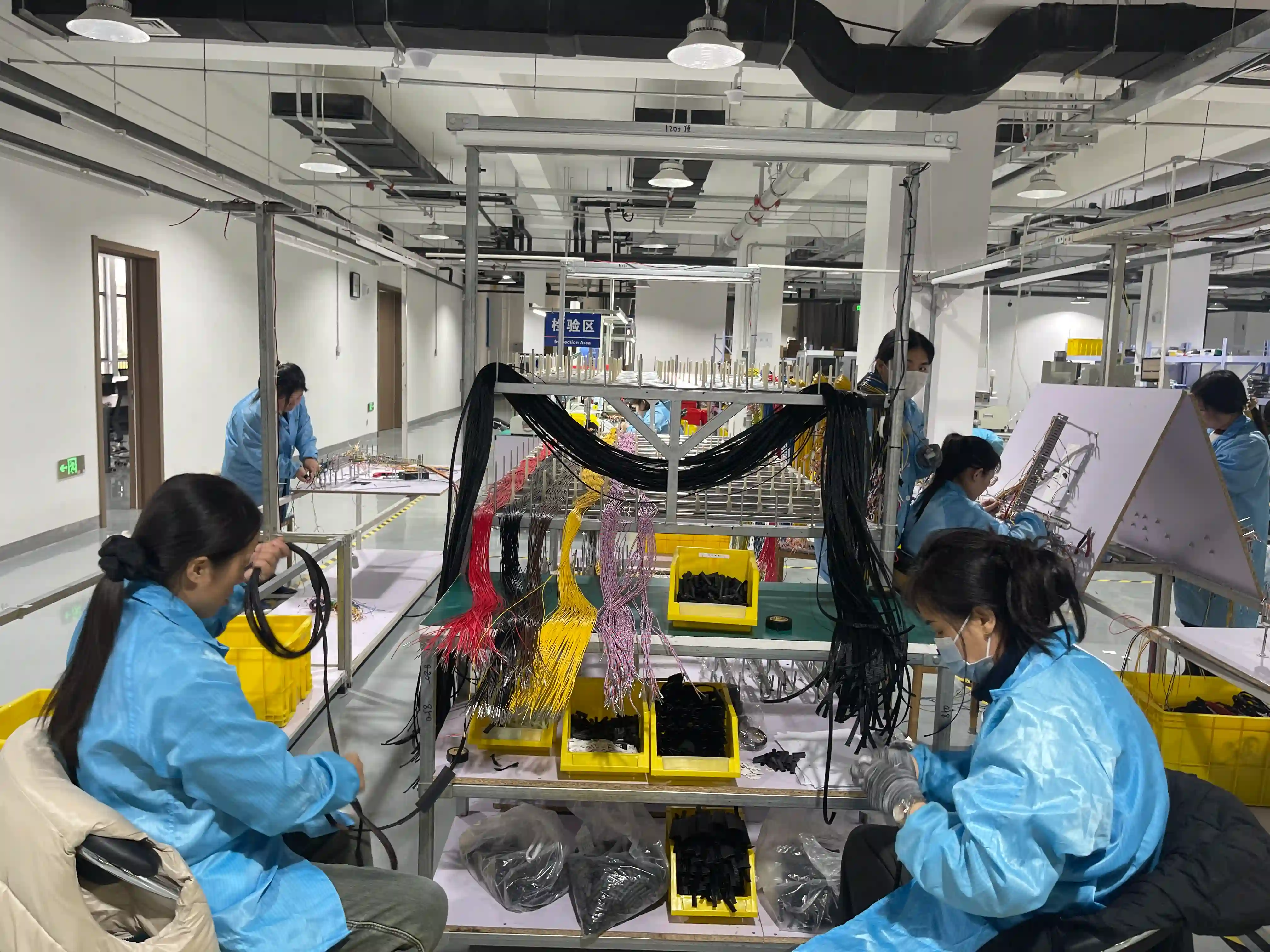
Why Board-Controlled Harness Assembly Matters
A wire harness can pass continuity testing and still create major installation problems if the branch geometry is inconsistent. That is why complex harnesses are often built on a physical board. The board controls the real path of the harness before wrapping, sleeving, and finishing, so the approved sample is not just electrically correct but physically repeatable.
For Australian OEMs, this matters most on equipment with tight packaging, multiple breakouts, fixed mounting clips, mixed connector orientations, or line-side assembly pressure. A controlled board method reduces rework, shortens installation time, and gives engineering a clearer first-article reference for future purchasing.
If your team is fighting small length errors, breakout drift, or harnesses that fit only when handled by the same operator who built them, the problem is often not the circuit design. It is the lack of a stable form-board release.

What We Control on a Wire Harness Board
Board assembly is not just a workshop convenience. It is a manufacturing control method for the physical features that most often cause field-fit and repeatability issues.
Controlled Branch Geometry
Board fixtures define the real breakout points and branch paths so finished harnesses fit the product consistently rather than only matching an overall-length note.
Repeatable Length Accuracy
Measurement references on the board keep leg lengths, clip positions, and service loops stable across prototypes, first articles, and repeat builds.
Better Connector Orientation
Complex multi-branch harnesses often fail at installation because connector clocking shifts. Board assembly holds orientation before wrapping and finishing.
Stronger First-Article Approval
A documented board layout gives purchasing and engineering a defined reference for what was actually approved, reducing drift between samples and later orders.
Verification Beyond Appearance
The board controls physical geometry, while electrical test confirms the circuits. The combination is more reliable than visual checking alone on complex looms.
Prototype to Production Continuity
Once the form-board method is locked, the same geometry can be released into repeat production with less operator interpretation and lower rework risk.
Board Types We Support
Prototype Form Boards
Used to prove fit, branch timing, and connector orientation quickly before production tooling is frozen. Ideal when the harness routing is still being refined.
Repeat Production Nail Boards
Used for stable builds where the approved geometry must be reproduced consistently across scheduled production lots and supplier handoffs.
Service Replacement Boards
Useful for legacy or aftermarket programs where the original supplier is unavailable and a field-proven harness must be recreated from samples.
Technical Scope
Typical Applications
Board-controlled harnesses are most valuable where physical routing and installation fit matter as much as the electrical circuit itself.
Industrial Equipment and Control Systems
Machine looms, PLC harnesses, and internal equipment wiring often need exact breakouts so installation technicians can land the harness without forcing branches into place.
Automotive and Transport Sub-Harnesses
Vehicle subassemblies benefit from defined clip points, branch geometry, and sealed connector orientation, especially where the harness must pass through fixed packaging zones.
Marine and Harsh-Environment Looms
When sleeving, sealing, and support points must align properly, board-controlled assembly prevents branch drift before protective finishing is applied.
Robotics and Motion Assemblies
Compact moving systems need consistent routing and strain management. A controlled board reference helps avoid fit issues that only appear during installation.
Medical and Analytical Equipment
Dense internal harnesses with low service access need predictable geometry, labels, and connector orientation so assembly and maintenance remain manageable.
Legacy Harness Replacement
Board recreation is often the most practical route when a sample exists but the original build package is incomplete or no longer available.
Our Board Assembly Process
Drawing or Sample Review
We confirm the real fit-critical dimensions, branch references, connector orientations, and installation constraints before defining the board method.
Board Layout Definition
The assembly reference is created around breakout points, branch legs, clips, labels, protection zones, and any handling notes needed for repeatability.
Prototype or First-Article Build
Initial harnesses are built on the defined board reference so fit, routing, and mating can be approved before the release package is locked.
Controlled Production Assembly
Approved materials, terminal tooling, routing methods, and work instructions are used to keep geometry and workmanship stable across the lot.
Electrical Test and Final Audit
Finished harnesses are checked against the agreed electrical and dimensional criteria, then packed for incoming inspection or line-side installation.
Public Quality References We Align With
A board-built harness still needs stable workmanship and quality language. For accessible public reference points, we use recognised sources on cable harness structure, crimp termination fundamentals, and ISO 9001 quality systems. These do not replace your product-specific drawing and acceptance criteria, but they help keep the language around workmanship and release control clear and inspectable.
When a project needs design refinement before the board method is frozen, our custom design and engineering drawing review capabilities are the right next step.
Related Capabilities and Resources
Buyers evaluating board-built harnesses usually also need DFM review, electrical validation, and a clear release path from sample to production.
Wire Harness Manufacturing
Broader custom harness capability for production-scale builds and mixed-application programs.
Engineering Drawing Review
Review BOM, pinout, tolerance, label, and test notes before releasing a board-built harness.
Testing & Quality Control
See the electrical validation and inspection capability that backs board-controlled harness production.
Wire Harness DFM Guide
A practical resource on design-for-manufacturability decisions that affect harness build quality and repeatability.
How a typical wire harness board assembly for australian oems program runs with us
This is an illustrative description of a representative project type, not a specific customer engagement. As a contract assembler we do not publish customer-identifiable data.
Frequently Asked Questions
Need a Repeatable Wire Harness Board Build?
Send the drawing, sample, or installation photos. We will review the board-control requirements, quote the build path, and define the first-article release needed for repeat supply.