
Cable Overmolding Design Guide
How to specify overmolded cable assemblies that survive real flex, sealing, and production-volume pressure. This guide covers materials, geometry, tooling DFM, validation, and the design mistakes that turn a clean sample into a field-return problem.
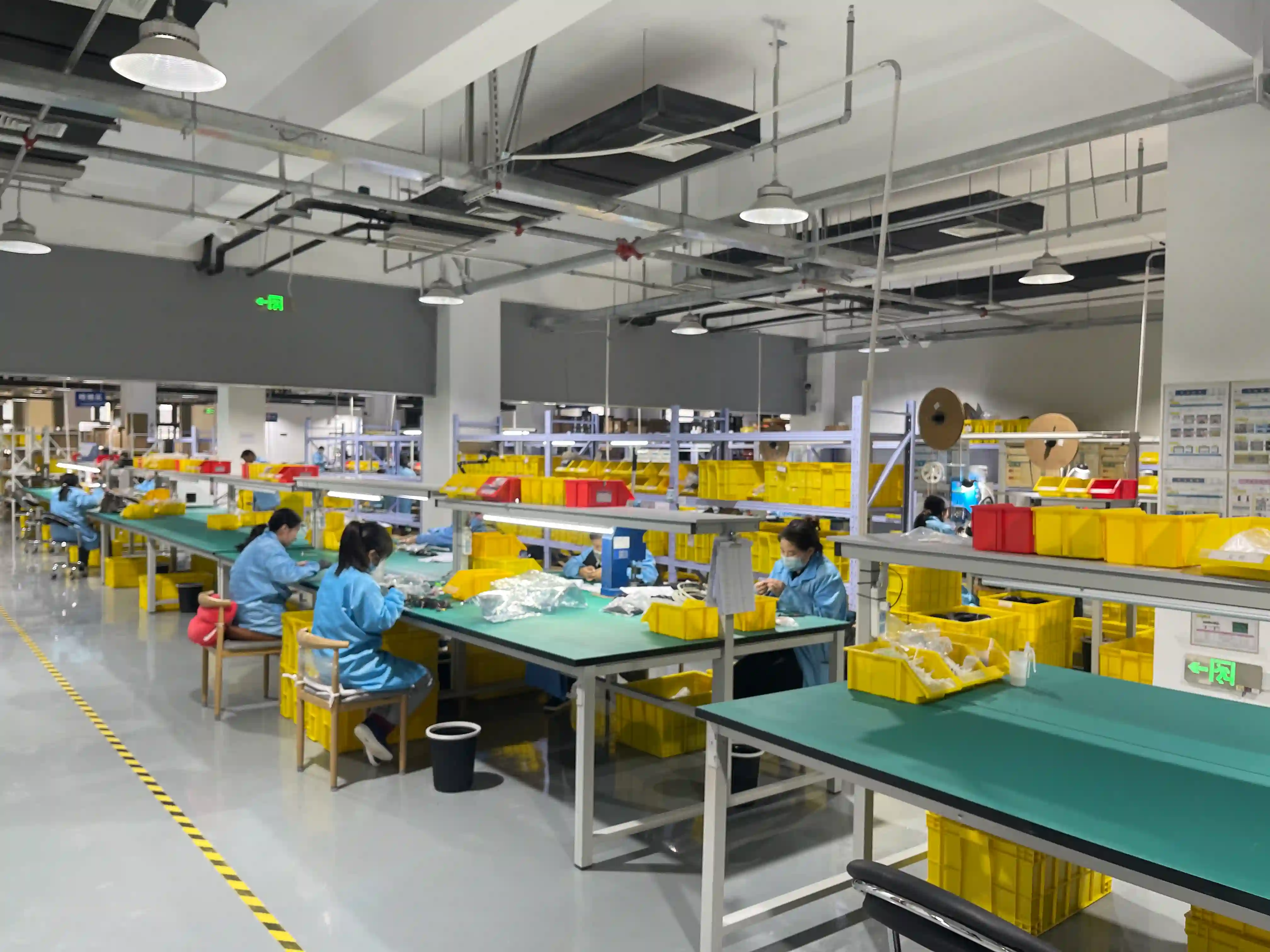
A cable overmold is not just a cosmetic shell. It is a mechanical transition that has to spread bend stress, resist pull-out, protect the termination zone, and in many programs help the assembly reach a sealing target such as IP67 or IP68 . Teams usually get into trouble when they treat overmolding as a last cosmetic step after the connector and cable are already frozen.
In practice, good overmold design sits between strain relief engineering, material compatibility, tooling release, and the test plan. It also has to align with whether the program should really be overmolded or potted in the first place. For OEMs buying custom interconnects, the fastest route to a robust result is to specify the mechanical load case and validation method before anyone cuts steel.
Early quote review prevents expensive tooling changes
If your assembly needs waterproof sealing, flex life, or a branded cosmetic finish, define that before tooling release. Changing cable OD, connector orientation, or latch-clearance geometry after first shots can add weeks and force tool rework.
Request an Overmold DFM Review"For most OEM programs, the overmold should survive at least 500 to 1,000 flex cycles in development and keep conductor movement below the visual threshold after a 30 lb pull check. If you only approve the sample by appearance, you are qualifying aesthetics, not reliability."
Why overmolding fails or succeeds
Three interfaces matter most: the cable jacket to overmold bond, the connector body retention inside the cavity, and the bend transition where the cable exits. If any one of those is wrong, the product can pass first-piece visual inspection and still fail in the field from jacket creep, water ingress, or conductor fatigue at the back of the termination.
That is why the design input should include cable OD tolerance, jacket material, expected flex direction, pull load, fluid exposure, and whether the assembly is static, service-handled, or continuous flex. Standards bodies such as the IEC and UL define product-level expectations, but your assembly still needs a program-specific test window.
Signs the design is robust
- Connector is positively retained and cannot float during injection.
- Exit geometry gradually transfers stress over a useful length.
- Cable jacket and overmold resin are compatibility-tested.
- Sealing is proven with the final connector and cable, not just coupons.
Signs the design is risky
- Short, hard boot creates a second stress point within 5 to 10 mm.
- Tooling closes on cosmetic lines without cable-centering control.
- No allowance for cable OD tolerance or ovality.
- Validation covers looks and continuity only, with no flex or pull test.
Material selection comes before geometry polish
Buyers often start by asking for "TPU overmold" or "soft TPE handle" because those words sound familiar. That is backwards. First decide what the assembly must survive: oil, UV, skin contact, abrasion, disinfectants, or submersion. Then check whether the resin bonds to the jacket compound and whether the hardness creates the right stiffness gradient away from the connector.
| Material | Best Use | Strength | Watch-Out | Typical Fit |
|---|---|---|---|---|
| PVC | General indoor cable sets | Low cost, stable processing | Limited high-flex and premium feel | Power cords, basic industrial leads |
| TPU | Abrasion and repeated flex | Excellent toughness and wear resistance | Higher cost, needs tighter process window | Mining, robotics, mobile equipment |
| TPE | Soft-touch and ergonomic transitions | Good appearance and flexibility | Adhesion varies strongly by jacket chemistry | Medical and handheld equipment |
| Silicone | Extreme temperature range | Very flexible at low and high temperature | More complex molding and tear control | Medical, lab, specialty sensing |
| Nylon | Hard shell and structural support | Good heat and dimensional stability | Can be too stiff for flex transitions | Static industrial and panel assemblies |
If your assembly requires both harsh abrasion performance and long flex life, the answer is not always "use the hardest material." A softer overmold placed over the right support length can outperform a hard boot because it reduces the strain concentration where the conductor leaves the termination.
"Most tooling mistakes start with the wrong stiffness profile. We aim for a controlled transition instead of a hard step. On flexing cables, a Shore A difference of 10 to 20 points can decide whether the bend moves gradually over 20 mm or snaps at one point after 800 cycles."
Geometry rules that prevent cracked exits and leaks
Exit and bend control
Start with a gradual taper, not a short cone. As a practical rule, the strain-relief section usually needs enough length to move bend stress beyond the conductor crimp or solder zone. If the cable will flex in service, align the exit to the real bend direction instead of assuming neutral straight pull.
Sealing path design
IP performance depends on surface contact, compression, and dimensional control. Mold around a defined sealing land where possible. Do not rely on flash or resin squeeze-out as a seal. That looks convincing in a sample and performs badly after thermal cycling.
Draft angle matters as much as the visible shape. For many elastomer tools, 1 to 3 degrees is a workable starting range. Textured surfaces, deep undercuts, and aggressive logos increase ejection force and can distort the part or drag marks into the sealing zone. Keep branding away from critical interfaces unless the surface has been validated on production-intent tooling.
Cable centering is another common miss. If the conductor package sits off-axis inside the cavity, one wall goes thin and another heavy. That changes cooling, shrink, and bend behaviour. Fixtures, locators, or preforms that hold the cable repeatably are usually worth far more than decorative geometry changes.
Tooling DFM should be reviewed before first samples
Overmolding becomes expensive when the team uses steel to discover basic process issues. The DFM review should confirm gate location, venting, ejector strategy, cable fixturing, draft, parting line placement, and whether the connector latch or keying features remain functional after molding. This is especially important on compact circular, medical, and waterproof assemblies where a few tenths of a millimetre can change mating performance.
DFM checklist for buyers and engineers
- Confirm final cable jacket material, OD tolerance, and supplier source before tooling freeze.
- Review whether the connector needs mechanical retention pins, flats, or anti-rotation features.
- Place parting lines away from seals, latch travel, and user-grip surfaces where possible.
- Request first-shot photos, section cuts, and pull-test data, not just assembled samples.
- Define what can change without tool rework and what cannot.
If you also need broader assembly validation, tie the overmold review into the same program as your cable testing and connector acceptance checks. Treat it as one controlled assembly, not separate cosmetic and electrical decisions.
"Once the tool is cut, every 0.2 mm argument becomes expensive. We ask customers to freeze cable OD, connector revision, and bend direction before steel release because those three inputs drive most of the downstream rework cost."
Validation plan: prove the assembly, not just the overmold
The test plan should reflect how the product fails in service. For static panel cables, that may be pull-out resistance plus environmental sealing. For handheld or robotic assemblies, flex cycling is usually the bigger risk. For washdown or outdoor equipment, sealing after thermal aging matters more than fresh-shot appearance.
Mechanical
Pull test, bend test, torsion where relevant, and destructive section review after the trial build.
Environmental
IP ingress, temperature cycling, fluid exposure, UV, or salt conditions based on the actual end market.
Electrical
Continuity, insulation resistance, hi-pot, and functional checks if the assembly carries signal or power that can drift under stress.
A useful shortcut is to validate the complete route from overmold material choice to finished assembly release. That means sample approval, test criteria, and revision control should sit in the same document package used for your overmolding program and production launch.
Five common overmolding mistakes
1. Approving by looks only
A clean sample can still hide conductor stress, weak sealing, or poor cable retention. Require pull, flex, and section checks.
2. Ignoring cable jacket variability
A design tuned to one cable supplier can loosen or flash badly when another jacket runs at the opposite side of tolerance.
3. Making the boot too short and too hard
This creates a stress riser at the back edge of the overmold and is one of the most common sources of flex failure.
4. Freezing tooling before connector revision control
Even minor connector updates can move latch windows, shoulders, and keying features enough to force tool rework.
5. Using overmolding where the program really needs serviceability
If the cable must be field-replaceable or reworked regularly, a mechanical strain-relief system may be the better architecture.
How a typical cable overmolding design guide program runs with us
This is an illustrative description of a representative project type, not a specific customer engagement. As a contract assembler we do not publish customer-identifiable data.
FAQ
What is the best material for cable overmolding?
There is no universal best material. PVC is common for cost-sensitive indoor products, TPU is strong for abrasion and repeated flex, TPE suits many ergonomic and medical designs, and silicone is useful when temperatures may span roughly -60 C to +200 C. The correct answer depends on jacket compatibility, not just softness.
How much draft angle is needed in an overmold tool?
A practical starting point is 1 degree to 3 degrees on most walls. Deep features, textured surfaces, and tacky materials may need more to prevent drag and tearing during ejection. If the part is sticking in the tool, the problem is often geometry, not just molding pressure.
Can cable overmolding achieve IP67 or IP68?
Yes, but only when the full connector system is designed for sealing. IP67 generally refers to immersion up to 1 metre for 30 minutes, while IP68 requires a defined test condition agreed by the manufacturer. The overmold must work with connector seals, cable tolerance, and test fixtures as one system.
When is overmolding better than potting?
Overmolding is usually better after the design is stable and annual volume is high enough to justify tooling, often from several hundred to several thousand units depending on complexity. Potting remains attractive for prototypes, low-volume specials, and housings that are too irregular for efficient tooling.
What tests should an overmolded cable assembly pass?
A solid release plan usually includes continuity, visual section approval, pull test, flex cycling, and ingress checks. Many teams also add insulation resistance or hi-pot. For harsh environments, include temperature cycling and exposure to the real fluid set, not a generic lab substitute.
What causes overmolded cable failures in production?
The most common causes are poor cable-to-resin compatibility, short or overly stiff strain relief, connector movement in the cavity, thin wall sections, and incomplete validation. Failures often appear after 500 to 1,000 flex cycles or after thermal and moisture exposure, not on day-one inspection.
Need help reviewing an overmold design before tooling release?
We build custom overmolded cable assemblies for Australian OEMs across industrial, mining, medical, and transport programs. If you already have a drawing, sample, or connector part number, we can review the cable OD, material pair, bend direction, and validation plan before the project locks into avoidable tooling cost.
Related reading
Overmolded vs Potted Cable Assembly
When tooling, volume, and sealing targets make overmolding the right choice.
Cable Assembly Strain Relief Guide
Compare overmolding, boots, glands, and clamp-based strain relief methods.
Wire Harness Testing 101
Electrical and mechanical checks that should sit alongside overmold validation.