
Cable Manufacturers China for OEM Cable Assembly and Harness Supply
Source custom cable assemblies and wire harnesses from China with tighter BOM control, first-article approval, electrical testing, and Melbourne-based support for Australian procurement and engineering teams.
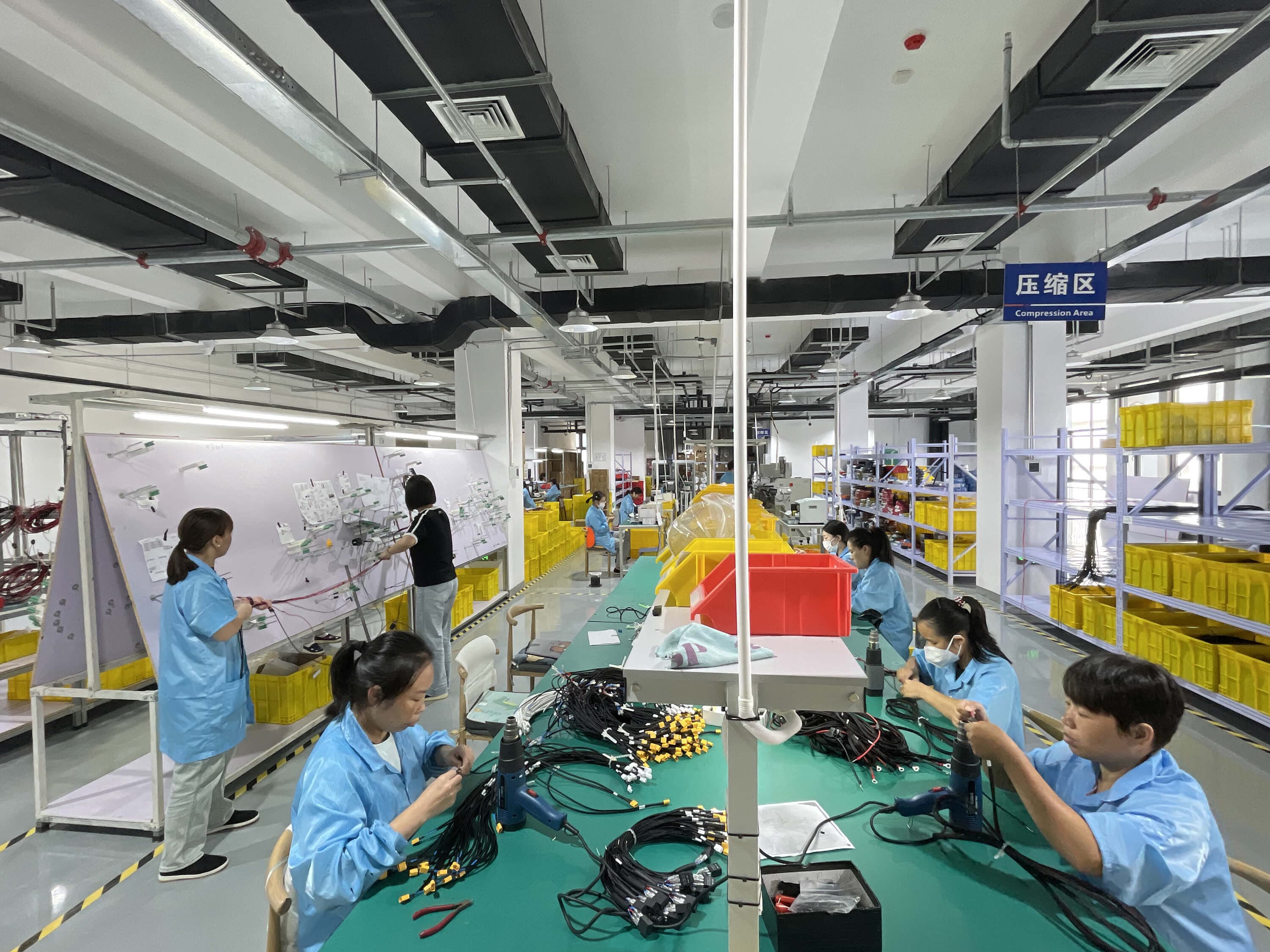
What buyers actually need from China cable manufacturers
A strong supplier is not just a low quote. Buyers need a factory that can interpret drawings correctly, lock approved materials, build first articles, manage connector sourcing, and ship finished assemblies without creating incoming inspection surprises in Australia.
China Manufacturing with Australian Buyer Context
We structure the project around how Australian OEM, procurement, and quality teams actually buy: clear RFQs, sample approval, shipping windows, and repeat reorder control instead of informal factory-only communication.
Supplier Selection Based on Build Fit
Not every cable factory is suited to every program. Low-mix moulded leads, high-mix wire harnesses, RF assemblies, and medical-adjacent builds each need different tooling, process discipline, and documentation depth.
Drawing and BOM Review Before Release
China sourcing works best when connector orientation, conductor spec, labels, and test scope are defined before the first production batch. We push that clarification up front so the factory is not forced to interpret gaps.
IQC and Finished-Test Discipline
Electrical continuity alone is not enough on many programs. We align incoming checks, crimp and workmanship expectations, and finished electrical verification around the actual field risk of the cable assembly.
Transit and Packaging Planned Into the Build
Longer shipping legs change the risk profile. Connector caps, bend control, carton segregation, moisture protection, and label accuracy matter more when the assemblies are crossing borders before use.
Prototype-to-Production Repeatability
The goal is not just one acceptable sample. The goal is a stable part number that can be reordered with the same BOM, same test evidence, and less incoming inspection drama on later lots.
Best-fit cable manufacturing programs
China manufacturing usually works best when the assembly is custom, recurring, or component-sensitive. The more defined the release package becomes, the more value buyers get from offshore scale and sourcing depth.
Australian OEM Production Programs
Cable assembly and harness programs for industrial equipment, transport systems, medical devices, and electronics products that need repeat offshore supply under a controlled BOM.
Supplier Transfer and Cost-Down Projects
Existing assemblies moved from a high-cost or unstable source into a better-controlled China manufacturing flow without losing fit, function, or traceability.
Sample-to-Production Conversion
Imported cables, field samples, or prototype bench leads converted into documented part numbers with measurable dimensions, approved connectors, and a defined release test.
Connector-Constrained Builds
Projects where connector lead times, alternate sourcing, or cable-component availability are easier to manage through China-based manufacturing ecosystems.
High-Mix Harness Outsourcing
Harness families with multiple labels, branch variants, and accessory packs that need manual build flexibility but still require stable test and packing rules.
Prototype Then Scale Programs
New products that need a first article quickly, then need the same source to ramp into repeat production once the design freezes.
Technical and commercial snapshot
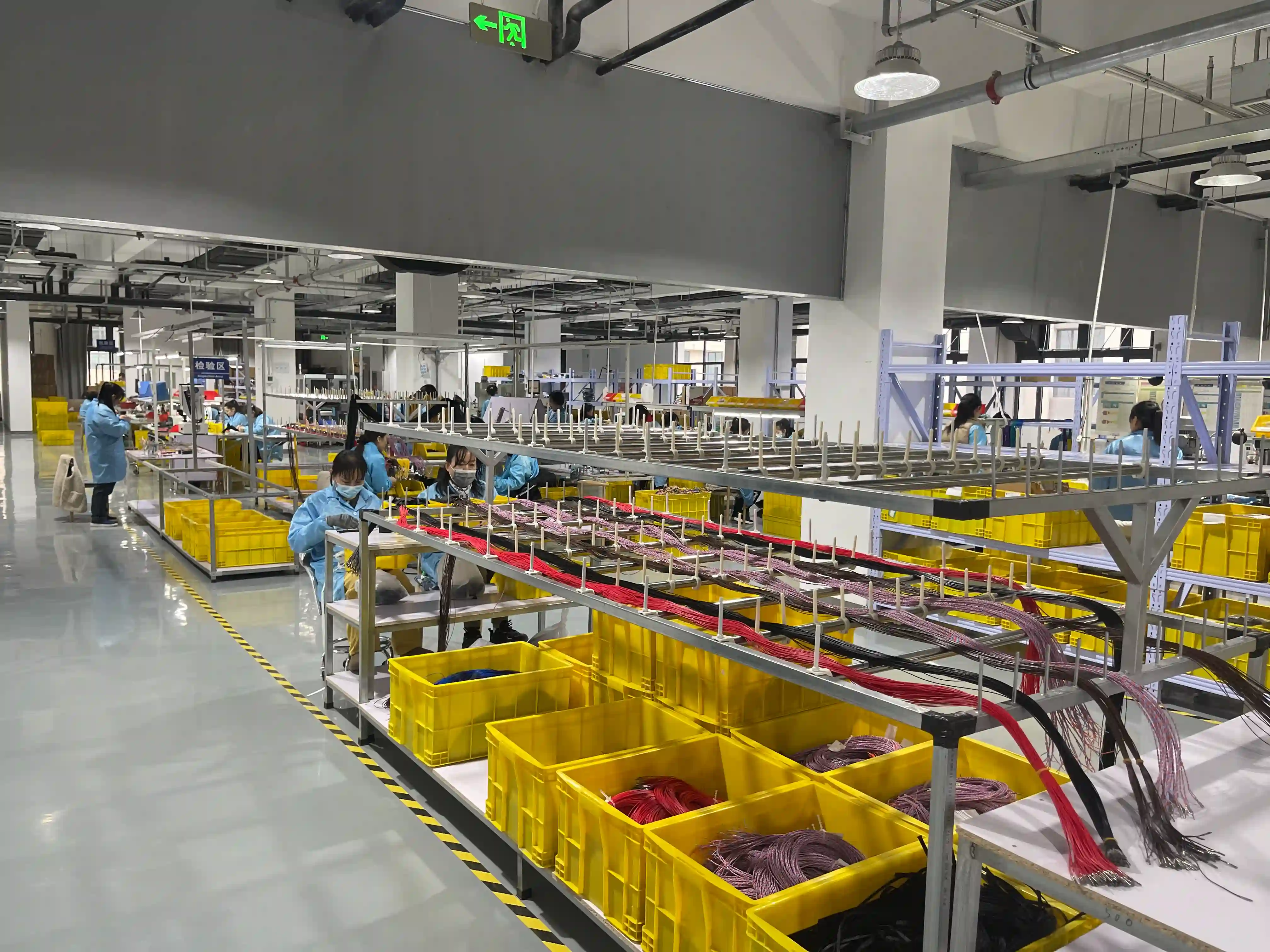
How a controlled offshore release works
Offshore sourcing breaks down when the first sample and the recurring lot are treated as different jobs. The process has to lock commercial, technical, and packaging requirements into one release path.
RFQ and Technical Review
We review drawings, BOMs, connector families, annual usage, cable type, and the real acceptance criteria before committing to a build path or quoting a production release.
Factory Fit and Material Definition
The program is aligned to the right manufacturing process and sourcing route, including approved terminals, wire, labels, shields, moulding, and packaging details.
Sample or First-Article Build
Initial builds validate fit, mating, routing, connector orientation, and test expectations before the assembly is treated as a repeatable production item.
Controlled Production and Inspection
Released builds follow the approved BOM, work instructions, and electrical test scope so later batches are not rebuilt from memory or chat messages.
Packing, Shipment, and Reorder Stability
Assemblies are packed for export handling, labelled for receiving, and kept under revision control so Australian buyers can reorder without restarting engineering every time.
Where the work happens: China build, Australian support
Manufacturing execution and buyer coordination have different responsibilities. Agree who supplies the evidence, who approves it, and who communicates the release before work starts.
China manufacturing execution
The manufacturing side carries out the physical build against the approved release package.
Cable preparation, terminal crimping, and assembly to the approved drawing and BOM.
Overmolding where specified, with tooling and finished geometry matched to the approved sample.
In-line checks and finished electrical testing against the agreed inspection and test requirements.
Packing, labelling, and protection of finished assemblies for export handling.
Australian support and coordination
Melbourne-based communication connects the buyer with the manufacturing workflow and keeps approvals and changes clear.
RFQ intake and engineering/BOM liaison to resolve technical questions with the factory.
Sample and first-article approval coordination, with quality sign-off liaison between buyer and factory.
Shipment and customs coordination with the nominated freight and clearance providers under the agreed shipping terms.
Reorder and revision management so the buyer and factory work from the same approved release.
What goes into landed cost
Use these components to compare quotes on the same delivery basis. Confirm what is already included in the unit price or freight offer before adding separate charges so nothing is counted twice.
- Ex-works unit price
- The quoted finished assembly price at the factory varies with volume, build complexity, and connector content, with inclusions confirmed before comparison.
- Tooling / NRE
- One-time tooling and non-recurring engineering cover moulds, fixtures, or setup work and can be amortised across the expected production volume.
- Connectors and cable components
- Approved connectors, terminals, cable, and accessories form the material content and should be added separately only where excluded from the unit price.
- QC and electrical testing
- Inspection, electrical verification, and agreed test evidence may be included in the unit quote or charged separately for additional scope.
- Export packaging
- Protective packing, carton labelling, and any pallet or moisture-protection requirements need to be checked against the quoted packing scope.
- International freight
- Sea freight generally suits planned bulk supply while air freight supports urgent deliveries at a higher transport cost, with origin handling and destination charges checked for inclusion.
- Marine / transit insurance
- Cargo cover protects against agreed transit risks, with exclusions and the insured journey checked against the shipping term and any cover already arranged.
- Australian import duty
- Duty depends on tariff classification, customs value, and any applicable origin-based preference supported by the required documentation.
- GST
- Australian import GST is 10% of the taxable importation value, including customs value, applicable duty, and transport and insurance to the Australian place of consignment without counting amounts already included.
- Customs brokerage / clearance
- Broker services, import declarations, and applicable clearance or processing charges cover the administrative work needed to release the shipment.
- Inland delivery
- Local transport from the arrival port or airport to the buyer's door depends on destination, handling needs, and what the freight quote already includes.
Shipping terms and who is responsible
Specify the named place or port and the agreed Incoterms edition in the order. FOB and CIF apply to sea and inland waterway transport; for container handover at a terminal, consider FCA or CIP to match the actual delivery point. Confirm that the party responsible for customs clearance can perform it.
EXW — Ex Works
The seller makes goods available at the named place, usually the factory, where risk passes before loading; the buyer pays for loading and onward transport, books freight, handles export and import clearance, and pays Australian duty and GST.
FOB — Free On Board
The seller pays for export clearance and delivery on board the buyer-nominated vessel at the named shipment port, where risk and onward costs pass to the buyer; the buyer books and pays for main freight, clears Australian imports, and pays duty and GST.
CIF — Cost, Insurance and Freight
The seller clears export and books and pays freight and the required minimum cargo insurance to the named destination port, but risk passes on board at the shipment port; the buyer clears Australian imports, pays duty and GST, and covers onward delivery and destination charges excluded from the carriage contract.
DDP — Delivered Duty Paid
The seller arranges and pays for transport and export and import clearance, including Australian duty and GST, with risk passing at the named destination when goods are available on the arriving vehicle ready for unloading; the buyer unloads and pays unloading costs unless included in the seller's carriage contract.
Delivery and acceptance
Inspect goods on receipt against the packing list and agreed test evidence. Raise any shortage, damage, or discrepancy within the agreed acceptance window, retaining photographs, packaging, and lot references for review. Record that window in the purchase agreement; receipt inspection does not change the risk-transfer point under the shipping term.
How incoming-material and quality issues are handled
An issue needs a clear owner, evidence, and a release decision. Use the following process to control affected stock and carry the findings back into the next incoming-material check.
Contain and quarantine the suspect lot
Identify affected material and related work in progress or finished assemblies, segregate the suspect stock, and hold its release while the scope is checked; agree a containment plan before the next shipment.
Verify against the approved references
Compare component identity, dimensions, workmanship, and test results with the approved BOM and first-article reference, recording the discrepancy and lot traceability for a shared assessment.
Investigate the root cause with the factory
Review supplier material evidence, receiving checks, build records, and process conditions to establish both how the defect occurred and why the existing checks missed it.
Apply corrective action and re-inspect
Agree the disposition of affected stock, carry out approved replacement or rework, and repeat the relevant inspection and electrical tests before the lot is considered for release.
Update the control plan for incoming material
Revise incoming acceptance checks, reference samples, supplier requirements, and work instructions as needed, then check subsequent receipts for the same failure mode to confirm the action is effective.
Buyer checklist before you source cable assemblies from China
The biggest failures are usually specification failures, not factory disasters. Clear ownership of release details does more for quality than chasing the cheapest unit price.
Treat the cable assembly drawing, BOM, and test plan as one release package. In offshore supply, any gap between those three documents usually becomes a factory assumption.
Lock connector part numbers or approved alternates before the first sample. Uncontrolled substitutions are one of the fastest ways to create incoming quality disputes.
Define the shipping basis early. Public references such as Incoterms affect landed-cost decisions, risk transfer, and who owns delay or damage in transit.
Make packaging a formal requirement when the assembly includes fine-pitch terminals, RF connectors, cosmetic customer-facing ends, or preformed routing shapes.
Plan incoming inspection around the actual risk. A simple continuity test at receiving is rarely enough if the build also depends on orientation, labels, or fit-critical dimensions.
Avoid buying through a generic trader when the program needs engineering clarification, first-article evidence, or stable revision history over multiple production lots.
Useful public references
These are stable public references that help frame outsourced cable manufacturing decisions without relying on bot-blocked standards sites.
Useful for understanding why process ownership, release control, and supply-chain handoffs matter in outsourced production.
Important when quoting or comparing EXW, FOB, CIF, and other shipping responsibilities on international cable orders.
A stable public reference for the quality-management logic behind repeatable documentation and controlled production release.
Related capabilities and buyer guidance
Most China cable manufacturing projects improve when the RFQ, quality plan, and sample approval logic are tightened before the first order leaves purchasing.
Wire Harness Manufacturing
See our broader harness capability for recurring custom builds and test-controlled release.
Engineering Drawing Review
Tighten BOM, pinout, and revision quality before sending an RFQ offshore.
Testing & Quality Control
Review the electrical and workmanship checks that keep prototype and production supply aligned.
Onshore vs Offshore Cable Assembly
Commercial guidance for comparing local and offshore supply models in Australia.
How a typical cable manufacturers china program runs with us
This is an illustrative description of a representative project type, not a specific customer engagement. As a contract assembler we do not publish customer-identifiable data.
Cable manufacturers China FAQ
Common questions from procurement, engineering, and quality teams evaluating offshore cable assembly supply.
Most buyers are looking for a factory that can build custom cable assemblies or wire harnesses at production scale, source connectors and cable economically, and still maintain controlled documentation, inspection, and repeat-order consistency. The real decision is not just geography. It is whether the supplier can convert a drawing, sample, or BOM into a stable manufacturing release.
Need a China cable manufacturing source that behaves like a controlled OEM supplier?
Send the drawing, sample, BOM, or target cost. We can review whether the assembly fits China-based production, what quality controls should be locked before release, and how to keep repeat orders stable for your Australian team.