
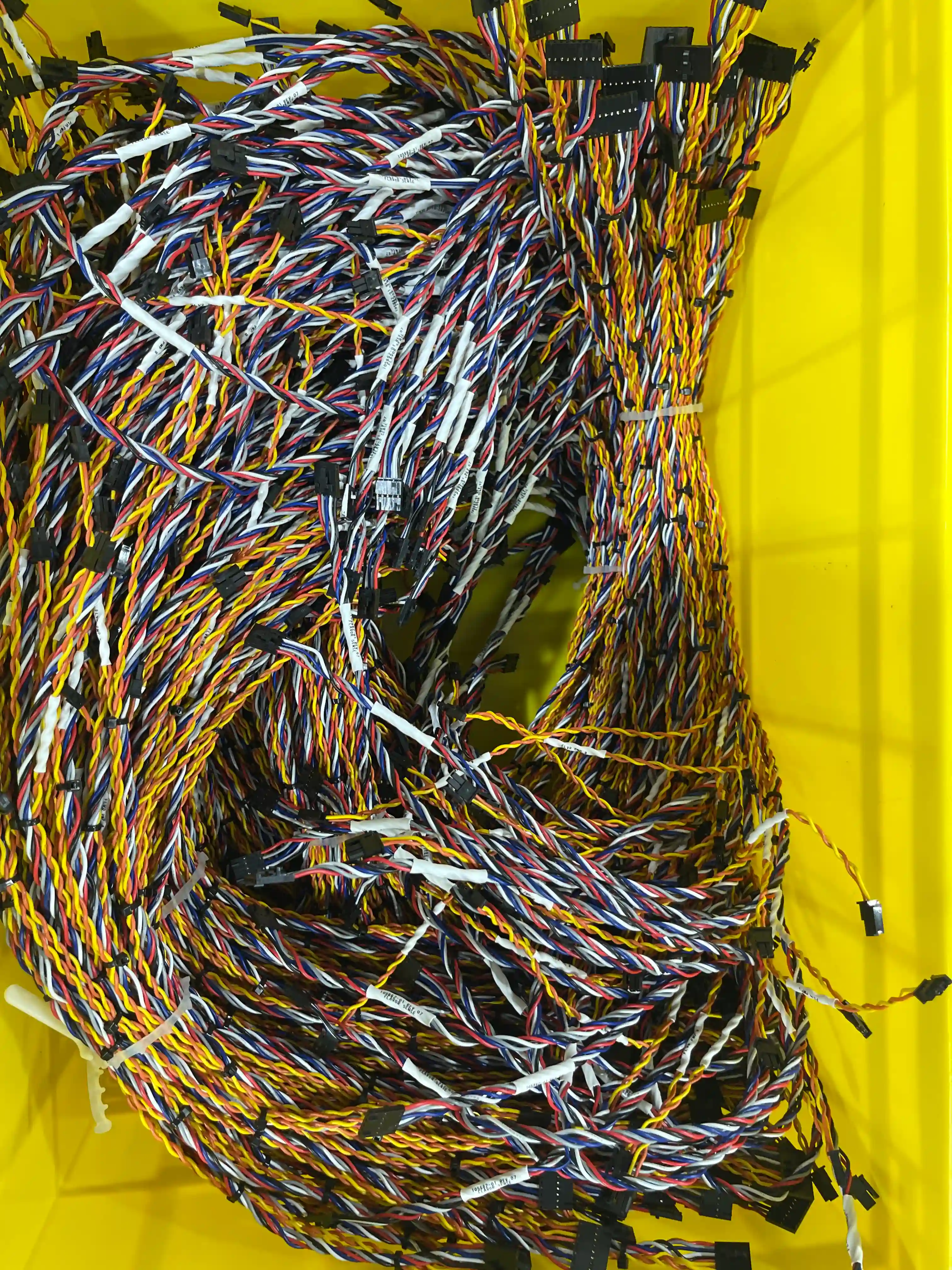
The plug looked correct. The machine powered up during FAT in Melbourne, then failed on site in Texas within two shifts. The OEM had ordered a “30 amp NEMA cord” without specifying whether it was 125V or 250V, straight blade or locking, 3-wire or 4-wire, indoor PVC or outdoor oil-resistant rubber. Purchasing chose the cheapest available option. The resulting cable assembly was mechanically close enough to pass a bench check, but wrong for the generator and wrong for the environment.
That is why NEMA plug charts matter. They compress several critical decisions into one line item: voltage class, current rating, number of poles and wires, and whether the connection is meant to stay seated in vibration. For Australian manufacturers shipping industrial systems, battery chargers, stage gear, food equipment, or mining support equipment into North America, NEMA identification is often the last step before commissioning. It is also one of the easiest places to make an avoidable mistake.
Typical NEMA 5 and L5 family voltage
Typical NEMA 6 and L6 family voltage
Most common locking export-power rating
Typical for 14-series split-phase loads
What NEMA Numbers Mean
NEMA stands for the National Electrical Manufacturers Association. In plug language, the configuration number tells you the family, while the suffix tells you whether the device is a plug (`P`) or receptacle (`R`). The first number generally indicates the electrical family:
- 1-series: two-pole, two-wire, non-grounding, 125V legacy types.
- 5-series: two-pole, three-wire grounding, 125V.
- 6-series: two-pole, three-wire grounding, 250V.
- 14-series: three-pole, four-wire grounding, 125/250V split-phase.
- L-prefix: locking version of the same voltage/current family.
The current rating follows the dash. A `5-15P` is therefore a 125V grounding plug rated 15A. A `L6-30R` is a locking 250V grounding receptacle rated 30A. The detailed geometry is defined by the standard so that a 20A plug cannot be casually inserted into a 15A outlet and a 250V plug cannot be confused with a 125V one.
“When a buyer sends only ‘NEMA 30A’ on an RFQ, we still do not know the voltage family, wire count, retention requirement, or jacket type. Four missing details can turn a correct plug into a wrong cable assembly.”
Good specification format
Specify the full assembly as: NEMA type + voltage + current + cord length + conductor gauge/count + jacket material + environment + mating end. Example: `L6-30P to blunt cut, 2.5 m, 10 AWG 3C, SOOW jacket, outdoor generator service`.
Common NEMA Plug Chart
The chart below covers the configurations most frequently requested on portable cords, industrial machines, mobile service equipment, and export power cables. It is not exhaustive, but it covers the majority of real procurement requests we see.
| Type | Voltage | Current | Poles / Wires | Typical Use | Cable Notes |
|---|---|---|---|---|---|
| 1-15P | 125V | 15A | 2P / 2W | Legacy non-grounded appliances | Avoid for new industrial builds; no protective earth |
| 5-15P | 125V | 15A | 2P / 3W | IT equipment, appliances, light industrial loads | Typically 14 AWG or 16 AWG depending on listing and load |
| 5-20P | 125V | 20A | 2P / 3W | Commercial appliances, power tools, food equipment | Usually 12 AWG with attention to voltage drop over longer runs |
| 6-15P | 250V | 15A | 2P / 3W | Small 230-240V export machines | Common on dual-market equipment with dedicated US cordsets |
| 6-20P | 250V | 20A | 2P / 3W | Compressors, heaters, industrial skids | Typically 12 AWG, sometimes heavier for long cord lengths |
| L5-20P | 125V | 20A | 2P / 3W | Portable distribution, mobile equipment | Locking version for vibration or trip hazards |
| L5-30P | 125V | 30A | 2P / 3W | Generators, event power, mobile service carts | Usually 10 AWG flexible rubber cord for field use |
| L6-30P | 250V | 30A | 2P / 3W | Industrial machinery, server power, heaters | Common export request for 240V North American equipment |
| TT-30P | 125V | 30A | 2P / 3W | RV shore power | Often confused with 240V dryer plugs; do not substitute |
| 14-30P | 125/250V | 30A | 3P / 4W | Dryers, split-phase equipment | Needs hot-hot-neutral-ground conductor set |
| 14-50P | 125/250V | 50A | 3P / 4W | Ranges, EV charging, high-power equipment | Heavy cable, heat rise, and bend radius become major concerns |
Common confusion points
`TT-30` is 125V RV power, not a 250V dryer configuration. `14-50` is widely used for EV charging but not every portable EVSE draws 50A. `L6-30` and `L5-30` share current rating but not voltage family. Those three mistakes account for a disproportionate number of field adapter problems.
How to Select the Right NEMA Type
Start with the load, not the plug image. The selection sequence should be: supply voltage, branch-circuit rating, continuous or intermittent duty, grounding requirement, retention requirement, environmental exposure, then cable size and jacket. This is the same engineering logic we use when specifying portable cords, wire gauge, and connector systems on custom assemblies.
For example, a 2.4 kW device on 125V draws roughly 19.2A. That already pushes the selection toward a 20A family, and if the load is continuous you need margin for temperature rise in the cord cap, conductor bundle, and termination area. Choosing a 5-15 simply because the cable looks lighter is poor engineering. Conversely, overspecifying a 14-50 on modest loads creates unnecessary cord stiffness, larger bend radius, higher material cost, and more difficult strain relief.
“A power-cord decision is never just about blade geometry. Heat rise at the termination and voltage drop along the length become visible once the cord exceeds about 3 metres or the load exceeds 80 percent of circuit rating.”
Selection checklist
- 1. Confirm supply family: 125V, 250V, or 125/250V split-phase.
- 2. Match branch-circuit rating: 15A, 20A, 30A, or 50A.
- 3. Confirm whether neutral is required or only line-line-ground.
- 4. Decide straight-blade vs locking based on movement and vibration.
- 5. Size conductors for current, length, ambient temperature, and duty cycle.
- 6. Choose jacket material for oil, UV, abrasion, and flexibility requirements.
Do not do this
- Do not choose by plug appearance alone from an online image chart.
- Do not assume all 30A connectors are interchangeable.
- Do not replace a locking plug with straight blade to save cost.
- Do not use adapters as permanent production solutions.
- Do not ignore region-specific approval requirements for Australia vs North America.
- Do not treat cord cap rating as proof the whole cable assembly is adequate.
When Locking Plugs Matter
Straight-blade devices are fine for stable indoor equipment, but locking types earn their keep in movement, vibration, and temporary-power environments. Generator output leads, stage distro cables, pump skids, mobile test carts, and airport support equipment all benefit from the positive retention of L-series connectors. Once the cable is dragged, lifted, or twisted in service, straight-blade retention becomes a reliability variable instead of a certainty.
Locking connectors also influence the rest of the assembly. Higher insertion and extraction forces mean you need betterstrain relief, a more considered cable bend exit, and enough jacket toughness to survive repeated handling. The connector alone will not compensate for an undersized flexible cord.
Locking plugs are a retention decision, not a shortcut
Use `L5-30` when the supply is 125V and the load is 30A with ground. Use `L6-30` when the supply is 250V and the load is 30A with ground. The `L` does not mean “heavy duty” in a general sense. It means the connector face and mating rotation are designed to resist accidental unplugging.
If your team specifies locking simply because “it seems more industrial,” stop and verify the actual receptacle installed at the site. Misaligned assumptions at this stage create expensive rework once the machine is already in transit.
“Locking connectors solve pull-out risk, but they do not solve a bad cord design. We still check conductor gauge, clamp compression, strip length, and temperature rise because failure usually starts behind the connector face.”
Adapter and Export Risks
Adapters are acceptable as commissioning aids. They are poor substitutes for a correctly designed production cable. A NEMA adapter can change geometry, but it cannot magically add a neutral conductor, improve current capacity, or align the product with Australian compliance rules. On export projects, this matters twice: once at the destination site and once at local FAT, where temporary bench power often hides the final installation reality.
Australian manufacturers especially need to separate three questions: What plug is needed at the destination? What cord assembly is needed to support the load? And what connection is allowed for the Australian market? Our AS/NZS compliance guideexplains the Australian side; the NEMA chart covers the North American mating side. One does not replace the other.
For baseline background on connector families, the NEMA connector overview, the National Electrical Code overview, and the IEC 60309 overview are useful authority references when teams compare North American and international connector systems.
Compliance risk
A North American plug pattern does not grant Australian product approval. Certification and market-use context still matter.
Thermal risk
Adapters add extra interfaces. Every extra interface is another contact resistance and heat-rise point at 20A, 30A, or 50A.
Electrical risk
Wrong family selection can leave a neutral absent, swap voltage class, or encourage unsafe field improvisation.
Application Examples
Export industrial skid to the US
A 240V 18A skid with no neutral requirement is usually a `6-20` candidate. If the site cable will be handled often or exposed to vibration, `L6-20` may be the better choice. Pair it with the correct flexible cord, not just the correct plug.
Portable generator lead
Mobile generators frequently use `L5-30` at 125V or `L14-30` for 125/250V output. Outdoor handling pushes the design toward oil- and weather-resistant rubber jacket constructions rather than light-duty PVC cords.
Portable EV charging lead
`14-50` is common, but the cable assembly still depends on charger output, continuous-duty loading, ambient temperature, and bend management. Heavy current plus poor strain relief is a known early-failure mechanism.
Temporary event power
Locking families such as `L5-30` are preferred where cables are dragged, coiled, stepped on, and repeatedly reconnected. Connector retention is part of uptime in these environments.
How a typical nema plug chart guide program runs with us
This is an illustrative description of a representative project type, not a specific customer engagement. As a contract assembler we do not publish customer-identifiable data.
FAQ
Choose the full cable assembly, not just the plug face
A NEMA plug chart is a fast way to identify mating geometry, but production-ready power cord design still depends on conductor count, gauge, jacket material, strain relief, environment, and market compliance. That is especially true for Australian OEMs building for export, where a North American plug type must coexist with local test setups, documentation, and approval constraints.
If you need a custom NEMA power cord, generator lead, EV charging cable, or export equipment cordset, we can review the connector family, recommend the appropriate cable construction, and build the assembly to your mechanical and electrical requirements.
Related Articles
Portable Cord Types: SOOW, SJOOW, SJTW & AS/NZS 3191
Decode flexible cord nomenclature and compare rubber and thermoplastic jacket options for industrial power cords.
Wire Gauge Selection Guide: AWG Chart & Ampacity
Use conductor sizing, voltage drop, and ampacity principles to turn a plug choice into a complete power-cord specification.
Cable Assembly Connector Selection Guide
Compare connector families and specify the mating interface, sealing, cycles, and retention for your application.