
Heavy Duty Equipment Wire Harnesses That Survive the Machine, Not Just the Drawing
Custom harness manufacturing for construction, agriculture, material handling, mobile plant, mining support, and industrial machinery that cannot afford intermittent faults in the field.
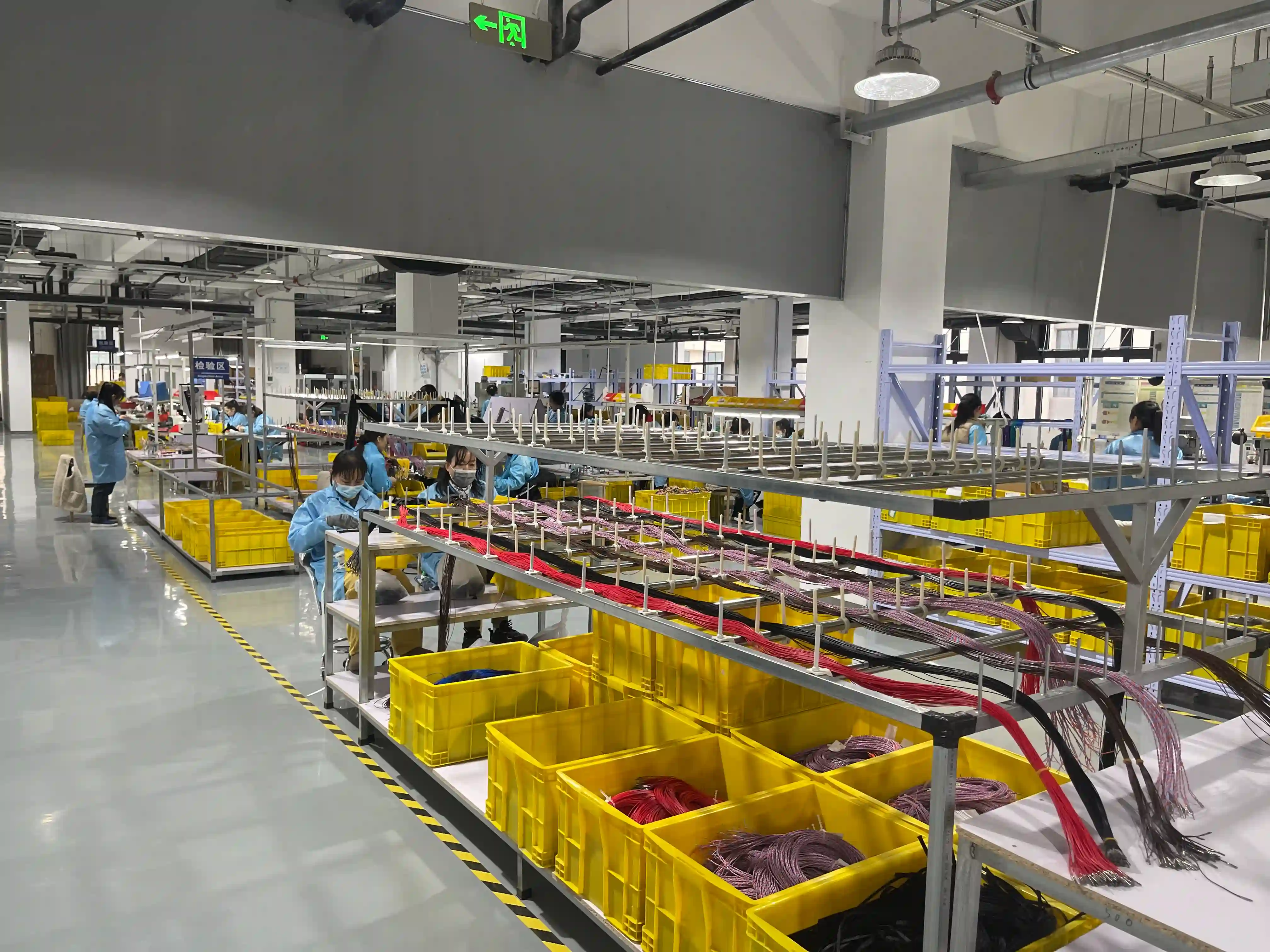
Heavy Equipment Harness Failure Usually Starts at the Connector Exit
Field equipment harnesses fail when cable exits, unsupported branches, clips, seals, or repair splices are treated like low-risk details. Our design review focuses on those failure points before tooling, cutting, and crimping begin.
We select conductor size, insulation, terminal plating, connector seals, strain relief, routing protection, and labels around the actual equipment duty cycle. A warehouse forklift harness, a hydraulic pump skid, and a Pilbara service vehicle harness should not share the same protection package.
For general harness architecture, see our wire harness manufacturing capability. For larger multi-conductor assemblies, compare this page with our custom cable harness service.
Common Equipment Programs
Design Choices That Separate Heavy Duty Harnesses from Standard Looms
Heavy duty harness design is not only thicker wire. The durability comes from controlled transitions, correct sealing, managed vibration, and testable documentation.
Sealed Interfaces
Connector seals, cavity plugs, backshells, boots, grommets, and adhesive-lined heat shrink stop water, dust, oil, and cleaning spray from tracking along the conductor.
Strain Relief That Fits the Route
Branch exits, connector backs, clip points, and service loops are reviewed so vibration does not concentrate at the terminal crimp or soldered accessory lead.
Current and Voltage Margin
Wire gauge, fuse strategy, insulation thickness, and voltage rating are checked against startup loads, motor surges, duty cycle, bundle temperature rise, and allowable voltage drop.
Connector Family Control
We support original connector brands and approved alternates, with pinout maps, terminal part numbers, seal sizes, and mating-interface checks kept under revision control.
Protection Against Moving Parts
Abrasion sleeves, routed clips, conduit, bend radius limits, and standoff points keep harnesses away from hydraulic lines, hot surfaces, sharp brackets, and articulated joints.
Release Testing and Records
Continuity, pinout, label, connector seating, and insulation checks catch build errors before the harness reaches a remote machine where rework is expensive.
Technical Specification Range
The specification below is a practical starting range for heavy equipment harness RFQs. Final material selection depends on voltage, current, bend radius, connector availability, and the environment near the installed route.
Standards References We Can Design Around
Workmanship can be aligned to IPC electronics assembly standards, while ingress protection language often references the IP Code managed through IEC standardization. For projects using international electrical terminology, the International Electrotechnical Commission provides the common standards framework.
| Wire range | 0.14 mm2 to 35 mm2, with larger battery and ground leads by review |
|---|---|
| Connector families | Deutsch DT/DTM/DTP, AMPSEAL, Superseal, M8/M12, Anderson, Molex, JST, Amphenol, and customer-specified parts |
| Protection methods | Conduit, braided sleeving, split loom, adhesive heat shrink, boots, backshells, grommets, and overmolding |
| Ingress strategy | Connector systems rated to the IP code the route needs, gasketed bulkhead exits, sealed splices, and a check of pressure-wash exposure; see the exposure map below |
| Temperature planning | Set by the lowest-rated part on the route: wire insulation, connector and sleeving. Example: the DEUTSCH DT series is listed at -55 to +125 degrees C, so a hotter zone needs a different connector or a shield, not only different wire |
| Testing | 100% continuity and pinout testing, insulation resistance and hi-pot when specified, plus crimp pull sampling |
| Documentation | Cut list, connector table, pinout, label map, test record, first-article report, and controlled revision release |
Prototype to Production Without Losing the Field Details
The first article captures fit. The production package captures repeatability.
Application Review
Confirm vibration, fluid exposure, temperature, ingress protection, routing, current load, and service access constraints.
Connector and Protection Selection
Match sealed connector families, terminal plating, backshells, boots, conduit, braid, heat shrink, and labels to the operating environment.
Prototype and Fit Check
Build a first article for length, branch position, clip location, connector orientation, bend radius, and installation clearance review.
Controlled Production
Release cut lists, work instructions, crimp tooling settings, inspection points, and lot traceability for repeatable production.
Electrical and Visual Testing
Verify continuity, pinout, insulation resistance where required, connector seating, label accuracy, and workmanship before shipment.
From Machine Exposure to Harness Specification
A heavy duty harness specification starts from what the route is exposed to. This table links each exposure to what to put in the RFQ and where the public reference sits. Test levels and limits come from your machine specification and the standards you cite, not from this page.
| Exposure | What to specify | Public reference and how to check |
|---|---|---|
| Dust and water | The IP code the route needs, and whether it sees pressure or steam cleaning. | IP codes are defined in IEC 60529 (see the IP code overview). For road vehicles, IP6K9K in ISO 20653 is described by test-equipment makers as 80 degrees C water at 8 to 10 MPa and 14 to 16 L/min from 100 to 150 mm, at four angles for 30 s each ( example description). Confirm the conditions in the standard itself. |
| Vibration and shock | Mounting location (engine, frame, cab, implement), the test profile if one applies, and support points near each connector. | ISO 16750-3 specifies vibration, shock and other mechanical loads for road-vehicle electrical equipment, with severity depending on mounting location. SAE J1455 covers environmental design practice for heavy-duty on- and off-highway vehicles, including construction and agricultural equipment, with test requirements agreed between customer and supplier ( SAE J1455). |
| Temperature | The hottest and coldest local temperature on the route, including heat from engines, exhausts and hydraulics. | Take the limit from the lowest-rated part. As an example, a distributor listing of the DEUTSCH DT series gives -55 to +125 degrees C, a size 16 contact rated 13 A, 14 to 20 AWG wire and over 100 mating cycles ( TTI listing). Check the TE datasheet for your exact part number. |
| Oil, fuel and hydraulic fluid | The fluids on this machine, and whether contact is splash or immersion. | Ask for the fluids and test method in the wire and sleeving datasheets, and compare them with your list. A material tested in one fluid is not automatically suitable for another. |
| Current and voltage drop | Load current, supply voltage, one-way route length and the allowed drop at the load. | Contact rating, wire gauge and wire ampacity are separate limits. Work the drop from resistance, as in the example below, and check each against its datasheet. |
Worked example with assumed numbers
Assume a 12 V circuit carrying 10 A over a 5 m one-way run, so 10 m of copper round trip. Copper resistivity is about 0.0172 ohm mm2 per metre at 20 degrees C. These inputs are assumptions to show the method, not a recommendation.
- 1.0 mm2 conductor: 0.0172 x 10 / 1.0 = 0.172 ohm, so the drop is 1.72 V, about 14% of 12 V.
- 2.0 mm2 conductor: 0.0172 x 10 / 2.0 = 0.086 ohm, so the drop is 0.86 V, about 7% of 12 V.
Doubling the cross-section halves the drop. Whether either is acceptable depends on the load and the limit you set, and neither says anything about the wire's temperature rating or the contact rating.
What to check after the harness is fitted
- Clearance from hydraulic lines, exhausts, sharp brackets and moving joints along the whole route.
- Support points near every connector and branch, so the load is not carried by the terminal crimp.
- Connector seated and latched, seals in place, unused cavities plugged, and boots or backshells fitted as drawn.
- Labels match the wiring diagram and the revision on the drawing.
- Continuity and insulation checks repeated after any vibration, washdown or fluid exposure test in your plan, compared with the baseline taken before it.
For routing and clamping detail, see our routing and clamping guide, and for sealing, IP67 vs IP68 vs IP69K and our harsh environment cable solutions page.
When to Specify a Heavy Duty Harness
Specify this build level when the harness is installed on equipment that moves, vibrates, gets cleaned, works outdoors, carries motor current, or will cost more to service than to build correctly.
Harness routes pass near hydraulic hoses, engine heat, pumps, or abrasive brackets.
Connectors sit outside the enclosure or face direct splash, dust, mud, or pressure cleaning.
The machine uses CAN bus, sensor feedback, motor control, lighting, safety interlocks, or telematics.
The harness must install consistently across repeated builds, retrofit kits, or field replacement stock.
Heavy Duty Equipment Wire Harness FAQs
What makes a wire harness heavy duty?
A heavy duty wire harness uses vibration-resistant terminals, sealed connector systems, abrasion protection, strain relief, and materials selected for oil, dust, UV, water, heat, and mechanical shock exposure.
Which equipment types do you support?
We manufacture harnesses for construction machinery, agricultural equipment, material handling vehicles, mobile plant, industrial skids, mining support equipment, trailers, pumps, compressors, and specialty OEM machinery.
Can you build from an old sample or damaged harness?
Yes. We can reverse engineer legacy harnesses from a sample, pinout, photos, equipment manual, or partial drawing, then produce a documented replacement build with controlled materials and electrical testing.
Do heavy duty harnesses need overmolding?
Overmolding is useful when the connector exit faces washdown, repeated flexing, or aggressive handling. For serviceable field equipment, we may recommend sealed backshells, adhesive heat shrink, or replaceable boots instead.
How do you test heavy duty equipment harnesses?
Every harness is checked for continuity, shorts, pinout accuracy, insulation resistance where specified, label accuracy, connector seating, crimp pull strength sampling, and visual workmanship before release.
Does a connector rated IP69K mean the whole harness is IP69K?
No. The rating belongs to the tested connector system with the right seals, wire size and cavity plugs. A harness is only as sealed as its weakest point: the wire seal range, any splice, the backshell or boot, and the cable exit. IP6K9K as defined for road vehicles in ISO 20653 uses 80 degrees C water at 8 to 10 MPa, so ask what was tested and on which assembly.
Which vibration standards apply to heavy equipment harnesses?
There is no single rule. SAE J1455 gives environmental design guidance for heavy-duty vehicles, including construction and agricultural equipment, and ISO 16750-3 gives mechanical load tests for road-vehicle electrical equipment by mounting location. Specific test levels are agreed between the customer and the supplier for the machine and the route.
What information should I provide for a quote?
Send drawings, photos, harness length, connector part numbers, wire gauges, circuit count, operating voltage, current load, environment, annual volume, and any test or documentation requirements.
Related Engineering Resources
Cable Assembly Connector Selection Guide
Compare sealed, circular, power, and signal connector families for equipment builds.
Wire Harness Routing and Clamping Guide
Prevent vibration fatigue, chafing, unsupported spans, and connector strain.
IP67 vs IP68 vs IP69K
Choose an ingress rating that matches dust, immersion, and washdown exposure.
Need a Harness That Fits the Machine and the Service Reality?
Send your drawing, sample, pinout, or equipment photos. We will review connector exits, routing risk, protection options, and test requirements before quoting.