
FPC Cable Manufacturer for Australian OEM Programs
Custom flexible printed cable assemblies for compact products that need shaped routing, low stack height, stiffener control, shield options, and a repeatable path from prototype to production.
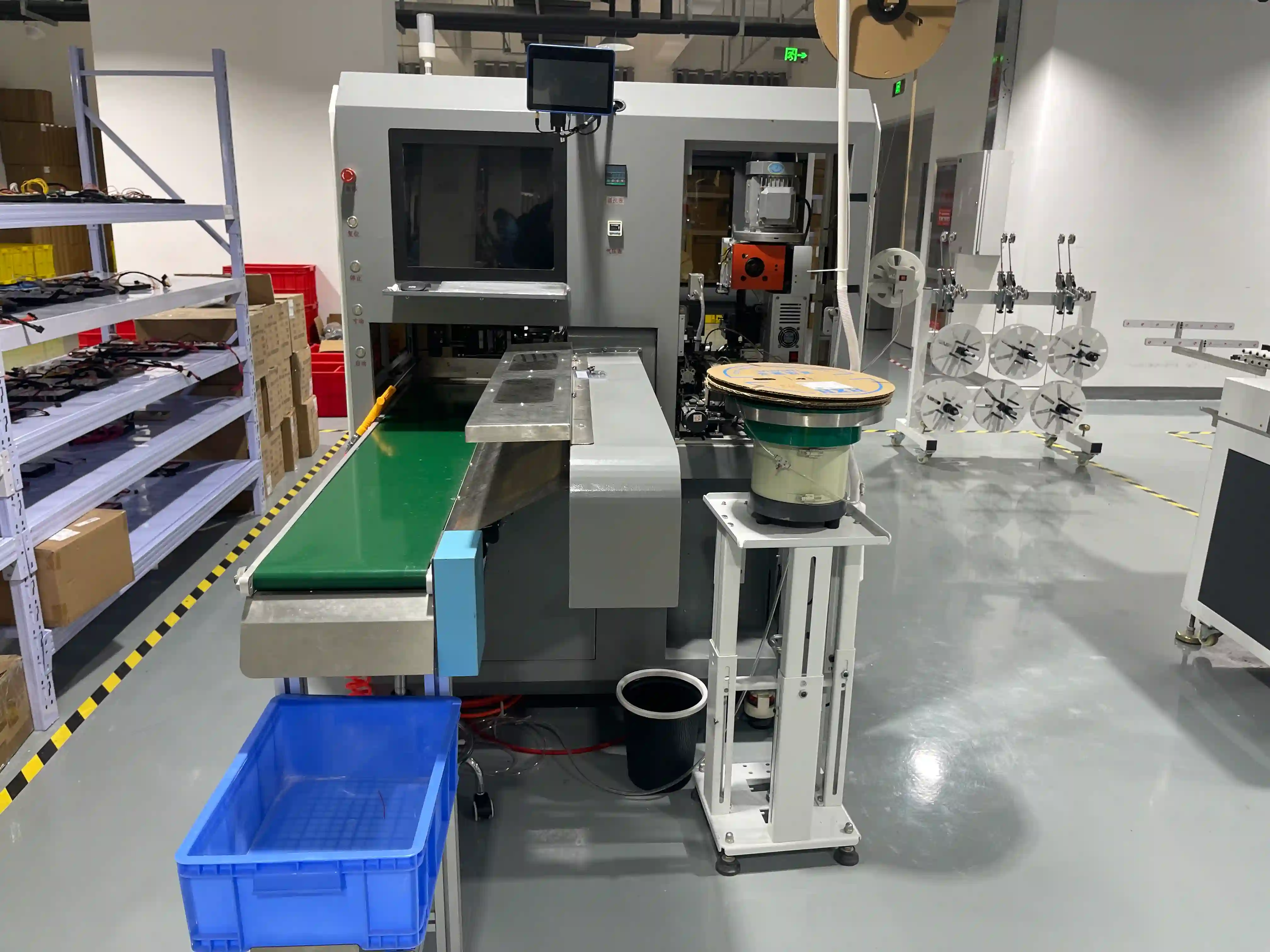
When buyers need an FPC cable manufacturer instead of a standard flat cable supplier
Some products cannot tolerate the thickness, bend profile, or routing uncertainty of a conventional cable assembly. Others outgrow a straight-run FFC because the interconnect needs shaped geometry, local bend zones, selective reinforcement, or tighter dimensional control inside the housing. That is where FPC cable manufacturing becomes commercially useful.
We treat these projects as cable-interconnect jobs for compact equipment, not as general PCB work. The focus is on repeatable internal routing, stable exposed-contact geometry, fit inside the enclosure, and release control that purchasing and quality teams can manage over time.
Define the material stack with the selected laminate supplier, then check bend areas and connector interfaces against the public references below. Material datasheets describe particular products; they do not establish this assembler's production limits.
Manufacturing and integration scope
Here, FPC cable manufacturer refers to component assembly using a separately specified bare flex circuit. This page does not claim in-house manufacture of the FPC substrate, copper etching, via plating or bare-board lamination. Identify the bare-flex source and its approved stackup in the BOM.
Manufacturing scope to agree in the quotation includes soldered connections where designed, crimped wire leads in hybrid assemblies, stiffener or reinforcement attachment, shield application and termination, and specified electrical tests. Crimping applies to compatible wire terminals, not automatically to an exposed FPC contact tail.
Integration covers connector matching, pin mapping, insertion access, strain relief and routing inside the equipment. Connector installation or complete equipment assembly requires a separately agreed scope. The OEM retains responsibility for system performance and end-product approval.
What we control on a custom FPC cable build
The main risks are usually mechanical fit, handling damage, exposed-contact definition, and uncontrolled assumptions around shielding or bend behaviour. These are the areas we review before a part is released.
For Routed, Thin, Multi-Bend Interconnects
FPC cables solve packaging problems that round wire and standard FFC cannot handle cleanly, especially where the interconnect must fold, clear components, or maintain a tightly controlled path.
Built Around the Actual Interconnect Geometry
We review pitch, trace count, bend zones, stiffeners, exposed pads, shielding, and mating orientation early so the assembly is defined as a manufacturable cable part rather than a fragile prototype artifact.
Shielding and Reinforcement Where the Design Needs It
Adhesive shield layers, ground structures, stiffeners, reinforcement tape, and selective protection can be specified where signal integrity, insertion durability, or handling risk justify them.
Prototype to Repeat Supply Under Revision Control
Plan samples, first articles, pilot lots and repeat supply against an approved drawing; confirm quantity, tooling and availability in the quotation.
Release Checks Beyond Simple Continuity
Pinout, orientation, dimensional control, exposed contact geometry, reinforcement placement, and handling-related risks can all be reviewed before the FPC cable is approved for shipment.
Useful for Regulated and Reliability-Sensitive Equipment
Compact medical devices, industrial HMIs, instruments, transport electronics, and embedded products often need the space saving of FPC cables without losing documentation discipline or incoming quality confidence.
Technical scope for buyers comparing FPC against FFC and round cable
| Aspect | FPC Cable | FFC Cable | Round Cable |
|---|---|---|---|
| Routing freedom | Best when the interconnect needs shaped paths, local bends, tabs, or asymmetric geometry inside tight enclosures | Best for straight, parallel, high-volume ribbon-style runs | Best for external routing, serviceability, and harsher mechanical handling |
| Profile control | Very low profile with selective stiffeners and precise termination areas | Low profile but more standardized in geometry | Bulkier because conductors, insulation, and strain relief build radial thickness |
| Design complexity | Higher engineering definition up front, but cleaner fit in compact products | Lower complexity for simple point-to-point links | Lower initial definition for simple cables, less suited to dense internal packaging |
| Best buyer scenario | Compact OEM products where the interconnect must fit exactly and repeat cleanly | Cost-sensitive, straight-path internal cable runs | General cable assemblies, service loops, and higher-flex external wiring |

Stackup and bend-zone reference
Specify the complete local stack, not just the polyimide film. A single-layer flex has one copper circuit layer; a double-layer flex has copper on both sides of a dielectric. Coverlay protects the traces, with openings for contacts. Base laminates can use adhesive between copper and film or an adhesiveless construction. Stiffeners add local support at terminations; they are not another circuit layer.
DuPont Pyralux AP is an adhesiveless double-sided polyimide laminate. Its table lists AP8515R with 18 µm copper and 25 µm dielectric, and AP9111R with 35 µm copper and 25 µm dielectric. The R suffix identifies rolled-annealed copper. These are named material examples, not a finished FPC thickness or this assembler's capability range. Account separately for coverlay, adhesive, plating and any shield.
DuPont Pyralux LF coverlay uses Kapton polyimide film coated with modified acrylic adhesive for insulation and protection of etched circuitry. An adhesiveless base laminate can still use an adhesive-backed coverlay. Select the exact material codes and released construction before calculating finished thickness.
Sources: DuPont Pyralux AP, Tables 1–2; DuPont Pyralux LF coverlay; Minco guide, pp. 4 and 13.
Static routing and repeated motion need different reviews
Static flex is formed for installation; dynamic flex moves repeatedly in service. Minco advises traces perpendicular to bend lines, consistent trace width through the bend, no plated through-holes in bend areas, and continuous cover material near a bend. Support terminations with local stiffeners and review strain relief at their edges. Coverlay protects the circuit; extra reinforcement through a moving zone must not be assumed to improve flex life.
Epec recommends rolled-annealed (RA) copper for dynamic flex rather than ordinary electrodeposited (ED) copper, citing its more ductile, elongated grain structure. Agree rolling direction with the flex supplier. Motion, layer arrangement and shielding also require review; copper type alone does not qualify repeated bending.
Sources: Minco guide, pp. 12–13 and 24; Epec dynamic-flex guidance.
Bend radius: material basis and assumed calculation
Use R = k × t, where t is the finished thickness at the bend, including applicable coverlay, adhesive and shield layers. It is not copper thickness alone or the reinforced connector-end thickness. Minco lists a double-layer minimum of 12 × circuit thickness in its static-flex discussion; Epec gives 100 × finished dynamic-area thickness as dynamic-flex guidance. These are supplier recommendations for different duties, not universal rules or a numerical requirement verified from IPC-2223.
Assumed example only: select t = 0.10 mm for illustration, not from either DuPont laminate row. With an assumed applicable static multiplier k = 12, R = 1.20 mm. With an assumed applicable dynamic multiplier k = 100, R = 10.00 mm. The arithmetic compares recommendations; it does not qualify a design or establish a bend-cycle count. Confirm construction, radius datum, motion and acceptance testing with the flex supplier.
# Assumed finished thickness; supplier-guidance comparison only
from decimal import Decimal
thickness_mm = Decimal("0.10")
for duty, multiplier in [("static", 12), ("dynamic", 100)]:
    print(f"{duty}: t={thickness_mm:.2f} mm, k={multiplier}, R={thickness_mm * multiplier:.2f} mm")
# static: t=0.10 mm, k=12, R=1.20 mm
# dynamic: t=0.10 mm, k=100, R=10.00 mm
Sources: Minco guide, pp. 12–13; Epec minimum bend-radius guidance. The IPC-2223E public contents confirms the flexible-board design standard's scope; use the contractually specified edition for detailed requirements.
Dimensional inspection, connector insertion and FAI
Choose inspection methods against the feature and its drawing datum. Optical measurement can check the outline, hole centres and stiffener edges against CAD; a specified caliper or go/no-go gauge can check accessible dimensions; a supported datum fixture can locate a flexible part and check assembled fit. Agree support condition and measurement force so the method does not distort the flex. Tolerances and acceptance limits follow the drawing and applicable standards, not a generic capability number.
This is a proposed inspection-method checklist, not a claim about installed metrology equipment or completed tests. Record the method, instrument or fixture identifier, drawing revision, required value, observed value and disposition. An insertion fixture supplements dimensional inspection; fitting once does not establish dynamic reliability.
Hirose FH12 ZIF example: terminal stack and full seating
The FH12 catalogue specifies a finished FPC/FFC contact thickness of 0.30 ± 0.05 mm. That is the reinforced terminal, not the stiffener alone. Its recommended FPC construction on page 14 includes a polyimide stiffener and reinforcement adhesive in the terminal stack. Include the local copper, base film, adhesive and finish when checking fit; the body coverlay stack can differ from the exposed contact end. This example is governed by the Hirose FH12 specification and the selected part drawing.
- Check the exact connector part, contact side, contact count, pitch, cable width and terminal drawing before insertion.
- For the horizontal bottom-contact FH12, open the actuator and seat the cable fully, parallel to the board, with conductors down. The top-contact version uses conductors up.
- Verify insertion depth against the selected drawing datum or approved seating witness. The catalogue calls for full insertion; do not substitute exposed-pad length for insertion depth or invent one depth for the entire series.
- Close the actuator while maintaining full seating. Reopen and reseat an offset or partly inserted tail; do not force the lock. Record seating, latch condition and the agreed continuity or pin-map check.
Source: Hirose FH12 catalogue, pp. 2, 14–17. Obtain the current drawing for the exact ordered connector; this reference does not generalise mating-cycle or retention ratings.
First-article inspection before release
Use a drawing-linked FAI record: identify the sample and drawing/BOM revisions; compare material identifiers and stackup documentation; inspect outline, holes, reinforcement and contact geometry; check marking and orientation; record connector fit and the agreed electrical checks. Resolve deviations and record approval before releasing that revision. Test voltages, limits, sampling and sample quantities belong in the agreed inspection plan.
IPC-2223 addresses flexible printed-board design; IPC-6013 addresses qualification and performance of flexible printed boards. Their public contents establish the standards' existence and scope. They do not certify this assembler, define this checklist as a mandatory FAI format, or replace the agreed edition, class and assembly acceptance requirements.
FPC ordering and inspection checklist
Unfilled planning checklist — no customer values, sample counts or test results. Complete requirements before ordering, then record actual observations during inspection.
| Item | Specify / verify |
|---|---|
| Stackup | Bare-flex source, drawing revision, layer sequence, PI grade, adhesive or adhesiveless base and material codes. |
| Total thickness | Finished body, bend-zone and reinforced-terminal thicknesses separately, including local additions and tolerance. |
| Copper type and thickness | RA or ED foil, grade, rolling direction where relevant, base copper and any plated thickness. |
| Bend type and radius | Static or dynamic zone, radius datum, bend direction, motion envelope and required qualification conditions. |
| Outline and hole positions | Datums, dimensions and drawing tolerances; agreed optical, gauge or fixture method. |
| Stiffener position and thickness | Material, side, adhesive, coverage and edge location; check the finished terminal against the connector. |
| Coverlay openings | Opening locations, contact exposure, registration and continuous protection around bend zones. |
| Shielding | Shield material, coverage, grounding, added thickness and system EMC or signal-integrity validation. |
| Connector and contact direction | Exact part number, contact face, pin order, mating geometry, insertion datum and actuator access. |
| Tests and records | Netlist, continuity and insulation requirements, applicable voltage and duration, acceptance criteria, marking and traceability. |
| Sample quantity | Requested FAI and qualification quantities, sampling plan, disposition and approval responsibilities; confirm at quotation. |
Typical process for a custom FPC cable program
The fastest projects are the ones that define mechanical fit and handling risk early, before anyone assumes a generic flat cable will work.
Define the Interconnect Envelope
We review the available package space, mating points, fold direction, insertion method, and mechanical risks before finalizing the cable geometry.
Lock the Technical Stack
Trace layout, pitch, copper weight, insulation film, stiffener zones, shield structure, reinforcement details, and exposed-contact geometry are aligned to the application.
Prototype and Fit Validation
Compare first articles with the approved drawing, BOM and marking requirements. Record dimensional checks and connector seating observations; resolve deviations before release.
Release the Production Build
The approved FPC cable is captured under a controlled BOM and inspection path so purchasing and quality teams can reorder against a stable revision.
Applications where FPC cable manufacturing creates clear value
These are possible application categories, not customer projects or evidence of qualification for a particular device.
Compact Medical Devices
Low-profile internal links for portable monitors, imaging accessories, diagnostics, and serviceable medical electronics where routing space is limited.
Displays and HMI Modules
Display, keypad, touch, and HMI interconnects that need shaped routing, low stack height, and repeatable insertion into compact product housings.
Instrumentation and Portable Electronics
Internal cable assemblies for handheld instruments, test equipment, scanners, and embedded products that benefit from lighter and thinner interconnect paths.
Transport and Embedded Electronics
Space-constrained modules inside vehicles, mobile equipment, and transport electronics where controlled routing and low mass improve packaging efficiency.
Prototype-to-Production OEM Programs
Programs that begin with a compact proof-of-concept and need the interconnect to remain stable as the product moves into pilot and production quantities.
Technical summary
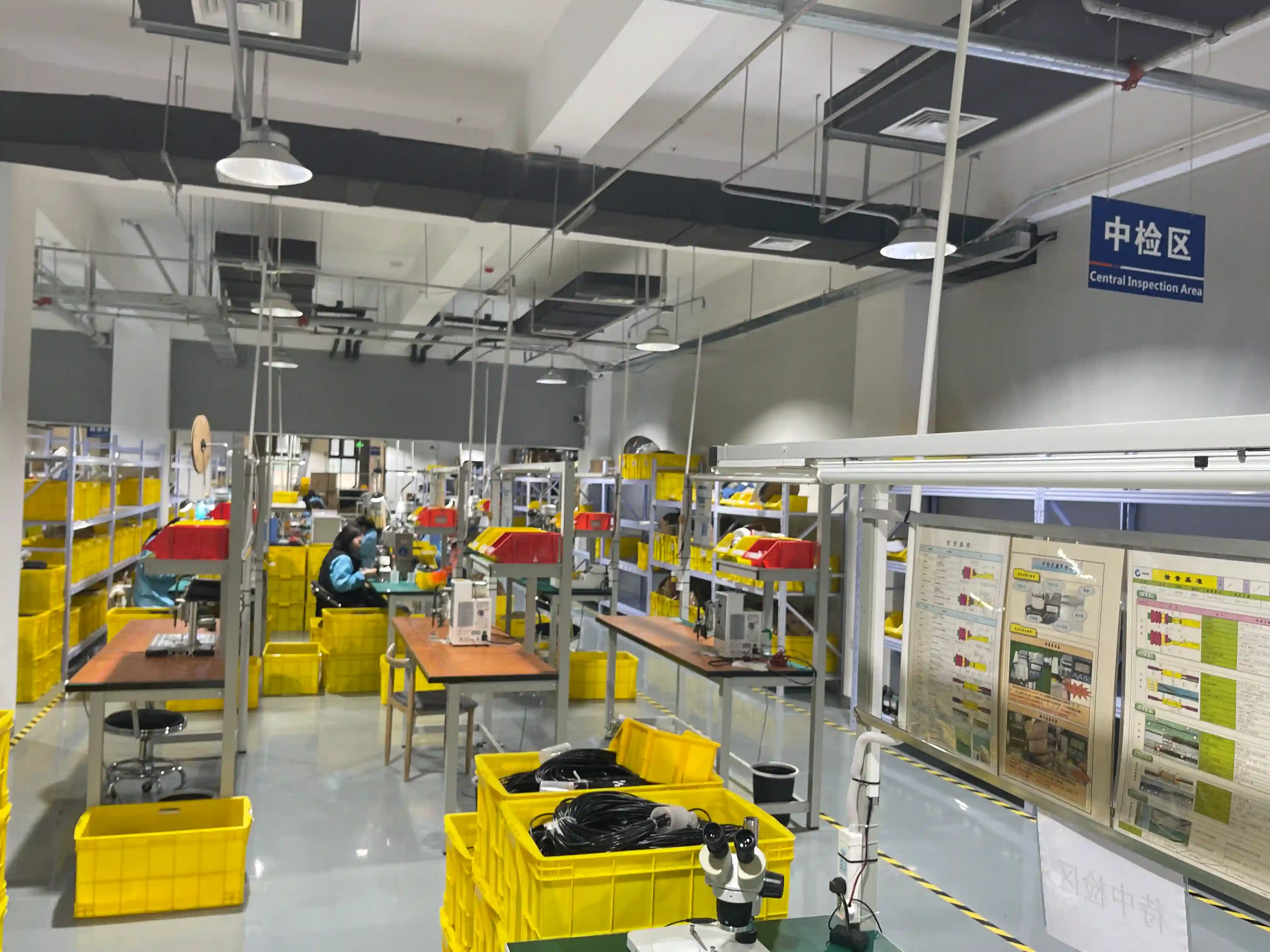
Quality and sourcing references buyers often review
FPC cable buyers usually need more than a thin sample that fits once. They need a controlled part number, inspection logic, and a supplier who can keep the geometry stable after approval.
Prepare an FPC Assembly RFQ
This is an unfilled planning template, not a customer case study, production commitment or measured inspection record.
FAQ
Common questions from buyers comparing custom FPC cable supply against standard flat-cable options.
What does an FPC cable manufacturer actually supply?
On this page, manufacturer means cable/FPC component assembly, using a separately specified bare flex circuit. The quoted scope may include compatible terminations, reinforcement, shielding and testing. Bare-FPC substrate fabrication is not claimed as an in-house service. Connector matching and equipment installation are integration tasks to agree separately.
How is an FPC cable different from an FFC cable?
FPC cables are better suited to shaped routing, localized bends, asymmetrical layouts, and selective reinforcement. FFC cables are typically more standardized and cost-effective for straight parallel runs. If the interconnect needs to snake around obstacles or fit a very specific internal path, FPC is often the stronger option.
Can you help if we only have an enclosure model or sample device?
An enclosure model, sample or interconnect sketch can support a drawing review. The released specification still needs geometry, materials, contact zones, reinforcement and inspection requirements before a build can be agreed.
What information matters most in an FPC cable RFQ?
The most useful RFQ inputs are mating connector details, pitch, trace count, overall path, bend areas, keep-out zones, expected insertion method, shield requirements, annual volume, and any reliability constraints such as repeated access or tight packaging tolerances.
Do you support prototypes as well as ongoing supply?
Request development samples, first articles, pilot builds and repeat quantities in the RFQ. Minimum order, tooling, availability and delivery dates are confirmed after review; no fixed sample quantity or lead time is promised here.
When should I avoid FPC and choose another cable type?
If the assembly needs heavy external handling, large service loops, harsh field rework, or repeated dynamic flex beyond the design envelope, a conventional cable assembly or another specialized interconnect may be more appropriate. FPC is strongest when packaging efficiency and controlled internal routing are the main priorities.
Is there one minimum bend radius for all FPC assemblies?
No. Use the finished thickness in the actual bend zone, the copper type and the movement requirement. The cited Minco and Epec recommendations cover different constructions and duties; the assumed calculation on this page is not an IPC requirement or a qualified lifetime.
Does the connector thickness refer to the stiffener alone?
No. The Hirose FH12 example specifies the finished reinforced terminal. Include the local flex layers, finish, adhesive and stiffener, then check the selected connector drawing and full insertion before closing the actuator.
What should an FPC first-article record contain?
Record drawing and BOM revisions, material identification, dimensions, markings, connector seating and the agreed electrical checks. List observations and deviations against the applicable requirements; an unfilled checklist is not a test result or certification.
Related capabilities and learning resources
These pages help buyers compare flat-cable formats, review connector-fit questions, and understand the validation work that usually sits around compact interconnect projects.
FFC vs FPC Selection Guide
Compare laminated parallel conductors with patterned flex circuitry.
Engineering Drawing Review
Define stackup, datums, bend zones and acceptance requirements before ordering.
RFQ Preparation Guide
Prepare drawings, quantities and inspection requirements for quotation.
FFC Cable Assembly
Use FFC when the interconnect path is mostly straight and a standard flat-cable format fits the product.
Testing & Quality Control
See how we define electrical verification and release control for custom cable assemblies.
Connector Selection Guide
Review connector-fit risks before locking pitch, mating method, and board interface details.
High-Speed Cable Signal Integrity Guide
Useful when the flexible interconnect also has tight signal-integrity requirements.
Need a repeatable FPC cable supply path?
Send the enclosure model, sample part, drawing package, or early interconnect concept. We can help define the FPC cable around fit, handling, and production repeatability before it becomes a sourcing problem.