
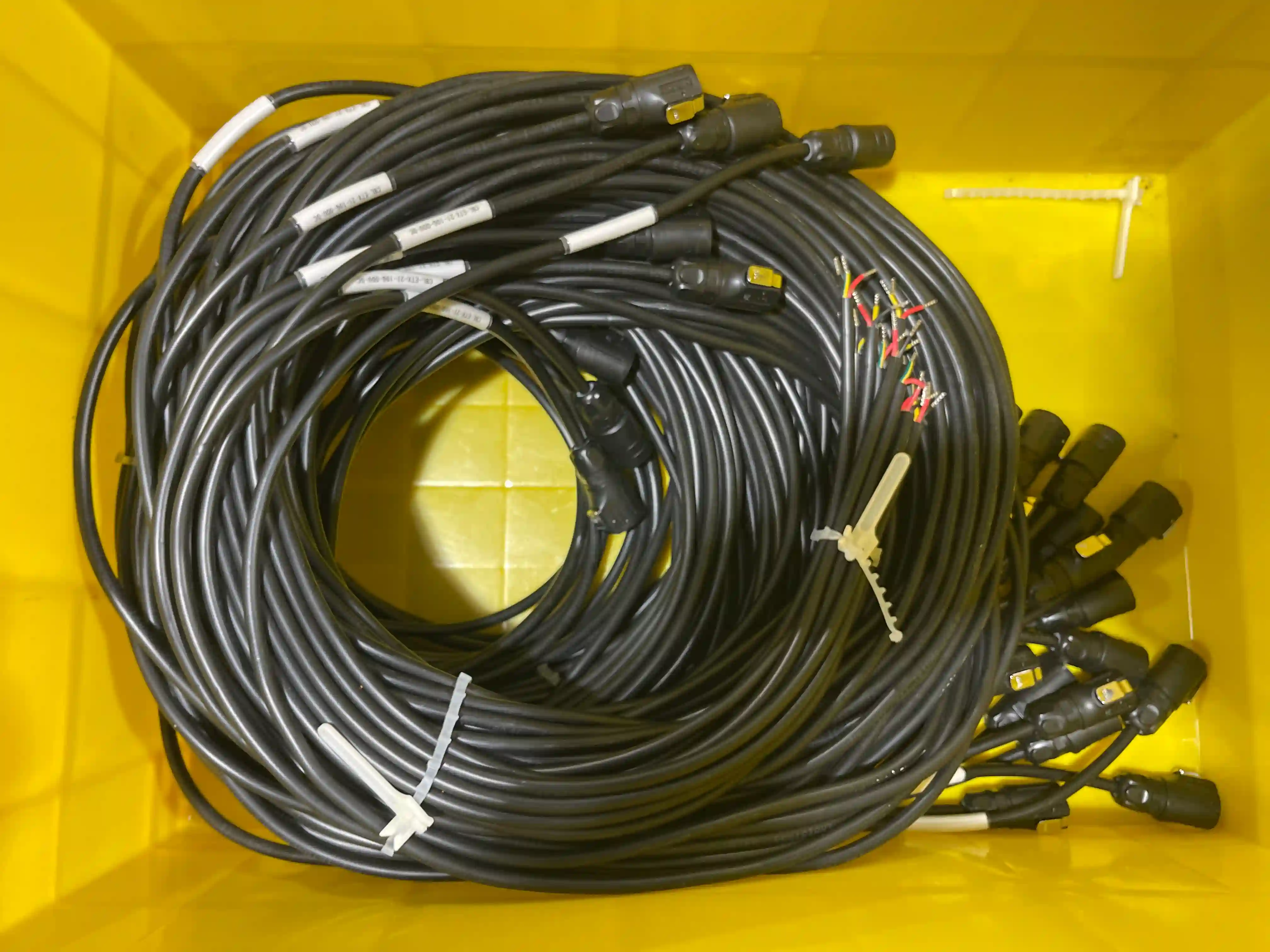
Why EV Wire Harnesses Are Different
EV programs mix low-voltage control circuits with high-voltage power distribution, battery interfaces, charging paths, thermal management wiring, sensor branches, and increasingly strict EMC targets. That changes the design problem. A conventional loom might be judged mostly by pinout, fit, and durability. An EV loom must also protect people from electric shock, contain inverter noise, survive elevated thermal zones, and maintain traceable production evidence.
In practice, the harness architecture starts with system voltage, current paths, charging strategy, packaging space, and serviceability. A 400 V platform and an 800 V platform can share similar mechanical packaging ideas, but the connector system, insulation stack, shielding method, and validation margin often shift. Buyers evaluating a supplier should look beyond whether the factory has automotive experience. They should ask whether that team can manage orange high-voltage routing, HVIL logic, shield termination, seal compression, and release documentation without improvising during pilot build.
If you need baseline electrical-test context first, our wire harness testing guide covers continuity, hi-pot, and insulation resistance in more detail. For manufacturability checkpoints, the DFM guide is the right companion read.
"Once a vehicle program moves above 60 V DC, small drawing shortcuts stop being harmless. A missing shield note or a vague seal callout can turn into weeks of revalidation. We try to eliminate those gaps before the first pilot build, not after 200 harnesses are on the rack."
Architecture Decisions That Set the Whole Program
The earliest EV harness decisions are structural. Which circuits are physically separated? Which branches carry inverter output, charger input, battery-to-PDU power, coolant pump power, resolver feedback, or CAN communication? Where must orange cables be isolated from low-voltage harnesses? A good architecture review clarifies these interfaces before material is released.
High-voltage branches
These carry traction, charging, or battery power and usually require orange identification, insulation systems sized to the program voltage, controlled bend radius, secure retention, and often shielded construction. Public references such as high-voltage practice and the IEC standards framework help explain why these branches need more discipline than ordinary body wiring.
HVIL and interlock circuits
High-voltage interlock loops confirm that connectors are fully seated and safety covers are closed. The harness design has to make the interlock path obvious, serviceable, and testable. If the interlock branch is buried inside a hard-to-access overwrapped breakout, diagnosis becomes slow and vehicle commissioning suffers.
Thermal zoning
Battery, inverter, e-axle, and onboard charger areas can expose the loom to sustained heat. Material choices such as XLPE, silicone, PTFE, sleeve construction, and clamp spacing should reflect the real thermal map, not just the nominal cabin or ambient temperature.
Vehicle assembly path
Harnesses that look correct on a bench can still fail at the plant if connector access, insertion force, or clip engagement is awkward. Installation sequence has to be considered with body trim, battery pack access, and service loops from the beginning.
Design Rules That Prevent Rework
EV harness design quality is often won in apparently small details. Clamp orientation, breakout angle, connector keying, shield exit strategy, and sleeve build-up all affect manufacturability. On a fast vehicle launch, the wrong detail may not appear until operators start loading terminals, threading branches through clips, or trying to access a test point that the drawing buried behind a moulded section.
- Separate electrical intent from operator instructions. The schematic shows what connects. The build document must also show strip lengths, seal direction, branch labels, torque requirements, and shield termination rules.
- Control creepage and clearance at interfaces. The issue is rarely the cable alone. Risk concentrates at connectors, busbar transitions, PDU entries, and battery pack pass-through points where geometry tightens. A public overview of creepage and clearance is useful when explaining these constraints to non-specialist buyers.
- Specify shielding with termination method, not only shield type. "Shielded cable" is incomplete. The drawing should say foil, braid, or combined shield, plus whether the shield lands through a 360-degree backshell, drain wire, braid clamp, or another defined method.
- Design with the test fixture in mind. If continuity, insulation resistance, and HVIL confirmation are mandatory, the connector family and breakout geometry should leave enough access for repeatable fixtures.
- Keep serviceability visible. EV platforms still need field diagnosis. Interlock branches, connectors, labels, and branch IDs should not disappear under wraps that force destructive rework.
"The harness only looks easy after the design has already solved access, shield exits, and fixture contact points. If those three items are vague, the factory starts doing engineering on the line, and that is where scrap and launch delay begin."
How EV Wire Harness Manufacturing Should Flow
Strong EV harness manufacturing is a controlled sequence, not a collection of skilled guesses. Material verification comes first: wire construction, insulation thickness, connector family, seals, labels, sleeves, and shielding parts must match the released revision. Then the process moves through cutting, stripping, crimping, subassembly, routing on the board, branch consolidation, protective coverings, electrical test, and final dimensional release.
On high-voltage programs, crimp process capability and terminal seating discipline matter more because rework can damage seals, terminals, or insulation interfaces. Teams should document first-off approval, crimp-height checks, applicator settings, and lot traceability. The workmanship baseline often aligns with IPC/WHMA-A-620 expectations, then adds EV-specific material and validation requirements from the customer program.
1. Prep and verify
Confirm part revision, cavity map, wire colour, orange jacket identification, seal range, tooling setup, and operator instructions before the first terminal is crimped.
2. Build controlled subassemblies
Terminate power branches, HVIL loops, and shielded subassemblies in stable steps. This reduces handling damage and makes in-process verification easier.
3. Validate before release
Run the required electrical tests, inspect labels and branch lengths, verify connector orientation, and capture traceable records before pack-out.
EV Harness Subsystem Comparison Table
| Subsystem | Typical electrical demand | Main design priority | Common manufacturing risk | Release evidence |
|---|---|---|---|---|
| Battery pack to PDU | 400 V to 800 V, high current | Insulation system, creepage, bend control | Seal damage, cable clocking error, incorrect torque interface | Continuity, insulation resistance, hi-pot, dimensional sign-off |
| Onboard charger branch | High voltage plus thermal load | Thermal durability, connector lock, service access | Underspecified sleeve or poor routing near heat | Electrical test, thermal review, fit check |
| DC fast-charge path | High current and repeated mate cycles | Contact system, shielding, strain relief | Termination heat rise, connector wear, misalignment | Cycle testing, contact resistance trend, visual release |
| Inverter or motor phase leads | High current with strong EMI environment | Shielding and separation from sensitive circuits | Poor shield termination, breakout stress | Shield continuity, electrical test, install review |
| HVIL loop | Low current safety circuit | Reliable detection of connector state | Hidden pinout swap or inaccessible rework | 100% pinout check, latch confirmation, diagnosis review |
| Low-voltage support branches | 12 V to 48 V control and sensing | Packaging efficiency and serviceability | Clip orientation error, branch-length drift | Continuity, label verification, dimensional inspection |
"For EV programs, 100% continuity alone is not a release plan. We normally expect continuity, insulation resistance, connector seating confirmation, and dimensional evidence at minimum, because the expensive failures usually start at interfaces rather than in the middle of the copper."
Validation and Release: What Buyers Should Ask For
A mature supplier should be able to explain not only what tests are run, but why those tests match the harness risk. EV harness release normally starts with 100% continuity and pinout verification, then adds insulation resistance and dielectric evidence as the electrical design requires. Programs with strong EMC sensitivity often request shield continuity or controlled shield-bonding verification as well. For launch builds, dimensional evidence, label checks, and first-article approval are just as important as electrical data.
If the program includes overmoulds, sealed bulkhead transitions, or unusual thermal zones, the validation plan should cover those items directly instead of relying on generic claims. Buyers comparing suppliers should ask to see how the manufacturing traveller, the test fixture, and the final inspection record connect to each other. A supplier that cannot show that chain is usually depending too heavily on operator memory.
Common EV harness failure modes
- Incorrect connector clocking that passes bench inspection but blocks vehicle installation.
- Over-opened shield terminations that reduce EMC performance near inverter or charger interfaces.
- Seal compression mismatch after rework, causing moisture ingress or retention loss.
- Branch routing that creates tension at full suspension or service positions.
- Incomplete documentation between prototype, pilot, and production revisions.
If your team is sourcing both low-voltage and high-voltage builds, our high-voltage cable assembly capability page and EV and renewable energy cable assembly guide provide adjacent context for materials, applications, and supplier-fit discussions.
How a typical ev wire harness design and manufacturing program runs with us
This is an illustrative description of a representative project type, not a specific customer engagement. As a contract assembler we do not publish customer-identifiable data.
FAQ
What makes an EV wire harness different from a standard automotive harness?
An EV harness has to manage much higher electrical stress, typically 400 V or 800 V nominal systems, plus higher current, stricter insulation control, HVIL circuits, and stronger EMC discipline. Standard 12 V harness practices are not enough for orange high-voltage branches that must maintain creepage, clearance, shielding, and traceable test evidence.
What tests should be required on an EV wire harness before shipment?
A practical release stack includes 100% continuity and pinout verification, insulation resistance testing, dielectric withstand or hi-pot where specified, connector seating checks, dimensional inspection, and label verification. Depending on the program, teams also add shield continuity, pull-force checks, vibration validation, thermal ageing, and ingress testing.
When is 800 V architecture worth the extra harness design effort?
800 V systems are usually justified when faster DC charging, lower current for the same power, and better thermal margin are important. The harness may gain efficiency because current can drop roughly in half for the same power, but connector interfaces, insulation systems, and validation discipline become less forgiving.
Does every EV harness need shielding?
No. Low-voltage body circuits may not need shielding, but high-voltage power branches, charging lines, resolver circuits, and high-speed communications often do. The correct answer depends on the noise environment, inverter switching behaviour, cable length, and the EMC target for the vehicle platform.
How much slack should be designed into an EV harness branch?
There is no single number, but production teams usually avoid zero-tolerance branch lengths. A harness should carry enough controlled service allowance to absorb stack-up, vibration, and installation variation without forcing connectors. Many programs aim for branch length process capability within a few millimetres while keeping clamp points and breakout geometry fixed on the form board.
Can a supplier build EV harnesses without early DFM review?
They can try, but it usually creates rework. EV harnesses should be reviewed before tooling release for connector orientation, bend radius, tape and sleeve stack-up, test fixture access, shielding method, and operator sequence. Catching one inaccessible cavity or oversized seal before pilot build can save weeks of launch delay.
Need a manufacturable EV harness, not just a nominal BOM?
Share your drawings, interface list, annual volume, and validation target. We can review high-voltage branch layout, connector families, shielding strategy, and the production controls needed before pilot build release.
Related reading
Wire Harness DFM Guide
Design rules that remove avoidable cost and rework before production release.
Wire Harness Testing Guide
Continuity, hi-pot, insulation resistance, pull-force, and functional validation basics.
High-Voltage Cable Assembly Capability
Production support for high-voltage power interconnects, insulation systems, and validation planning.
This article is for engineering planning and supplier-evaluation purposes. Program-specific validation should always be tied to the actual connector family, vehicle architecture, installation environment, and customer requirements.