
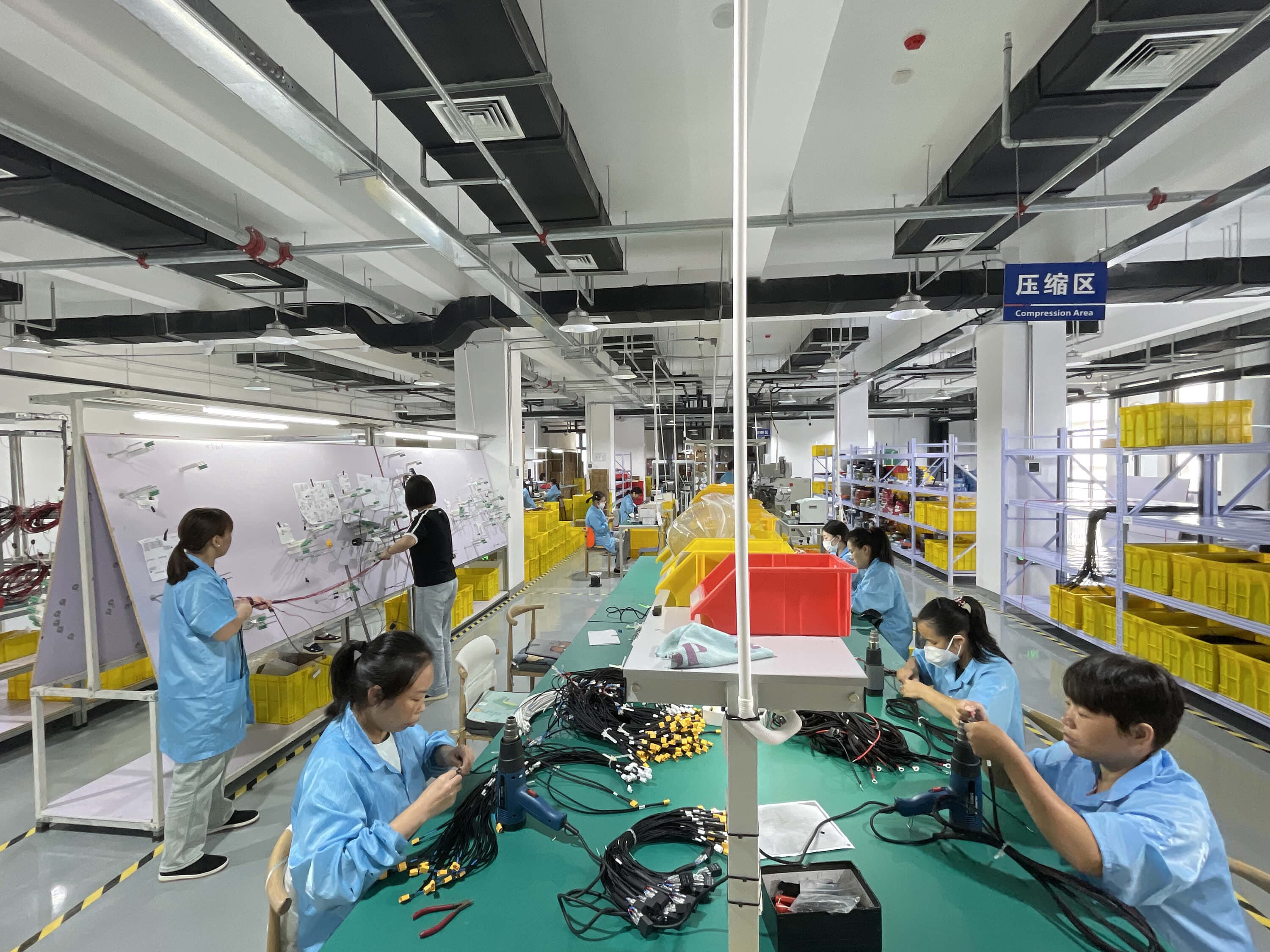
Sustainability is no longer optional in wire harness manufacturing—it's a strategic imperative. With global demand for eco-friendly materials in cable production projected to reach $15 billion by 2025, manufacturers and OEMs must embrace green practices to remain competitive and meet regulatory requirements.
This comprehensive guide explores sustainable materials, manufacturing practices, and design strategies that reduce environmental impact while maintaining the quality and reliability your applications demand. From recyclable conductors to circular economy approaches, discover how to make your wire harness supply chain more sustainable.
Carbon reduction using recycled copper vs virgin copper
Lower environmental burden with innovative cable designs
Facilities now using renewable energy sources
“If a cable assembly drawing does not lock conductor gauge, insulation spec, and tolerance stack within plus or minus 0.5 mm, the first-article review will drift. We push those three controls before any build moves to pilot.”
Eco-Friendly Wire Harness Materials
Material selection has the largest impact on wire harness sustainability. Transitioning from traditional materials to eco-friendly alternatives can dramatically reduce environmental footprint without sacrificing performance.
| Material | Traditional Alternative | Environmental Benefit | Applications |
|---|---|---|---|
| XLPE Insulation | PVC | Recyclable, no chlorine, longer life | Power cables, automotive |
| LSZH Compounds | PVC/Halogenated | No toxic smoke, safer disposal | Mass transit, buildings |
| Bio-Based Polymers | Petroleum plastics | 24% lower carbon footprint | Jacket materials, sleeves |
| Recycled Copper | Virgin copper | 85% less carbon emissions | All conductor applications |
| CCA Wire | Solid copper | 30% less carbon, lighter weight | Data cables, automotive |
| Recycled PET Sleeving | Virgin polyester | Post-consumer waste reduction | Protective sleeves, braiding |
Low-Smoke Zero-Halogen (LSZH): The Sustainable Standard
LSZH materials are becoming the default choice for applications where safety and environmental responsibility converge. These materials produce minimal smoke and no toxic halogen gases when exposed to fire, making them safer for both people and the environment.
- Required in mass transit, offshore platforms, and public buildings
- No chlorine, bromine, or fluorine compounds
- Safer end-of-life disposal and incineration
- Meets IEC 60754 and EN 50267 standards
Sustainable Conductor Options
Recycled Copper
Using recycled copper reduces carbon emissions by up to 85% compared to virgin copper production. Modern refining processes produce recycled copper with identical electrical properties.
- • No quality difference from virgin copper
- • Global recovery rate exceeds 80%
- • Infinitely recyclable without degradation
- • Growing availability and supply chain
Copper-Clad Aluminum (CCA)
CCA wire combines an aluminum core with copper cladding, offering 30% lower carbon emissions during production while providing adequate conductivity for many applications.
- • 40% lighter than solid copper
- • Suitable for data and signal cables
- • Aluminum requires less processing energy
- • Cost savings passed to customers
Carbon Footprint Reduction Strategies
Life cycle assessment (LCA) research shows that manufacturing and material stages are the primary contributors to wire harness carbon emissions. Targeted strategies in these areas yield the greatest environmental benefits.
Key Carbon Reduction Approaches
Renewable Energy Manufacturing
Over 30% of progressive wire harness facilities now operate on solar or wind power. This single change can reduce manufacturing-stage emissions by 40-60%. Some manufacturers achieve carbon-neutral production through renewable energy and offset programs.
Closed-Loop Material Recovery
Leading manufacturers recover 85% or more of copper waste through in-house recycling. Scrap copper is melted and refined on-site, while plastic waste is reprocessed into new insulation compounds. This dramatically reduces raw material needs.
Optimized Logistics
Sustainable logistics include using Euro 6 vehicles, partnering with low-carbon logistics networks, optimizing shipping routes, and consolidating shipments. Some manufacturers use rail transport for bulk materials to reduce road transport emissions.
Cut-to-Length Optimization
Precision cutting systems minimize wire waste. Advanced planning software optimizes cutting patterns to reduce scrap, while accurate length measurement prevents over-cutting. Some facilities achieve less than 2% wire waste rates.
Carbon Impact by Material Choice
| Material Decision | Carbon Impact | Implementation Difficulty | Cost Impact |
|---|---|---|---|
| Virgin to recycled copper | -85% | Low | Neutral to lower |
| Copper to CCA wire | -30% | Medium | Lower |
| Fossil to bio-based jacket | -24% | Medium | 10-20% higher |
| Standard to innovative design | -54% | High | Variable |
| Grid to renewable energy | -40-60% | Medium | Neutral long-term |
“A harness is manufacturable only when operators can repeat the process with less than 30 seconds of variation per station and still meet IPC/WHMA-A-620 criteria. Repeatability matters more than a perfect prototype.”
Circular Economy Approaches
The circular economy represents a fundamental shift from the traditional "take-make-dispose" model to a system where materials continuously cycle through use, recovery, and remanufacturing. For wire harnesses, this means designing for end-of-life from the beginning.
Design for Disassembly
Products designed for easy disassembly at end-of-life enable efficient material recovery and recycling.
- Use mechanical rather than adhesive fastening
- Minimize material variety for easier sorting
- Mark materials clearly for identification
- Design connectors for easy separation
Material Recovery Programs
Systematic collection and processing of end-of-life harnesses returns valuable materials to production.
- Copper recovery rates exceeding 85%
- Plastic insulation reprocessing
- Connector component refurbishment
- Take-back program partnerships
Key Questions for Circular Design
The German Wiring Harness Transformation Hub identifies these critical questions for sustainable wire harness development:
- How can the CO2 footprint of wiring harnesses be reduced?
- For which components can recycled or bio-based materials be used?
- How can harnesses be designed for easy disassembly?
- How can material variety be reduced to increase recycling rates?
Innovative Business Models
Some manufacturers are exploring leasing models for wire harnesses, where components are returned after use for dismantling and material recovery. This product-as-a-service approach ensures materials re-enter the production cycle rather than ending in landfill.
Benefits of Circular Business Models
- Predictable material supply
- Reduced raw material costs
- Customer loyalty through service relationships
- Quality control over returned materials
- Differentiation in competitive markets
- Compliance with extended producer responsibility
Sustainability Certifications and Compliance
Environmental regulations and certifications provide frameworks for sustainable wire harness design and manufacturing. Compliance is often mandatory, while voluntary certifications demonstrate commitment to sustainability leadership.
| Certification/Regulation | Scope | Key Requirements | Status |
|---|---|---|---|
| RoHS | EU/Global | Restrict hazardous substances (lead, cadmium, etc.) | Mandatory |
| REACH | EU/Global | Chemical registration and SVHC declaration | Mandatory |
| WEEE | EU | End-of-life recycling requirements | Mandatory |
| ISO 14001 | Global | Environmental management system | Voluntary |
| Cradle to Cradle | Global | Circular design certification | Voluntary |
| Halogen-Free | Global | No chlorine, bromine, fluorine compounds | Voluntary/Required |
RoHS Compliance
The Restriction of Hazardous Substances directive limits or bans specific substances that pose risks to health and environment:
- • Lead (Pb): <0.1% by weight
- • Mercury (Hg): <0.1% by weight
- • Cadmium (Cd): <0.01% by weight
- • Hexavalent chromium (Cr6+): <0.1%
- • PBB and PBDE flame retardants: <0.1%
- • Four phthalates (DEHP, BBP, DBP, DIBP)
REACH Compliance
REACH requires registration and communication of chemical substances:
- • Registration of substances >1 tonne/year
- • Declaration of Substances of Very High Concern (SVHC)
- • Communication through supply chain
- • Authorization for specific hazardous uses
- • Regular updates as SVHC list expands
- • Full material disclosure requirements
Cradle to Cradle Certification
Products like Hueson's Enviro-Wire have achieved Cradle to Cradle Silver certification, demonstrating circular design principles. This certification evaluates products across five categories:
Material Health
Material Reuse
Renewable Energy
Water Stewardship
Social Fairness
“The last 5% of reliability comes from verification discipline: 100% continuity, documented pull-force checks, and revision-controlled work instructions. Without that, field failures show up after shipment.”
Implementing Sustainable Practices
Transitioning to sustainable wire harness practices requires a phased approach that balances environmental goals with operational realities. Start with high-impact, low-barrier changes and progressively tackle more complex initiatives.
Sustainability Implementation Roadmap
Assess Current State
Conduct a baseline assessment of materials, energy use, waste generation, and supply chain emissions. Identify quick wins and major impact areas.
Switch to Recycled Copper
Transition conductor sourcing to certified recycled copper. This change has the highest impact (85% carbon reduction) with minimal qualification requirements.
Adopt LSZH Materials
Replace PVC and halogenated materials with LSZH alternatives where application requirements allow. Prioritize applications with safety benefits.
Implement Waste Recovery
Establish closed-loop recycling for copper scrap and plastic waste. Partner with recyclers or invest in on-site processing capabilities.
Design for Circularity
Update design guidelines to incorporate disassembly considerations, material standardization, and end-of-life recovery planning.
Pursue Certifications
Obtain ISO 14001 certification for environmental management. Consider Cradle to Cradle certification for leading products.
Cost Considerations
Balancing Sustainability and Cost
While some eco-friendly materials have higher upfront costs, sustainable practices often reduce total cost of ownership:
- Material recovery programs offset 15-25% of raw material costs
- Waste disposal expenses reduced by 40-60%
- Renewable energy provides long-term cost stability
- Green procurement preferences from major OEMs
- Brand differentiation and customer loyalty
"Sustainability in wire harness manufacturing isn't just about meeting regulations—it's about building resilience and competitive advantage. Companies that invest in recycled materials, renewable energy, and circular design today are positioning themselves for success as environmental expectations continue to rise. The key is to start with high-impact changes that also make business sense."— Hommer Zhao, Founder of Custom Wire Assembly
Frequently Asked Questions
What are the most eco-friendly wire harness materials?
The most sustainable wire harness materials include: XLPE (cross-linked polyethylene) which is recyclable and durable, LSZH (low-smoke zero-halogen) cables that produce minimal toxic emissions, bio-based polymers for insulation and jackets, recycled copper conductors which reduce carbon emissions by up to 85%, and halogen-free materials that meet environmental compliance standards like RoHS and REACH.
How can wire harness manufacturing reduce carbon footprint?
Wire harness manufacturers can reduce carbon footprint through: using renewable energy (solar, wind) for production facilities, implementing closed-loop recycling for copper and plastic waste, sourcing recycled materials (recycled copper reduces emissions by 85%), designing for disassembly to improve end-of-life recycling, optimizing logistics with low-carbon transportation, and switching to lightweight materials like aluminum or CCA wire.
What is the circular economy approach to wire harness manufacturing?
Circular economy in wire harness manufacturing involves designing products for recyclability from the start, implementing take-back programs for end-of-life harnesses, recovering and reusing materials (copper, plastics) in new production, reducing material variety to improve recycling rates, and exploring leasing models where harnesses are returned for component recovery and remanufacturing.
What sustainability certifications apply to wire harnesses?
Key sustainability certifications for wire harnesses include: RoHS (Restriction of Hazardous Substances), REACH (Registration, Evaluation, Authorization of Chemicals), ISO 14001 for environmental management systems, Cradle to Cradle certification for circular design, and WEEE compliance for end-of-life recycling requirements. Some products also carry halogen-free certifications and carbon-neutral manufacturing declarations.
How does sustainable wire harness design affect costs?
While some eco-friendly materials have higher upfront costs (bio-based polymers may cost 10-20% more), sustainable practices often reduce total cost through: material recovery programs that offset raw material costs, reduced waste disposal expenses, energy savings from efficient manufacturing, potential tax incentives and green procurement preferences, and brand value from sustainability credentials.
Sources and Further Reading
Ready to Make Your Wire Harnesses More Sustainable?
Our engineering team can help you identify sustainable material alternatives and manufacturing approaches that meet your environmental goals without compromising performance or reliability.