
Australia's data centre industry is experiencing unprecedented growth. With hyperscale facilities expanding across Sydney, Melbourne, and Canberra, and edge computing nodes reaching into regional areas, the demand for reliable, high-performance cable assemblies has never been greater. A single cable failure in a data centre can cascade into rack-level outages, service degradation, and SLA breaches costing thousands of dollars per minute. This guide covers everything you need to know about selecting the right cable assemblies for telecommunications and data centre applications in Australia — from copper and fibre optic options to compliance standards, installation practices, and failure prevention.
Australian data centre market value projected by 2028
Uptime target requiring fault-tolerant cabling infrastructure
Network outages traced to physical layer cabling issues
Current high-speed backbone interconnect standard
Need Telecom-Grade Cable Assemblies?
Get a free quote from our engineering team — fast turnaround for Australian data centres.
The Australian Data Centre Landscape
Australia has become one of the Asia-Pacific region's most important data centre markets. Sydney hosts the largest concentration of facilities, particularly in the Macquarie Park and Eastern Creek corridors. Melbourne's data centre precincts in Deer Park and Port Melbourne are expanding rapidly, while Canberra serves as the primary hub for government and defence cloud infrastructure.
Several trends are driving cable assembly demand across the sector:
- Hyperscale expansion: Major cloud providers (AWS, Microsoft Azure, Google Cloud) continue to build new facilities across Australia, each requiring tens of thousands of structured cable assemblies.
- Edge computing: Low-latency requirements are pushing micro data centres into metropolitan and regional areas, creating demand for compact, pre-terminated cable solutions.
- 5G infrastructure: The rollout of 5G base stations and small cells requires high-density fibre and power cable assemblies for backhaul and fronthaul connectivity.
- Sustainability mandates: Australian data centre operators are increasingly specifying energy-efficient cabling solutions and recyclable cable materials to meet ESG targets.
"The Australian data centre market is evolving faster than most operators realise. We are seeing cable density per rack double every few years, which means the structured cabling infrastructure you install today must support 400G and beyond. Choosing the right cable assemblies at the design stage saves enormous cost compared to retrofitting later."
Hommer Zhao
Founder, Custom Wire Assembly
Cable Types for Telecommunications & Data Centres
Data centre cabling falls into three broad categories: copper data cables, fibre optic cables, and power cables. Each has distinct applications, and most facilities use all three. Understanding where each type excels is essential for building a reliable, future-proof infrastructure. For a deeper look at the differences between cable assemblies and wire harnesses, see our cable assembly vs wire harness guide.
Copper Data Cable Assemblies
Copper cabling remains the workhorse for server-to-switch connections within racks and for management network links. The key copper cable types used in modern data centres include:
| Cable Type | Max Speed | Max Distance | Typical Use |
|---|---|---|---|
| Cat 6A (Augmented) | 10 Gbps | 100 m | Horizontal runs, server connections, management networks |
| Cat 8 | 25/40 Gbps | 30 m | Top-of-rack switch uplinks, short server connections |
| DAC (Direct Attach Copper) | 10-400 Gbps | 1-7 m | Switch-to-switch interconnects, high-density rack links |
Pro tip: DAC cables consume zero power (passive variants) and add zero latency compared to fibre optic transceivers. For runs under 5 metres, DAC is almost always the better choice for cost, power, and performance.
Fibre Optic Cable Assemblies
Fibre optic cabling is the backbone of any modern data centre, handling high-speed trunk connections between rows, halls, and buildings. The two main categories are single-mode and multi-mode fibre:
| Fibre Type | Core Size | Typical Range | Best For |
|---|---|---|---|
| OM3 (Multi-mode) | 50/125 µm | Up to 300 m (10G) | Intra-building runs, cost-sensitive 10G/40G links |
| OM4 (Multi-mode) | 50/125 µm | Up to 400 m (10G) | Standard data centre backbone, 40G/100G trunks |
| OM5 (Multi-mode) | 50/125 µm | Up to 400 m (10G) | SWDM applications, future-proofing for 400G |
| OS2 (Single-mode) | 9/125 µm | Up to 10+ km | Campus backbone, inter-building links, long-haul telecom |
Power Cable Assemblies
Power distribution is the lifeline of every data centre. Custom power cable assemblies connect Power Distribution Units (PDUs) to server racks, UPS systems, and switchgear. Common configurations include:
- PDU whips: Pre-terminated power cables connecting busway tap-off boxes to rack-mounted PDUs, typically rated at 32A or 63A single-phase or three-phase.
- Branch circuit cables: Custom-length cables from floor PDUs to individual rack PDUs, with IEC 60309 or C19/C20 connectors.
- Custom hybrid assemblies: Combined power and signal cables for integrated rack solutions, reducing cable tray congestion and improving airflow.

Connector Selection for Data Centre Cable Assemblies
The connector is where performance meets reliability. Choosing the wrong connector type can limit bandwidth, create maintenance headaches, or introduce points of failure. For a comprehensive overview of connector selection principles, see our connector selection guide.
| Connector | Type | Fibre Count | Best Application |
|---|---|---|---|
| RJ45 | Copper | N/A (8P8C) | Cat 6A/Cat 8 patch cords, management networks |
| LC Duplex | Fibre | 2 | Standard fibre patch cords, SFP/SFP+ transceivers |
| SC | Fibre | 1-2 | Telecom carrier terminations, legacy infrastructure |
| MPO/MTP-12 | Fibre | 12 | 40G QSFP+ trunk cables, high-density patching |
| MPO/MTP-24 | Fibre | 24 | 100G/400G backbone trunks, spine-leaf architecture |
Important: MPO/MTP connectors require strict polarity management. Using the wrong polarity method (Method A, B, or C per TIA-568) will result in crossed fibre pairs and link failures. Always document your polarity scheme and label every assembly.
"In high-density data centre environments, we recommend pre-terminated MPO trunk cables with factory-tested insertion loss. Field-polishing fibre connectors in a live data hall introduces contamination risk and inconsistent performance. Pre-terminated assemblies arrive tested to under 0.2 dB insertion loss — that consistency is worth the investment."
Hommer Zhao
Founder, Custom Wire Assembly
Key Standards & Compliance
Australian data centre cable assemblies must comply with a layered framework of international and national standards. Non-compliance can result in failed inspections, insurance issues, and — most critically — unsafe installations. Understanding the EMC/EMI requirements is equally important for maintaining signal integrity in dense cable environments.
| Standard | Scope | Key Requirements |
|---|---|---|
| TIA-942 | Data centre infrastructure | Cabling topology, redundancy tiers, pathway design |
| AS/CA S009 | Customer cabling (Australia) | Installation requirements for customer premises cabling |
| AS/NZS 3080 | Telecom cabling | Generic cabling for customer premises (based on ISO/IEC 11801) |
| ISO/IEC 11801 | Structured cabling | Channel performance classes, component categories |
| AS/NZS 3013 | Electrical installations | LSZH requirements for enclosed spaces, fire safety |
| BCA (NCC) | Building code | Flame spread, smoke generation limits for building cables |
Warning: Using non-LSZH cables in plenum spaces or raised floor environments violates AS/NZS 3013 and the Building Code of Australia. Standard PVC cables release toxic hydrogen chloride gas when burning, which can corrode electronic equipment throughout the facility — even in areas not directly affected by the fire.
Cable Management & Installation Best Practices
Even the best cable assemblies will fail prematurely if installed incorrectly. Data centre cable management directly affects airflow efficiency, maintenance access, and long-term reliability. For insights into how cable testing fits into the quality process, refer to our wire harness testing guide.
Hot/Cold Aisle Cable Routing
- Route cables through overhead cable trays or under-floor pathways — never across the top of racks where they block airflow
- Maintain separation between hot aisle exhaust and cold aisle supply pathways
- Use blanking panels in racks to prevent air recirculation — cable entry points should be sealed
Bend Radius & Airflow
- Fibre optic cables: minimum bend radius of 10x cable diameter (under no load) or 15x (under tension)
- Cat 6A copper: minimum bend radius of 4x cable diameter
- Never cable-tie fibre bundles tightly — use Velcro hook-and-loop straps to prevent microbending
Pre-Terminated vs Field-Terminated Assemblies
| Factor | Pre-Terminated | Field-Terminated |
|---|---|---|
| Installation speed | Minutes per link | 30-60 min per link |
| Insertion loss consistency | Factory-tested, <0.2 dB | Variable, operator-dependent |
| Length flexibility | Must order exact lengths | Cut to length on site |
| Skilled labour required | No (plug and play) | Yes (fusion splicer, OTDR) |
| Best for | New builds, rapid deployments | Retrofits, non-standard routes |
Recommendation: For new data centre builds in Australia, pre-terminated fibre assemblies are the standard approach. They reduce installation time by up to 80%, eliminate the need for on-site fibre technicians, and deliver guaranteed optical performance. Our manufacturing capabilities include pre-terminated fibre and copper assemblies tested to channel-level specifications.
Environmental Considerations for Australian Conditions
Australian data centres face unique environmental challenges that directly affect cable assembly selection. Temperature extremes, fire safety regulations, and the growing emphasis on sustainability all influence material and design choices. Understanding the cost factors for custom cable assemblies helps balance performance requirements against budget.
Temperature Management
Australian summers can push ambient temperatures above 45 degrees C in some regions. While data halls are climate-controlled, cable pathways through ceiling voids and risers may not be. Specify cables rated for at least 60 degrees C continuous operation, and use plenum-rated cables in unconditioned spaces where temperatures can spike during cooling system failures.
LSZH Requirements
Low Smoke Zero Halogen jacketing is mandatory in enclosed data centre spaces under AS/NZS 3013. LSZH cables produce minimal toxic smoke when exposed to flame, protecting personnel and preventing corrosive gas damage to nearby equipment. All data centre cable assemblies — including patch cords — should specify LSZH construction.
EMI Shielding
High-density racks generate significant electromagnetic interference. Shielded Cat 6A (S/FTP) cables are recommended for copper runs near power cables or high-density switching equipment. Maintain a minimum 150 mm separation between power and data cables in shared pathways to minimise crosstalk and interference.
"One often-overlooked issue in Australian data centres is cable performance during a cooling failure event. When HVAC systems trip, cable pathway temperatures can exceed 50 degrees C within minutes. If your cables are only rated to 60 degrees C, you are operating with a very thin margin. We always recommend specifying cables with headroom — 75 degrees C rated jackets for critical infrastructure paths."
Hommer Zhao
Founder, Custom Wire Assembly

Common Failure Modes & Prevention
Understanding how data centre cable assemblies fail is the first step to preventing costly downtime. The majority of cabling failures are caused by installation errors, not manufacturing defects.
Bend Radius Violations
Exceeding the minimum bend radius causes microbending in fibre (increasing attenuation) and pair deformation in copper cables (increasing crosstalk). This is the most common installation error in data centres.
Prevention: Use cable management rings and waterfall trays at rack entries. Train installers on minimum bend radius for each cable type. Inspect all pathways after installation.
Connector Contamination
A single dust particle on a fibre optic connector end face can cause 1 dB or more of insertion loss — enough to degrade a 100G link. Contamination is the leading cause of intermittent fibre faults.
Prevention: Always inspect fibre connectors with a fibre scope before mating. Use dust caps on every unmated port. Clean connectors with lint-free wipes and IPA or dedicated fibre cleaning tools.
Poor Labelling & Documentation
Unlabelled or mislabelled cables cause maintenance technicians to trace cables manually, increasing the risk of accidental disconnection. In a facility with thousands of patch cords, this is a significant operational risk.
Prevention: Label both ends of every cable with a unique identifier. Use a structured naming convention (e.g., hall-row-rack-port). Maintain a digital cable management database and update it with every change.
EMI from Power Cable Proximity
Running unshielded copper data cables parallel to power cables introduces electromagnetic interference, causing bit errors and reduced throughput. This is especially problematic with Cat 6A UTP cables near high-current PDU feeds.
Prevention: Maintain minimum 150 mm separation between power and data pathways. Use shielded (S/FTP) copper cables in high-EMI environments. Cross power and data cables at 90-degree angles when separation is not possible.
Frequently Asked Questions
What cable type is best for short-range data centre interconnects under 5 metres?
For short-range interconnects under 5 metres, Direct Attach Copper (DAC) cables are the most cost-effective and energy-efficient option. DAC assemblies offer low latency, zero power consumption (passive variants), and lower cost compared to fibre optic transceivers. They are available in 10G SFP+, 25G SFP28, and 100G QSFP28 configurations and are ideal for top-of-rack switch connections.
Why is LSZH cable required in Australian data centres?
Low Smoke Zero Halogen (LSZH) cable is required under AS/NZS 3013 for areas where fire safety is critical, including data centres with raised floors and enclosed plenum spaces. Standard PVC cables release toxic halogen gases and dense smoke when burning, which can damage sensitive equipment and endanger personnel. LSZH cables produce minimal smoke and no corrosive gases, protecting both people and infrastructure during a fire event.
What is the difference between single-mode and multi-mode fibre for data centres?
Single-mode fibre (OS2, 9/125 micron core) supports longer distances up to 10+ km and higher bandwidth, making it ideal for campus backbone and inter-building links. Multi-mode fibre (OM3/OM4/OM5, 50/125 micron core) is more cost-effective for short distances under 300-400 metres and is the standard choice for intra-building data centre runs. Multi-mode uses less expensive VCSEL transceivers, while single-mode requires costlier laser transceivers.
How do I choose between pre-terminated and field-terminated fibre assemblies?
Pre-terminated fibre assemblies are factory-polished and tested, delivering guaranteed insertion loss performance (typically under 0.2 dB). They install in minutes and eliminate the need for skilled fibre technicians on site. Field termination is more flexible for non-standard lengths but requires trained personnel, fusion splicers, and on-site testing. For Australian data centres where uptime is critical, pre-terminated assemblies reduce installation risk and speed up deployment significantly.
What standards must data centre cable assemblies comply with in Australia?
Australian data centre cable assemblies must comply with several standards: AS/NZS 3080 (telecommunications cabling), AS/CA S009 (customer cabling requirements), AS/NZS 3013 (electrical installations with LSZH requirements), and should follow ISO/IEC 11801 and TIA-942 for structured cabling design. Fire safety compliance under the Building Code of Australia (BCA) is mandatory, and cables in plenum spaces must meet relevant flame spread and smoke generation ratings.
References & Further Reading
Related Articles

Cable Assembly vs Wire Harness: What's the Difference?
Understanding the key differences and when to use each
Cable Assembly Connector Selection Guide
How to choose the right connector for your application

EMC/EMI Best Practices for Cable Assemblies
Shielding, grounding, and interference prevention

Wire Harness Testing Guide
Testing methods and quality assurance for wire harnesses
Custom Cable Assembly Cost Guide Australia
Understanding pricing factors for custom cable assemblies
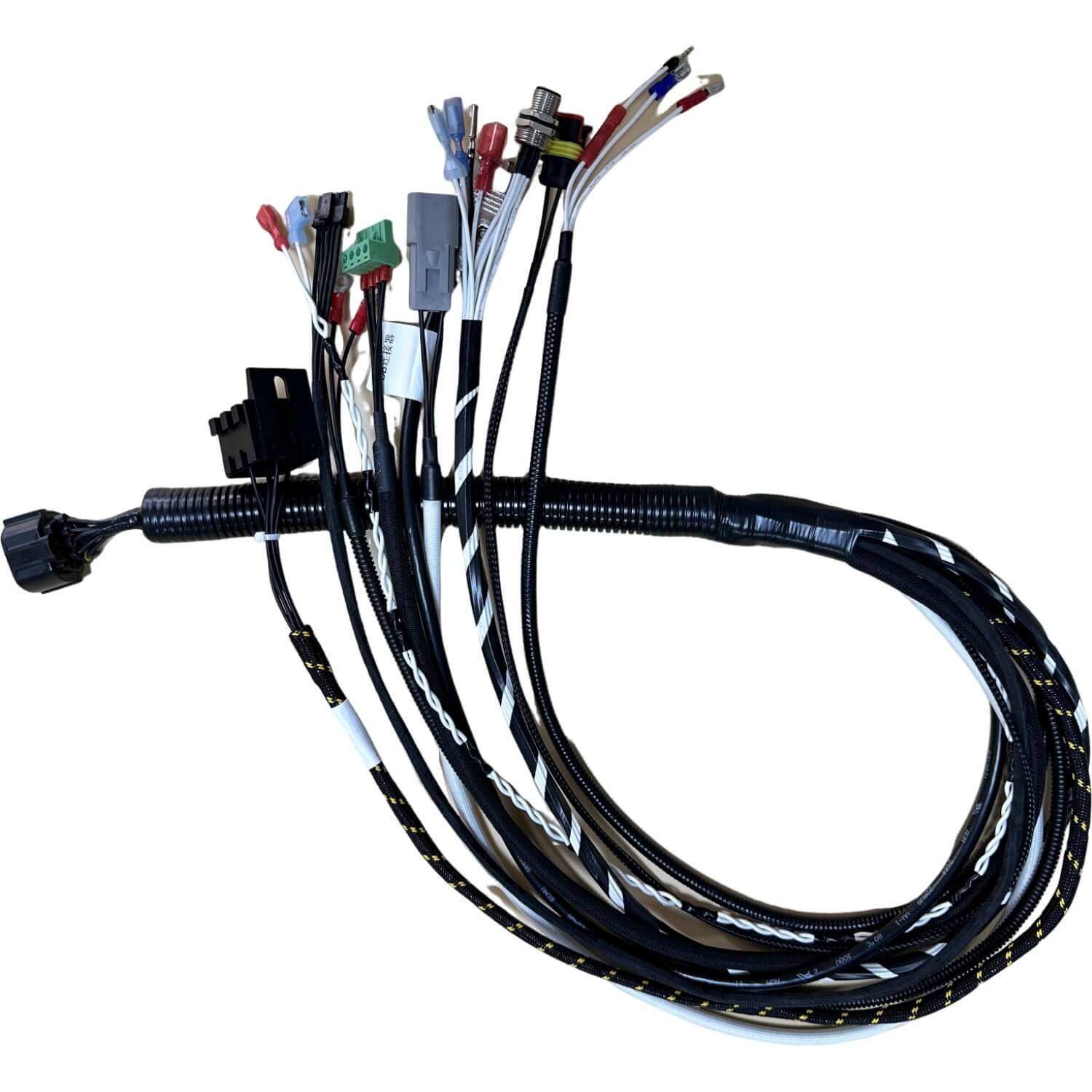
Our Manufacturing Capabilities
Explore our full range of cable assembly and wire harness services