
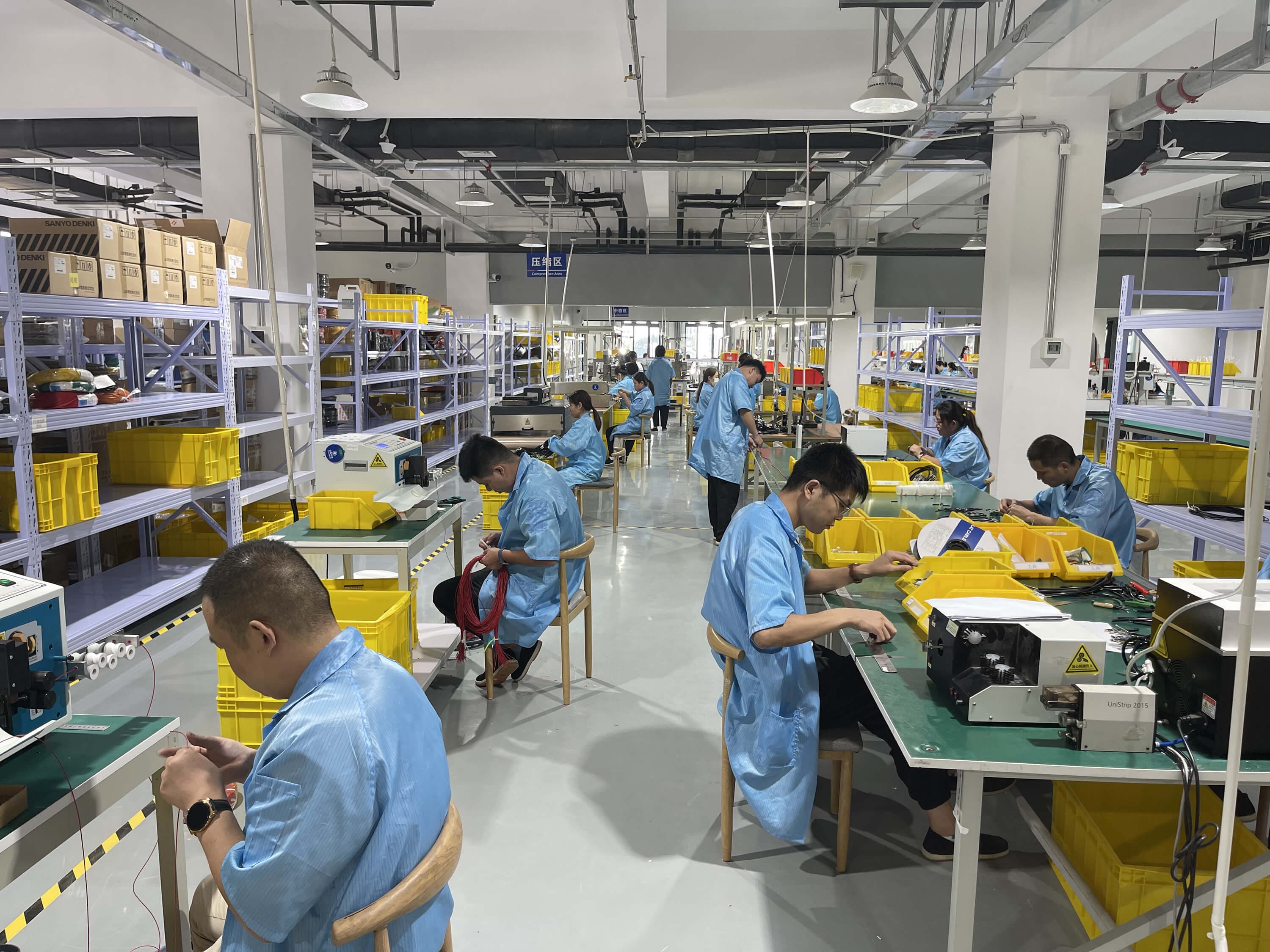
How Much Does Custom Cable Assembly Cost in Australia?Complete 2026 Pricing Guide
Transparent cost breakdowns across mining, medical, industrial, and defence sectors. Understand exactly where your money goes and how to reduce costs by 15-35% without compromising quality.
The $12 Cable Assembly That Actually Cost $47
A Perth mining equipment OEM received a quote for $12 per cable assembly from an overseas supplier. After tooling fees ($3,200), minimum order penalties, three rounds of revisions ($1,800 in ECO charges), expedited shipping ($640), and failed first-batch inspection requiring rework, the true cost landed at $47 per unit. They lost 11 weeks to the process.
This guide gives you the real numbers so you can budget accurately, compare quotes fairly, and avoid the costly surprises that derail 4 out of 5 first-time cable assembly buyers.
Australia's cable and wire manufacturing industry is valued at $2.2 billion AUD in 2026, with the broader wires and cables market growing at 6.7% CAGR through 2031. Whether you're building mining equipment for the Pilbara, medical devices for TGA approval, or defence systems under AUKUS, understanding cable assembly costs is essential for accurate project budgeting.
Unlike off-the-shelf components with catalogue pricing, every custom cable assembly is unique. The same 15-wire assembly can cost anywhere from $18 to $95 depending on connector types, compliance requirements, volume, and where it's manufactured. This guide breaks down exactly what drives those differences.
What You'll Learn
- • Complete cost component breakdown — materials, labour, tooling, compliance, and overhead
- • Industry-specific pricing ranges for mining, medical, defence, industrial, and marine sectors
- • How volume impacts unit pricing from prototype to 10,000+ units
- • 8 hidden costs that inflate budgets by 15-40%
- • Proven DFM strategies to reduce costs by 15-35%
- • What information you need for an accurate quote
Australian cable & wire manufacturing industry (2026)
CAGR growth rate for Australian wires & cables market
Materials as a percentage of total cable assembly cost
Price difference between prototype and volume production
"The biggest mistake Australian OEMs make is comparing quotes on unit price alone. A $12 quote with $4,000 in hidden tooling and compliance fees is more expensive than a $22 all-inclusive quote. We provide itemised cost breakdowns so buyers can compare apples to apples."
Hommer Zhao
Engineering Director, 18+ Years in Cable Assembly Manufacturing
Cable Assembly Cost Breakdown: Where Your Money Goes
Understanding the cost structure helps you identify where to optimise. Here's the typical breakdown for a custom cable assembly in volume production (1,000+ units):
Typical Cost Distribution (Volume Production)
Key Material Cost Drivers
Why connectors dominate cost variability: A standard Molex Micro-Fit connector costs $0.80-$2.50, while a Deutsch DT sealed connector costs $8-$15, and a MIL-SPEC circular connector can exceed $45. Connector choice alone can shift the total assembly cost by 30-50%. See our connector comparison guide to understand the tradeoffs.
Cable Assembly Pricing by Industry
Pricing varies dramatically by industry because each sector has unique requirements for materials, connectors, compliance, and testing. Below are realistic ranges based on medium-complexity assemblies (10-25 wires) at production volumes of 500+ units:
| Industry | Unit Price Range (AUD) | Key Cost Driver | Typical Compliance |
|---|---|---|---|
| Mining & Resources | $35 - $180 | IP69K connectors, high-temp wire | AS/NZS 3000, IP69K |
| Medical Devices | $25 - $250 | Biocompatible materials, traceability | ISO 13485, TGA, IEC 60601 |
| Defence & Aerospace | $65 - $500+ | MIL-SPEC connectors, IPC-620 Class 3 | AS9100D, MIL-DTL |
| Industrial & Automation | $15 - $95 | Flex life, EMI shielding | IPC/WHMA-A-620, CE |
| Marine & Offshore | $40 - $200 | Corrosion-resistant, UV-stable | AS/NZS 3004, DNV |
| EV & Renewable Energy | $30 - $175 | High-voltage rated, thermal management | AS/NZS 3000, IEC 62196 |
| Robotics & Automation | $20 - $120 | Continuous flex, miniaturisation | UL, IPC-620 Class 2/3 |
Why Defence Costs 3-5x More
MIL-SPEC connectors cost 5-10x more than commercial equivalents. IPC-620 Class 3 workmanship requires 100% inspection under magnification. AS9100D documentation adds 15-25% overhead. These requirements exist for critical safety reasons.
Industrial Assemblies: Best Value
Industrial and automation cable assemblies offer the best value because they use standard connectors (Molex, TE, JST), moderate IP ratings, and Class 2 workmanship. See our connector comparison for brand analysis.

How Volume Impacts Pricing: Prototype to Mass Production
Volume is the single biggest lever for cost reduction. Below is a realistic pricing model for a medium-complexity industrial cable assembly (18 wires, 3 connector types, braided shield, IP67 rated):
| Volume | Materials | Labour | Tooling/Unit | QC & Other | Unit Price (AUD) |
|---|---|---|---|---|---|
| 10 (prototype) | $42.00 | $18.00 | $280.00 | $15.00 | $355.00 |
| 50 units | $38.00 | $15.50 | $56.00 | $11.00 | $120.50 |
| 100 units | $35.00 | $14.00 | $28.00 | $9.00 | $86.00 |
| 500 units | $30.00 | $12.00 | $5.60 | $7.00 | $54.60 |
| 1,000 units | $27.50 | $10.50 | $2.80 | $5.50 | $46.30 |
| 5,000 units | $24.00 | $9.00 | $0.56 | $4.50 | $38.06 |
| 10,000+ units | $22.00 | $8.00 | $0.28 | $4.00 | $34.28 |
Volume Break Strategy for Australian Buyers
The steepest price drops happen at 100, 500, and 1,000 units. If you're planning 80 units, consider ordering 100 to unlock better material pricing. Planning 400? Go to 500. The marginal cost of additional units is typically lower than the per-unit savings you gain. Many Australian OEMs save 10-20% annually by aggregating quarterly orders into semi-annual production runs.
"For Australian companies ordering 200-2,000 units, the sweet spot is partnering with a manufacturer who has established supply chains for standard components. We stock Molex, TE, Deutsch, and Amphenol connectors — eliminating 2-3 weeks of lead time and 15-20% of component markups that small-quantity buyers face."
Hommer Zhao
Engineering Director, OurPCB Australia
Get Your Free Itemised Quote
Detailed cost breakdown within 24 hours. No hidden fees. $100 AUD off your first order.
5 Proven Strategies to Reduce Cable Assembly Costs by 15-35%
Cost reduction is about eliminating waste, not cutting corners. These strategies maintain full compliance with Australian standards while significantly reducing your total cost:
Standardise Connector Families Across Products
Every unique connector type requires separate tooling ($500-$1,200) and limits bulk purchasing power. Standardising on 2-3 connector families across your product lines can cut tooling costs by 60% and unlock material volume discounts.
- • 3x different Molex families
- • 2x TE Connectivity types
- • 1x custom moulded
- • 1x Deutsch sealed
- • 1x Molex Micro-Fit (signal)
- • 1x TE AMPSEAL (sealed)
- • 1x Deutsch DT (power)
- • Bulk pricing on all three
Right-Spec Materials for Actual Conditions
Over-specifying is one of the most expensive mistakes in cable assembly. Specifying 200°C silicone wire when 105°C PVC is adequate costs 3-4x more. Match materials to actual operating conditions with an appropriate safety margin — not worst-case assumptions.
For a 20-wire assembly averaging 1.5m per wire, the difference between silicone and PVC is $42 per unit. See our insulation comparison guide.
Optimise Wire Routing and Reduce Length
Wire costs seem small per metre, but across 15-30 wires, a 10-15% length reduction delivers meaningful savings — and reduces weight, which matters for automotive, aerospace, and robotics applications.
Real example: A Melbourne robotics company reduced average wire length from 2.1m to 1.8m (14% reduction) through CAD-optimised routing. On their 22-wire assembly at 1,000 units/year, this saved $3,960 AUD annually in materials alone.
Consolidate Volume Across Product Variants
If you manufacture three products each needing 300 cable assemblies, ordering separately means 3x the setup and small-batch pricing. Consolidating common components across all products unlocks volume tiers.
Invest in DFM Review Before Production
A thorough Design for Manufacturability review catches costly issues before they become expensive engineering change orders. The ROI on DFM is typically 5-10x the investment.
We offer free DFM reviews on all cable assembly projects. Our engineers review your design for material optimisation, assembly efficiency, and compliance gaps — before you commit to production. This regularly saves customers $2,000-$8,000 in avoided ECOs and rework. Learn more about our RFQ best practices.
"After 18 years manufacturing cable assemblies for Australian mining, medical, and defence companies, the pattern is clear: companies that invest in DFM review and right-spec their materials save 20-35% versus those who over-engineer then try to cost-reduce later. Get the design right first."
Hommer Zhao
Engineering Director, OurPCB Australia
What You Need for an Accurate Cable Assembly Quote
The more information you provide upfront, the more accurate your quote. Vague specifications lead to contingency pricing — meaning you pay for uncertainty. Here's the ideal RFQ checklist:
RFQ Checklist for Best Pricing
Technical Documentation
Wiring diagram, schematic, or even a hand sketch with dimensions. Any documentation reduces quote uncertainty.
Bill of Materials
Connector part numbers, wire types and gauges, terminal specifications. Approved equivalents if flexible on brands.
Quantity & Forecast
Initial order quantity AND annual volume forecast. This unlocks strategic volume pricing and component pre-ordering.
Compliance Requirements
Required certifications (AS/NZS, UL, IP rating), industry standards, environmental specs (temp range, chemical exposure).
Testing Requirements
Continuity, hi-pot, pull force, IP verification — specify what testing the assembly must pass.
Timeline & Delivery
Target delivery date, whether phased delivery is acceptable, and shipping destination within Australia.
Don't have all this information? That's completely fine. Our engineering team works with customers at every stage — from napkin sketches to fully documented designs. We'll help you define specifications and provide preliminary pricing estimates while your design evolves. Contact us to start the conversation.
References & Sources
[1] IBISWorld — Electric Cable and Wire Manufacturing in Australia Industry Analysis, 2025
[2] Grand View Research — Cable Assembly Market Size & Share | Industry Report, 2030
[3] ASSEMBLY Magazine — Cost Reduction in Wire Harness Assembly
[4] Multi-Tek — Economies of Scale in Custom Cable Manufacturing
Frequently Asked Questions
How much does a custom cable assembly cost in Australia?
Custom cable assembly costs in Australia range from $5-$15 AUD per unit for simple assemblies (2-5 wires) in volumes of 1,000+, to $150-$500+ AUD for complex multi-conductor harnesses with specialty connectors. Prototype pricing is typically 3-8x higher than volume pricing due to tooling amortisation and material minimums.
What factors affect cable assembly pricing the most?
The top cost drivers are: (1) Materials — 35-55% of total cost; (2) Labour — 20-35% for assembly and inspection; (3) Production volume — prototype to 10,000+ pricing can differ by 5-8x; (4) Compliance requirements — certifications add 10-20% to testing costs; (5) Connector selection — MIL-SPEC connectors cost 5-10x more than commercial equivalents.
Is it cheaper to source cable assemblies locally or from overseas?
For volumes under 500 units, Australian manufacturing is often cost-competitive when factoring in shipping ($200-$800), customs duties (5%), lead time delays (4-8 weeks), and communication overhead. For volumes over 5,000, overseas manufacturing typically saves 25-40% on unit price — but only with certified factories meeting Australian standards.
How can I reduce cable assembly costs without sacrificing quality?
Five proven strategies: (1) Standardise connector families across product lines for bulk pricing; (2) Optimise wire routing to reduce total length by 10-15%; (3) Right-spec materials — don't over-engineer temperature or IP ratings; (4) Consolidate orders across product variants; (5) Invest in DFM review to catch issues before production.
What information do I need to get an accurate quote?
For the most accurate quote, provide: wiring diagram or schematic, bill of materials with connector part numbers, wire types and gauges, quantity and annual forecast, required certifications (AS/NZS, UL, IP rating), environmental requirements, and testing specifications. Even partial information helps — our team can work with you to define the rest.
What is the typical lead time for custom cable assemblies?
Prototypes take 2-3 weeks including DFM review. Production orders of 100-1,000 units typically ship in 3-4 weeks. Larger orders (5,000+) require 5-7 weeks. Component availability is the biggest variable. Rush orders are available at 25-50% premium.
Ready for Transparent Cable Assembly Pricing?
Get a detailed, itemised quote within 24 hours. Every cost component disclosed upfront. No hidden fees. No surprises. 18 years of certified manufacturing for Australian businesses.
Related Articles
Automotive Wire Harness Cost Breakdown
Detailed cost analysis specific to IATF 16949 automotive applications.
7 Cost-Saving Tips for Wire Harness Procurement
Expert strategies to reduce procurement costs by 15-40%.
Onshore vs Offshore Manufacturing
Compare local Australian vs overseas cable assembly sourcing.