
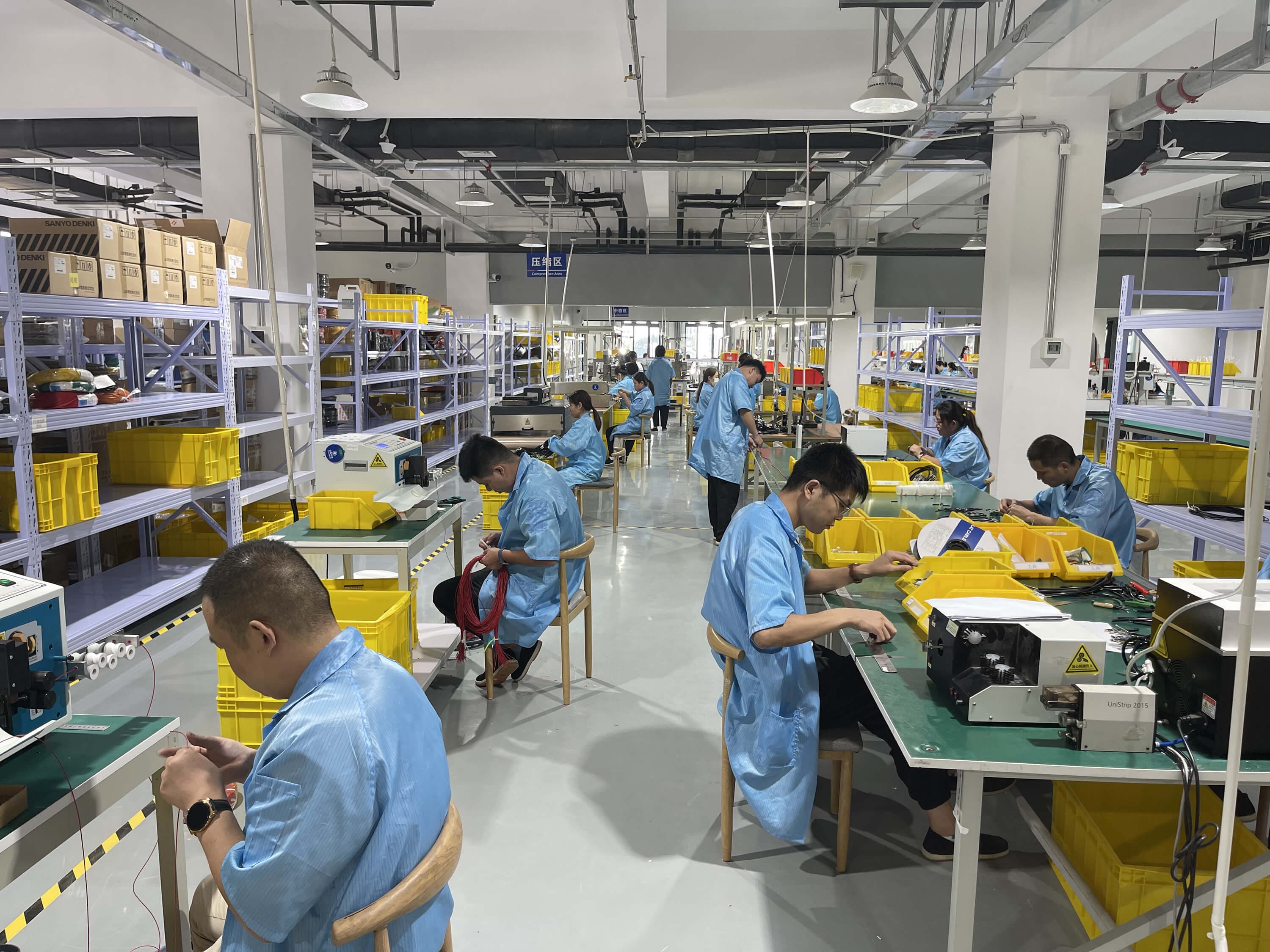
Automotive Wire Harness Cost Breakdown: What Drives Pricing in 2026
Complete cost analysis for Australian automotive manufacturers. Understand material costs, labor factors, volume pricing, and proven strategies to reduce costs by 20-40% while maintaining IATF 16949 quality standards.
Why a $50 Quote Can Become a $120 Reality
A Brisbane automotive electronics company received quotes ranging from $47 to $115 for the same 32-wire harness. They chose the cheapest option. Three months later, after adding "forgotten" tooling fees ($2,800), ECO charges ($1,950), and expedite costs, their actual unit cost hit $98—plus they lost 6 weeks fighting quality issues.
This guide will help you understand what truly drives automotive wire harness costs and how to get accurate, transparent pricing from day one.
Automotive wire harness pricing is notoriously complex. Unlike off-the-shelf components with standard pricing, every custom harness has unique cost drivers based on wire gauges, connector types, production volume, and quality requirements.
For Australian automotive manufacturers, understanding these cost factors is critical—especially when working with overseas suppliers where hidden costs can derail budgets. This comprehensive guide breaks down every cost component and shows you exactly where your money goes.
What You'll Learn in This Guide
- • Complete cost component breakdown (materials, labor, tooling, overhead)
- • Material cost factors: wire, connectors, terminals, and protective sleeving
- • How production volume impacts unit pricing (prototype vs. 10,000+ units)
- • Hidden costs that catch 80% of buyers by surprise
- • Proven Design for Manufacturing (DFM) strategies to reduce costs by 20-40%
- • Real pricing transparency examples from IATF 16949 certified manufacturing
Complete Cost Components Breakdown
Understanding where your money goes is the first step to cost optimization. Here's the typical cost structure for automotive wire harnesses in volume production (1,000+ units):
Typical Cost Distribution (Volume Production)
Material costs dominate in volume production, while tooling and labor drive prototype pricing
Important Note on Prototype vs Volume Costs
The percentages above apply to volume production (1,000+ units). For prototypes and low volumes (<100 units), the cost structure inverts: Tooling and labor can represent 60-70% of total cost, with materials only 25-35%. This is why prototype pricing is typically 3-5x higher than volume pricing.
Materials (40-55%)
- •Wire/cable (15-25% of total)
- •Connectors & housings (12-18%)
- •Terminals & contacts (8-12%)
- •Protective sleeving & tapes (3-5%)
- •Labels, cable ties, misc. (2-3%)
Direct Labor (20-30%)
- •Wire cutting & stripping
- •Terminal crimping
- •Assembly & routing
- •Connector insertion
- •Visual inspection
Tooling & Setup (10-15%)
- •Crimp tooling & dies
- •Test fixtures
- •Assembly jigs
- •Production programming
- •Setup time amortization
Quality & Testing (8-12%)
- •Electrical testing (continuity, hi-pot)
- •Pull force testing
- •First article inspection
- •In-process quality checks
- •Documentation & traceability
Material Cost Factors: The 40-55% That Matters Most
Materials are the largest cost component in volume production. Understanding what drives material costs helps you make informed design decisions without compromising performance.
1. Wire & Cable Costs (15-25% of total)
Typical Automotive Wire Pricing (Per Meter, Volume Pricing)
| Wire Type | Gauge | Temp Rating | Cost/Meter |
|---|---|---|---|
| PVC automotive wire | 22 AWG | 80°C | $0.15-0.25 |
| PVC automotive wire | 18 AWG | 80°C | $0.25-0.35 |
| Cross-linked (XLPE) | 18 AWG | 125°C | $0.45-0.65 |
| Silicone wire | 18 AWG | 200°C | $0.85-1.25 |
| Shielded cable | 24 AWG (twisted pair) | 105°C | $1.20-1.80 |
Cost Reduction Strategies
- • Use standard wire gauges (avoid odd sizes like 19 AWG)
- • Don't over-specify temperature ratings (125°C vs 200°C is 2x cost)
- • Consolidate wire colors (using 10 colors costs more than 5)
- • Optimize routing to reduce total wire length by 10-15%
- • Consider PVC instead of silicone where high-temp isn't needed
Real Cost Example
A 32-wire harness with 5.5m average wire length:
- • Standard PVC (18 AWG): 32 × 5.5m × $0.30 = $52.80
- • Silicone upgrade: 32 × 5.5m × $1.05 = $184.80
- • Difference: $132 per unit (3.5x higher!)
Only use premium wire where actually required by operating conditions.
2. Connectors & Housing Costs (12-18% of total)
Connectors often represent the second-largest material cost, with prices varying dramatically based on brand, pin count, and environmental ratings. Learn more about connector selection in our Molex vs TE vs JST comparison guide.
Automotive Connector Pricing Examples
| Connector Type | Pin Count | IP Rating | Cost per Set |
|---|---|---|---|
| JST XH series (economy) | 6-pin | None | $0.85-1.20 |
| Molex Mini-Fit Jr | 12-pin | None | $2.50-3.80 |
| TE AMP Superseal 1.5 | 8-pin | IP67 | $4.50-6.50 |
| DEUTSCH DT series | 12-pin | IP68/IP69K | $12.50-18.00 |
| DEUTSCH HD30 (heavy duty) | 24-pin | IP68/IP69K | $28.00-42.00 |
Note: Prices include both male and female connectors plus terminals. Volume pricing (1,000+ units).
Cost Impact: Custom vs Standard Connectors
A harness with 4 connectors switching from standard Molex ($3.50 each) to custom DEUTSCH ($16.00 each) adds $50 per unit in material costs alone—before considering custom tooling fees ($500-$1,200 per connector type). Always evaluate if premium connectors are truly necessary for your application.
3. Protective Sleeving & Tapes (3-5% of total)
PVC Tape
Economy option, suitable for indoor automotive applications
Split Loom Tubing
Good abrasion protection, reusable for service
Heat Shrink Tubing
Premium protection, excellent sealing, higher labor cost
Labor & Complexity Factors: The 20-30% Variable
Labor costs vary significantly based on harness complexity and production location. Understanding these factors helps you design for efficient manufacturing.
What Increases Labor Costs
High Labor Complexity:
- Multiple wire branches requiring separate assembly
- Hand-crimped contacts (vs automated crimping)
- Complex wire routing with precise length requirements
- Heat shrink application on every branch
- Over-molding or potting requirements
- Extensive labeling and documentation needs
Lower Labor Complexity:
- Single trunk design with minimal branches
- Fully automated crimping capability
- Standardized wire lengths with tolerance
- Simple tape wrapping or split loom protection
- Pre-terminated connectors where possible
- Minimal custom labeling requirements
Typical Assembly Time vs Cost
Based on experienced operators in IATF 16949 certified facilities:
| Harness Complexity | Wire Count | Assembly Time | Labor Cost* |
|---|---|---|---|
| Simple (single trunk) | 5-10 wires | 8-12 minutes | $2.50-4.00 |
| Medium (2-3 branches) | 15-25 wires | 18-28 minutes | $6.00-9.50 |
| Complex (multiple branches) | 30-50 wires | 35-55 minutes | $12.00-18.50 |
| Very complex (advanced) | 50+ wires | 60-120 minutes | $20.00-40.00 |
*Labor cost assumes blended rate of $18-22/hour including overhead, benefits, and supervision. Australian domestic manufacturing labor costs are 3-4x higher.
Design for Manufacturing (DFM) Tip
A Melbourne EV manufacturer reduced assembly time by 40% by consolidating their 6-branch harness into a 2-branch design with longer individual wires. Assembly time dropped from 48 minutes to 28 minutes, saving $6.80 per unit in labor—a $68,000 annual savings on 10,000 units. Our engineering team provides free DFM reviews to identify similar opportunities.
Tooling & Setup Costs: The One-Time Investment
Tooling costs are one-time investments amortized across production volume. Understanding these costs is critical for accurate total cost analysis, especially for low-volume production.
Typical Tooling Costs
Tooling Amortization Impact
Example: $3,000 total tooling cost
This is why prototype pricing is 3-5x higher than volume production—tooling costs dominate at low volumes.
Our Transparent Tooling Policy
At OurPCB, tooling costs are clearly itemized in quotes with amortization schedules. For prototypes, we often absorb tooling costs for customers who commit to production volumes. We also maintain tooling for 3+ years at no storage fee, making re-orders seamless.
Learn about our prototyping servicesVolume Impact: How Quantity Transforms Pricing
Production volume is the single most powerful cost lever. Here's exactly how pricing scales from prototype to high-volume production:
Real Pricing Example: 32-Wire Automotive Harness
Medium complexity: 32 wires, 4 connectors, IP67-rated, split loom protection
| Volume | Materials | Labor | Tooling | QC/Other | Unit Price |
|---|---|---|---|---|---|
| 10 units (prototype) | $68.00 | $14.50 | $310.00 | $12.00 | $404.50 |
| 50 units | $62.00 | $13.00 | $62.00 | $9.50 | $146.50 |
| 100 units | $58.00 | $12.00 | $31.00 | $8.00 | $109.00 |
| 500 units | $50.00 | $10.50 | $6.20 | $6.50 | $73.20 |
| 1,000 units | $46.00 | $9.50 | $3.10 | $5.50 | $64.10 |
| 5,000 units | $41.00 | $8.50 | $0.62 | $4.50 | $54.62 |
| 10,000+ units | $38.00 | $7.80 | $0.31 | $4.00 | $50.11 |
Volume Breaks & Strategic Planning
Notice the steepest price drops occur at 100, 500, and 1,000 units. If you're ordering 450 units, consider increasing to 500 to unlock better material pricing. If planning 900 units, order 1,000 to benefit from the next tier. The marginal cost of additional units is often lower than the per-unit savings gained.
Hidden Costs That Catch 80% of Buyers
The quoted unit price is only part of the story. These hidden costs can add 15-35% to your total project expense:
Engineering Change Orders (ECOs)
Design modifications after production begins require new tooling, material re-ordering, and production reprogramming. A single ECO can cost more than your entire prototype order.
How to avoid: Invest in thorough design review and prototyping before production. Our free DFM review catches 85% of potential issues.
Custom Tooling Not in Quote
Some manufacturers quote without tooling, then add it later. Others quote 'standard' tooling but charge extra for connectors requiring special dies.
How to avoid: Always ask: 'Does this quote include ALL tooling costs?' Get it in writing.
Minimum Order Quantity Penalties
Ordering below MOQ (often 100-500 units) triggers higher per-unit pricing that wasn't clear in initial quotes.
How to avoid: Clarify MOQ and below-MOQ pricing upfront. We have no MOQ—order from 1 unit.
Rush Order & Expedite Fees
Need it faster than standard lead time? Expect significant upcharges for expedited material procurement and overtime labor.
How to avoid: Plan ahead. Standard lead times (2-3 weeks for samples, 4-5 weeks for production) avoid these fees.
First Article Inspection (FAI)
IATF 16949 and aerospace customers require formal FAI documentation. Some manufacturers charge separately for this.
How to avoid: Ask if FAI is included for IATF customers. Our FAI is included for automotive projects.
Material Obsolescence Risk
Connectors and wire types can become obsolete. If your design uses end-of-life parts, you'll face forced redesigns.
How to avoid: Use current-generation components. Our team flags obsolescence risks during design review.
Shipping & Customs for International
Overseas manufacturing adds shipping, customs clearance, and potential duty fees. Small orders have disproportionately high shipping costs.
How to avoid: We offer free shipping to Australia on orders over $1,000 AUD. Customs handled for you.
Quality Failure Rework Costs
If harnesses fail quality testing, rework or replacement costs can devastate project budgets, especially on tight timelines.
How to avoid: Choose IATF 16949 certified manufacturers. Our defect rate is <0.3% with 100% testing.
Proven Strategies to Reduce Costs by 20-40%
Cost reduction doesn't mean compromising quality. These Design for Manufacturing (DFM) strategies maintain IATF 16949 standards while significantly reducing costs:
Standardize Wire Gauges & Types
Using 5 different wire gauges instead of 2-3 increases material costs (smaller quantity breaks) and labor complexity (more setup changes, higher error risk).
- • 10x 22 AWG wires
- • 8x 20 AWG wires
- • 6x 18 AWG wires
- • 5x 16 AWG wires
- • 3x 14 AWG wires
- • 24x 18 AWG wires (signal)
- • 8x 14 AWG wires (power)
- • All others consolidated to 18 AWG
- • Bulk pricing achieved
- • Simpler assembly process
Minimize Connector Types & Use Standards
Every unique connector type requires separate tooling ($500-1,200) and increases assembly complexity. Standardizing on 2-3 connector families across product lines yields massive savings.
Bonus benefit: Standardized connectors mean simpler inventory management, easier field service, and lower spare parts costs.
Optimize Wire Routing to Reduce Length
Wire costs per meter seem small, but across 30-50 wires, a 10-15% length reduction saves significant material cost—and reduces weight for automotive applications.
How we help: Our engineering team uses CAD modeling to optimize routing before production, typically achieving 8-15% wire length reduction.
Right-Spec Materials (Don't Over-Engineer)
Specifying 200°C silicone wire when 125°C cross-linked wire is adequate costs 2-3x more. Match material specifications to actual operating requirements.
- • 200°C silicone wire (operates at 85°C)
- • IP69K connectors (outdoor use, no washdown)
- • Military-grade terminals (commercial app)
- Total cost: $127.50/unit
- • 125°C XLPE wire (20°C safety margin)
- • IP67 connectors (perfect for outdoor)
- • Industrial-grade terminals (exceeds needs)
- Total cost: $64.80/unit (49% savings!)
Expert insight: Our team has 18 years experience in automotive wire harness design. We'll recommend the most cost-effective materials that meet your actual requirements—not sales upsells.
Consolidate Volume Across Product Lines
Ordering 200 units of Product A, 300 of Product B, and 400 of Product C separately costs more than consolidating common components across all three products to unlock volume discounts.
Strategic planning: We help customers identify consolidation opportunities across their product portfolio. Many save 10-20% through strategic volume aggregation.
Our Pricing Transparency Promise
At OurPCB, transparent pricing isn't a marketing claim—it's how we've operated for 18 years. Here's exactly what you get:
What's Included in Our Quotes
Itemized Cost Breakdown
Materials, labor, tooling, testing—every cost component clearly listed, not buried in a single number.
Complete Tooling Costs Upfront
All crimp dies, test fixtures, and setup costs disclosed in initial quote. No surprises after you commit.
Volume Tier Pricing
Pricing for 100, 500, 1,000, 5,000+ units shown upfront so you can plan volume strategy.
Realistic Lead Times
We quote actual lead times (2-3 weeks samples, 4-5 weeks production), not optimistic promises we can't deliver.
Quality Included, Not Extra
100% electrical testing, pull force testing, and documentation included in pricing. FAI included for IATF customers.
No Hidden Fees
Free shipping on orders $1,000+. No MOQ penalties. No surprise tooling fees. What we quote is what you pay.
Our Quality-Cost Philosophy
We believe the best value comes from eliminating waste, not cutting corners. Our IATF 16949:2016 certification ensures systematic cost efficiency through:
- • Right-first-time manufacturing (defect rate <0.3% vs industry average 2-4%)
- • Optimized material usage through advanced nesting algorithms
- • Lean manufacturing principles eliminating non-value-added steps
- • Volume purchasing power from 18 years of supplier relationships
- • In-house CNAS-certified testing (no external lab fees)
The result? Lower costs than competitors while maintaining superior quality. It's not magic—it's process discipline.
Frequently Asked Questions
What is the average cost of an automotive wire harness?
Automotive wire harness costs vary significantly based on complexity. Simple harnesses (5-10 wires) start from $8-$20 per unit in volumes of 1,000+. Medium complexity (20-40 wires, multiple connectors) ranges from $35-$85. Complex automotive harnesses (50+ wires, advanced connectors, special requirements) can cost $150-$400+ per unit. Prototype and low-volume pricing is typically 3-5x higher.
How much does production volume affect pricing?
Volume has a dramatic impact. A harness costing $250 for 10 units (prototype) might cost $75 at 100 units, $45 at 1,000 units, and $35 at 10,000+ units. This 7-8x reduction comes from tooling amortization, material bulk discounts (15-30%), optimized labor efficiency, and reduced per-unit overhead.
What are the main cost drivers in automotive wire harness manufacturing?
The main cost drivers are: (1) Materials (40-55% of total cost) including wire, connectors, terminals, and protective sleeving, (2) Direct labor (20-30%) for assembly and inspection, (3) Tooling and setup (10-15% amortized), (4) Quality control and testing (8-12%), and (5) Overhead and logistics (8-10%). Material costs dominate in high-volume production, while labor and tooling drive prototype costs.
How can I reduce automotive wire harness costs without compromising quality?
Cost reduction strategies include: Design for Manufacturing (DFM) optimization (standardize wire gauges, minimize connector types, avoid unnecessary branches), volume consolidation across product lines, using standard connectors instead of custom where possible, optimizing wire routing to reduce length by 10-15%, selecting appropriate wire specifications (not over-specifying temperature ratings), and working with IATF 16949 certified manufacturers who can identify cost-saving opportunities during design review.
What hidden costs should I watch for?
Common hidden costs include: Custom tooling fees ($500-$3,000 per connector type), engineering change orders (ECOs) averaging $800-$2,500 each, first article inspection costs, expedite fees for rush orders (25-50% premium), minimum order quantity penalties, material obsolescence risks, rework costs from design issues (15-25% of order value), shipping and customs for international sourcing, and inventory carrying costs.
Why is there such a big difference between prototype and volume pricing?
Prototype pricing is 3-5x higher because tooling costs ($2,000-5,500) are spread over very few units. At 10 units, tooling adds $200-550 per unit. At 1,000 units, it's only $2-5.50 per unit. Additionally, prototypes don't benefit from material bulk discounts, optimized production setup, or labor efficiency from repetition. As volume increases, material and labor costs also decrease through economies of scale.
Ready for Transparent Automotive Wire Harness Pricing?
Get a detailed, itemized quote within 24 hours. No hidden fees. No surprises. Just honest pricing backed by 18 years of IATF 16949 certified manufacturing.
Related Articles
How to Choose a Manufacturer
Complete buyer's guide with 8 key evaluation factors.
Prototype to Production
Navigate EVT, DVT, PVT stages for successful scaling.
Onshore vs Offshore Manufacturing
Compare local Australian vs overseas cost implications.