
FFC Cable Assembly Manufacturing for Australia
Custom flat flexible cable assemblies engineered for space-constrained applications. ZIF/LIF connectors, 0.3mm to 2.54mm pitch, shielded and unshielded configurations for consumer electronics, medical devices, automotive, and industrial equipment.
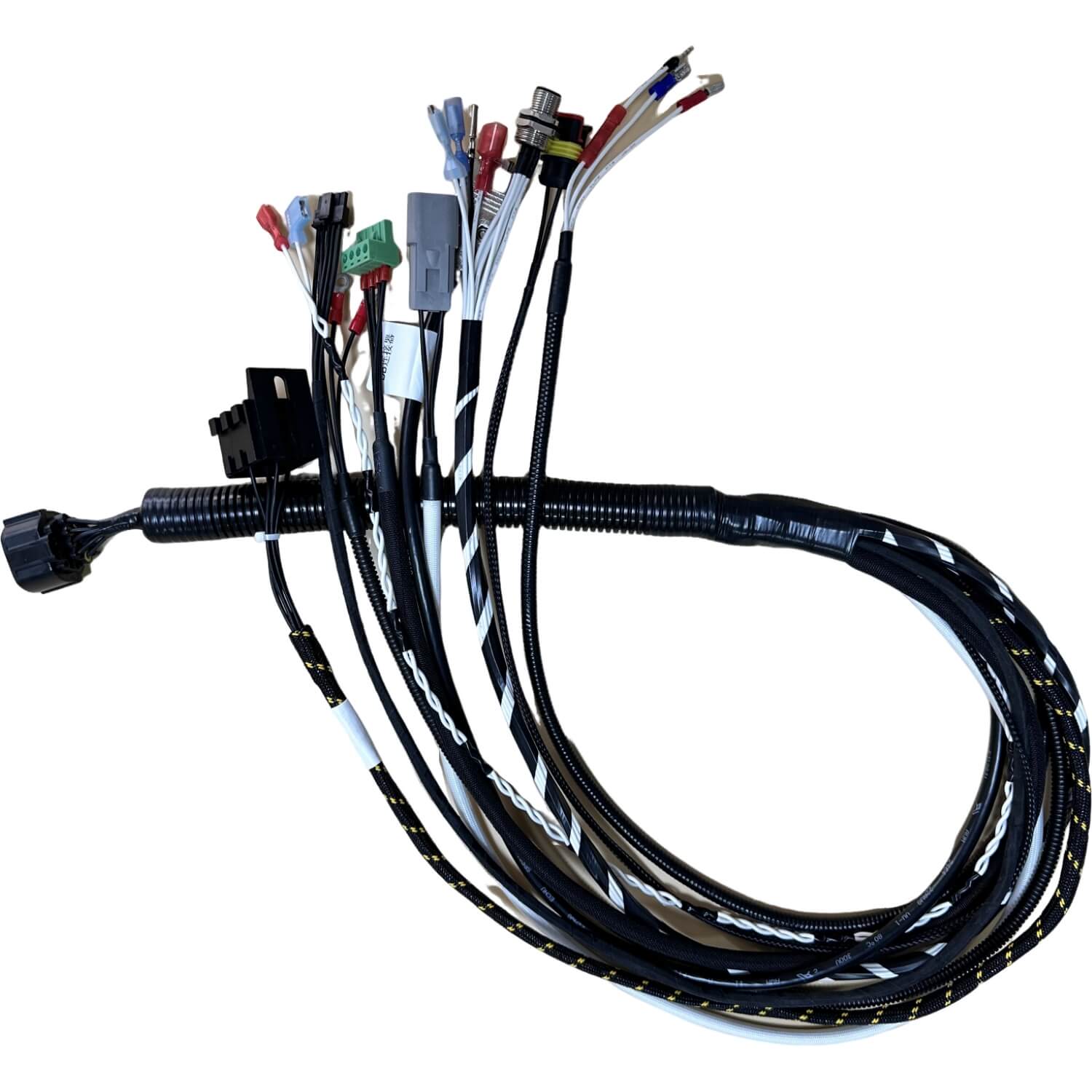
What is an FFC Cable Assembly?
An FFC (Flat Flexible Cable) assembly is an ultra-thin ribbon cable constructed from multiple flat copper conductors laminated between layers of polyester (PET) or polyimide (PI) insulation film. Unlike conventional round cables, FFC cables maintain a flat, uniform profile -- typically just 0.1mm to 0.3mm thick -- that routes through tight spaces, folds around corners, and connects PCBs in the most compact product enclosures.
Each FFC assembly is terminated with precision connectors -- most commonly ZIF (Zero Insertion Force) or LIF (Low Insertion Force) types -- that slide into mating receptacles on PCBs without the bulk of traditional wire-to-board connectors. This combination of flat cable and low-profile connector makes FFC the preferred interconnect solution wherever millimetres matter.
FFC cables are everywhere in modern electronics: inside laptops connecting the display to the motherboard, inside printers linking the print head, inside medical devices routing signals from sensors to processing boards, and inside automotive dashboards connecting instrument clusters to ECUs. For Australian OEMs designing products where space, weight, and reliability are non-negotiable, FFC cable assemblies deliver a compelling advantage over round cable harnesses.
Why Australian Engineers Choose FFC Cable Assemblies
FFC cables solve the critical design challenges that round cable harnesses cannot address in modern compact electronics
Ultra-Thin Profile
At just 0.1mm to 0.3mm thick, FFC cables route through gaps where no round cable can fit. Ideal for laptops, tablets, wearables, and any product where internal space is measured in tenths of a millimetre.
Consistent Impedance Control
The uniform conductor spacing in FFC cables provides predictable impedance characteristics essential for high-speed data signals, display interfaces (LVDS, eDP, MIPI), and differential pair routing up to multi-gigabit speeds.
Significant Weight Reduction
FFC cables weigh 50-70% less than equivalent round cable assemblies. In battery-powered devices, drones, portable medical instruments, and aerospace applications, every gram matters for performance and battery life.
Automated Assembly Compatibility
ZIF connectors enable tool-free cable insertion and removal, simplifying both automated production line assembly and field service replacement. This reduces assembly labour costs and eliminates connector damage from improper mating.
EMI Shielding Options
Shielded FFC variants with copper foil, silver-printed ground planes, or aluminium wrapping provide effective EMI attenuation while maintaining the thin profile. Essential for medical devices, automotive ECUs, and RF-sensitive equipment.
Cost-Effective at Volume
FFC manufacturing uses continuous lamination and stamping processes that scale efficiently to high volumes. At production quantities, FFC assemblies are typically 20-40% less expensive than equivalent round cable solutions.
FFC vs. Alternative Cable Solutions
Compare FFC cables against round cables, FPC flex circuits, and ribbon cables to find the right solution for your application
| Feature | FFC Cable | Round Cable | FPC Flex Circuit | IDC Ribbon |
|---|---|---|---|---|
| Thickness | 0.1-0.3mm | 2-10mm+ | 0.1-0.2mm | 1-2mm |
| Weight | Very Light | Heavy | Very Light | Moderate |
| Min. Pitch | 0.3mm | N/A | 0.15mm | 1.27mm |
| Flex Life (cycles) | 10K-100K | 1K-10K | 100K-1M | 100-1K |
| Complex Routing | Straight only | 3D routing | Complex patterns | Straight only |
| Shielding | Available | Standard | Available | Difficult |
| Component Mounting | No | No | Yes | No |
| Cost (High Volume) | Low | Medium | High | Lowest |
Not sure which cable type suits your application?
Read Our Cable Selection GuideFFC Cable Types & Configurations We Manufacture
From standard straight cables to complex shielded multi-layer assemblies, we build FFC solutions for every requirement
Standard FFC Assemblies
- Type A (same-side contacts) -- conductors exposed on same side at both ends
- Type B (opposite-side contacts) -- conductors exposed on opposite sides, 180-degree flip
- Straight and reverse configurations for any connector orientation
- Single-ended (one connector + bare pads) and double-ended assemblies
- Custom lengths from 30mm to 1,000mm+
- Conductor counts from 4 to 80+ positions
Shielded & Specialty FFC
- Copper foil shielded FFC for EMI/RFI protection
- Silver-printed ground plane FFC for controlled impedance
- Dual-layer shielded FFC for high-noise environments
- High-temperature polyimide (PI) FFC for automotive and industrial
- Extra-flexible FFC for dynamic bending applications (printers, scanners)
- Custom stiffener tabs for PCB-mount applications
FFC Cable Technical Specifications
Manufacturing capabilities for custom FFC cable assemblies
| Conductor Pitch | 0.3mm, 0.5mm, 0.8mm, 1.0mm, 1.25mm, 2.54mm |
| Conductor Material | Rolled annealed copper (RA), tin-plated, gold-plated contact areas |
| Conductor Count | 4 to 80+ positions |
| Cable Length | 30mm to 1,000mm+ (custom lengths available) |
| Insulation Material | PET (polyester) standard, PI (polyimide) for high-temperature |
| Total Thickness | 0.1mm to 0.3mm (unshielded), 0.3mm to 0.5mm (shielded) |
| Voltage Rating | 30V to 300V DC depending on pitch and insulation |
| Current Rating | 0.3A to 1.5A per conductor (pitch-dependent) |
| Temperature Range | PET: -10C to +105C | PI: -40C to +150C |
| Flex Life | 10,000 to 100,000+ cycles (application dependent) |
| Connector Types | ZIF, LIF, non-ZIF, SMT, through-hole mount |
| Connector Brands | Molex, TE Connectivity, JST, Hirose, Amphenol, Wurth, JAE |
| Shielding Options | Copper foil, silver-printed ground, aluminium foil, combination |
| Impedance Control | Available for differential pairs (90 ohm, 100 ohm typical) |
| Quality Standard | IPC/WHMA-A-620 Class 2 & Class 3 |
| Certifications | UL 758, UL 2651, RoHS, REACH compliant |
FFC Cable Applications Across Australian Industries
FFC cable assemblies are the preferred interconnect solution wherever space, weight, and signal integrity are critical design constraints
Consumer Electronics
Laptop display cables, tablet touch panel connections, printer head cables, camera module links, gaming console internal connections, and smart home device wiring.
Medical Devices
Patient monitor display interfaces, ultrasound probe cables, surgical instrument connections, diagnostic imaging signal paths, and wearable health sensor links.
Automotive & EV
Instrument cluster connections, infotainment display cables, ADAS camera links, battery management system (BMS) connections, and head-up display interfaces.
Industrial & Automation
PLC backplane connections, HMI display interfaces, sensor array cables, stepper motor driver links, and industrial printer mechanisms.
Our FFC Cable Manufacturing Process
From design review to 100% tested assemblies ready for your production line
Design & DFM Review
Our engineers review your schematic, connector requirements, and mechanical constraints. We provide free DFM feedback on pitch selection, bend radius, shielding needs, and connector compatibility within 24 hours.
Material & Connector Sourcing
We source FFC cable stock, ZIF/LIF connectors, and shielding materials from certified suppliers. Common connectors from Molex, Hirose, JST, and TE are stocked for faster turnaround.
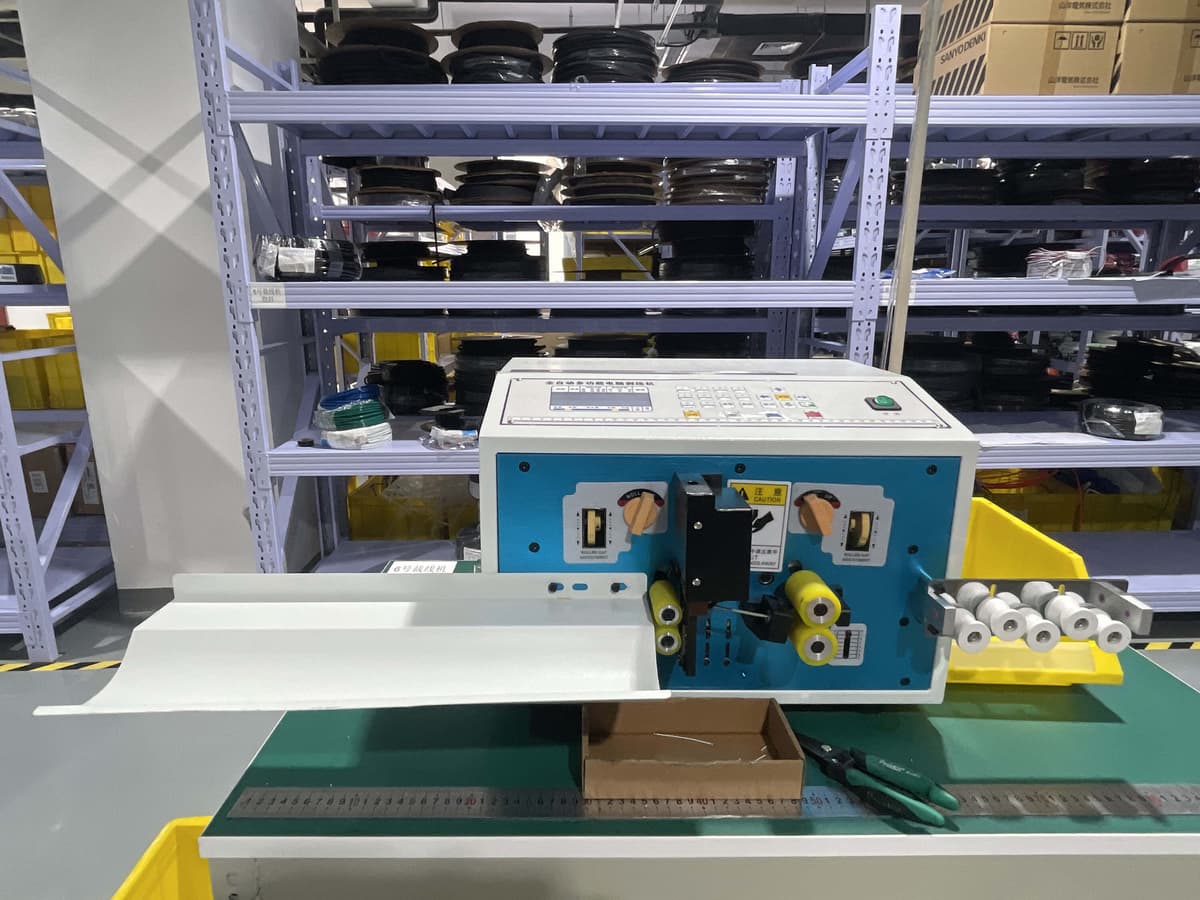
Precision Cutting & Termination
Automated cutting to exact length with tight tolerances. Conductors are stripped and terminated to connectors using precision crimping or hot-bar soldering for reliable contact resistance.
100% Testing & Inspection
Every FFC assembly undergoes continuity testing, insulation resistance verification, and visual inspection under magnification. Hi-pot testing and impedance verification available for critical applications.
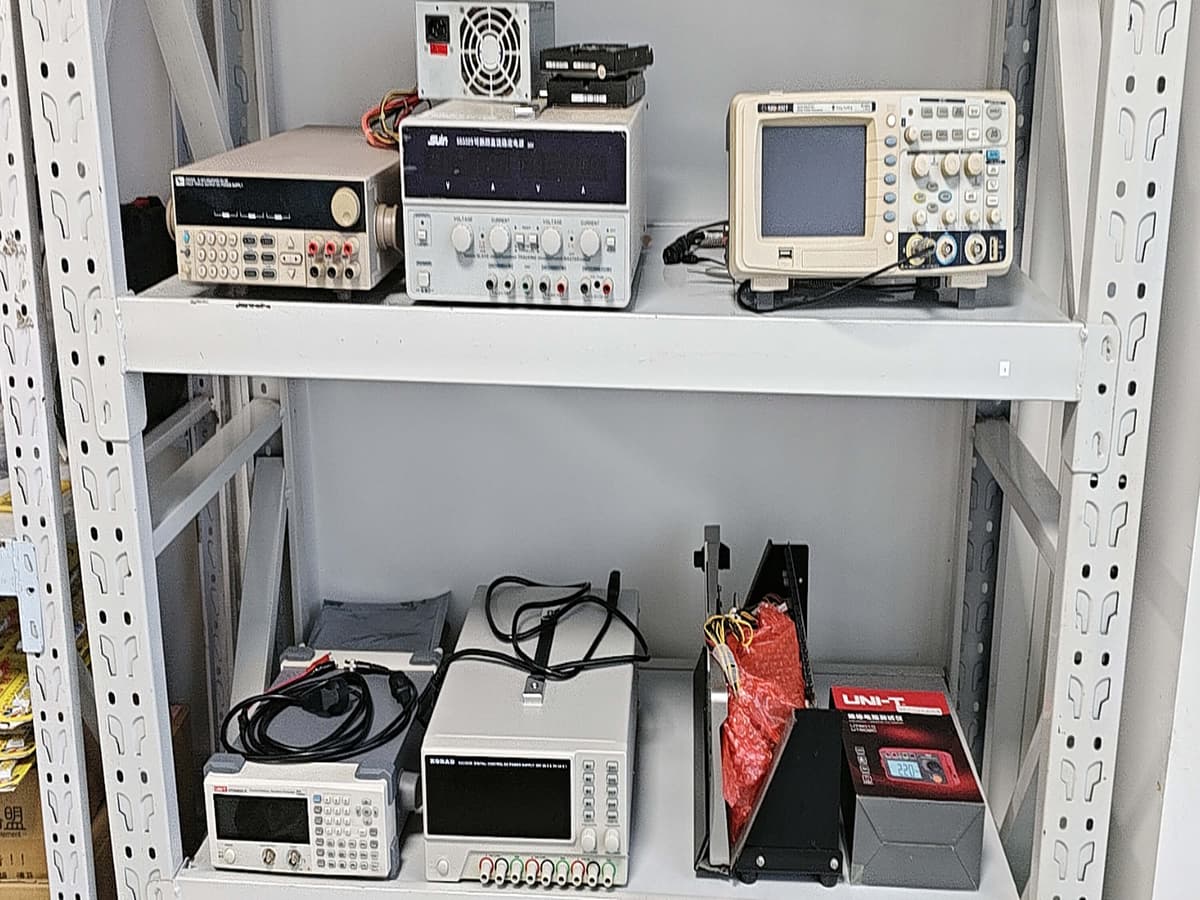
Quality Assurance Built Into Every FFC Assembly
Our ISO 9001 and IATF 16949 certified quality management system ensures consistent, defect-free FFC cable assemblies from prototype through high-volume production. Every assembly is 100% electrically tested before shipment.
- 100% continuity and short-circuit testing
- Insulation resistance verification (100M ohm minimum)
- Hi-pot testing to 500V DC for dielectric strength
- Pull force testing on every connector termination
- Visual inspection under 10x magnification per IPC-A-620
- First article inspection (FAI) for every new design
- Full lot traceability from raw material to finished assembly
FFC Connector Partners & Compatibility
We work with all major connector manufacturers to ensure your FFC assembly mates perfectly with your PCB design
Molex
Premo-Flex, Easy-On, FFC/FPC
TE Connectivity
FPC/FFC, AMP
Hirose
FH12, FH19, FH26, FH34
JST
FFC/FPC ZIF connectors
Amphenol
FCI FPC/FFC series
Wurth
WR-FPC series
Custom connector not listed? We source from 200+ connector suppliers worldwide. Send us your part number and we will confirm availability and compatibility within 24 hours.
FFC Cable Design Guidelines for Engineers
Key considerations when specifying FFC cable assemblies for your next product design
Pitch & Conductor Selection
Choose the widest pitch that fits your PCB real estate -- wider pitch means lower cost, easier assembly, and higher current capacity. For most applications, 0.5mm or 1.0mm pitch provides the best balance of density and manufacturability. Only specify 0.3mm pitch when the application genuinely demands it.
Consider conductor count carefully. Adding extra ground conductors between signal pairs improves EMI performance. Adding spare conductors during the design phase is far cheaper than redesigning the cable later.
Bend Radius & Routing
The minimum bend radius for a standard FFC cable is 3-5x the cable thickness for static bends and 10-15x for dynamic (repeated) bending. For a 0.2mm thick FFC, the minimum static bend radius is approximately 0.6mm -- dramatically tighter than any round cable equivalent.
Route FFC cables away from sharp edges, hot components, and moving parts. Where the cable passes through a housing wall, use a slot with radiused edges to prevent insulation damage. For dynamic applications, specify extra-flex grade with thinner conductors.
Shielding Considerations
Not every FFC needs shielding. For low-speed signals (I2C, SPI under 10 MHz, GPIO), unshielded FFC is typically adequate. For display interfaces (LVDS, eDP, MIPI DSI), high-speed data (USB, SATA), or cables routed near switching power supplies, specify shielded FFC with a proper ground return path.
Ensure the shielding connects to ground at both ends through the connector or a dedicated ground pad. Floating shields can actually worsen EMI performance.
Connector & Locking Selection
ZIF (Zero Insertion Force) connectors use a flip-lock actuator that clamps the cable -- ideal for production assembly but can open under severe vibration. LIF (Low Insertion Force) connectors require slight insertion force but provide more secure retention in vibration-prone environments.
For automotive and industrial applications subject to vibration, specify LIF or locking ZIF connectors. For consumer electronics where easy service access matters, standard ZIF is preferred. Always verify that your PCB footprint matches the specific connector series and pitch.
Frequently Asked Questions About FFC Cable Assembly
Common questions from Australian engineers about FFC cable assemblies
Related Resources & Capabilities
Related Capabilities
Related Articles
Industries Using FFC Cables
Ready to Design Your FFC Cable Assembly?
Send us your schematic or connector part numbers. Our engineers will provide a free DFM review and quote within 24 hours.