
Wire Harness DFM Guide: 10 Design for Manufacturability Rules That Cut Costs
Practical DFM rules that reduce wire harness manufacturing costs by 15-40%. Covers connector standardisation, wire routing, tolerance optimisation, modular design, and BOM best practices — written for Australian design engineers and procurement teams.
The Hidden Tax on Non-DFM Designs
A Perth-based mining equipment OEM redesigned a 48-circuit control panel harness after their manufacturer flagged 14 DFM issues. The original design used 11 different connector families, specified ±1mm tolerances on every wire, and routed 6 breakouts through the same 25mm grommet.
After a single DFM review session, the redesign consolidated to 4 connector families, relaxed non-critical tolerances to ±5mm, and split the grommet pass-through into two locations. Result: 32% lower unit cost, 40% faster assembly time, and zero rework on the first production run.
The DFM review took 3 hours. The savings across a 500-unit production run exceeded AU$85,000.
What Is DFM for Wire Harnesses?
Design for Manufacturability (DFM) is a systematic approach to designing wire harnesses so they can be built efficiently, repeatably, and at the lowest total cost without compromising electrical or mechanical performance. It bridges the gap between what an electrical engineer designs on screen and what an assembly operator can realistically build on the production floor.
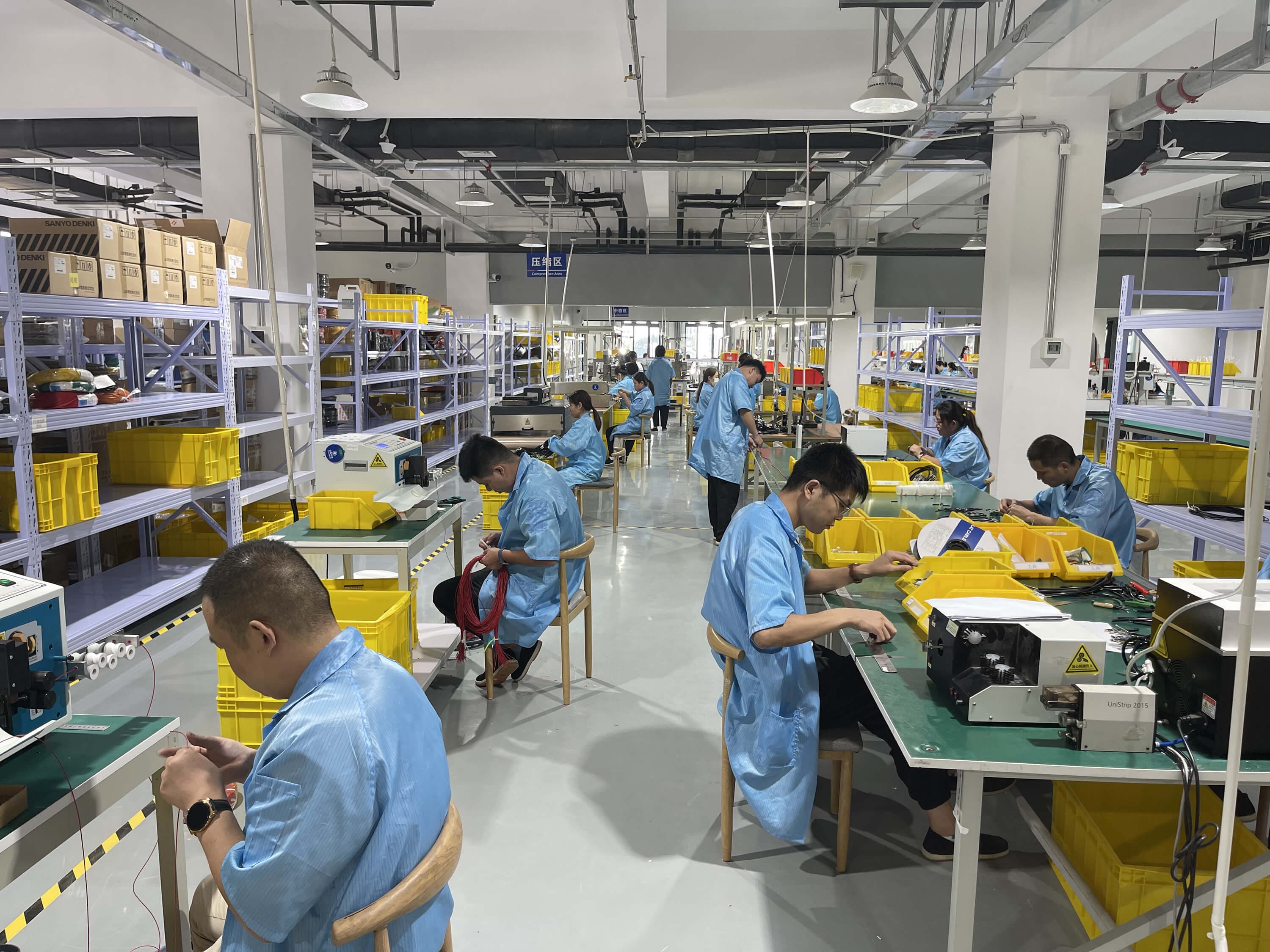
Wire harnesses remain one of the most labour-intensive electronic components to manufacture. Unlike PCBs, which are almost entirely automated, harness assembly relies on human operators for routing, termination, and bundling. This makes DFM principles disproportionately impactful — small design changes create large cost effects because they directly affect assembly time and operator skill requirements.
of wire harness cost is assembly labour — the primary target for DFM savings
typical total cost reduction from a proper DFM review
cost ratio for changes at design vs tooling vs production stages
"The best wire harness design is the one your manufacturer's newest operator can build correctly on their first attempt. If your harness requires a senior technician and a magnifying glass to assemble, you have a DFM problem — no matter how elegant the electrical design is."
Hommer Zhao
Engineering Director, Custom Wire Assembly
Free DFM Review on Your Next Wire Harness Design
Our engineers review your drawings and identify cost-saving opportunities — no obligation.
Where DFM Saves Money: Wire Harness Cost Breakdown
To understand where DFM has the greatest impact, you need to understand how wire harness costs are structured. Here is a typical cost breakdown for a mid-complexity industrial harness:
| Cost Category | % of Total | DFM Lever | Typical Savings |
|---|---|---|---|
| Assembly Labour | 25-35% | Simplify routing, reduce breakouts, improve accessibility | 20-50% |
| Connectors & Terminals | 20-30% | Standardise families, reduce unique part numbers | 10-25% |
| Wire & Cable | 15-25% | Consolidate gauge sizes, optimise wire lengths | 5-15% |
| Testing & QC | 5-10% | Design for automated test, reduce test points | 15-30% |
| Tooling & Setup | 5-10% | Use standard crimp applicators, reduce changeovers | 20-40% |
| Overhead & Scrap | 5-10% | Reduce rework through mistake-proofing | 30-60% |
10 Wire Harness DFM Rules That Cut Manufacturing Costs
These rules are ordered by typical cost impact — highest savings first. Each rule includes a clear before/after comparison and the specific cost mechanism it addresses.
Standardise Connector Families
Every unique connector family requires its own crimp tooling, applicator setup, and operator training. A harness with 8 different connector brands means 8 crimp tool changeovers, 8 sets of spare applicators on the shelf, and 8 terminal part numbers in inventory.
11 connector families (Molex, TE, JST, Deutsch, Amphenol, Hirose, JAE, Yazaki, Sumitomo, Delphi, custom)
3-4 connector families covering all applications (e.g., Molex Micro-Fit for signal, Deutsch DT for sealed, TE MATE-N-LOK for power)
Cost mechanism: Each connector family elimination removes AU$2,000-5,000 in tooling cost and 15-30 minutes of changeover time per production run. See our connector comparison guide for selection criteria.
Relax Non-Critical Tolerances
Tight tolerances are the silent killer of wire harness production speed. When every wire length is specified at ±1mm, automated wire cutting equipment runs at reduced speed, and operators must individually verify each wire. Most wires in a harness have 20-50mm of service loop available at the termination point.
All wire lengths ±1mm, odd fractional measurements (137.5mm, 5/32" strip length)
Critical wires ±2mm, non-critical wires ±5-10mm, round measurements (140mm, 5mm strip)
Cost mechanism: Relaxing from ±1mm to ±5mm on non-critical wires increases wire cutting throughput by 30-50% and eliminates individual length verification.
Design for Crimp, Not Solder
Crimping is 5-10x faster than soldering, does not require a skilled solder technician, produces more consistent results, and can be fully automated. Every solder joint in your harness is a DFM penalty.
| Factor | Crimp | Solder |
|---|---|---|
| Cycle time per joint | 2-3 seconds | 15-30 seconds |
| Operator skill level | Entry-level | Certified solder tech |
| Repeatability | Machine-controlled | Operator-dependent |
| Automation potential | Fully automatable | Limited |
| Inspection method | Crimp height + pull test | Visual + X-ray (IPC-610) |
When solder is acceptable: RF coaxial connections, ultra-fine pitch (<0.5mm) PCB headers, prototype quantities under 10 units. Read our crimp vs solder guide for detailed criteria.
Consolidate Wire Gauges
Every unique wire gauge and colour combination is a separate spool on the cutting machine, a separate inventory line item, and a separate setup operation. If your BOM has 18 AWG, 20 AWG, and 22 AWG for signal wires, consider standardising on 20 AWG for all three — the weight and cost difference is negligible, but setup time drops dramatically.
12 wire gauges (28, 26, 24, 22, 20, 18, 16, 14, 12, 10, 8, 6 AWG)
4-5 wire gauges (22, 18, 14, 10, 6 AWG) with clear application rules
Cost mechanism: Each wire gauge elimination saves 5-10 minutes of setup time per run and reduces inventory carrying cost. Refer to our wire gauge selection guide for ampacity data.
Design for Mistake-Proofing (Poka-Yoke)
A harness that can be assembled incorrectly will be assembled incorrectly — if not on unit 1, then on unit 500 when the operator is fatigued. Design mechanical features that make wrong assembly physically impossible.
Poka-Yoke Techniques for Wire Harnesses:
Cost mechanism: Each assembly error costs AU$15-50 in rework labour plus the risk of an undetected fault reaching your customer. Poka-yoke eliminates entire categories of assembly errors at zero per-unit cost.

"We review hundreds of harness designs per year. The single biggest cost savings comes from asking one question: can this connector be changed to one we already have tooling for? Seven times out of ten, the answer is yes — and the designer had no idea the alternative existed."
Hommer Zhao
Engineering Director, Custom Wire Assembly
Use Modular Sub-Assembly Architecture
A 150-circuit monolithic harness must be built sequentially by a single operator on a single assembly board. The same harness split into 5 sub-assemblies of 30 circuits each can be built by 5 operators simultaneously, tested independently, and replaced individually if a defect is found.
Modular Design Benefits:
When to modularise: Harnesses with >40 circuits, products with multiple configuration variants, or assemblies where one section has a higher defect rate than others.
Respect Bend Radius in Your Routing
Bend radius violations cause two problems: immediate mechanical stress that damages conductors, and long-term flex fatigue that creates intermittent field failures. Design your routing paths with adequate bend radius before the harness reaches the assembly board — not as an afterthought during installation.
| Application | Minimum Bend Radius | Standard Reference |
|---|---|---|
| Static installation | 5x cable outer diameter | IPC/WHMA-A-620 |
| Dynamic / robotics | 10x cable outer diameter | IEC 60227-2 |
| Coaxial cables | 10x cable OD (static), 15x (dynamic) | Manufacturer spec |
| Flat ribbon cable | 10x cable thickness | IPC/WHMA-A-620 |
DFM tip: Include bend radius zones on your assembly drawing. Our flex life and bend radius guide covers calculation methods in detail.
Limit Breakouts to 3 Per Junction Point
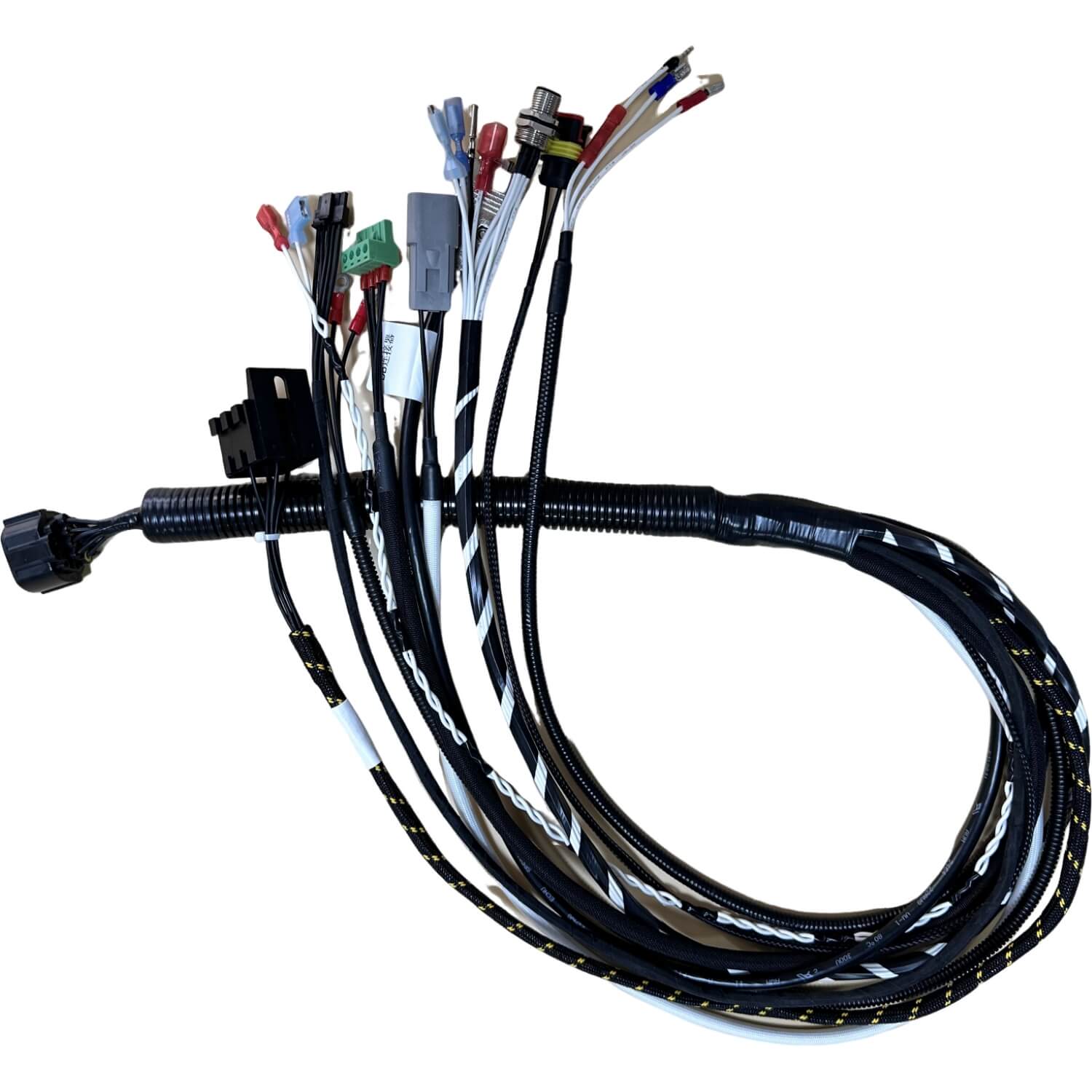
When 6 or more wire branches converge at a single breakout point, the junction becomes physically difficult to tape-wrap cleanly, creates an oversized bundle diameter that may not fit through grommets, and becomes nearly impossible to rework if a single wire needs replacement.
6 branches from a single breakout, 8 wires per branch = 48 wires at one junction. Tape wrapping is inconsistent and grommet fit is marginal.
2-3 branches per breakout, staggered at 50mm intervals along the trunk. Each junction is clean, testable, and serviceable.
Cost mechanism: Complex breakouts increase assembly time by 15-25 minutes per junction and are the #1 cause of rework on assembly boards.
Write Complete, Unambiguous Documentation
Vague documentation is a hidden DFM tax. Every time an operator stops to ask a question, call engineering, or make an assumption, you lose production time and introduce defect risk. Your documentation package should enable a qualified operator to build the harness without asking a single question.
Documentation DFM Checklist:
Cost mechanism: Incomplete documentation causes an average of 2-4 production queries per new design, each costing 15-30 minutes of combined engineering and production time. See our documentation guide for templates.
Design for Automated Testing
Testing accounts for 5-10% of harness cost, but a design that prevents automated testing can double that figure. Every connector in your harness should mate with a standard test fixture. If the test operator needs to probe individual wires with alligator clips, your design is not test-friendly.
Design for Test Rules:
Cost mechanism: Automated continuity testing takes 5-15 seconds per harness. Manual probe testing takes 5-15 minutes. Read our testing guide for equipment recommendations.
Complete Wire Harness DFM Checklist
Use this checklist before releasing any wire harness design to manufacturing. Each item addresses a specific cost or quality risk.
Pre-Release DFM Checklist
Connectors & Terminals
Wires & Cables
Routing & Assembly
Documentation
When to Conduct a DFM Review (and Who Should Be in the Room)
The cost of design changes increases exponentially through the development cycle. A change during schematic review costs 1x. The same change after tooling is ordered costs 50-100x. Engage your manufacturer for DFM review at the right stage:
Engineering Validation (Cost: 1x)
Ideal DFM review point. Electrical design is validated but physical layout is still flexible. Changes cost minimal engineering time and zero tooling cost.
Design Validation (Cost: 5-10x)
Prototype tooling may be ordered. Changes require new first articles and re-qualification. Still possible but increasingly expensive.
Production Validation (Cost: 50-100x)
Production tooling, test fixtures, and assembly boards are built. Changes require scrapping existing tooling. Only critical safety or function issues justify changes at this stage.
Who Should Attend the DFM Review?
"The most expensive sentence in wire harness engineering is 'we'll fix it in production.' Every DFM issue you defer to the production floor costs 10-50x what it would have cost to fix during design review. I've seen companies spend AU$50,000 on production rework that a 2-hour DFM session would have prevented entirely."
Hommer Zhao
Engineering Director, Custom Wire Assembly
8 Common DFM Mistakes That Increase Wire Harness Costs
Specifying ±1mm tolerance on every wire length
Fix: Only critical wires (sensor leads, matched-length pairs) need tight tolerances. Use ±5mm or ±10mm for everything else.
Using 8+ connector families when 3-4 would cover all applications
Fix: Audit your connector BOM. Consolidate to families with the widest product range (pin count, sealing options, wire range).
Writing "or equivalent" without a pre-approved alternatives list
Fix: "Or equivalent" forces the manufacturer to guess, then wait for your approval. Provide 2-3 specific approved alternatives upfront.
Designing one monolithic harness instead of modular sub-assemblies
Fix: Split harnesses with >40 circuits into modules. The interconnect cost is far less than the parallel assembly and testing benefits.
Routing 6+ breakouts through a single junction point
Fix: Limit to 3 breakouts per junction, stagger along the trunk at 50mm intervals.
Specifying solder terminations when crimps would work
Fix: Default to crimp. Only specify solder when the application genuinely requires it (RF, ultra-fine pitch, prototypes).
Not including IPC-620 class on the drawing
Fix: Specify Class 1, 2, or 3 on every drawing. Without this, the manufacturer guesses — and either over-builds (costs more) or under-builds (fails your inspection).
Releasing drawings without engaging the manufacturer for DFM review
Fix: Invite your manufacturer to review at EVT stage. A 2-hour DFM session typically identifies 5-15 cost-saving opportunities.
References & Further Reading
- IPC — IPC/WHMA-A-620E Requirements and Acceptance for Cable and Wire Harness Assemblies (the industry workmanship standard for wire harness manufacturing)
- IPC — IPC-D-620 Design Requirements for Cable and Wire Harness Assemblies (design companion standard to A-620)
- Multi-Tek — Introduction to Cable Assembly Design for Manufacturability (practical DFM overview for cable assemblies)
- WHMA — Wire Harness Manufacturer's Association (industry body for wire harness manufacturing standards and best practices)
Frequently Asked Questions
What is DFM for wire harness design?
Design for Manufacturability (DFM) for wire harnesses is a set of engineering principles that optimise a harness design for efficient, repeatable, and cost-effective production. It addresses connector selection, wire routing, termination methods, tolerances, and documentation to minimise assembly time, reduce defects, and lower total manufacturing cost.
How much can DFM save on wire harness manufacturing costs?
Proper DFM implementation typically reduces wire harness manufacturing costs by 15-40%. Savings come from reduced assembly labour (30% of total cost), fewer rework cycles, lower scrap rates, and optimised material usage. The greatest savings come from standardising connectors and wire gauges, which reduces inventory costs and setup time.
When should DFM review happen in the wire harness development process?
DFM review should happen during the EVT (Engineering Validation Test) stage — after the electrical design is functionally validated but before tooling is ordered. Changes at EVT cost 1x; changes at DVT cost 5-10x; changes after production tooling cost 50-100x. Engage your manufacturer during schematic review, not after drawings are released.
What is the most common DFM mistake in wire harness design?
The most common DFM mistake is specifying unnecessarily tight tolerances. Designers often default to ±1mm on wire lengths when ±5mm would be functionally identical. Tight tolerances increase assembly time by 30-50% because operators must measure and verify each wire individually rather than using standard cut lengths from automated equipment.
Should I use crimp or solder terminations for manufacturability?
Crimp terminations are preferred for DFM in 90% of applications. Crimping is faster (2-3 seconds vs 15-30 seconds for solder), more repeatable, does not require skilled operators, and can be fully automated. Solder is only preferred for ultra-fine pitch connections, prototype quantities under 10 units, or specialised RF applications.
How does modular harness design improve manufacturability?
Modular design splits a complex harness into smaller sub-assemblies connected by mating connectors. This enables parallel assembly (multiple operators build sub-assemblies simultaneously), simplifies testing (each module tested independently), reduces scrap (one defective module replaced without scrapping the entire harness), and enables mix-and-match configurations for product variants.
Get a Free DFM Review for Your Wire Harness Design
Our engineering team reviews your harness drawings and identifies specific cost-saving opportunities — connector consolidation, tolerance relaxation, routing optimisation, and more. Most reviews uncover 15-30% savings that can be implemented without changing electrical performance.
Related Articles
Crimp vs Solder Terminations
Expert comparison explaining why crimping wins in 90% of wire harness applications.
Wire Harness Documentation Guide
Complete guide to BOM, drawings, wire tables, and manufacturing specs.
7 Cost-Saving Tips for Procurement
Expert strategies to reduce wire harness costs by 15-40%.