
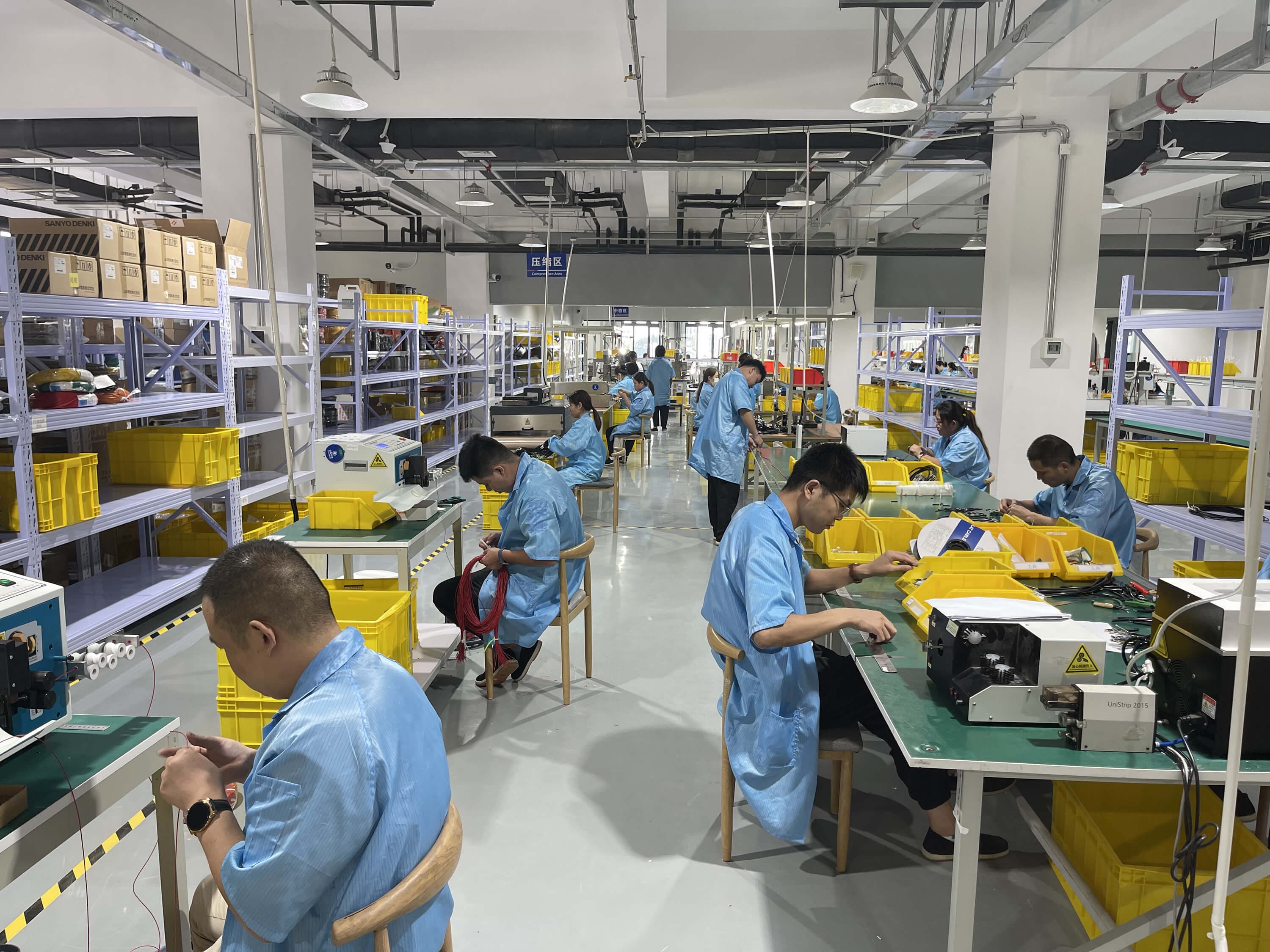
How to Switch Cable Assembly Suppliers Without Production Downtime
The complete procurement playbook for Australian manufacturers. Learn how to qualify new suppliers, execute a dual-sourcing bridge strategy, and complete a full production transfer in 6 months with zero line stoppages.
Why Australian Manufacturers Are Switching Suppliers in 2026
Supply chain volatility has become the defining challenge for Australian manufacturers. According to the Australian Industry Group's 2025 Supply Chain Resilience Report, 47% of Australian industrial companies experienced at least one significant supply chain disruption in the past 12 months, with cable assemblies and wire harnesses among the top 10 most-affected component categories.
The triggers for switching suppliers are varied but predictable. Quality deterioration that creeps in after the first year of production. Costs that escalate beyond original quotes without justification. An inability to scale when demand increases. Communication breakdowns that delay critical decisions by days or weeks. And increasingly, geopolitical risk has pushed the China+1 diversification strategy to the top of every procurement leader's agenda.
The good news: 67% of Australian manufacturers have already adopted hybrid sourcing models, recognising that relying on a single supplier is no longer viable. If you are considering a switch, you are not alone. But the difference between a successful transition and a costly disaster lies entirely in the planning. This guide gives you the exact process to follow.
For a comprehensive look at evaluating potential new suppliers, see our guide to choosing a wire harness manufacturer.
The Real Cost of Getting the Transition Wrong
Manufacturing Downtime: The Numbers That Keep Procurement Managers Awake
The Siemens True Cost of Downtime Report puts the average cost of unplanned manufacturing downtime at $260,000 per hour. For automotive assembly plants, that figure rises to $2.3 million per hour. A botched supplier transition that causes even a single 8-hour shift of downtime can cost more than the entire annual savings you hoped to achieve.
Worse, supply chain failures typically cascade. A missing cable assembly does not just delay one workstation; it halts the entire line downstream. Industry data suggests that 11% of annual revenue is lost across Australian manufacturing to supply chain-related disruptions, much of it during poorly planned supplier transitions.
The most dangerous scenario is the dual penalty: you have already committed to the new supplier but the incumbent has deprioritised your orders, and neither can deliver on time. This gap, sometimes lasting only two to three weeks, can result in hundreds of thousands of dollars in lost production. The dual-sourcing bridge strategy described later in this guide exists specifically to prevent this scenario.
Understanding the financial stakes also helps justify the investment in a proper transition plan. A 6-month structured changeover may feel slow, but it costs a fraction of what a single week of unplanned downtime would.
"We have seen too many Australian OEMs try to switch suppliers over a weekend. The technical reality is that even identical drawings produce subtly different assemblies from different factories. Crimp force profiles, wire routing habits, solder techniques, they all vary. You need a structured validation period to catch those differences before they reach your production floor."
Before You Switch: The Documentation Ownership Audit
The single most common reason supplier transitions fail is not quality or cost. It is incomplete documentation. Many procurement teams discover too late that their incumbent supplier holds design files, tooling, or certification records that the buyer assumed they owned. Research consistently shows that 70% of a product's total lifecycle cost is locked in at the design stage, making your design documentation the most valuable asset in the transition.
The IP Ownership Trap
If your current supplier developed or refined your cable assembly design, they may claim IP ownership over the drawings. Review your original contract carefully. If design ownership is ambiguous, resolve this before approaching a new supplier. Many Australian manufacturers have been forced to reverse-engineer their own products because they could not obtain production drawings from a departing supplier.
Complete Documentation Audit Checklist
| Document | Why It Matters | Priority |
|---|---|---|
| Engineering drawings (latest rev) | New supplier cannot quote or produce without them | Critical |
| Bill of Materials (BOM) | Material sourcing, cost estimation, lead time planning | Critical |
| Electrical test specifications | Defines pass/fail criteria for continuity, hi-pot, insulation resistance | Critical |
| Tooling drawings / physical tooling | Custom tooling can take 4-8 weeks to replicate | Critical |
| UL / certification files | Agency approvals may need to be transferred or re-filed | High |
| Revision history | Explains why design changes were made, prevents repeating mistakes | High |
| Quality records (PPAP / FAI) | Establishes baseline quality expectations for new supplier | High |
| Approved vendor list (AVL) | Ensures material equivalency with approved component brands | Helpful |
For a deeper dive into documentation best practices, refer to our wire harness documentation guide. Getting this right before you engage a new supplier will save weeks of back-and-forth and prevent costly requoting cycles.
How to Qualify a New Cable Assembly Supplier
Qualification is not about finding the cheapest quote. It is about confirming that a supplier can reliably produce your specific cable assembly to your specific quality standard, at a volume that matches your production schedule. Here is the 5-step process used by leading Australian OEMs.
Define Technical Requirements
Document every specification, tolerance, material requirement, and test criterion before engaging any potential supplier. Include environmental ratings, expected service life, and applicable industry standards. Vague requirements produce vague quotes and guarantee quality disputes later.
Conduct Due Diligence
Verify certifications, visit the factory (or request a virtual tour), check customer references, and assess financial stability. For Australian buyers, confirming that a supplier holds a valid ABN, maintains local support capability, and understands onshore vs offshore trade-offs is essential.
Issue a Detailed RFQ
Send your complete documentation package. Evaluate responses not just on price, but on how thoroughly the supplier addresses your specifications, what clarifying questions they ask, and how quickly they respond. A supplier that asks zero questions about a complex assembly is a red flag. See our RFQ best practices guide for detailed templates.
First Article Inspection (FAI)
Order a small batch of samples (typically 5-25 units) and subject them to your full incoming inspection protocol: dimensional verification, electrical testing, crimp cross-sections, pull testing, and if applicable, environmental stress screening. Compare results directly against your incumbent supplier's quality records.
Pilot Production Run
Before committing full volume, run a pilot batch at production speed (100-500 units depending on your volume). This validates the supplier's process capability, identifies bottlenecks in their production flow, and gives you real Cpk data on critical dimensions. Only after a successful pilot should you enter the dual-sourcing phase.
Industry Certification Requirements
| Industry | Required Certification | Key Focus |
|---|---|---|
| All Industries | ISO 9001:2015 | Quality management system baseline |
| Automotive | IATF 16949:2016 | PPAP, FMEA, SPC, APQP process control |
| Aerospace & Defence | AS9100D | Configuration management, traceability, risk management |
| Medical Devices | ISO 13485:2016 | Design controls, biocompatibility, full lot traceability |
| Mining (Australia) | ISO 9001 + AS/NZS 3000 | IP69K sealing, flame retardancy, harsh environment testing |
Need help evaluating potential suppliers? Our top 10 questions to ask a wire harness manufacturer provides a practical framework for supplier due diligence calls.
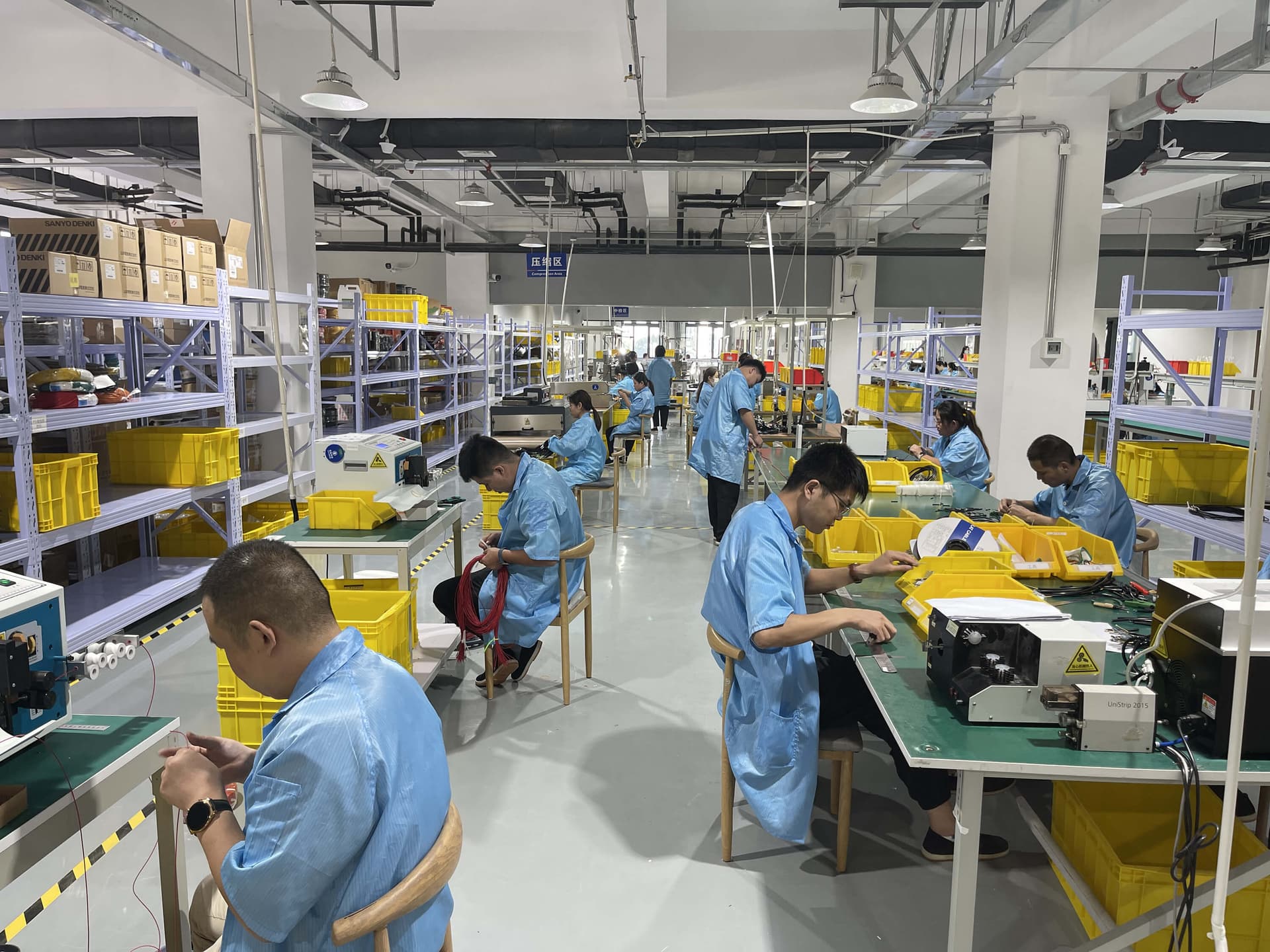
Structured supplier qualification ensures production-ready quality from day one
The Dual-Sourcing Bridge Strategy: Your Zero-Downtime Playbook
Dual sourcing is the single most effective risk mitigation strategy during a supplier transition. Rather than a hard cutover from the old supplier to the new one, you gradually shift production volume across five phases. Industry benchmarks show that 70/30 dual sourcing increases component costs by only 1.3% but reduces revenue risk by 3.8%, making it one of the highest-ROI procurement strategies available.
Critical prerequisite: Before entering Phase 1, build 3-6 months of safety stock from your incumbent supplier. This buffer ensures you are never dependent on either supplier performing perfectly during the transition.
| Phase | Incumbent | New Supplier | Go/No-Go Gate |
|---|---|---|---|
| Phase 1: Validation | 90% | 10% | FAI passed, all test data within spec |
| Phase 2: Pilot | 70% | 30% | No quality escapes, on-time delivery ≥ 95% |
| Phase 3: Parity | 50% | 50% | Cpk ≥ 1.33 on critical dimensions, SPC stable |
| Phase 4: Ramp-Up | 30% | 70% | Full production rate sustained for 4+ weeks |
| Phase 5: Full Transfer | 0% | 100% | All KPIs met, safety stock replenished, contract signed |
Key Principle: Never Skip a Phase
Each go/no-go gate exists to catch problems while you still have fallback capacity from the incumbent supplier. Jumping from Phase 1 directly to Phase 5 is the single most common cause of supplier-transition downtime. If any gate fails, hold at the current phase until the issue is resolved. The cost of an extra month of dual sourcing is trivial compared to a production line stoppage.
For cost optimisation strategies during the dual-sourcing period, review our wire harness cost saving guide, which covers techniques like component consolidation and design-for-manufacturing that can offset the short-term cost of running two suppliers.
Month-by-Month Transition Roadmap (6-Month Plan)
This roadmap assumes you have already completed the documentation audit and identified your shortlisted suppliers. Adjust timelines based on your product complexity and volume, but resist the temptation to compress the plan below four months.
Month 1: Preparation
Internal Readiness- Complete documentation ownership audit
- Begin building safety stock from incumbent (target 3-6 months)
- Issue RFQs to 2-3 shortlisted suppliers
- Review incumbent contract for termination clauses and notice periods
Month 2: Qualification
Supplier Selection- Evaluate RFQ responses and conduct supplier site visits or virtual audits
- Verify certifications and check customer references
- Award first article order to selected supplier
- Continue building safety stock
Month 3: Validation
First Article + Pilot- Receive and inspect first article samples (FAI)
- Conduct full electrical, mechanical, and environmental testing
- If FAI passes, order pilot production batch (100-500 units)
- Begin transfer of any tooling or certification files
Month 4: Pilot Production
Dual Sourcing Begins (90/10)- Receive pilot batch and validate at production rate
- Begin Phase 1 dual sourcing: 90% incumbent / 10% new supplier
- Collect SPC data and Cpk values from new supplier's production
- Notify incumbent supplier (safety stock secured)
Month 5: Ramp-Up
Volume Shift (70/30 to 30/70)- Progress through Phase 2 and Phase 3 of dual sourcing
- Move to 70/30, then 50/50, then 30/70 allocation
- Validate sustained on-time delivery performance
- Execute final handover requests with incumbent
Month 6: Full Transfer
100% New Supplier- Complete Phase 5: 100% production from new supplier
- Replenish safety stock from new supplier's production
- Sign long-term supply agreement
- Close out incumbent relationship professionally
For understanding how lead times affect your transition schedule, consult our wire harness lead time guide.
Managing the Incumbent Supplier During Transition
How you manage the outgoing relationship directly affects your transition risk. A mishandled notification can result in the incumbent dropping your order priority, reducing quality effort, or even refusing to supply during the notice period. Follow these principles to protect your production during the transition.
Do This
- Build safety stock before notifying
- Review termination clauses and notice periods
- Maintain professional, respectful communication
- Request formal handover of all outstanding documentation
- Honour all contractual payment obligations
- Resolve any outstanding quality disputes first
Avoid This
- Notifying before safety stock is secured
- Badmouthing the incumbent to the new supplier
- Withholding payment as leverage for documentation
- Rushing the exit to save one month of overlap cost
- Assuming tooling you paid for will be released without a request
- Ignoring contractual minimum purchase commitments
"The industrial world is smaller than people think. We regularly receive enquiries from companies whose previous supplier has refused to release tooling because of unpaid invoices or broken notice periods. Treat your outgoing supplier the way you would want to be treated. You may need them again someday as a backup source."
Quality Validation Checkpoints
Quality validation is not a single event. It is a series of progressive checks that build confidence in the new supplier's capability. Each checkpoint must pass before advancing to the next phase of the dual-sourcing strategy.
First Article Inspection (FAI)
Full dimensional, visual, and functional verification of initial samples against engineering drawings. 100% inspection of all critical characteristics.
Crimp Cross-Section Analysis
Micro-section crimped terminals to verify wire strand compression, void area, and crimp geometry. Compare directly against incumbent supplier's baseline data.
Electrical Testing
Continuity, insulation resistance, and hi-pot testing per specification. Include contact resistance measurements for high-current applications.
Environmental Screening
Thermal cycling, vibration, salt spray, and humidity testing where applicable. Essential for automotive, mining, and outdoor applications.
Incoming Material Verification
Verify that wire, connectors, and terminals match the approved vendor list. Check material certificates and lot traceability documentation.
SPC / Cpk Data
Collect Statistical Process Control data during pilot and dual-sourcing phases. Target Cpk ≥ 1.33 for critical dimensions, ≥ 1.67 for safety-critical characteristics.
Warning: Never Skip Validation Steps to Accelerate the Timeline
Under schedule pressure, procurement teams are often tempted to skip environmental screening or reduce FAI sample size. This is the highest-risk decision you can make during a transition. Quality problems discovered in the field after full production transfer cost 10-100x more to resolve than those caught during validation. The validation phase is your insurance policy. Protect it.
Australian-Specific Considerations
Australian manufacturers face unique challenges during supplier transitions that international guides rarely address. Understanding these factors will help you build a realistic timeline and avoid unpleasant surprises.
AS/NZS 3000 and AS/NZS 3008 Compliance
All cable assemblies used in Australian electrical installations must comply with the Wiring Rules (AS/NZS 3000) and cable selection standards (AS/NZS 3008). When switching suppliers, verify that the new manufacturer understands these requirements, particularly for current-carrying capacity, cable sizing, and installation conditions. Non-compliance carries fines up to $10 million under the EESS framework.
For full details, read our AS/NZS cable assembly compliance guide.
Port Delays and Logistics Planning
If your new supplier ships from overseas, factor in 7-14 days of potential port congestion at Sydney and Melbourne during peak seasons (October through February). Customs clearance for cable assemblies with certification requirements can add further delays. Build an additional 2-week buffer into your initial safety stock calculations for any import-dependent transition.
Hybrid Model Economics for Australian Buyers
Based on our analysis of Australian procurement data, hybrid sourcing (offshore manufacturing with local Australian engineering support) delivers 27% average savings versus pure onshore manufacturing and 15% savings versus pure offshore when Total Cost of Ownership is calculated. The hybrid model eliminates the hidden costs of pure offshore (expedited freight, excess inventory, quality delays) while maintaining the cost efficiency of offshore production.
Mining and Defence Sector Requirements
Mining cable assemblies require IP69K-rated connectors, flame-retardant materials, and harsh environment testing that not all suppliers can deliver. Defence contracts often mandate ITAR compliance and Australian content requirements. If you operate in these sectors, your supplier shortlist will be significantly smaller, and the qualification process will take longer. Start planning at least 8 months ahead.
"Australian buyers have a unique advantage in the global cable assembly market right now. The strong demand from mining and renewable energy means suppliers are competing hard for Australian business. Use the transition as an opportunity to negotiate better terms, not just lower prices. Local engineering support, safety stock programs, and guaranteed lead times are worth more than a 5% price reduction that comes with no service commitment."
Frequently Asked Questions
How long does it take to switch cable assembly suppliers?
A well-planned cable assembly supplier transition typically takes 4-6 months from initial qualification to full production transfer. This includes 1-2 months for documentation audit and supplier qualification, 1 month for first article inspection and validation, 1-2 months of dual-sourcing pilot production, and a final month for full volume ramp-up. Rushing the process below 3 months significantly increases the risk of production disruption.
What is dual sourcing and why is it critical during a supplier transition?
Dual sourcing means purchasing the same cable assembly from two suppliers simultaneously during the transition period. You gradually shift volume from the incumbent to the new supplier, typically moving from 90/10 to 70/30 to 50/50 to 30/70 to 0/100 over several months. This approach ensures continuous supply even if the new supplier encounters early production issues, eliminating the risk of production downtime.
What documents do I need before switching cable assembly suppliers?
Before switching suppliers, you need complete ownership of: engineering drawings with current revision levels, detailed bill of materials (BOM), electrical test specifications, environmental and mechanical test requirements, tooling drawings or tooling itself, UL/certification files and agency approvals, quality records including PPAP or FAI reports, and complete revision history. Missing any of these documents can delay or derail a supplier transition.
Should I tell my current supplier I am switching?
Do not notify your incumbent supplier until you have secured 3-6 months of safety stock and your new supplier has passed first article inspection. Premature notification can lead to reduced priority on your orders, quality slippage, or abrupt termination of supply. Once safety stock is secured and the new supplier is validated, communicate professionally and honour all contractual obligations including notice periods.
What certifications should a new cable assembly supplier have?
At minimum, your new cable assembly supplier should hold ISO 9001:2015 certification. For automotive applications, IATF 16949:2016 is mandatory. Aerospace requires AS9100D. Medical devices need ISO 13485:2016 awareness or certification. For the Australian market, verify compliance with AS/NZS 3000 and AS/NZS 3008 wiring standards. Also confirm UL or equivalent listing for any safety-critical components.
What are the biggest risks when changing cable assembly suppliers?
The biggest risks include: production downtime from supply gaps (averaging $260,000 per hour in manufacturing), quality escapes during the learning curve period, loss of intellectual property if documentation is incomplete, certification lapses if agency approvals are not properly transferred, and cost overruns from unplanned expediting. A structured dual-sourcing bridge strategy with proper safety stock mitigates all of these risks.
Sources & References
Planning a Supplier Transition? Let Us Help.
Our Melbourne engineering team has guided dozens of Australian manufacturers through zero-downtime supplier transitions. Whether you need a full production transfer or a dual-sourcing partner, we provide the technical expertise, certified manufacturing capacity, and local support to make it seamless.
Melbourne Office
Why Transition to Us
- ISO 9001:2015 & IATF 16949:2016 certified
- CNAS-accredited testing laboratory on-site
- Local Melbourne engineering for design reviews
- 18+ years manufacturing, 2,500+ customers
- Dual-sourcing support during transition
Related Articles
How to Choose a Wire Harness Manufacturer
Complete buyer's guide with evaluation checklist for selecting the right manufacturing partner.
Wire Harness RFQ Best Practices
Get accurate quotes faster with properly prepared RFQ documentation and templates.
Onshore vs Offshore Cable Assembly
Data-driven comparison of onshore, offshore, and hybrid manufacturing models for Australian businesses.