

Marine & Offshore Cable Assembly: Saltwater Corrosion Protection Guide
The complete guide to designing cable assemblies that survive Australia's harshest marine environments. From offshore oil platforms in the Browse Basin to the Royal Australian Navy's Hunter-class fleet, learn what separates 2-year failures from 25-year service life.
Why Saltwater Is the #1 Enemy of Cable Assemblies
Seawater is not simply water with salt dissolved in it. It is an aggressive, electrically conductive electrolyte containing roughly 3.5% sodium chloride alongside magnesium, calcium, and sulphate ions. When this electrolyte contacts copper conductors or dissimilar metals inside a cable assembly, it triggers a cascade of electrochemical reactions that can destroy wiring in months rather than decades.
"Black Wire Disease" — The Silent Killer
Black wire disease is the irreversible oxidation of copper conductors caused by saltwater wicking underneath insulation through capillary action. The copper turns black and brittle as cupric oxide forms along the strand surfaces. Resistance climbs, heat builds at terminations, and the conductor eventually fractures. By the time external symptoms appear — such as intermittent faults or warm connectors — the damage has propagated metres along the cable run.
Critical fact: Bare copper conductors exposed to salt air can begin corroding within 48 hours. Once oxidation starts wicking under insulation, there is no repair — only replacement.
Three primary corrosion mechanisms affect marine cable assemblies:
Direct Electrochemical Attack
Saltwater electrolyte dissolves copper through oxidation-reduction reactions. Accelerated by higher temperatures, dissolved oxygen, and water velocity past exposed conductors.
Galvanic Corrosion
When dissimilar metals (e.g., copper conductors and aluminium connector shells) are connected through saltwater electrolyte, the less noble metal corrodes rapidly. A single wrong material pairing can destroy a connector in weeks.
UV + Salt Synergy
UV radiation degrades cable jackets, creating micro-cracks that allow salt spray ingress. In tropical Australia, UV Index regularly exceeds 11, compounding corrosion damage with polymer breakdown.
Understanding these mechanisms is essential because each requires a different defence. A cable that resists direct immersion may still fail from galvanic corrosion at a connector interface, or from UV-induced jacket cracking that allows salt spray to reach the conductors. Proper marine cable design addresses all three simultaneously, which is why generic environmental protection strategies must be specifically adapted for saltwater service.
Australian Marine & Offshore Environments: Unique Challenges
Australia's marine and offshore sectors are vast and growing. With over 900,000 registered recreational vessels, a commercial fishing fleet spanning tropical to sub-Antarctic waters, offshore oil and gas operations across the Browse, Carnarvon, and Gippsland basins, and a naval fleet undergoing its largest expansion in decades, the demand for marine-grade cable assemblies has never been higher.
Key Australian Marine Sectors
Offshore Oil & Gas
Operations across the Browse Basin (WA), Carnarvon Basin (WA), and Gippsland Basin (VIC) face constant salt spray, wave impact, and tropical cyclone exposure. NOPSEMA (National Offshore Petroleum Safety and Environmental Management Authority) mandates rigorous equipment standards. Cable assemblies must withstand 25+ year design life with minimal intervention.
Naval Defence
The Collins-class submarine fleet and the incoming Hunter-class frigates represent some of the most demanding cable assembly environments on earth. Submersible wiring must survive extreme pressure differentials, continuous saltwater immersion, and electromagnetic shielding requirements dictated by Defence Standard DEF(AUST) specifications.
Offshore Wind (Emerging)
Victoria's offshore wind sector is booming, projected to grow from $5.4B to $20.86B by 2034 with a 25 GW target in the Gippsland region alone. Subsea inter-array cables and topside control wiring both demand marine-grade assemblies rated for 25-30 year service life with limited maintenance access.
Commercial Fishing & Aquaculture
Operations in the Great Barrier Reef Marine Park must comply with strict environmental regulations under the Great Barrier Reef Marine Park Act 1975. Cable assemblies for fishing vessels and aquaculture systems face continuous salt spray, hydraulic fluid exposure, and frequent mechanical stress from winches and equipment handling.
Tropical Conditions Compound the Problem
Northern Australia's tropical marine environment combines the worst-case conditions: water temperatures above 28°C (accelerating corrosion rates by 2-3x compared to temperate waters), UV Index consistently above 11, cyclone-force salt spray events, and high humidity that prevents cables from ever fully drying. Cable assemblies designed for North Sea or Mediterranean conditions frequently underperform by 50-70% when deployed in tropical Australian waters.
"The most expensive cable assembly is the one that fails at sea. We see Australian marine operators spending $2,000 on a cable assembly, then losing $200,000 when it corrodes and takes down navigation or engine management systems 300 kilometres offshore. In marine applications, tinned copper is not optional, sealed connectors are not optional, and salt spray testing is not optional. The upfront cost difference between a marine-grade assembly and a standard one is 15-30%. The consequence of getting it wrong is 100x that."
Anatomy of a Marine-Grade Cable Assembly
A marine-grade cable assembly is not simply a standard cable with better connectors. Every layer — from conductor to outer jacket — must be specifically selected and validated for saltwater service. Here is what each layer does and why it matters.
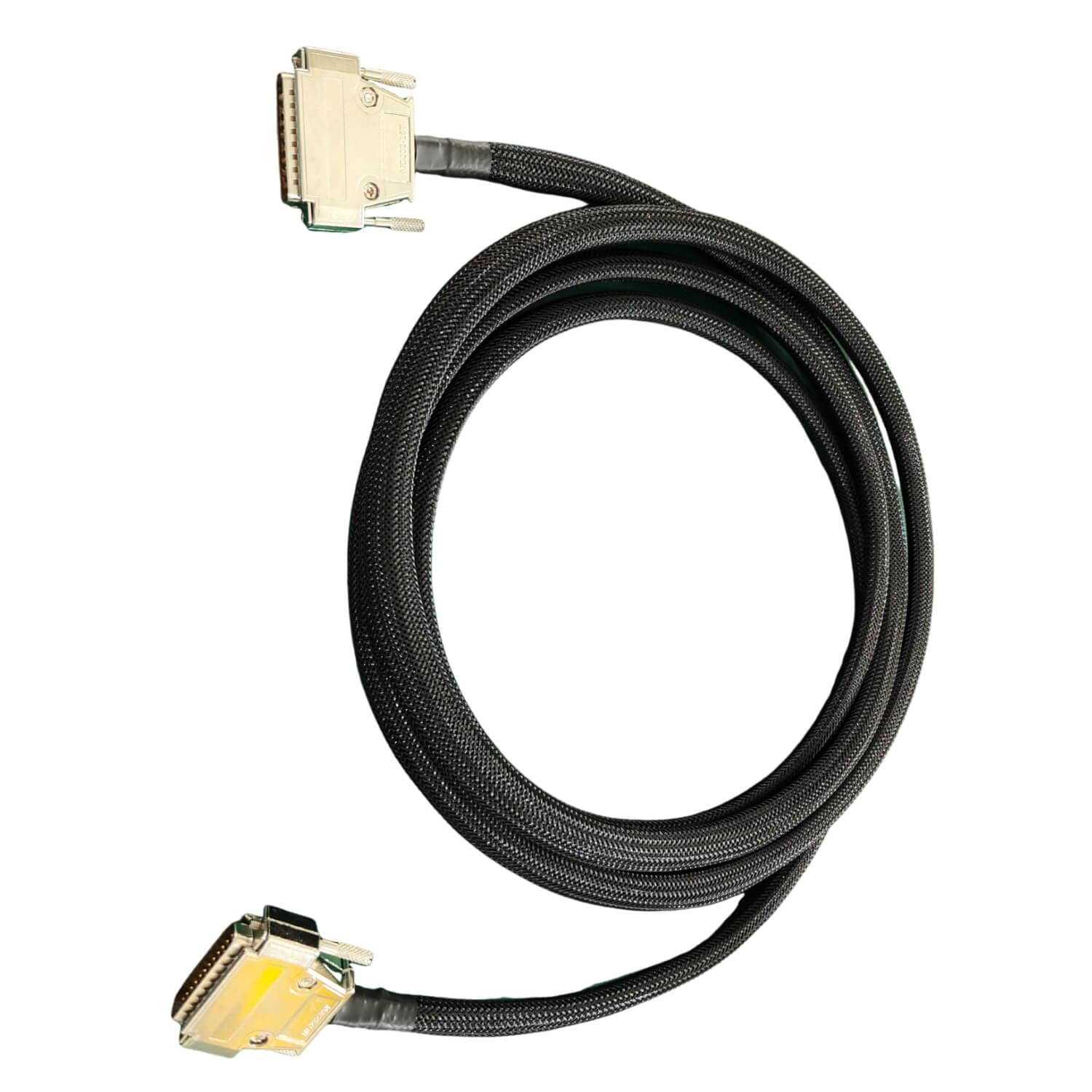
Marine-grade cable assemblies require corrosion protection at every layer, from conductor to connector
1Conductors: Individually Tinned Copper
The single most important defence against black wire disease is individually tinned copper strands. Each strand receives a minimum 40 micro-inch tin coating per MIL-T-10727, creating a barrier between the copper and any saltwater that penetrates the insulation. Tinning costs approximately 8-12% more than bare copper but extends conductor life from 2-5 years to 15-25+ years in marine service.
Key specification: Ensure tin coating is applied to individual strands before bunching, not as a surface coating on the finished conductor. Surface-tinned conductors leave bare copper at strand contact points, allowing corrosion to initiate internally.
2Insulation: XLPE vs PVC vs Silicone
Insulation material determines moisture resistance, temperature range, and UV durability. For detailed material comparisons, see our XLPE vs PVC vs Silicone guide.
| Property | XLPE | PVC | Silicone |
|---|---|---|---|
| Water Absorption | Very Low (0.01%) | Moderate (0.5%) | High (1.0%+) |
| Temp Range | -40 to +90°C | -10 to +70°C | -60 to +200°C |
| UV Resistance | Excellent | Poor | Good |
| Marine Suitability | Excellent | Deck only | Engine room only |
| Cost (Relative) | $$ | $ | $$$ |
3Jacketing, Shielding & Armouring
Jacketing: XLPO (cross-linked polyolefin) and TPU (thermoplastic polyurethane) offer the best combination of saltwater, UV, and abrasion resistance. Avoid standard PVC jackets in permanent marine installations — they become brittle under UV exposure and crack, allowing salt ingress.
Shielding: For EMI protection in marine environments, braided tinned copper shields are preferred over aluminium foil shields due to galvanic compatibility with copper conductors. See our braided vs foil shield comparison for detailed guidance.
Armouring: Steel wire armour (SWA) is essential for subsea and hull-penetration cables. It provides mechanical protection against anchor strikes, trawl damage, and marine growth abrasion. Galvanised or stainless steel armour wires are standard; zinc-aluminium coatings offer the best long-term corrosion resistance.
4Connectors & Sealing
Deutsch DT/DTM series are the workhorse of Australian marine cable assemblies. Their wedgelock contact retention, silicone interfacial seals, and thermoplastic housings deliver IP67/IP68 when mated. For higher pin counts and offshore installations, Amphenol AT series provides IP68/IP69K with corrosion-resistant nickel plating.
Sealing methods — listed from good to best:
- Adhesive-lined heat-shrink: Good baseline protection; use 3:1 or 4:1 shrink ratio with hot-melt adhesive lining for wire-to-connector junctions
- Overmolding: Excellent — creates a monolithic seal with no ingress paths; ideal for assemblies that will not be field-serviceable
- Potting (epoxy/polyurethane): Best for junction boxes and termination points; fully encapsulates connections in a waterproof compound
IP Ratings for Marine Applications: What You Actually Need
IP (Ingress Protection) ratings are critical for marine specification, but they are frequently misunderstood. Our IP67 vs IP68 vs IP69K comparison guide covers the full standard; here we focus on marine-specific considerations.
CRITICAL: IP Ratings Only Apply When Connectors Are Mated
An IP68-rated connector provides zero water protection when the two halves are disconnected. On a vessel, disconnected connectors during maintenance or equipment swaps are exposed to salt spray. Always specify sealed dust caps for unmated connectors and ensure maintenance crews carry them. This single oversight causes more marine connector failures than any other factor.
Minimum IP Recommendations by Marine Zone
| Zone | Min IP Rating | Exposure | Additional Requirements |
|---|---|---|---|
| Open Deck | IP66+ | Spray, wave splash, UV | UV-resistant jacket, salt spray 168hr min |
| Engine Room | IP67 | Bilge flooding, oil, vibration | Oil-resistant jacket, flame retardant |
| Hull Penetration | IP68 | Continuous immersion | Pressure-rated glands, SWA cable |
| Subsea Equipment | IP68 + depth | Permanent submersion under pressure | Depth-rated connectors, ROV-mateable |
Salt Spray Testing Is Separate from IP Rating
An IP68 rating confirms the connector resists fresh water immersion. It does not confirm corrosion resistance to saltwater. Marine connectors must be separately validated with salt spray testing (ASTM B117/ISO 9227) to confirm the materials and coatings can withstand prolonged saltwater exposure. Always request both the IP test report and the salt spray test report when sourcing marine connectors.
Marine & Offshore Cable Standards and Certifications
Marine cable assemblies must comply with a matrix of international, classification society, and Australian standards. The applicable standards depend on the vessel type, operating area, and classification society. Here is a reference table of the key standards:
| Standard | Scope | Application |
|---|---|---|
| IEC 60092 | Electrical installations in ships | All classified commercial vessels |
| DNV Type Approval | Classification society certification | Offshore oil/gas, commercial shipping |
| ABYC E-11 | AC and DC electrical systems on boats | Recreational vessels, small craft |
| NEK 606 | Halogen-free offshore cables | Offshore platforms, FPSOs |
| BS 6883 / BS 7917 | Shipboard and offshore fire-resistant cables | Fire safety critical circuits |
| NORSOK | Norwegian petroleum industry standards | Widely adopted for offshore globally |
| AS/NZS 3008.1.1 | Electrical installations — selection of cables | Australian port and shore-side installations |
| Marine Order 32 (AMSA) | Electrical equipment on Australian vessels | All Australian-flagged vessels |
Compliance Tip
When specifying marine cable assemblies for Australian projects, always confirm which classification society (DNV, Lloyd's Register, Bureau Veritas) the vessel or platform is classed with, as each may have additional requirements beyond the base IEC 60092 standard. For more on Australian compliance requirements, see our AS/NZS compliance guide.
7 Corrosion Protection Strategies That Extend Cable Life
Marine cable assembly longevity comes down to implementing multiple layers of protection. No single strategy is sufficient on its own. Here are the seven proven methods, listed in order of implementation priority:
Individually Tinned Copper Conductors
Non-negotiable for any marine application. Tin coating on each individual strand prevents copper-saltwater contact even if moisture breaches the insulation. Specify MIL-T-10727 Grade A minimum (40 micro-inch). This single specification change extends conductor service life by 5-10x in marine environments.
Galvanic Series Matching
Every metal-to-metal interface must use materials that are close together on the galvanic series. Tinned copper conductors with nickel-plated brass or stainless steel connectors is a safe pairing. Never pair bare aluminium with copper in a marine connector — the aluminium will corrode catastrophically. When dissimilar metals are unavoidable, use isolating bushings and dielectric compounds.
Adhesive-Lined Heat-Shrink at All Transitions
Every point where cable jacket meets a connector, splice, or branch is a potential moisture ingress path. Adhesive-lined heat-shrink (3:1 or 4:1 ratio with hot-melt adhesive liner) creates a watertight seal at these critical junctions. Apply with calibrated heat gun ensuring full adhesive flow — incomplete adhesive activation is a top cause of premature failure.
Sealed Marine Connectors (Deutsch DT/DTM or Amphenol AT)
Use purpose-built marine connectors with interfacial seals, wire seals, and corrosion-resistant housings. Deutsch DT/DTM series with silicone seals is the Australian marine industry standard. For offshore applications requiring higher contact counts, Amphenol AT series offers IP68/IP69K. Always populate unused cavities with sealing plugs.
Dielectric Grease on All Contact Interfaces
Apply marine-grade dielectric grease (silicone-based, not petroleum-based) to all connector mating faces and contact pins before assembly. The grease fills micro-gaps between sealing surfaces and displaces any residual moisture. Reapply during every maintenance inspection. This costs under $5 per connector and can prevent failures worth thousands.
Proper Cable Routing and Support
Route cables away from bilge areas, scuppers, and areas where standing water collects. Use marine-grade cable ties (UV-stabilised nylon or stainless steel), not standard nylon ties which become brittle under UV. Support cables every 300mm minimum with properly sized P-clips or saddle clamps to prevent chafing. Drip loops at vertical-to-horizontal transitions prevent water tracking along cables into equipment.
Overmolded Assemblies for Permanent Installations
For cable assemblies that will not require field termination or service, overmolding provides the highest level of marine protection. The connector-to-cable transition is fully encapsulated in a thermoplastic or thermoset compound, eliminating all ingress paths. Overmolded assemblies routinely achieve 20+ year service life in offshore applications. See our overmolded vs potted cable guide for detailed comparisons.
"When we design marine cable assemblies for Australian offshore operators, we treat every layer as a barrier. Tinned copper is barrier one. XLPE insulation is barrier two. Sealed connectors are barrier three. Overmolding or adhesive heat-shrink is barrier four. If any single barrier fails, the others still protect the circuit. Redundancy in corrosion protection is not over-engineering — it is the only approach that delivers 20-year service life in tropical saltwater."
Salt Spray Testing: How Marine Cables Are Validated
Salt spray testing per ASTM B117 / ISO 9227 is the primary accelerated corrosion validation for marine cable assemblies. The test exposes cable assemblies to a continuous 5% NaCl solution mist at 35°C inside a sealed chamber, simulating years of salt exposure in days.
Testing Duration by Application
Complementary Tests
- UV exposure testing (ASTM G154)
- Thermal cycling (-40°C to +85°C, 100 cycles)
- Vibration testing (IEC 60068-2-6)
- Insulation resistance (min 500 MΩ post-test)
- Dielectric withstand (Hi-Pot) testing
Limitations of Salt Spray Alone
- Does not replicate UV degradation
- Steady-state temperature (no thermal cycling)
- No mechanical stress or vibration
- Cannot predict exact field service life
- Does not test connector mating/unmating cycles
Our Testing Approach: 100% Electrical + Environmental
Every marine cable assembly we produce receives 100% electrical testing (continuity, insulation resistance, hi-pot) before shipment. For projects requiring environmental validation, we conduct salt spray testing in our CNAS-accredited laboratory and provide full test reports with photographic documentation. Our wire harness testing guide details our complete testing capabilities.
Installation and Maintenance Best Practices
Even the best marine cable assembly will fail prematurely if installed incorrectly or neglected. Proper installation and regular maintenance are the final pillars of a long service life.
Installation Essentials
Bend Radius
Maintain minimum bend radius of 6x outer cable diameter for non-armoured cables, 12x for armoured cables. Tight bends crack insulation and jacketing, creating moisture ingress points. Use proper marine-rated bend limiters at equipment entries.
Strain Relief
All marine connectors must have proper strain relief — either integral to the connector backshell or applied via cable glands. Vessel vibration and wave motion create continuous mechanical stress on terminations. Without strain relief, conductor fatigue and seal failure are inevitable.
Cable Glands
Use double-compression marine cable glands (nickel-plated brass or 316 stainless steel) at all bulkhead and deck penetrations. The inner seal grips the cable jacket while the outer seal compresses against the gland body, providing both IP68 sealing and strain relief simultaneously.
Drip Loops & Routing
Always include drip loops before cables enter equipment enclosures — a 50mm downward loop prevents water from tracking along the cable jacket into junction boxes. Route cables below equipment where possible, never directly above heat sources.
Recommended Inspection Schedule
| Interval | Actions | Personnel |
|---|---|---|
| Quarterly | Visual inspection of exposed connectors, cable runs, cable ties. Check for green verdigris, chafing, UV cracking, loose glands. | Crew / operator |
| Annual | De-mate sample connectors to inspect contacts. Insulation resistance testing (megger). Reapply dielectric grease. Replace damaged heat-shrink or cable ties. | Marine electrician |
| 5-Year Survey | Full electrical testing of all circuits. Inspect inside junction boxes. Replace all seals and gaskets. Thermal imaging under load. Document insulation resistance trends. | Certified surveyor |
The Economics of Failure: Why Prevention Pays
Cable assembly failure at sea is not just an inconvenience — it is a financial catastrophe. Industry data shows the true cost of marine electrical failures:
- $1.8M - $30M: Typical cost per major offshore electrical incident including vessel downtime, emergency response, and environmental penalties
- 40-60 days: Average downtime for offshore platform cable system replacement
- 50-80%: Proportion of offshore wind insurance claims related to cable and electrical system failures
- $500K+: Average cost of a single vessel return-to-port for electrical system repair
Warning Signs: Replace Immediately If You Observe
- Green verdigris (copper carbonate) on conductors or connector contacts
- White powdery deposits on aluminium connector shells (aluminium oxide)
- Insulation cracking, hardening, or discolouration
- Connector shells pitting or showing rust streaks
- Insulation resistance below 50 megohms
- Warm or hot connector shells during normal operation
- Intermittent circuit faults that correlate with wave action or vessel movement
"The best maintenance programme for marine cable assemblies is designing them right from the start. When we specify tinned conductors, sealed connectors, and overmolded transitions for an offshore client, their 5-year inspection often shows assemblies in better condition than a poorly specified assembly looks after 6 months. Spend the extra 20% upfront and save 10x on maintenance and replacement over the vessel's life."
Frequently Asked Questions
What is "black wire disease" and how do you prevent it in marine cable assemblies?
Black wire disease is the irreversible oxidation of copper conductors caused by saltwater wicking under insulation through capillary action. The copper turns black and brittle, increasing resistance and eventually causing open circuits. Prevention requires individually tinned copper strands (minimum 40 micro-inch tin coating per MIL-T-10727), sealed entry points using adhesive-lined heat-shrink or overmolding, and marine-grade insulation such as XLPE that resists moisture absorption.
What IP rating do I need for marine cable assemblies in Australia?
Minimum recommendations by zone: deck-mounted equipment needs IP66 or higher for spray and wave splash protection; engine rooms require IP67 for temporary immersion during bilge flooding; hull penetrations and below-waterline connections demand IP68 rated for continuous submersion at specified depth; subsea equipment needs IP68 with depth-rated pressure testing. Critically, IP ratings only apply when connectors are mated — unmated connectors must have protective caps.
Which connectors are best for Australian marine and offshore cable assemblies?
For general marine applications, Deutsch DT and DTM series connectors with their wedgelock retention and silicone seals are the industry standard — they offer IP67/IP68 when mated and are widely stocked in Australia. For offshore oil and gas, Amphenol AT series and TE Connectivity DEUTSCH HD30/HDP20 connectors provide higher pin counts and IP68/IP69K ratings. All marine connectors should use nickel-plated or stainless steel shells and gold-plated contacts to prevent galvanic corrosion.
How long should marine cable assemblies survive salt spray testing?
Standard marine applications require a minimum 168 hours (7 days) of salt spray testing per ASTM B117 or ISO 9227 using 5% NaCl solution at 35°C. Offshore oil and gas installations require 500 to 1000 hours. Naval defence applications often specify 1000 hours or more. Salt spray testing should be complemented by UV exposure testing, thermal cycling, and vibration testing for a complete environmental validation.
What standards apply to marine cable assemblies used on Australian vessels?
Key standards include IEC 60092 (Electrical Installations in Ships), DNV type approval for classification society requirements, ABYC E-11 for recreational vessels, and AS/NZS 3008.1.1 for general electrical installations. For offshore oil and gas, NORSOK standards and NEK 606 apply. Australian Maritime Safety Authority (AMSA) enforces Marine Order 32 for electrical installations. Equipment in the Great Barrier Reef Marine Park must also comply with environmental release requirements.
How often should marine cable assemblies be inspected and replaced?
Recommended inspection intervals: quarterly visual inspection of exposed connectors and cable runs checking for corrosion, chafing, and UV degradation; annual detailed inspection including insulation resistance testing and connector de-mating to check contacts; comprehensive survey every 5 years with full electrical testing and replacement of seals and heat-shrink. Replace immediately if green verdigris appears on copper, insulation shows cracking, or insulation resistance drops below 50 megohms.
References
- ASTM B117-19 — Standard Practice for Operating Salt Spray (Fog) Apparatus. astm.org
- Great Barrier Reef Marine Park Act 1975 — Federal Register of Legislation. legislation.gov.au
- IEC 60092 — Electrical Installations in Ships. International Electrotechnical Commission.
- DNV Rules for Classification — Ships/Offshore Standards. Det Norske Veritas.
Related Articles
IP67 vs IP68 vs IP69K Comparison
Complete guide to IP ratings for cable assemblies in harsh environments.
Silicone vs PVC vs XLPE Cable
Material comparison for insulation and jacketing selection.
Environmental Protection Guide
Comprehensive strategies for protecting wire harnesses from environmental threats.
Need Marine-Grade Cable Assemblies for Australian Waters?
From recreational vessels to offshore platforms, we design and manufacture cable assemblies that survive decades in saltwater service. Get a free engineering review and quote for your marine project.
Melbourne Office
Local Australian engineering support:
Marine Capabilities
- Tinned copper conductors (MIL-T-10727)
- Salt spray testing to 1000 hours (CNAS lab)
- Deutsch DT/DTM & Amphenol AT connectors
- Overmolded & potted assemblies
- 100% electrical testing on every assembly