

IPC/WHMA-A-620: The Complete Wire Harness Workmanship Standard Guide
Everything Australian engineers and procurement managers need to know about IPC-620 acceptance criteria — from Class 1/2/3 requirements to supplier audit checklists. The one standard that separates quality harnesses from ticking time bombs.
The Wire Harness That Grounded an Entire Fleet
In 2023, an Australian mining operator discovered intermittent electrical faults across 34 haul trucks — all fitted with wire harnesses from the same offshore supplier. Root cause: crimp barrel heights were 0.3mm outside IPC/WHMA-A-620 Class 2 tolerances. The crimps passed basic continuity tests but failed under vibration within 8 months.
Total cost: AU$890,000 in harness replacements, vehicle downtime at AU$4,200/hour per truck, and emergency fly-in technicians. The supplier had never heard of IPC-620.
This guide will teach you exactly what IPC/WHMA-A-620 requires — and how to verify your supplier actually follows it.
What Is IPC/WHMA-A-620?
IPC/WHMA-A-620, formally titled "Requirements and Acceptance for Cable and Wire Harness Assemblies," is the only internationally recognised consensus standard dedicated specifically to wire harness and cable assembly workmanship. Jointly developed by IPC (Association Connecting Electronics Industries) and the Wire Harness Manufacturer's Association (WHMA), it provides visual acceptance criteria and measurable requirements for every step of harness production.
What Does IPC-620 Cover?
"IPC/WHMA-A-620 is to wire harnesses what ISO 9001 is to quality management — it's the baseline. Any supplier who can't tell you which revision they follow, or doesn't have certified operators, is a risk you shouldn't take. We've seen too many Australian companies learn this the hard way after a field failure."
Hommer Zhao
Engineering Director, Custom Wire Assembly
Need IPC-620 Compliant Harnesses?
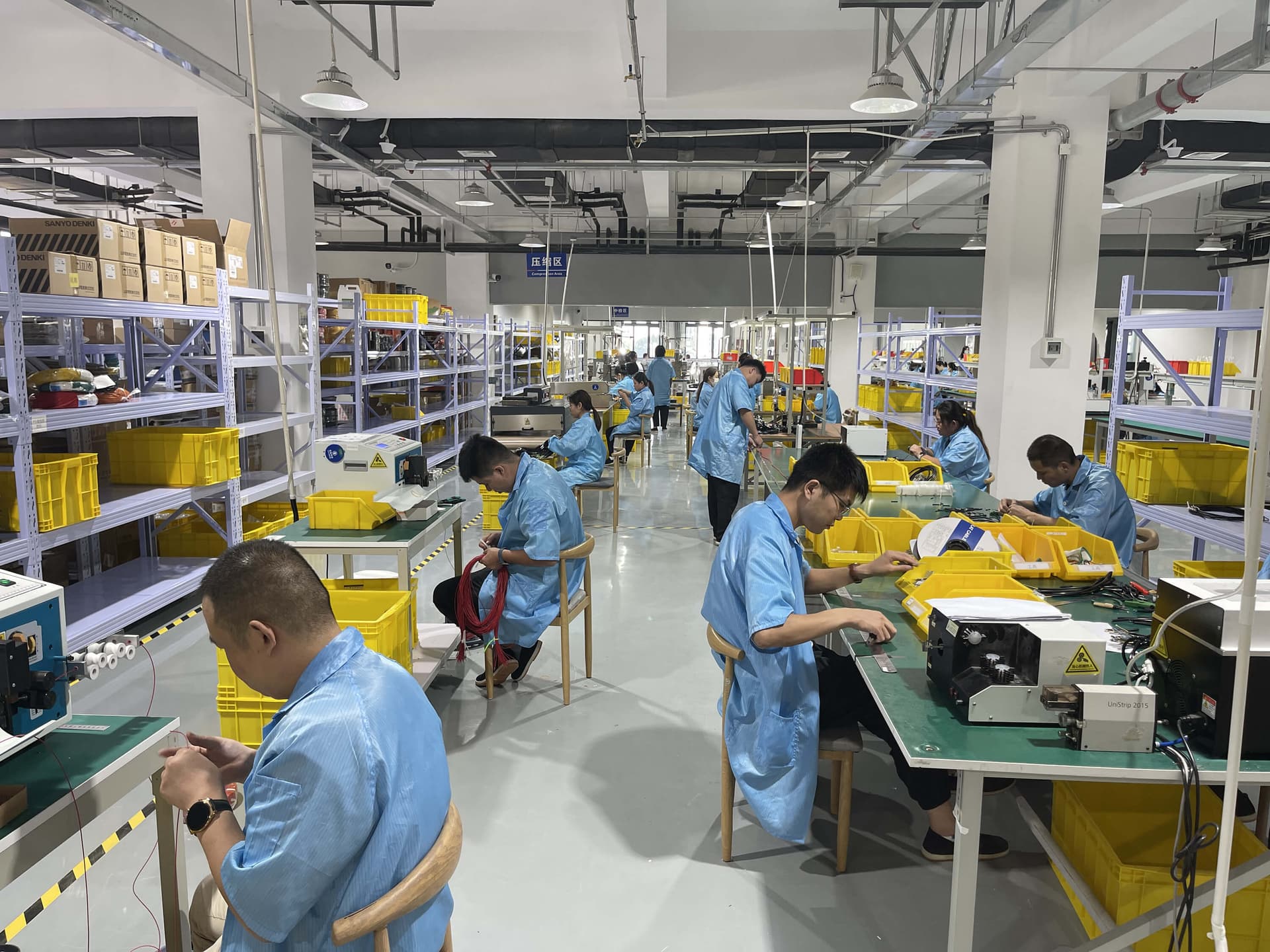
Get $100 off your first order. All our wire harnesses are built to IPC/WHMA-A-620 Class 2 or Class 3 by certified operators.
IPC-620 Class 1 vs Class 2 vs Class 3: Which Do You Need?
The three classes represent escalating levels of quality and reliability. Choosing the right class is the single most important decision you'll make when specifying wire harness requirements — it determines inspection criteria, defect tolerances, and ultimately, cost.
| Criteria | Class 1 General | Class 2 Dedicated | Class 3 High-Reliability |
|---|---|---|---|
| Typical Applications | Consumer electronics, disposable products | Industrial, automotive, telecom, mining equipment | Aerospace, military, medical life-support |
| Strand Damage Allowed | Up to 20% of strands | Up to 10% of strands | 0% — no strand damage |
| Crimp Bellmouth | Not required | Preferred but not required | Required on both ends |
| Wire Insulation Nick Depth | ≤ 20% wall thickness | ≤ 10% wall thickness | No visible nicks |
| Solder Fill Requirements | ≥ 75% fill | ≥ 75% fill, smooth fillet | 100% fill, concave fillet |
| Cable Tie Tightness | No insulation damage | No deformation when finger-pushed | Controlled torque, no deformation |
| Inspection Level | Visual spot-check | 100% visual + sample measurement | 100% visual + 100% measurement |
| Cost Relative to Class 1 | 1.0× | 1.15–1.30× | 1.40–2.0× |
Class 1 Best For
- • Consumer appliances
- • LED lighting
- • Non-critical peripherals
- • Disposable devices
Class 2 Best For
- • Mining & industrial equipment
- • Automotive (non-safety)
- • Telecom infrastructure
- • Marine & offshore
Class 3 Best For
- • Defence & aerospace (AUKUS)
- • Medical life-support
- • Safety-critical automotive
- • Nuclear & space systems
Australian Buyer Tip
Most Australian industrial, mining, and automotive applications require Class 2 minimum. If your supplier quotes "IPC-620 compliant" without specifying a class, they likely default to Class 1 — which may be insufficient. Always specify the class in your purchase order and RFQ documents.
Key IPC-620 Acceptance Criteria: What Inspectors Actually Check
IPC-620 covers over 80 individual acceptance criteria. Here are the eight most critical areas that account for the majority of quality non-conformances — and the ones you should prioritise when evaluating a wire harness supplier.
Crimp Terminations (Section 18)
Crimps are the #1 inspection focus area. IPC-620 defines acceptance criteria for crimp height, bellmouth, wire brush length, insulation support crimp, and conductor visibility through inspection windows.
Acceptable (Target)
- • Crimp height within manufacturer specs (±0.1mm)
- • Bellmouth visible on both ends of crimp barrel
- • Wire brush visible beyond crimp barrel (0.5–2mm)
- • Insulation support contacts insulation without cutting
- • Conductor visible through terminal window
Defect (Reject)
- • Crimp height outside tolerance (Class 2: ±0.1mm)
- • No bellmouth — wire strands sheared at barrel edge
- • No wire brush — insufficient wire insertion
- • Insulation trapped in conductor crimp zone
- • Cracked or split crimp barrel
Wire Stripping & Preparation (Section 8)
Wire stripping defects are among the most common and hardest to catch without training. Nicked strands and insulation damage cause latent failures that appear months after installation.
| Defect Type | Class 1 | Class 2 | Class 3 |
|---|---|---|---|
| Nicked / cut strands | ≤ 20% | ≤ 10% | 0% (reject) |
| Insulation scorch / melt | Minor OK | No visible melt | No discoloration |
| Strip length variation | ±3mm | ±1.5mm | ±1mm |
| Insulation nick depth | ≤ 20% | ≤ 10% | Not visible |
Soldered Connections (Section 19)
IPC-620 references IPC J-STD-001 for soldering workmanship but adds wire harness-specific requirements. Key focus areas include solder wetting, fill percentage, cold joints, and flux residue.
Good Solder Joint
- • Smooth, shiny or satin finish
- • Concave fillet (Class 3)
- • 100% wetting on pad & lead
- • No flux residue (Class 3)
Acceptable (Class 1/2)
- • ≥75% fill on cup terminals
- • Slight texture acceptable
- • Non-corrosive flux residue OK
- • Minor voids (no exposed wire)
Defect (All Classes)
- • Cold joint (grainy, dull, fractured)
- • Bridging between pins
- • Disturbed joint (moved during cooling)
- • Overheated (burnt flux, darkened)
Cable Ties & Lacing (Section 12)
Cable ties must not deform insulation, cut into jacketing, or be overtightened. IPC-620 specifies tail length (≤ body width for Class 3), spacing intervals (max 150mm), and positioning relative to breakouts and connectors.
Wire Dressing & Routing (Section 5)
Wires must follow natural routing without crossing at sharp angles. Minimum bend radius is 3× outer diameter for fixed cables (10× for flex applications). Service loops must be provided where connectors may be replaced.
Connector & Terminal Assembly (Section 16)
Pins must be fully seated (positive click), strain relief installed per manufacturer spec, and backshells torqued to specification. Contact retention must exceed minimum pull force per connector manufacturer's datasheet.
Shielding & EMI Protection (Section 14)
Shield braid coverage must meet specification (typically ≥85% for EMI). Drain wires must be properly terminated, and shield termination must provide 360° contact where specified. No stray shield strands may contact signal conductors.
Marking & Labelling (Section 4)
Labels must be legible, correctly positioned, and durable enough to survive the operating environment. Heat-shrink labels must not obscure wire colours. Class 3 requires permanent marking that survives all environmental exposure.
"When we audit a new supplier, the first thing I check is their crimp cross-section records. If they can't show me crimp height data plotted on a control chart — not just pass/fail records — they're not running a process, they're running a lottery. IPC-620 gives you the acceptance criteria, but SPC (Statistical Process Control) is what keeps you there consistently."
Hommer Zhao
Engineering Director, Custom Wire Assembly
Top 7 IPC-620 Defects Found in Wire Harness Inspections
Based on incoming inspection data from Australian OEMs, these are the most frequently discovered IPC-620 non-conformances — especially from suppliers who lack formal IPC training.

Incorrect Crimp Height
28% of NCRsCriticalCrimp barrel compressed too much (under-crimp) or too little (over-crimp). Often caused by worn tooling or incorrect die selection. Can pass continuity test but fails under vibration.
Wire Strand Damage During Stripping
18% of NCRsMajorMechanical strippers set to wrong depth nick or sever conductor strands. Reduces current capacity and creates stress concentration points that break under flex cycling.
Insulation Damage or Discoloration
12% of NCRsMajorThermal strippers set too hot melt or scorch insulation. Chemical strippers leave residue. Both compromise dielectric strength and accelerate ageing.
Cable Tie Over-Tightening
11% of NCRsMinor to MajorCable ties cinched too tight deform wire insulation, creating high-stress points. Especially problematic on small gauge wires (24-28 AWG) where jacket wall is thin.
Poor Solder Wetting
10% of NCRsMajorInsufficient flux, incorrect temperature, or contaminated surfaces produce dull, grainy joints with inadequate wetting. Common when operators lack J-STD-001 training.
Incorrect Wire Routing / Dress
8% of NCRsMinor to MajorWires crossing over each other at sharp angles, insufficient bend radius, or missing service loops. Causes pinch points and premature wear in dynamic applications.
Missing or Illegible Labels
5% of NCRsMinorLabels printed with wrong ink for the environment (fading in UV/heat), positioned where they peel off, or missing entirely. Complicates field service and troubleshooting.
The 80/20 Rule of IPC-620 Defects
The top 3 defects (incorrect crimps, strand damage, and insulation damage) account for 58% of all IPC-620 non-conformances. Suppliers who invest in proper crimp tooling validation, calibrated stripping equipment, and operator training eliminate the majority of quality issues. When evaluating a supplier, ask specifically about these three areas.
IPC-620 Supplier Audit Checklist for Australian Buyers
Use this checklist when evaluating a wire harness supplier's IPC-620 compliance. A supplier who scores well on these 10 points is likely producing consistently high-quality harnesses.
CIS/CIT Certification
Ask for copies of Certified IPC Specialist (CIS) operator certificates and Certified IPC Trainer (CIT) trainer certificates. Check expiry dates — certifications must be renewed every 2 years.
Documented Work Instructions
Work instructions should reference specific IPC-620 clause numbers and revision letter (e.g., "per IPC/WHMA-A-620E, Section 18.3.2"). Generic "best practice" documents are not sufficient.
Crimp Height Validation Records
Request crimp height SPC (Statistical Process Control) charts, not just pass/fail data. Cpk ≥ 1.33 indicates a well-controlled process. Ask about tooling change-out frequency and validation procedures.
Pull Force Testing Protocol
Verify they perform destructive pull testing on first article, per shift, and last article. Check pull force tester calibration certificates (annual calibration to NATA/ILAC traceable standards).
Cross-Section Microscopy
Quality-focused suppliers perform crimp cross-section analysis at setup and periodically. Ask to see sample micrographs showing crimp compression ratio (50–80% target) and wire bundle symmetry.
Incoming Material Inspection
IPC-620 quality starts with incoming materials. The supplier should verify wire gauge, insulation type, terminal plating, and connector part numbers against approved vendor lists.
Class-Specific Inspection Procedures
Ensure the supplier's inspection procedures are calibrated to your required class. A Class 2 procedure is different from Class 1 — the accept/reject criteria change for every inspection point.
Training Program & Frequency
Operators should receive initial IPC-620 training plus annual refresher training. Ask about pass rates, retraining for failed operators, and how new hires are qualified before they touch production.
Non-Conformance & CAPA System
A mature supplier has a documented system for Non-Conformance Reports (NCRs) and Corrective/Preventive Actions (CAPA). Ask for sample NCR data — the number of NCRs is less important than the corrective actions taken.
First Article Inspection Reports
Request a sample FAIR (First Article Inspection Report) from a recent order. It should include dimensional measurements, electrical test data, pull force results, and visual inspection records per IPC-620.
"The best way to judge a supplier is to ask them to walk you through a rejected harness. If they can show you the defect, explain which IPC-620 clause it violates, and show you the corrective action they took — that's a supplier who actually lives the standard, not just quotes it on their website."
Hommer Zhao
Engineering Director, Custom Wire Assembly
IPC-620 in the Australian Market: Why It Matters Now More Than Ever
Several macro trends are driving increased IPC-620 adoption across Australian industries:
AUKUS & Defence Sovereign Capability
The AUKUS agreement is driving AU$368 billion in defence spending over 30 years. Wire harnesses for submarines, frigates, and military vehicles must meet IPC-620 Class 3. Suppliers without certified IPC-620 processes are excluded from the supply chain.
EV & Renewable Energy Growth
Australia's EV market grew 161% in 2024. High-voltage battery pack harnesses and charging infrastructure require IPC-620 Class 2 minimum, with many OEMs specifying Class 3 for safety-critical circuits above 60V DC.
Mining Automation
Autonomous haul trucks, remote-operated drills, and automated processing plants demand higher reliability. Rio Tinto, BHP, and Fortescue now require IPC-620 Class 2 for all electrical harnesses in autonomous equipment.
TGA Medical Device Reforms
The Therapeutic Goods Administration increasingly aligns with EU MDR requirements. Medical device cable assemblies must demonstrate compliance with recognised quality standards — IPC-620 is the default for wire harness workmanship evidence.
How to Specify IPC-620 in Your Purchase Orders
Simply writing "IPC-620 compliant" on a PO is not enough. Here's the correct way to specify the standard to avoid ambiguity and ensure you get what you pay for:
// Example PO specification language:
"Wire harness assembly shall comply with
IPC/WHMA-A-620E, Class 2
with the following additional requirements:
- 100% continuity and hi-pot testing per Section 9
- Destructive pull testing: 3 samples per lot per Section 18
- First Article Inspection Report required before production
- Operators must hold current CIS certification
- Crimp height SPC data to be included with shipment"
Good Practice
- • Specify revision letter (e.g., "A-620E")
- • State the class explicitly (Class 2 or 3)
- • List specific testing requirements
- • Require operator certification evidence
- • Define deliverable documentation
Common Mistakes
- • "IPC-620 compliant" without specifying class
- • Referencing outdated revision (A-620B or C)
- • No testing or documentation requirements
- • Assuming Class 2 when supplier defaults to Class 1
- • Not requiring operator certification
References & Further Reading
- IPC — IPC/WHMA-A-620E Requirements and Acceptance for Cable and Wire Harness Assemblies (official standard)
- WHMA — Wire Harness Manufacturer's Association (industry body and co-developer of A-620)
- Australian Government — AUKUS Defence Partnership (driving IPC-620 Class 3 requirements for sovereign capability)
- IPC — IPC J-STD-001 Soldering Standard (referenced by IPC-620 for solder acceptance criteria)
Frequently Asked Questions
What is IPC/WHMA-A-620?
IPC/WHMA-A-620 is the internationally recognised standard for Requirements and Acceptance of Cable and Wire Harness Assemblies. Jointly developed by IPC and the Wire Harness Manufacturer's Association (WHMA), it defines workmanship criteria across three classes for crimps, solder joints, wire dressing, cable ties, connectors, and more. It is used in over 50 countries and is the only consensus standard dedicated specifically to wire harness quality.
What is the difference between IPC-620 Class 1, Class 2, and Class 3?
Class 1 (General Electronic Products) has the least stringent criteria — suitable for consumer electronics where cosmetic imperfections are acceptable. Class 2 (Dedicated Service) covers industrial, telecom, automotive, and mining where continued performance is important. Class 3 (High-Reliability) is the most stringent — required for aerospace, military, and medical life-support equipment where failure is not acceptable. Each higher class tightens every inspection criterion.
Is IPC/WHMA-A-620 certification mandatory in Australia?
IPC/WHMA-A-620 is not legally mandated in Australia. However, many Australian OEMs and procurement teams require suppliers to demonstrate IPC-620 compliance as a contractual quality requirement. Defence (under AUKUS), medical devices (TGA), and major mining operators effectively mandate it through supply chain requirements. Not having it increasingly means exclusion from tenders.
How do I audit a supplier for IPC-620 compliance?
Key audit steps: verify CIS (Certified IPC Specialist) operator certifications are current; inspect crimp cross-sections against IPC-620 acceptance criteria; review documented inspection procedures referencing specific IPC-620 clause numbers; check calibration records for pull force testers and microscopes; request sample test reports showing pass/fail criteria; and verify the training program keeps certifications up to date every 2 years.
What are the most common IPC-620 defects?
The five most common defects are: incorrect crimp height (28% of NCRs), wire strand damage during stripping (18%), insulation damage or discoloration (12%), cable tie overtightening (11%), and poor solder wetting (10%). These five defects account for approximately 79% of all IPC-620 non-conformances. Proper tooling validation and operator training eliminate the majority of these issues.
How much does IPC-620 Class 2 compliance add to wire harness cost?
Typically 15-30% compared to Class 1 (non-certified production). The added cost comes from operator training and certification, tighter process controls, more rigorous inspection, better tooling, and documentation. However, the cost of a single field failure in mining or industrial applications (often AU$50,000-500,000+) makes Class 2 compliance a clear net positive ROI for most professional applications.
Get IPC/WHMA-A-620 Certified Wire Harnesses
Every Custom Wire Assembly harness is built by CIS-certified operators to IPC/WHMA-A-620 Class 2 or Class 3 standards. We provide complete documentation including crimp height data, pull force reports, and First Article Inspection Reports. Melbourne office support with factory-direct pricing.
Related Articles
Wire Harness Testing 101
Complete guide to continuity, hi-pot, pull force, and environmental testing.
How to Choose a Wire Harness Manufacturer
8 critical evaluation factors for Australian buyers.
Crimp vs Solder Terminations
Expert comparison — which is better for your application?