

Cable Assembly Incoming Inspection (IQC): The Complete Guide for Australian Buyers
How to set up and run incoming quality control for cable assemblies — from receiving dock to stock release. AQL sampling plans, defect classification, equipment recommendations, and supplier scorecards written for quality engineers and procurement teams.
The AU$340,000 Lesson in Skipping Incoming Inspection
A Melbourne-based medical device manufacturer received 2,400 cable assemblies from a new overseas supplier. The supplier provided a Certificate of Conformance stating 100% pass. The assemblies went straight to the production line without incoming inspection.
Three weeks later, 340 finished devices failed final test. Root cause: 14% of cable assemblies had crimp heights outside IPC-620 Class 2 tolerance — enough to pass basic continuity but failing under thermal cycling. Total cost: AU$340,000 in scrap, rework, production delays, and TGA incident reporting.
A 15-minute incoming inspection per lot would have caught 100% of these defects before a single assembly reached the line.
What Is Incoming Quality Inspection (IQC) for Cable Assemblies?
Incoming Quality Control (IQC) is the systematic inspection and testing of purchased cable assemblies before they enter your production process or inventory. Unlike outgoing quality control (which is the supplier's responsibility), IQC is your last line of defence between an external supplier and your production floor.
For cable assemblies specifically, IQC verifies that crimps, solder joints, connectors, wire routing, insulation, and electrical performance all meet your specification — regardless of what the supplier's paperwork claims.
"The biggest mistake I see Australian OEMs make is treating the supplier's test report as a substitute for incoming inspection. A CoC tells you what the supplier wants you to believe. Your IQC tells you what's actually in the box. We've shipped thousands of lots with 100% pass rates — and I still expect our customers to verify at their end. That's how quality systems are supposed to work."
Hommer Zhao
Engineering Director, Custom Wire Assembly
Need Cable Assemblies That Pass Your IQC First Time?
Get $100 off your first order. Every lot ships with full test reports, crimp data, and Certificate of Conformance — built to pass your incoming inspection.
Why Incoming Inspection Matters More Than You Think
Cable assemblies are not passive components — they carry power and signals that your product depends on. A defective cable assembly that reaches your production floor doesn't just waste one assembly; it contaminates your entire manufacturing process.
The Cost Multiplier
A defective crimp caught at incoming inspection costs AU$2-5 to disposition. The same defect found during your assembly costs AU$50-200 in rework. Found by your customer in the field? AU$5,000-50,000+ in warranty, downtime, and reputation damage.
Quality Fade Risk
Suppliers who know you don't inspect gradually relax their own controls. This "quality fade" is well-documented in manufacturing — first article is perfect, lot 50 starts showing defects. Active IQC is the best deterrent against quality fade.
Australian Compliance
For medical devices (TGA), defence (AUKUS), and AS/NZS-regulated products, incoming inspection is not optional — it's a regulatory expectation under your quality management system (ISO 9001 clause 8.4.2).
Step-by-Step IQC Procedure for Cable Assemblies
This 8-step procedure takes a cable assembly lot from receiving dock to stock release (or rejection). Adapt it to your specific products, but maintain all eight steps — skipping any one creates a gap that defects will exploit.
Receiving Dock Check
Verify packing slip matches your purchase order: correct part number, revision, quantity, and lot/date code. Inspect outer packaging for shipping damage — crushed boxes, water damage, or missing desiccant. Photograph any damage before opening. Record the supplier, lot number, and quantity received in your IQC log.
Documentation Review
Check that the shipment includes: Certificate of Conformance (CoC), electrical test reports (continuity, hi-pot if specified), material certifications (RoHS declaration, UL wire certificates), and lot traceability information. Missing documentation is a hold condition — do not proceed until the supplier provides it.
Sample Selection (AQL)
Determine your sample size using ISO 2859-1 (see AQL section below). Use random sampling — do not cherry-pick assemblies from the top of the box. For new suppliers or first articles, consider 100% inspection regardless of lot size. Record which units were sampled by serial number.
Visual Inspection
Inspect against IPC/WHMA-A-620 acceptance criteria for your specified class. Check: connector housing integrity, crimp quality (bellmouth, wire brush, barrel formation), wire routing and bend radius, cable tie tightness, heat shrink coverage, label legibility and placement, and overall workmanship. Use 3-5x magnification for crimp inspection.
Dimensional Verification
Verify: overall cable length (±tolerance per drawing), connector type and orientation, pin-out configuration, breakout lengths, and label positioning. Use calipers or a tape measure depending on tolerance requirements. Check at least 3 measurements per sample unit.
Electrical Testing
At minimum: 100% continuity testing (verify every pin-to-pin connection per wiring diagram). For critical applications, add: insulation resistance testing (≥100 MΩ at 500V DC typical), hi-pot / dielectric withstand testing (per specification), and contact resistance measurement (<20 mΩ for most applications).
Mechanical Testing (Destructive)
On designated sample units: crimp pull testing per IPC-620 Table 18-1 (force varies by wire gauge — e.g., 22 AWG requires ≥19N / 4.3 lbf). This is a destructive test — sampled units cannot be shipped. Record force at failure and failure mode (wire break vs. crimp pullout). Wire break = good crimp; pullout = defective crimp.
Disposition & Documentation
Based on results: ACCEPT (all AQL criteria met — release to stock with IQC pass sticker and lot number), REJECT (AQL criteria failed — quarantine lot, issue NCR, notify supplier within 48 hours), or CONDITIONAL ACCEPT (minor deviations with engineering concession — document the deviation and attach to lot records). Update your supplier scorecard.
AQL Sampling Plans for Cable Assembly Inspection
AQL (Acceptable Quality Level) defines the maximum percentage of defective units considered acceptable in a lot. It does not mean you accept defective parts — it means you accept that the lot has an acceptably low probability of containing defects beyond the specified level.
Cable assembly AQL sampling follows ISO 2859-1 (also known as AS 1199.1 in Australia). Here are the recommended AQL levels for different defect severities:
| Defect Severity | Standard Industrial Mining, Telecom, General | Safety-Critical Medical, Automotive, Defence |
|---|---|---|
| Critical (safety hazard, wrong part) | AQL 0% — reject lot | AQL 0% — reject lot |
| Major (functional impact) | AQL 1.0% | AQL 0.65% |
| Minor (cosmetic, non-functional) | AQL 2.5% | AQL 1.0% |
Quick Reference: Sample Sizes (General Inspection Level II)
| Lot Size | Sample Size | Accept (Major 1.0%) | Reject (Major 1.0%) |
|---|---|---|---|
| 2 – 8 | 2 | 0 | 1 |
| 9 – 15 | 3 | 0 | 1 |
| 16 – 25 | 5 | 0 | 1 |
| 26 – 50 | 8 | 0 | 1 |
| 51 – 90 | 13 | 0 | 1 |
| 91 – 150 | 20 | 0 | 1 |
| 151 – 280 | 32 | 1 | 2 |
| 281 – 500 | 50 | 1 | 2 |
| 501 – 1,200 | 80 | 2 | 3 |
Switching Rules: Normal → Tightened → Reduced
Normal → Tightened
If 2 out of 5 consecutive lots are rejected, switch to tightened inspection (double sample size). Supplier must earn their way back.
Normal → Reduced
After 10 consecutive lots accepted under normal inspection, you may switch to reduced inspection (half sample size). Production must be stable.
When to Use 100%
New supplier (first 3 lots), after a field failure, safety-critical applications, or when tightened inspection continues to reject lots.
Defect Classification: Critical, Major, and Minor
Not all defects are equal. Classifying defects by severity ensures your inspection resources focus on what matters most and prevents over-rejection on cosmetic issues while catching safety-critical problems. This classification table is specific to cable assemblies and aligns with IPC/WHMA-A-620 acceptance criteria.
Critical Defects — Automatic Lot Rejection (AQL 0%)
Any single critical defect in any sample unit = reject the entire lot.
Major Defects — Functional Impact (AQL 1.0%)
May affect performance, reliability, or serviceability. Count against AQL sample.
Minor Defects — Cosmetic / Non-Functional (AQL 2.5%)
Do not affect form, fit, or function. Count against AQL but not cause for line stoppage.
"The defect classification table is the most valuable document in your IQC system. Without it, every inspector makes their own judgement calls, and you get inconsistent results. Spend the time to build yours, get engineering sign-off, and post it at every inspection station. I've seen companies reduce their internal defect rate by 40% just by standardising what 'reject' actually means."
Hommer Zhao
Engineering Director, Custom Wire Assembly
Visual Inspection Checklist: What to Look For
Visual inspection catches 60-70% of cable assembly defects when performed by trained inspectors using proper magnification. Here's your checklist organised by inspection area:
Connectors
- Housing: no cracks, broken latches, or missing seals
- Pins: correct type, fully seated (positive click), no bent pins
- Keying: correct orientation, polarisation features intact
- Strain relief: properly installed, not over-tightened
Crimps (3-5x magnification)
- Bellmouth visible on both ends of crimp barrel
- Wire brush visible (0.5–2mm beyond barrel)
- No stray strands outside crimp zone
- Insulation support contacts jacket, doesn't cut it
Wire & Cable
- No cuts, nicks, kinks, or crush damage on insulation
- Correct colour coding per wiring diagram
- Proper stripping length, clean cut (no ragged edges)
- Bend radius ≥3x outer diameter (10x for flex)
Assembly & Markings
- Cable ties: no insulation deformation, correct spacing
- Heat shrink: full coverage, no gaps, properly adhered
- Labels: legible, correct part number, date code present
- Overall cleanliness: no solder flux, fingerprints, debris
Electrical Testing at Incoming Inspection
Electrical testing catches defects that visual inspection cannot — internal crimp failures, insulation breakdown, and intermittent connections. Here are the four key tests and when to apply each:
| Test Type | When Required | Pass Criteria | Equipment Cost |
|---|---|---|---|
| Continuity | Every lot (100% recommended) | <1 Ω per connection | AU$200–2,000 |
| Insulation Resistance | All applications >50V | ≥100 MΩ at 500V DC | AU$500–3,000 |
| Hi-Pot (Dielectric) | Safety-critical, medical, defence | No breakdown at 2x rated V + 1000V | AU$1,500–8,000 |
| Contact Resistance | High-current or precision signal | <10–20 mΩ per contact | AU$3,000–15,000 |
Why Continuity Alone Is Not Enough
A common forum question: "Our cable assemblies pass continuity but fail intermittently in the field." Basic continuity only confirms a circuit is closed — it doesn't check resistance quality. A crimp with 5 out of 19 strands making contact will pass continuity but fail under vibration or thermal cycling. Use contact resistance testing (<20 mΩ) to catch marginal connections that continuity alone misses.
Essential IQC Equipment by Budget Tier
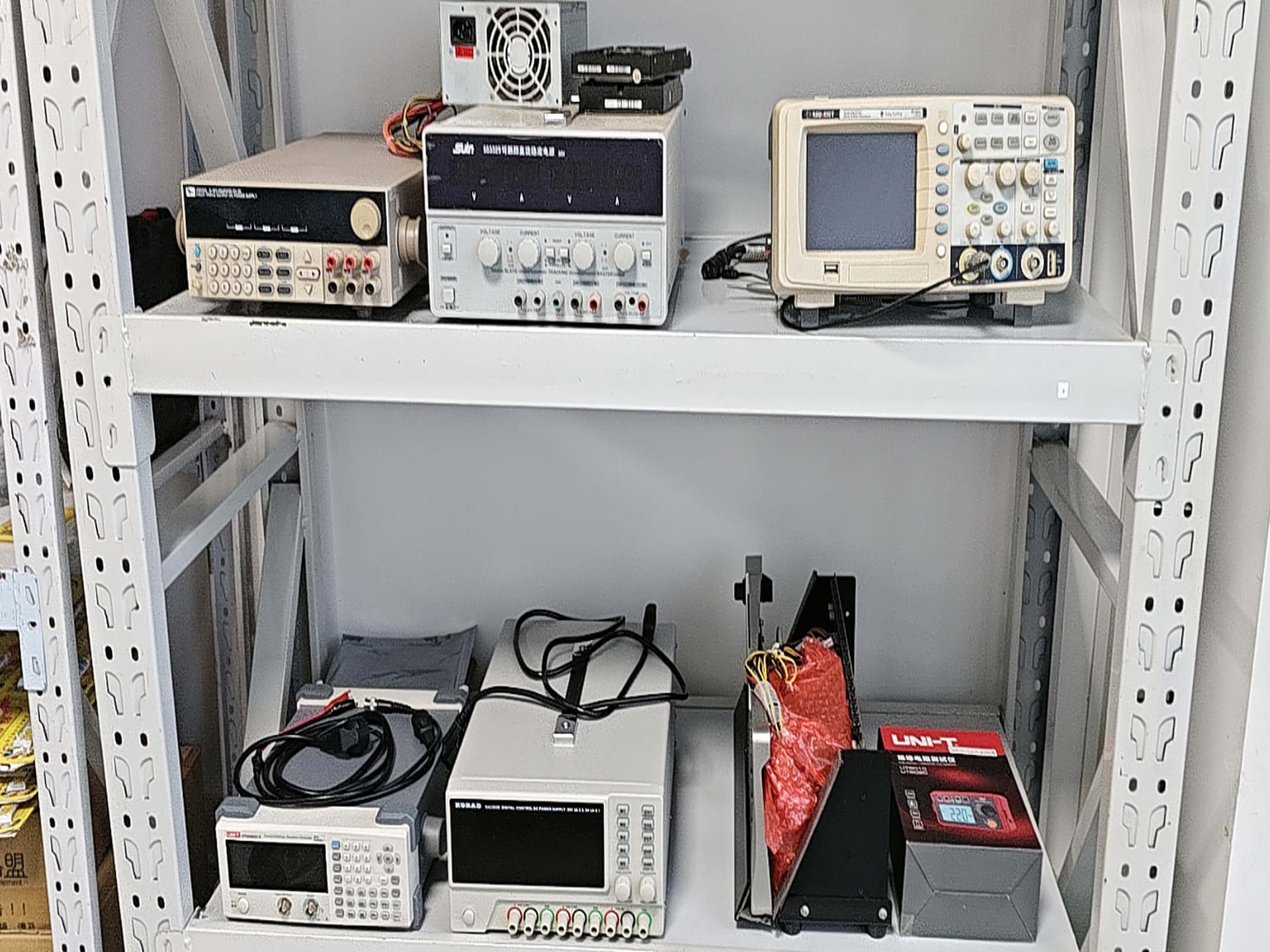
You don't need AU$100,000 of test equipment to run effective incoming inspection. Here are three tiers based on your volume and risk level:
Entry Level
Small shop, <50 assemblies/month
AU$500–2,000
- • Digital multimeter (continuity + resistance)
- • Manual pull-test gauge (50N capacity)
- • 5x magnification loupe or headband
- • Pin gauge set (for connector checks)
- • Callipers (for length measurement)
Mid Level
50–500 assemblies/month
AU$5,000–15,000
- • Dedicated cable tester (CIRRIS or CableEye)
- • Digital force gauge (motorised, 200N)
- • USB digital microscope (10-50x)
- • Insulation resistance tester (megger)
- • Inspection workstation with good lighting
Advanced
High-volume OEM, >500/month
AU$20,000–80,000
- • Automated cable test system with fixtures
- • Hi-pot / dielectric withstand tester
- • Crimp cross-section analysis (micrometer + microscope)
- • Motorised pull tester with data logging
- • Environmental chamber (for incoming batch sampling)
Calibration Schedule
All measurement equipment must be calibrated to NATA-traceable or ILAC-accredited standards. Recommended intervals:
IQC Focus Areas by Cable Assembly Type
Different cable assembly types have unique failure modes. Adjust your inspection emphasis accordingly:
| Assembly Type | Primary IQC Focus | Key Test |
|---|---|---|
| Power cords & mains cables | Earth continuity, polarity, insulation integrity | Hi-pot + earth bond test |
| Multi-conductor signal harness | Pin-to-pin mapping, crimp quality, wire colour | Full wiring verification + continuity |
| Shielded / EMI cables | Shield continuity, braid coverage, drain wire termination | Shield resistance + insulation resistance |
| High-voltage assemblies | Insulation thickness, creepage distances, marking | Hi-pot at 2x rated + 1000V |
| Waterproof / IP-rated | Seal integrity, overmould quality, gland tightness | Visual seal check + sample IP testing |
| Flex / continuous motion | Conductor integrity, jacket flexibility, bend radius | Resistance measurement at bend + flex life sample |
Using IQC Data to Build a Supplier Scorecard
IQC data is only valuable if you use it to drive supplier improvement. A supplier scorecard converts raw inspection results into actionable metrics that determine your inspection level, trigger corrective actions, and inform purchasing decisions.
Key Scorecard Metrics
| Metric | Green (Excellent) | Yellow (Watch) | Red (Action Required) |
|---|---|---|---|
| Lot Acceptance Rate | ≥98% | 90–97% | <90% |
| Defect PPM (parts per million) | <500 PPM | 500–2,000 PPM | >2,000 PPM |
| On-Time Delivery | ≥95% | 85–94% | <85% |
| CAR Response Time | <5 business days | 5–10 business days | >10 business days |
| Documentation Completeness | 100% complete | Missing 1 item | Missing ≥2 items |
How Scorecard Drives IQC Level
Green Supplier → Reduced Inspection
10+ consecutive lots accepted, all metrics green. Move to reduced AQL sampling (skip-lot eligible after 20 consecutive passes).
Yellow Supplier → Normal Inspection
Any metric in yellow zone. Standard AQL sampling with documented feedback to supplier. Require improvement plan within 30 days.
Red Supplier → Tightened Inspection
Any metric in red. Double sample size, issue formal CAR, consider 100% inspection at supplier cost. Evaluate alternative sources.
7 Common IQC Mistakes (and How to Avoid Them)
Trusting the supplier's CoC without verifying
Fix: Use the CoC to set inspection level, but always perform your own testing. A CoC is a statement of intent, not proof of quality.
Cherry-picking samples instead of random selection
Fix: Use true random sampling — pull from different positions in the box/pallet, not just the top layer.
Testing continuity only and declaring "pass"
Fix: Add contact resistance, insulation resistance, and visual inspection per IPC-620. Continuity alone misses 40% of defect types.
Not documenting IQC results over time
Fix: Track lot-by-lot acceptance rates, defect types, and PPM trends. Data without trending is just paperwork.
Same inspection level for all suppliers
Fix: Use supplier scorecard to adjust: reduced for proven suppliers, tightened for problematic ones. ISO 2859-1 switching rules provide the framework.
Accepting known-defective units because the lot passed AQL
Fix: AQL determines lot disposition, not individual unit disposition. Always segregate and reject known-defective samples — never ship them to your production floor.
No feedback loop to the supplier
Fix: Send IQC reports (including passes) to the supplier quarterly. Share defect photos, NCR data, and scorecards. Suppliers can only improve what they know about.
Setting Up an IQC Program from Scratch
If your company doesn't have a formal incoming inspection process today, here's how to get one running within 4 weeks:
Week 1: Define What You're Inspecting
Identify all purchased cable assemblies, specify the IPC-620 class for each, and create your defect classification table (use the one above as a starting point). Get engineering sign-off.
Week 2: Write Your IQC Procedure & Procure Equipment
Document the 8-step procedure (adapt from above), select AQL levels, and order your entry-level equipment. Create inspection record forms and NCR templates.
Week 3: Train Your Inspectors
Train inspectors on the procedure, defect classification, and equipment use. Consider IPC-620 CIS certification for dedicated inspectors. Run practice inspections on known-good and known-bad samples.
Week 4: Go Live & Calibrate
Start with 100% inspection for all suppliers. After 3 months of data, transition proven suppliers to AQL sampling. Set up monthly scorecard reviews and quarterly supplier feedback sessions.
"Start simple. A multimeter, a magnifying glass, and a documented procedure will catch 80% of cable assembly defects. You can add CIRRIS testers and automated systems later as your volume grows. The worst IQC system you can have is the one you never implement because it seemed too expensive to start."
Hommer Zhao
Engineering Director, Custom Wire Assembly
References & Further Reading
- ISO — ISO 2859-1:1999 Sampling procedures for inspection by attributes (the international standard behind AQL sampling plans)
- IPC — IPC/WHMA-A-620E Requirements and Acceptance for Cable and Wire Harness Assemblies (the workmanship standard referenced throughout this guide)
- NATA — National Association of Testing Authorities, Australia (accreditation body for calibration laboratories)
- InTouch Quality — Don't Neglect Incoming Quality Control for Components and Materials (IQC best practices overview)
Frequently Asked Questions
Should we re-test cable assemblies if the supplier provides a Certificate of Conformance?
Yes. A Certificate of Conformance (CoC) is only as reliable as the supplier's quality system. Use CoC data to determine inspection level (reduced for proven suppliers, tightened for new ones), but always perform your own incoming inspection. Industry data shows that 15-25% of cable assembly lots with passing CoCs still contain defects detectable at incoming inspection.
What AQL level should we use for cable assemblies?
For most industrial cable assemblies, use AQL 0% for critical defects (automatic lot rejection), AQL 1.0% for major defects, and AQL 2.5% for minor defects. Safety-critical applications (medical, automotive, defence) should use tighter AQL levels: 0% critical, 0.65% major, 1.0% minor. Start with General Inspection Level II per ISO 2859-1.
How do we inspect crimps that are already inserted into connectors?
For crimps hidden inside connector housings, use a combination of: (1) contact retention testing — pull the wire to verify it exceeds the minimum retention force without extracting the pin, (2) continuity and contact resistance testing — high resistance readings can indicate poor crimps, and (3) destructive testing on sample units — remove contacts from sample assemblies for crimp height measurement and cross-section analysis.
Is visual inspection enough or do we need electrical testing at incoming?
Visual inspection alone is insufficient for cable assemblies. A harness can look perfect visually but have an open circuit from a cracked crimp, a short from stray shield strands, or marginal insulation resistance. At minimum, perform 100% continuity testing and visual inspection. Add insulation resistance and hi-pot testing for safety-critical applications.
How do we handle a rejected cable assembly lot?
When a lot fails AQL inspection: (1) Quarantine the entire lot — do not release any units to production, (2) Issue a formal Non-Conformance Report (NCR) documenting the defect type, quantity, and IPC-620 clause violated, (3) Notify the supplier within 48 hours with photographic evidence, (4) Decide disposition: return for rework, perform 100% screening in-house (at supplier's cost), or scrap. Always get a Corrective Action Report (CAR) before accepting the next shipment.
How often should incoming inspection equipment be calibrated?
Calibration intervals depend on the instrument: pull force testers every 12 months (or after 10,000 tests), multimeters and cable testers every 12 months, hipot testers every 12 months, crimp height micrometers every 6 months, and optical inspection equipment every 12 months. All calibrations should be traceable to NATA (in Australia) or ILAC-accredited standards.
Cable Assemblies Built to Pass Your Incoming Inspection
Every Custom Wire Assembly lot ships with complete test data: 100% continuity reports, crimp height records, pull force data, and Certificate of Conformance. Our IPC-620 certified operators and ISO 9001 quality system mean your IQC team spends less time rejecting and more time releasing.
Related Articles
IPC/WHMA-A-620 Standard Guide
Complete acceptance criteria guide for Class 1/2/3 wire harness workmanship.
Wire Harness Testing 101
Continuity, hi-pot, pull force, and environmental testing methods explained.
Top 10 Questions for Manufacturers
Essential questions to evaluate wire harness suppliers before placing your order.